Kirjojen hintavertailu. Mukana 12 152 606 kirjaa ja 12 kauppaa.

Kirjailija

Anthony King

Kirjat ja teokset yhdessä paikassa: 38 kirjaa, julkaisuja vuosilta 1973-2026, suosituimpien joukossa Ascent. Vertaile teosten hintoja ja tarkista saatavuus suomalaisista kirjakaupoista.

38 kirjaa

Kirjojen julkaisuhaarukka 1973-2026.

Ascent

Ascent

Anthony King

THE HISTORY PRESS LTD
2026
sidottu
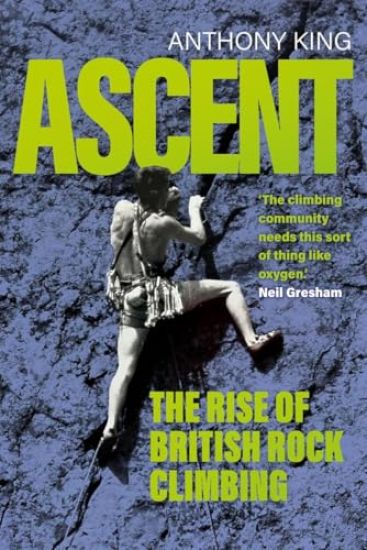
‘The climbing community needs this sort of thing like oxygen at the moment... a wonderfully detailed, expansive and inspiring book.’ – Neil Gresham Climbing has risen from the margins to the mainstream. Today, there are over 5 million climbers in the UK. From its amateur days in the 1950s to the present, where climbing finds itself recognised as an increasingly popular Olympic sport, Ascent tells the story of this remarkable transformation. Anthony King – a dedicated climber himself – traces the sport’s evolution through decades of rebellion, innovation and achievement to its place today as a vibrant, diverse culture. His own experiences colour the narrative; we discover not just how climbing developed, but what it feels like to climb, and be a climber. More than just a history of the sport, through telling this story we also see how British society itself has been transformed. Expansive, immediate, and deeply engaging, Ascent is both cultural sport history and lived experience.
The Blunders of Our Governments

The Blunders of Our Governments

Anthony King; Ivor Crewe

Oneworld Publications
2025
pokkari
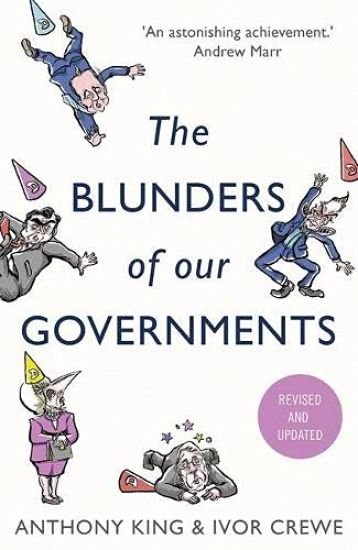
With unrivalled political savvy and a keen sense of irony, distinguished political scientists Anthony King and Ivor Crewe open our eyes to the worst government horror stories and explain why the British political system is quite so prone to appalling mistakes.
AI, Automation, and War

AI, Automation, and War

Anthony King

PRINCETON UNIVERSITY PRESS
2025
sidottu
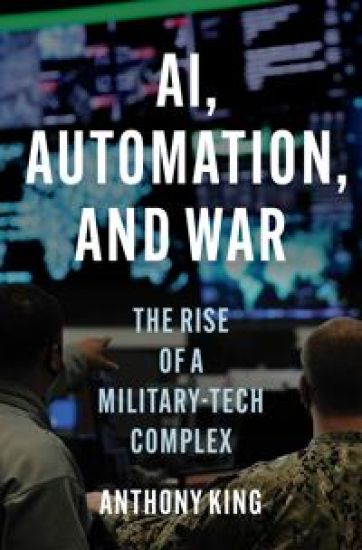
Why AI will not replace human strategic judgement in warIs AI about to automate war? Will autonomous drone swarms and killer robots controlled by AI dominate the battlespace and determine the winner? In AI, Automation, and War, Anthony King debunks this science fiction–tinged narrative of AI’s military potential, exploring instead the actual applications of AI by the armed forces over the last decade. He finds that AI is not going to replace human commanders and combatants; the machines are not about to take over. Rather, the military has used, and will continue to use, AI to process data at a scale and speed that exceeds the capacity of humans. AI will be used primarily to improve military understanding and intelligence.King explains that military commanders, enabled by the data processing power of AI, will be able to see the battlespace at a previously unattainable depth, fidelity, and speed. AI will help the armed forces plan, target, and conduct cyber operations faster and more effectively. In order to harness AI in this way, however, a radical organisational transformation is taking place. The armed forces are integrating civilian technologists into operational headquarters to work alongside military staff. This partnership between the armed forces and the technology sector signals the emergence of a military-tech complex that promises to be as powerful in this century as the military-industrial complex was in the last.
Urban Warfare in the Twenty-First Century

Urban Warfare in the Twenty-First Century

Anthony King

JOHN WILEY AND SONS LTD
2025
nidottu
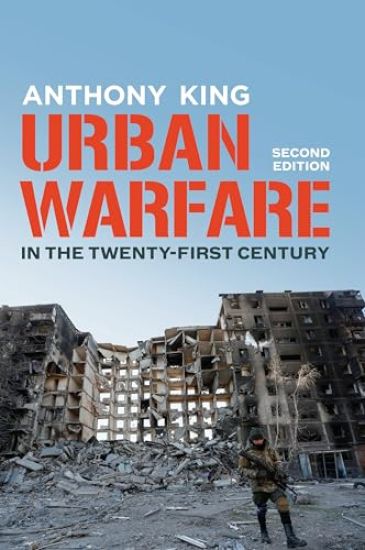
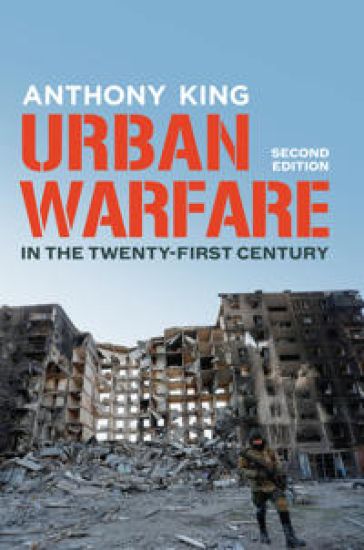
War is urbanising. From Mosul to Mumbai, Aleppo to Marawi, the largest and most intense battles of the twenty-first century have taken place in densely populated urban areas. In the Ukraine War, Russian and Ukrainian troops have converged on urban areas, Kyiv, Mariupol, and Bakhmut, to fight brutal attritional sieges. Meanwhile the Battle of Gaza rages. Through a close analysis of recent urban conflicts and their historical antecedents, sociologist Anthony King explores the changing typography of the urban battlescape. Whilst many tactics used in urban warfare are not new, he shows how operations in cities today have coalesced into localised micro-sieges, which extend from street level – and below – to the airspace high above the city, as combatants fight for individual buildings, streets and districts. At the same time, digitalized social media and information networks communicate these battles to global audiences across an urban archipelago, with these spectators often becoming active participants in the fight. Fully revised and updated to include detailed examples from Ukraine and Gaza to illustrate the anatomy of twenty-first century urban warfare, the second edition of this popular text is a timely reminder of the costs and the horror of war and violence in cities. As such, it offers an invaluable interdisciplinary introduction to urban warfare in the new millennium for students of international security, urban studies and military science, as well as military professionals.
Urban Warfare in the Twenty-First Century

Urban Warfare in the Twenty-First Century

Anthony King

JOHN WILEY AND SONS LTD
2025
sidottu
War is urbanising. From Mosul to Mumbai, Aleppo to Marawi, the largest and most intense battles of the twenty-first century have taken place in densely populated urban areas. In the Ukraine War, Russian and Ukrainian troops have converged on urban areas, Kyiv, Mariupol, and Bakhmut, to fight brutal attritional sieges. Meanwhile the Battle of Gaza rages. Through a close analysis of recent urban conflicts and their historical antecedents, sociologist Anthony King explores the changing typography of the urban battlescape. Whilst many tactics used in urban warfare are not new, he shows how operations in cities today have coalesced into localised micro-sieges, which extend from street level – and below – to the airspace high above the city, as combatants fight for individual buildings, streets and districts. At the same time, digitalized social media and information networks communicate these battles to global audiences across an urban archipelago, with these spectators often becoming active participants in the fight. Fully revised and updated to include detailed examples from Ukraine and Gaza to illustrate the anatomy of twenty-first century urban warfare, the second edition of this popular text is a timely reminder of the costs and the horror of war and violence in cities. As such, it offers an invaluable interdisciplinary introduction to urban warfare in the new millennium for students of international security, urban studies and military science, as well as military professionals.
Urban Warfare in the Twenty-First Century
Warfare has migrated into cities. From Mosul to Mumbai, Aleppo to Marawi, the major military battles of the twenty-first century have taken place in densely populated urban areas. Why has this happened? What are the defining characteristics of urban warfare today? What are its military and political implications? Leading sociologist Anthony King answers these critical questions through close analysis of recent urban battles and their historical antecedents. Exploring the changing typography and evolving tactics of the urban battlescape, he shows that although not all methods used in urban warfare are new, operations in cities today have become highly distinctive. Urban warfare has coalesced into gruelling micro-sieges, which extend from street level – and below – to the airspace high above the city, as combatants fight for individual buildings, streets and districts. At the same time, digitalized social media and information networks communicate these battles to global audiences across an urban archipelago, with these spectators often becoming active participants in the fight. A timely reminder of the costs and the horror of war and violence in cities, this book offers an invaluable interdisciplinary introduction to urban warfare in the new millennium for students of international security, urban studies and military science, as well as military professionals.
The Combat Soldier

The Combat Soldier

Anthony King

Oxford University Press
2019
nidottu
How do small groups of combat soldiers perform on the battlefield and maintain their cohesion under fire? Why are they willing to fight for each other? These questions have long intrigued social scientists, military historians, and philosophers. Based on extensive research and drawing on graphic analysis of close quarter combat from the Somme to Sangin, this book puts forward a novel and challenging answer to this question. Against the common presumption of the virtues of the citizen soldier, the author claims that, in fact, the infantry platoon of the mass twentieth century army typically performed poorly and demonstrated low levels of cohesion in combat. With inadequate time and resources to train their troops for the industrial battlefield, citizen armies typically relied on appeals to masculinity, nationalism, and ethnicity to unite their troops and to encourage them to fight. By contrast, cohesion among today's professional soldiers is generated and sustained quite differently. While concepts of masculinity and patriotism are not wholly irrelevant, the combat performance of professional soldiers is based primarily on drills which are inculcated through intense training regimes. Consequently, the infantry platoon has become a highly skilled team capable of collective virtuosity in combat. The increasing importance of training, competence, and drills to the professional infantry soldier has not only changed the character of cohesion in the twenty-first century platoon, but it has also allowed for a wider social membership of this group. Soldiers are no longer included or excluded into the platoon on the basis of their skin colour, ethnicity, social background, sexuality, or even sex (women are increasingly being included in the infantry) but their professional competence alone: can they do the job? In this way, the book traces a profound transformation in the western way of warfare to shed light on wider processes of change not only in the armed forces but in civilian society as well. This book is a project of the Oxford Programme on the Changing Character of War.
The European Ritual

The European Ritual

Anthony King

Routledge
2019
nidottu
Football constitutes a vivid public ritual in contemporary European culture through which emergent social solidarities and new economic networks have come into being. This fascinating and unique volume traces the transformation of European football from the 1950s to the present, focusing in particular on the dramatic changes that have occurred in the last decade and linking them to the wider process of European integration. The examination of football illuminates how the growing dominance of the free market has changed European society from an international order in which the nation-state was dominant to a more complex transnational regime in which cities and regions are becoming more prominent than in the past. The study is supported by detailed ethnographic accounts emerging from the author's fieldwork at Manchester United and interview data with some of the most important figures in European football at clubs including Juventus, Milan, Bayern Munich, Schalke and Barcelona. It also includes a highly topical examination of racism in European football.
Command

Command

Anthony King

Cambridge University Press
2019
sidottu
In the wake of the troubled campaigns in Afghanistan and Iraq, military decision-making appears to be in crisis and generals have been subjected to intense and sustained public criticism. Taking these interventions as a starting point, Anthony King examines the transformation of military command in the twenty-first century. Focusing on the army division, King argues that a phenomenon of collective command is developing. In the twentieth century, generals typically directed and led operations personally, monopolising decision-making. They commanded individualistically, even heroically. As operations have expanded in range and scope, decision-making has multiplied and diversified. As a result command is becoming increasingly professionalised and collaborative. Through interviews with many leading generals and vivid ethnographic analysis of divisional headquarters, this book provides a unique insight into the transformation of command in western armies.
Command

Command

Anthony King

Cambridge University Press
2019
pokkari
In the wake of the troubled campaigns in Afghanistan and Iraq, military decision-making appears to be in crisis and generals have been subjected to intense and sustained public criticism. Taking these interventions as a starting point, Anthony King examines the transformation of military command in the twenty-first century. Focusing on the army division, King argues that a phenomenon of collective command is developing. In the twentieth century, generals typically directed and led operations personally, monopolising decision-making. They commanded individualistically, even heroically. As operations have expanded in range and scope, decision-making has multiplied and diversified. As a result command is becoming increasingly professionalised and collaborative. Through interviews with many leading generals and vivid ethnographic analysis of divisional headquarters, this book provides a unique insight into the transformation of command in western armies.
Urbanism, Colonialism and the World-economy
Recent years have witnessed a surge in public awareness concerning the impact of world economic forces on cities. In this challenging book, the author argues that though the consciousness is new the phenomena themselves are not. For the past two centuries at least, world economic, political and cultural forces have been major factors shaping cities, patterns of urbanization and the physical and spatial forms of the built environment. Anthony King believes that the historical context of contemporary global restructuring must be recognized if present-day urban and regional change is to be properly understood. He explores and documents the cultural and spatial links between metropolitan core and colonial periphery and examines the historical foundations of the world urban system. He also looks at the social production of building and urban form, and demonstrates their potential for understanding economic, political, socail and cultural change on a global scale.
Global Cities

Global Cities

Anthony King

Routledge
2016
nidottu
This book originates as a case study of London's role as 'world city', focusing on imperialism and the internationalization of capital of London and exploring the link between urbanization processes and global economic forces.
Writing the Global City

Writing the Global City

Anthony King

Routledge
2016
sidottu
Over the last three decades, our understanding of the city worldwide has been revolutionized by three innovative theoretical concepts – globalisation, postcolonialism and a radically contested notion of modernity. The idea and even the reality of the city has been extended out of the state and nation and re-positioned in the larger global world.In this book Anthony King brings together key essays written over this period, much of it dominated by debates about the world or global city. Challenging assumptions and silences behind these debates, King provides largely ignored historical and cultural dimensions to the understanding of world city formation as well as decline. Interdisciplinary and comparative, the essays address new ways of framing contemporary themes: the imperial and colonial origin of contemporary world and global cities, actually existing postcolonialisms, claims about urban and cultural homogenisation and the role of architecture and built environment in that process. Also addressed are arguments about indigenous and exogenous perspectives, Eurocentricism, ways of framing vernacular architecture, and the global historical sociology of building types. Wide-ranging and accessible, Writing the Global City provides essential historical contexts and theoretical frameworks for understanding contemporary urban and architectural debates. Extensive bibliographies will make it essential for teaching, reference and research.
Writing the Global City

Writing the Global City

Anthony King

Routledge
2016
nidottu
Over the last three decades, our understanding of the city worldwide has been revolutionized by three innovative theoretical concepts – globalisation, postcolonialism and a radically contested notion of modernity. The idea and even the reality of the city has been extended out of the state and nation and re-positioned in the larger global world.In this book Anthony King brings together key essays written over this period, much of it dominated by debates about the world or global city. Challenging assumptions and silences behind these debates, King provides largely ignored historical and cultural dimensions to the understanding of world city formation as well as decline. Interdisciplinary and comparative, the essays address new ways of framing contemporary themes: the imperial and colonial origin of contemporary world and global cities, actually existing postcolonialisms, claims about urban and cultural homogenisation and the role of architecture and built environment in that process. Also addressed are arguments about indigenous and exogenous perspectives, Eurocentricism, ways of framing vernacular architecture, and the global historical sociology of building types. Wide-ranging and accessible, Writing the Global City provides essential historical contexts and theoretical frameworks for understanding contemporary urban and architectural debates. Extensive bibliographies will make it essential for teaching, reference and research.
Urbanism, Colonialism and the World-economy
Recent years have witnessed a surge in public awareness concerning the impact of world economic forces on cities. In this challenging book, the author argues that though the consciousness is new the phenomena themselves are not. For the past two centuries at least, world economic, political and cultural forces have been major factors shaping cities, patterns of urbanization and the physical and spatial forms of the built environment. Anthony King believes that the historical context of contemporary global restructuring must be recognized if present-day urban and regional change is to be properly understood. He explores and documents the cultural and spatial links between metropolitan core and colonial periphery and examines the historical foundations of the world urban system. He also looks at the social production of building and urban form, and demonstrates their potential for understanding economic, political, socail and cultural change on a global scale.
Global Cities

Global Cities

Anthony King

Routledge
2015
sidottu
Since the late 1970s the role of key world cities such as Los Angeles, New York and London as centres of global control and co-ordination has come under increasing scrutiny. This book provides an overview and critique of work on the global context of metropolitan growth, world city formation and the theory it has generated. Suggesting ‘post-imperialism’ as the most appropriate framework for analysis, the author demonstrates the extent to which urban and regional development, both in Britain and elsewhere, were linked to a colonial mode of production, and highlights the effects of its disappearance. Against this background, the author charts the transformation of London from imperial capital in the nineteenth and early twentieth centuries to world city in the capitalist world economy of today.
The Blunders of Our Governments

The Blunders of Our Governments

Anthony King; Ivor Crewe

Oneworld Publications
2014
pokkari
With unrivalled political savvy and a keen sense of irony, distinguished political scientists Anthony King and Ivor Crewe open our eyes to the worst government horror stories and explain why the British political system is quite so prone to appalling mistakes.
The Transformation of Europe's Armed Forces

The Transformation of Europe's Armed Forces

Anthony King

Cambridge University Press
2014
pokkari
As a result of new strategic threats, Europe's land forces are currently undergoing a historic transformation which may reflect wider processes of European integration. Europe's mass, mainly conscript armies are being replaced by smaller, more capable, professionalised militaries concentrated into new operational headquarters and rapid reaction brigades, able to plan, command, and execute global military interventions. At the same time, these headquarters and brigades are co-operating with each other across national borders at a level which would have been inconceivable in the twentieth century. As a result, a transnational military network is appearing in Europe, the forces in which are converging on common forms of military expertise. This book is a groundbreaking study of the military dimensions of European integration, which have been largely ignored until now. It will appeal to scholars across the social sciences interested in the progress of the European project, and the nature of the military today.