Kirjojen hintavertailu. Mukana 12 595 353 kirjaa ja 12 kauppaa.

Kirjailija

Anthony Lake

Kirjat ja teokset yhdessä paikassa: 5 kirjaa, julkaisuja vuosilta 1976-2024, suosituimpien joukossa Our Own Worst Enemy. Vertaile teosten hintoja ja tarkista saatavuus suomalaisista kirjakaupoista.

5 kirjaa

Kirjojen julkaisuhaarukka 1976-2024.

Nazi Germany and the Holocaust in Historical Crime Fiction
This is the first book- length academic study of the portrayal in contemporary historical crime fiction of Nazi Germany and the Holocaust and their legacies. It discusses novels written by five authors: David Downing, Philip Kerr, Luke McCallin, Joseph Kanon and David Thomas. Their work belongs to a subgenre of the historical crime novel that has emerged since the late 1980s to become a significant body of writing located at the intersection of crime fiction and Holocaust literature. The readings of these novels explore questions of form and genre to ask how popular fiction might approach the Holocaust. Themes of resistance and complicity and the relationship between them, and problems of guilt and responsibility are also discussed. This book also explores questions of justice to show how these novels explore social and moral justice, and vengeance and revenge, as alternatives to ordinary legal justice after the Holocaust.

Nazi Germany and the Holocaust in Historical Crime Fiction
This is the first book- length academic study of the portrayal in contemporary historical crime fiction of Nazi Germany and the Holocaust and their legacies. It discusses novels written by five authors: David Downing, Philip Kerr, Luke McCallin, Joseph Kanon and David Thomas. Their work belongs to a subgenre of the historical crime novel that has emerged since the late 1980s to become a significant body of writing located at the intersection of crime fiction and Holocaust literature. The readings of these novels explore questions of form and genre to ask how popular fiction might approach the Holocaust. Themes of resistance and complicity and the relationship between them, and problems of guilt and responsibility are also discussed. This book also explores questions of justice to show how these novels explore social and moral justice, and vengeance and revenge, as alternatives to ordinary legal justice after the Holocaust.
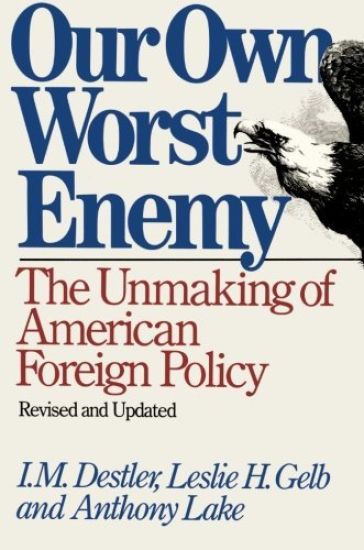
Our Own Worst Enemy

Our Own Worst Enemy

I M Destler; Leslie H Gelb; Anthony Lake

Touchstone Books
2014
pokkari
Three former government officials rethink the foreign policy decisions of America's leaders as they detail their failures and inadequacies and propose effective new moves the nation could make to self-correct. The authors of Our Own Worst Enemy, each of which have held high positions in the State Department and Pentagon, argue that for more than 20 years the United States has been experiencing a nervous breakdown concerning the making of foreign policy. As foreign policy continuously becomes more partisan and ideological, and each president disavows his predecessor as he starts anew, the authors describe how America has watched its leaders repeatedly trap themselves in foreign policy debacles. Within the pages of this book, I.M. Destler, Leslie H. Gelb, and Anthony Lake propose clear and effective measures by which America may extricate itself from the political quagmire it is repeatedly placed in.
The Tar Baby Option

The Tar Baby Option

Anthony Lake

Columbia University Press
1976
sidottu
"No area of the world has been viewed by Americans with greater moral disapproval and yet less attention than southern Africa," writes Anthony Lake in the introduction to The "Tar Baby" Option. Feeling that there is much to be learned from an examination of the American response to the Rhodesian problem, he offers a detailed account of America's Southern Rhodesia policy since the Smith government's unilateral declaration of independence from Great Britain in 1965. The book provides information essential to an understanding of the American approach to the current crisis in the region. The author's use of previously undisclosed materials and interviews with U.S. foreign policymakers gives the reader an inside look not only at the Rhodesian question but also at the politics of American foreign policy.