Kirjojen hintavertailu. Mukana 12 459 402 kirjaa ja 12 kauppaa.

Kirjailija

Anthony O'Brien

Kirjat ja teokset yhdessä paikassa: 25 kirjaa, julkaisuja vuosilta 2001-2024, suosituimpien joukossa Economics, Global Edition -- Pearson eText (OLP) 5Yr Subscription. Vertaile teosten hintoja ja tarkista saatavuus suomalaisista kirjakaupoista.

25 kirjaa

Kirjojen julkaisuhaarukka 2001-2024.

Money, Banking and the Financial System

Money, Banking and the Financial System

Glenn Hubbard; Anthony O'Brien

PEARSON EDUCATION LIMITED
2013
pokkari
Make the link between theory and real-world easier for students with the most up-to-date Money and Banking text on the market today! Hubbard/O'Brien's textbook presents Money, Banking, and the Financial System in the context of contemporary events, policy, and business with an integrated explanation of today’s financial crisis. Reviewers tell us that Hubbard/O'Brien helps make the link between theory and real-world easier for students!The second edition retains the modern approach of the first edition, while incorporating several changes to address feedback from instructors and students and also to reflect the authors’ own classroom experiences. Available with MyEconLab! MyEconLab is a powerful assessment and tutorial system that works hand-in-hand with Money and Banking. MyEconLab includes comprehensive homework, quiz, test, and tutorial options, where instructors can manage all assessment needs in one program.
Economics (Arab World Editions) with MyEconLab

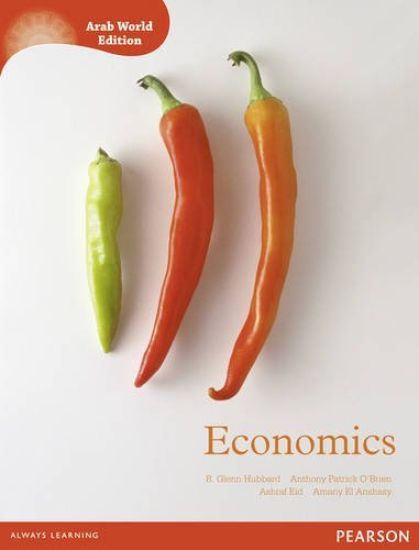
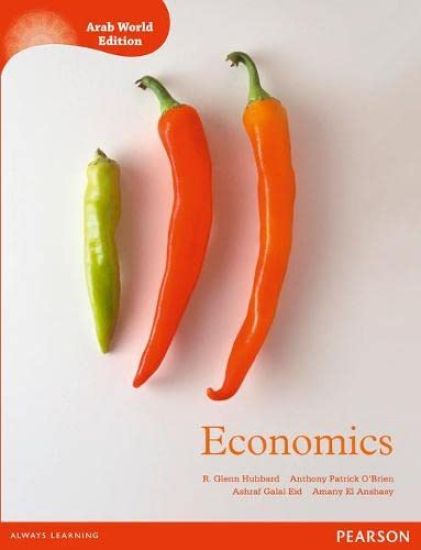
Economics (Arab World Editions) with MyEconLab

R. Glenn Hubbard; Anthony O'Brien

PEARSON EDUCATION LIMITED
2012
muu
This textbook utilizes the ideas and concepts that made the international edition a valued companion to economics students and lecturers the world over, but tailors its language and illustrations to better suit its Arab readers. Regional case studies, photographs and examples bring the principles and concepts of economics to life for Arab learners, who are encouraged to apply the information and data contained in Economics to their own environment and experiences.
Against Normalization

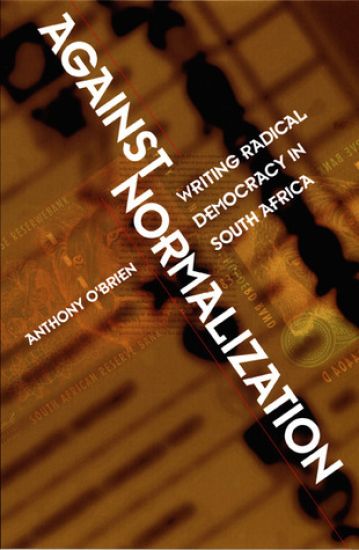
Against Normalization

Anthony O'Brien

Duke University Press
2001
pokkari
At the end of apartheid, under pressure from local and transnational capital and the hegemony of Western-style parliamentary democracy, South Africans felt called upon to normalize their conceptions of economics, politics, and culture in line with these Western models. In Against Normalization, however, Anthony O’Brien examines recent South African literature and theoretical debate which take a different line, resisting this neocolonial outcome, and investigating the role of culture in the formation of a more radically democratic society. O’Brien brings together an unusual array of contemporary South African writing: cultural theory and debate, worker poetry, black and white feminist writing, Black Consciousness drama, the letters of exiled writers, and postapartheid fiction and film. Paying subtle attention to well-known figures like Nadine Gordimer, Bessie Head, and Njabulo Ndebele, but also foregrounding less-studied writers like Ingrid de Kok, Nise Malange, Maishe Maponya, and the Zimbabwean Dambudzo Marechera, he reveals in their work the construction of a political aesthetic more radically democratic than the current normalization of nationalism, ballot-box democracy, and liberal humanism in culture could imagine. Juxtaposing his readings of these writers with the theoretical traditions of postcolonial thinkers about race, gender, and nation like Paul Gilroy, bell hooks, and Gayatri Spivak, and with others such as Samuel Beckett and Vaclav Havel, O’Brien adopts a uniquely comparatist and internationalist approach to understanding South African writing and its relationship to the cultural settlement after apartheid.With its appeal to specialists in South African fiction, poetry, history, and politics, to other Africanists, and to those in the fields of colonial, postcolonial, race, and gender studies, Against Normalization will make a significant intervention in the debates about cultural production in the postcolonial areas of global capitalism.
Against Normalization

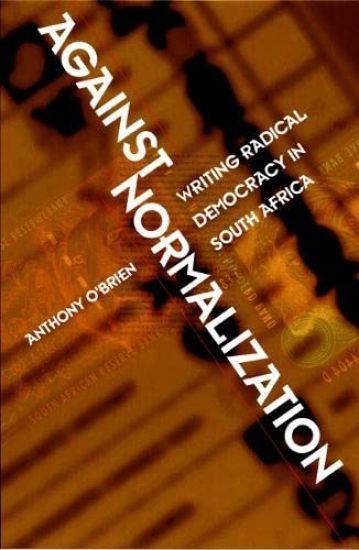
Against Normalization

Anthony O'Brien

Duke University Press
2001
sidottu
At the end of apartheid, under pressure from local and transnational capital and the hegemony of Western-style parliamentary democracy, South Africans felt called upon to normalize their conceptions of economics, politics, and culture in line with these Western models. In Against Normalization, however, Anthony O’Brien examines recent South African literature and theoretical debate which take a different line, resisting this neocolonial outcome, and investigating the role of culture in the formation of a more radically democratic society. O’Brien brings together an unusual array of contemporary South African writing: cultural theory and debate, worker poetry, black and white feminist writing, Black Consciousness drama, the letters of exiled writers, and postapartheid fiction and film. Paying subtle attention to well-known figures like Nadine Gordimer, Bessie Head, and Njabulo Ndebele, but also foregrounding less-studied writers like Ingrid de Kok, Nise Malange, Maishe Maponya, and the Zimbabwean Dambudzo Marechera, he reveals in their work the construction of a political aesthetic more radically democratic than the current normalization of nationalism, ballot-box democracy, and liberal humanism in culture could imagine. Juxtaposing his readings of these writers with the theoretical traditions of postcolonial thinkers about race, gender, and nation like Paul Gilroy, bell hooks, and Gayatri Spivak, and with others such as Samuel Beckett and Vaclav Havel, O’Brien adopts a uniquely comparatist and internationalist approach to understanding South African writing and its relationship to the cultural settlement after apartheid.With its appeal to specialists in South African fiction, poetry, history, and politics, to other Africanists, and to those in the fields of colonial, postcolonial, race, and gender studies, Against Normalization will make a significant intervention in the debates about cultural production in the postcolonial areas of global capitalism.