

Kirjailija
Anthony O'Hear
Kirjat ja teokset yhdessä paikassa: 28 kirjaa, julkaisuja vuosilta 1989-2025, suosituimpien joukossa Ruminating on Ruse. Vertaile teosten hintoja ja tarkista saatavuus suomalaisista kirjakaupoista.
Mukana myös kirjoitusasut: Anthony O’Hear
28 kirjaa
Kirjojen julkaisuhaarukka 1989-2025.


This Element aims to make good an imbalance in scholarly work on the thought of Karl Popper. Towards the end of his life he developed a dualistic view of the self, and connected to it, a model of reality consisting of three worlds: first the inorganic world; a second level domain of consciousness; and a third world of ideas, institutions and concepts. This third world develops beyond the ideas and understanding of its human inventors. The implications of these later developments has not been fully considered, nor has his idea that his critical rationalism rests on an irrational faith. These are considered against the context of his more famous work on science and the open society. Popper saw his late work in quasi-Platonic terms, and the similarities and differences here are explored. Does Popper's work as a whole tend in an unfulfiled Platonic direction or need a religious foundation?
This Element aims to make good an imbalance in scholarly work on the thought of Karl Popper. Towards the end of his life he developed a dualistic view of the self, and connected to it, a model of reality consisting of three worlds: first the inorganic world; a second level domain of consciousness; and a third world of ideas, institutions and concepts. This third world develops beyond the ideas and understanding of its human inventors. The implications of these later developments has not been fully considered, nor has his idea that his critical rationalism rests on an irrational faith. These are considered against the context of his more famous work on science and the open society. Popper saw his late work in quasi-Platonic terms, and the similarities and differences here are explored. Does Popper's work as a whole tend in an unfulfiled Platonic direction or need a religious foundation?

An ultimate God, being transcendent, is beyond description in literal terms; our knowledge of the divine nature must be indirect. A prime means of such an indirect approach to the divine is through the religious mythologies that have captivated humankind throughout recorded time, and even earlier. After considering the limitations of scientific thinking in dealing with questions of ultimate meaning and value, Anthony O'Hear argues that we should be open to taking religious mythologies seriously. We could, and probably should, see each of these mythologies as partial revelations, each capturing some aspect of the divine. They aim at truth, and should be valued as such, for their own particular insights and traditions of practice, but no single myth can capture the whole truth. Each is necessarily filtered through fallible human imagery and thought. So, while respecting and prioritizing our own favored myth, we should also be open to illumination from myths originating in different times and cultures for their own unique vision and approach.
An ultimate God, being transcendent, is beyond description in literal terms; our knowledge of the divine nature must be indirect. A prime means of such an indirect approach to the divine is through the religious mythologies that have captivated humankind throughout recorded time, and even earlier. After considering the limitations of scientific thinking in dealing with questions of ultimate meaning and value, Anthony O'Hear argues that we should be open to taking religious mythologies seriously. We could, and probably should, see each of these mythologies as partial revelations, each capturing some aspect of the divine. They aim at truth, and should be valued as such, for their own particular insights and traditions of practice, but no single myth can capture the whole truth. Each is necessarily filtered through fallible human imagery and thought. So, while respecting and prioritizing our own favored myth, we should also be open to illumination from myths originating in different times and cultures for their own unique vision and approach.

This book expounds and analyses notions of transcendence, creation and incarnation reflectively and personally, combining both philosophical and religious insights. Preferring tender-minded approaches to reductively materialistic ones, it shows some ways in which reductive approaches to human affairs can distort the appreication of our lives and activities.In the book’s first half it examines a number of aspects of human life and experience in the thought of Darwin, Ruskin, and Scruton with a view to exploring the extent to which there could be intimations of transcendence. The second half is then devoted to outlining an account of divine creation and incarnation, deriving initially, though not uncritically, from the thought of Simone Weil. The text concludes by examining the extent to which grace is needed to engage in religious practice and belief.Taking in art, literature, music and classical Greek writings, this is a multifaceted thesis on transcendence. It will, therefore, will be of keen interest to any scholar of Philosophy of Religion, Theology, Aesthetics and Metaphysics.
This book expounds and analyses notions of transcendence, creation and incarnation reflectively and personally, combining both philosophical and religious insights. Preferring tender-minded approaches to reductively materialistic ones, it shows some ways in which reductive approaches to human affairs can distort the appreication of our lives and activities.In the book’s first half it examines a number of aspects of human life and experience in the thought of Darwin, Ruskin, and Scruton with a view to exploring the extent to which there could be intimations of transcendence. The second half is then devoted to outlining an account of divine creation and incarnation, deriving initially, though not uncritically, from the thought of Simone Weil. The text concludes by examining the extent to which grace is needed to engage in religious practice and belief.Taking in art, literature, music and classical Greek writings, this is a multifaceted thesis on transcendence. It will, therefore, will be of keen interest to any scholar of Philosophy of Religion, Theology, Aesthetics and Metaphysics.
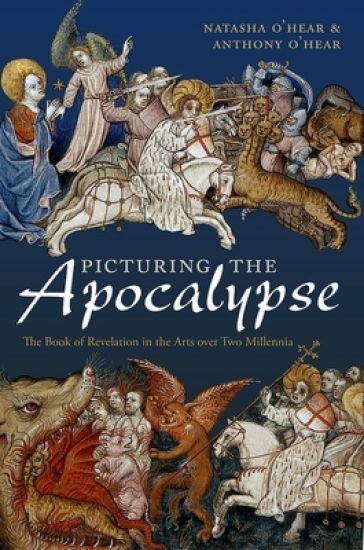
The book of Revelation has been a source of continual fascination for nearly two thousand years. Concepts such as The Lamb of God, the Four Horsemen, the Seventh Seal, the Beasts and Antichrist, the Whore of Babylon, Armageddon, the Millennium, the Last Judgement, the New Jerusalem, and the ubiquitous Angel of the Apocalypse have captured the popular imagination. One can hardly open a newspaper or click on a news web site without reading about impending financial or climate change Armageddon, while the concept of the Four Horsemen pervades popular music, gaming, and satire. Yet few people know much about either the basic meaning or original context of these concepts or the multiplicity of different ways in which they have been interpreted by visual artists in particular. The visual history of this most widely illustrated of all the biblical books deserves greater attention. This book fills these gaps in a striking and original way by means of ten concise thematic chapters which explain the origins of these concepts from the book of Revelation in an accessible way. These explanations are augmented and developed via a carefully selected sample of the ways in which the concepts have been treated by artists through the centuries. The 120 visual examples are drawn from a wide range of time periods and media including the ninth-century Trier Apocalypse, thirteenth-century Anglo-Norman Apocalypse Manuscripts such as the Lambeth and Trinity Apocalypses, the fourteenth-century Angers Apocalypse Tapestry, fifteenth-century Apocalypse altarpieces by Van Eyck and Memling, Dürer and Cranach's sixteenth-century Apocalypse woodcuts, and more recently a range of works by William Blake, J. M. W. Turner, Max Beckmann, as well as film posters and stills, cartoons, and children's book illustrations. The final chapter demonstrates the continuing resonance of all the themes in contemporary religious, political, and popular thinking, while throughout the book a contrast will be drawn between those readers of Revelation who have seen it in terms of earthly revolutions in the here and now, and those who have adopted a more spiritual, otherworldly approach.
In this book Anthony O’Hear examines the reasons that are given for religious faith. His approach is firmly within the classical tradition of natural theology, but an underlying theme is the differences between the personal Creator of the Bible or the Koran and a God conceived of as the indeterminate ground of everything determinate. Drawing on several religious traditions and on the resources of contemporary philosophy, specific chapters analyse the nature of religious faith and of religious experience. They examine connections between religion and morality, and religion and human knowledge – the cosmological, teleological and ontological arguments, process thought, and the problem that evil presents for religion. The final chapter returns to the inherently dogmatic nature of religious faith and concludes that rational people should look beyond religion for the fulfilment of their spiritual needs.
The book of Revelation has been a source of continual fascination for nearly two thousand years. Concepts such as the Lamb of God, the Four Horsemen, the Seventh Seal, the Beasts and Antichrist, the Whore of Babylon, Armageddon, the Millennium, the Last Judgement, the New Jerusalem, and the ubiquitous angels of the Apocalypse have captured the popular imagination. One can hardly open a newspaper or click on a news site without reading about impending financial or climate-change Armageddon, while the concept of the Four Horsemen pervades popular music, gaming, and satire. Yet few people know much about either the basic meaning or original context of these concepts or the multiplicity of different ways in which they have been interpreted by visual artists in particular. The visual history of this most widely illustrated of all the biblical books deserves greater attention. This book fills these gaps in a striking and original way by means of ten concise thematic chapters which explain the origins of these concepts from the book of Revelation in an accessible way. These explanations are augmented and developed via a carefully selected sample of the ways in which the concepts have been treated by artists through the centuries. The 120 visual examples are drawn from a wide range of time periods and media including the ninth-century Trier Apocalypse, thirteenth-century Anglo-Norman Apocalypse Manuscripts such as the Lambeth and Trinity Apocalypses, the fourteenth-century Angers Apocalypse Tapestry, fifteenth-century Apocalypse altarpieces by Van Eyck and Memling, Dürer and Cranach's sixteenth-century Apocalypse woodcuts, and more recently a range of works by William Blake, J.M.W. Turner, Max Beckmann, as well as film posters and film stills, cartoons, and children's book illustrations. The final chapter demonstrates the continuing resonance of all the themes in contemporary religious, political, and popular thinking, while throughout the book a contrast will be drawn between those readers of Revelation who have seen it in terms of earthly revolutions in the here and now, and those who have adopted a more spiritual, other-worldly approach.
First published in 1988, the aim of this book can be stated in Nietzsche’s words: ‘To look at science from the perspective of the artist, but at art from that of life’. The title contests the notions that science alone can provide us with the most objective truth about the world, and that artistic endeavour can produce nothing more valuable than entertainment. O’Hear argues that art and the study of art are not indispensable aspects of human life, and that this is equally as important as the investigation of the natural world.

Intended primarily for education students this book provides an introduction to the philosophy of education that tackles educational problems and at the same time relates them to the mainstream of philosophical analysis. Among the educational topics the book discusses are the aims of education, the two cultures debate, moral education, equality as an ideal and academic elitism. It examines the limitations of a purely technological education, and suggests the shape of a balanced curriculum. It critically analyses important educational theses in the work of Rousseau, Dewey, R S Peters, P H Hirst, F R Leavis, Ronald Dworkin and G H Bantock, among many others, and considers the philosophical copics of relativism, the nature of knowledge, the basis of moral choice, the value of democracy and the status of religious claims.
First published in 1988, the aim of this book can be stated in Nietzsche’s words: ‘To look at science from the perspective of the artist, but at art from that of life’. The title contests the notions that science alone can provide us with the most objective truth about the world, and that artistic endeavour can produce nothing more valuable than entertainment. O’Hear argues that art and the study of art are not indispensable aspects of human life, and that this is equally as important as the investigation of the natural world.
In this book Anthony O’Hear examines the reasons that are given for religious faith. His approach is firmly within the classical tradition of natural theology, but an underlying theme is the differences between the personal Creator of the Bible or the Koran and a God conceived of as the indeterminate ground of everything determinate. Drawing on several religious traditions and on the resources of contemporary philosophy, specific chapters analyse the nature of religious faith and of religious experience. They examine connections between religion and morality, and religion and human knowledge – the cosmological, teleological and ontological arguments, process thought, and the problem that evil presents for religion. The final chapter returns to the inherently dogmatic nature of religious faith and concludes that rational people should look beyond religion for the fulfilment of their spiritual needs.
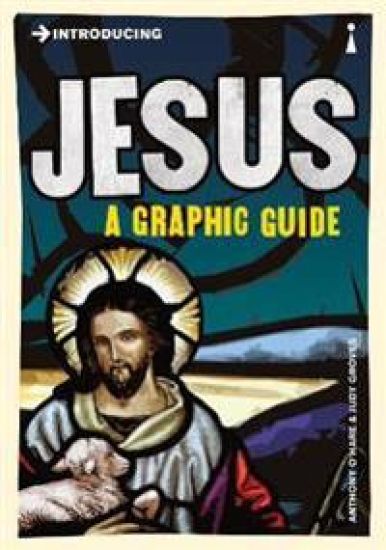
Christianity depends on the belief that the Jesus of history is identical with the Christ of faith, and that God in the person of Jesus intervened finally and decisively in human history. But is the historical Jesus the same as the Christian Saviour? And how did an obscure provincial religion based on the paradox of a crucified saviour conquer the Roman Empire and outlive it?INTRODUCING JESUS - A GRAPHIC GUIDE confronts the enigmas. It sets Jesus in the perspective of his time - within Judaism and its expectations of a Messiah, in the atmosphere of Greek philosophy and the Roman deification of emperors. It traces the development of Christianity from St. Paul and the Romanization of the Church, to modern liberation theology. This book is a lucid and exciting investigation that will appeal to all readers, whether Christian or not.
Intended primarily for education students this book provides an introduction to the philosophy of education that tackles educational problems and at the same time relates them to the mainstream of philosophical analysis. Among the educational topics the book discusses are the aims of education, the two cultures debate, moral education, equality as an ideal and academic elitism. It examines the limitations of a purely technological education, and suggests the shape of a balanced curriculum. It critically analyses important educational theses in the work of Rousseau, Dewey, R S Peters, P H Hirst, F R Leavis, Ronald Dworkin and G H Bantock, among many others, and considers the philosophical copics of relativism, the nature of knowledge, the basis of moral choice, the value of democracy and the status of religious claims.
The fourteen essays in this book develop a conception of human culture, which is humane and traditionalist. Focusing particularly on notions of beauty and the aesthetic, it sees within our culture intimations of the transcendent, and in two essays the nature of religion is directly addressed. A number of essays also explore the relation between politics and tradition.
The fourteen essays in this book develop a conception of human culture, which is humane and traditionalist. Focusing particularly on notions of beauty and the aesthetic, it sees within our culture intimations of the transcendent, and in two essays the nature of religion is directly addressed. A number of essays also explore the relation between politics and tradition.