Kirjojen hintavertailu. Mukana 12 390 323 kirjaa ja 12 kauppaa.

Kirjailija

Anthony Reid

Kirjat ja teokset yhdessä paikassa: 14 kirjaa, julkaisuja vuosilta 1986-2023, suosituimpien joukossa An Indonesian Frontier. Vertaile teosten hintoja ja tarkista saatavuus suomalaisista kirjakaupoista.

14 kirjaa

Kirjojen julkaisuhaarukka 1986-2023.

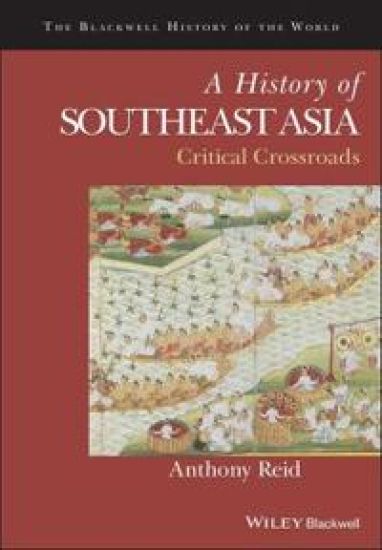
A History of Southeast Asia

A History of Southeast Asia

Anthony Reid

Blackwell Publishers
2015
sidottu
2016 PROSE Award Honorable Mention for Textbook in the Humanities A History of Southeast Asia: Critical Crossroads presents a comprehensive history of Southeast Asia from our earliest knowledge of its civilizations and religious patterns up to the present day. Incorporates environmental, social, economic, and gender issues to tell a multi-dimensional story of Southeast Asian history from earliest times to the presentArgues that while the region remains a highly diverse mix of religions, ethnicities, and political systems, it demands more attention for how it manages such diversity while being receptive to new ideas and technologiesDemonstrates how Southeast Asia can offer alternatives to state-centric models of history more broadly Part of The Blackwell History of the World Series The goal of this ambitious series is to provide an accessible source of knowledge about the entire human past, for every curious person in every part of the world. It will comprise some two dozen volumes, of which some provide synoptic views of the history of particular regions while others consider the world as a whole during a particular period of time. The volumes are narrative in form, giving balanced attention to social and cultural history (in the broadest sense) as well as to institutional development and political change. Each provides a systematic account of a very large subject, but they are also both imaginative and interpretative. The Series is intended to be accessible to the widest possible readership, and the accessibility of its volumes is matched by the style of presentation and production.
A History of Southeast Asia

A History of Southeast Asia

Anthony Reid

John Wiley Sons Inc
2015
nidottu
2016 PROSE Award Honorable Mention for Textbook in the Humanities A History of Southeast Asia: Critical Crossroads presents a comprehensive history of Southeast Asia from our earliest knowledge of its civilizations and religious patterns up to the present day. Incorporates environmental, social, economic, and gender issues to tell a multi-dimensional story of Southeast Asian history from earliest times to the presentArgues that while the region remains a highly diverse mix of religions, ethnicities, and political systems, it demands more attention for how it manages such diversity while being receptive to new ideas and technologiesDemonstrates how Southeast Asia can offer alternatives to state-centric models of history more broadly Part of The Blackwell History of the World Series The goal of this ambitious series is to provide an accessible source of knowledge about the entire human past, for every curious person in every part of the world. It will comprise some two dozen volumes, of which some provide synoptic views of the history of particular regions while others consider the world as a whole during a particular period of time. The volumes are narrative in form, giving balanced attention to social and cultural history (in the broadest sense) as well as to institutional development and political change. Each provides a systematic account of a very large subject, but they are also both imaginative and interpretative. The Series is intended to be accessible to the widest possible readership, and the accessibility of its volumes is matched by the style of presentation and production.
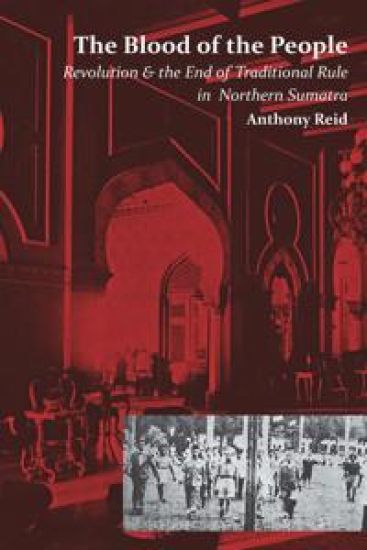
The Blood of the People

The Blood of the People

Anthony Reid

NUS Press
2014
nidottu
In the Malay peninsula and northern Sumatra, colonial rule embraced an extravagant array of sultans, rajas, datuks and ulèëbalangs, traditional rulers whose support was important to the smooth running of the administration. In Malaya, the traditional Malay elite served as a barrier to revolutionary change, and the ruling class survived the transition to independence, but in Sumatra the ruling class was destroyed in a wave of violence and killing in 1945-46. Anthony Reid’s The Blood of the People explores the circumstances of Sumatra’s sharp break with the past during this dramatic “social revolution”. Events in northern Sumatra were a prelude to Indonesia’s national revolution, normally viewed from the perspective of Java, and anticipated some of the broader issues of that conflict. For some residents of the archipelago, the revolution was a popular, peasant supported movement that liberated them from foreign rule. Others, though, felt victimised by a conflict created by outsiders. Java, with a relatively homogeneous population, passed through the revolution without fundamental social change. In Sumatra, though, a new identity overrode the ethnic categories, and the ethnic competition, of the past.
Reason For Rhyme

Reason For Rhyme

Anthony Reid

Lulu.com
2012
pokkari
This is an entertaining and thought provoking read, a collection of over 100 poems from a new author. Anthony undoubtedly had his own unique style which consistently brings a nice combination of alliteration and rhyming couplets to the forefront without sacrificing depth and meaning - in fact many of his pieces carry very profound and positive messages. There are also quirky, humorous poems and other light-hearted offerings scattered throughout helping to set a nice pace that keeps you turning the pages. Overall the book is more an account of one mans insights into the world he seems to find himself at odds with, though, perhaps ironically, they invariably end up conveying sentiments that I think many of us share. With subjects such as love, loneliness, politics, family, work and faith - the book gives good variety whilst managing to maintain a continuity in style & technique. If you're seeking a breath of poetic 'fresh air' in the shape of something current & ably crafted then 'Reason For Rhyme' is a must.
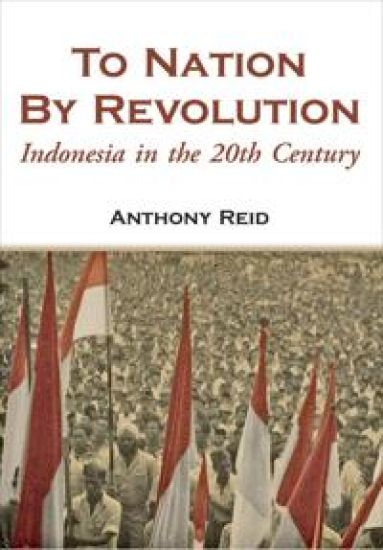
To Nation by Revolution

To Nation by Revolution

Anthony Reid

NUS Press
2011
nidottu
The twelve chapters of this book all derive from the reflections of a prominent historian on the nature of modern Indonesian history, over a 40-year time span. A central thread running through the book is the importance of the fact that Indonesia entered the modern community of nation-states through political revolution. This revolution has often been denied or downplayed as a failure because it did not have a communist outcome like those of China and Vietnam. A much better analogy is the French revolution - a profound breaking with and discrediting of the ancien regime but without the guiding hand of a disciplined party intent on power. Like other revolutions, it demanded a huge price in violence, human suffering, and the loss of cultural traditions; like them too, it offered a glittering prize. The prize turned out not to be the freedom and equality of which the revolutionaries had dreamt, but a previously inconceivable unity enforced by a state of a completely new kind. The Faustian bargain in by which Indonesia was created in the 1940s is at the heart of this book. All the chapters save one have been revissed and updated for this publication, with the injection of some additional optimism called for by post-1998 democracy. The exception is the earliest paper, from 1967, on the paroxysm of violence that punctuated Indonesia's independent history from 1965-1966. This piece has been left unchanged as a document in the early quest for understanding of those horrific events.
Imperial Alchemy

Imperial Alchemy

Anthony Reid

Cambridge University Press
2009
pokkari
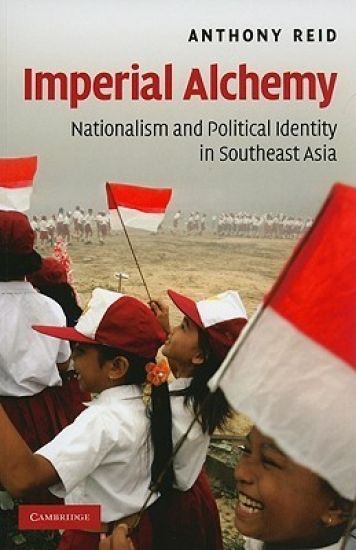
The mid-twentieth century marked one of the greatest watersheds of Asian history, when a range of imperial constructs were declared to be nation-states, either by revolution or decolonisation. Nationalism was the great alchemist, turning the base metal of empire into the gold of nations. To achieve such a transformation from the immense diversity of these Asian empires required a different set of forces from those that Europeans had needed in their transitions from multi-ethnic empires to culturally homogeneous nations. In this book Anthony Reid explores the mysterious alchemy by which new political identities have been formed. Taking Southeast Asia as his example, Reid tests contemporary theory about the relation between modernity, nationalism, and ethnic identity. Grappling with concepts emanating from a very different European experience of nationalism, Reid develops his own typology to better fit the formation of political identities such as the Indonesian, Malay, Chinese, Acehnese, Batak and Kadazan.
Imperial Alchemy

Imperial Alchemy

Anthony Reid

Cambridge University Press
2009
sidottu
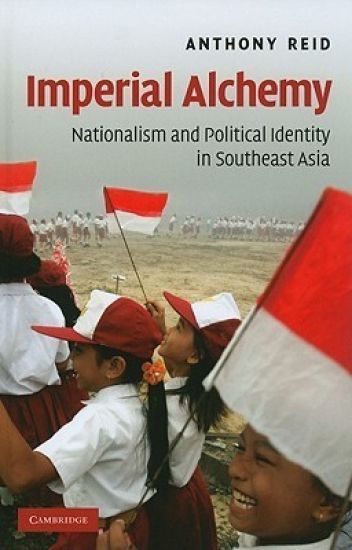
The mid-twentieth century marked one of the greatest watersheds of Asian history, when a range of imperial constructs were declared to be nation-states, either by revolution or decolonisation. Nationalism was the great alchemist, turning the base metal of empire into the gold of nations. To achieve such a transformation from the immense diversity of these Asian empires required a different set of forces from those that Europeans had needed in their transitions from multi-ethnic empires to culturally homogeneous nations. In this book Anthony Reid explores the mysterious alchemy by which new political identities have been formed. Taking Southeast Asia as his example, Reid tests contemporary theory about the relation between modernity, nationalism, and ethnic identity. Grappling with concepts emanating from a very different European experience of nationalism, Reid develops his own typology to better fit the formation of political identities such as the Indonesian, Malay, Chinese, Acehnese, Batak and Kadazan.
An Indonesian Frontier

An Indonesian Frontier

Anthony Reid

NUS Press
2004
nidottu
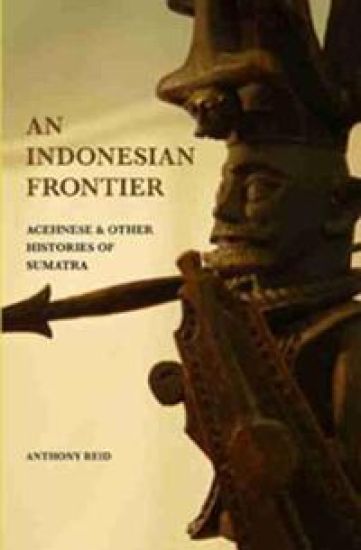
Sumatra is a vast and understudied island with a population of 43 million people divided into a variety of ethnic groups. Few serious historical works deal with its history, and even fewer attempt to describe that history as a coherent whole. This compilation of articles by Anthony Reid takes a step in that direction.
An Indonesian Frontier

An Indonesian Frontier

Anthony Reid

K.I.T.L.V.
2004
nidottu
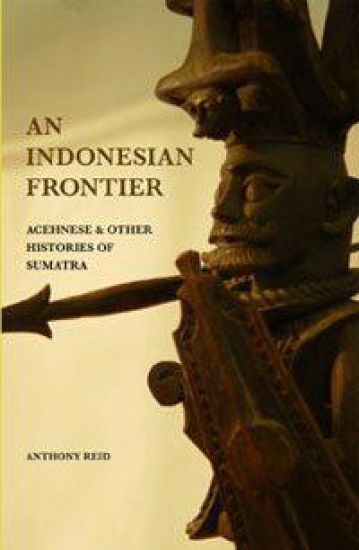
Sumatra is a vast and understudied island with a population of 43 million people divided into a variety of ethnic groups. Apart from William Marsden's great study of 1783, few serious historical works deal with Sumatra's history, and even fewer attempt to describe that history as a coherent whole. Sumatra's rich resources of land and minerals, and its enterprising people, have made it the prosperous frontier of the Archipelago. But the island's people, most of whom were stateless highlanders until the 20th century, were politically united only by the rule of Dutch Batavia and Indonesian Jakarta. Sumatrans have a tradition of defying central authority, and the Acehnese are once again, as in Dutch times, kept in the nation only by force. This book is the fruit of 40 years' study of Sumatran history, from the 16th century to the present. While seeking patterns of coherence in this vast island, it focuses on Aceh, which has both the most illustrious past and the most troubled present of any Sumatran region.
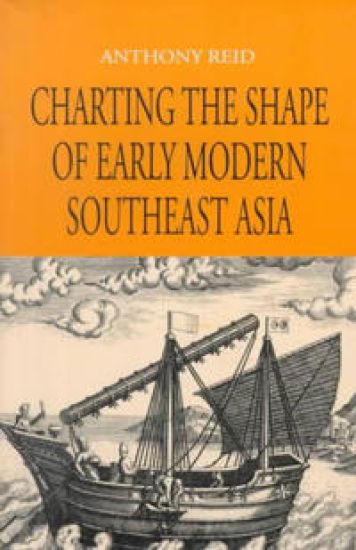
Charting the Shape of Early Modern Southeast Asia
In this volume Anthony Reid positions Southeast Asia on the stage of world history. He argues that the region not only had a historical character of its own, but that it played a crucial role in shaping the modern world.Southeast Asia's interaction with the forces uniting and transforming the world is explored through chapters focusing on Islamization; Chinese, Siamese, Cham, and Javanese trade; Makasar's modernizing moment; and slavery. The last three chapters examine from different perspectives how this interaction of relative equality shifted to one of an impoverished "third world" region exposed to European colonial power. at UCLA.
Southeast Asia in the Age of Commerce, 1450-1680

Southeast Asia in the Age of Commerce, 1450-1680

Anthony Reid

Yale University Press
1995
pokkari
Between the fifteenth and the mid-seventeenth centuries, when the Renaissance and early capitalism were transforming Europe, changes no less dramatic were occurring in Southeast Asia. This diverse tropical region was integrated into a global trade system, while trade-based cities came to dominate its affairs. Its states became more centralized and absolutist, and its people adopted scriptural faiths of personal morality. The pace of these changes finds parallels only in our own era. Anthony Reid has analyzed and vividly portrayed this Southeast Asian Age of Commerce in two volumes. The first volume, published in 1988 to great acclaim, explored the physical, material, cultural, and social structures of the region. The concluding volume focuses on the profound changes that defined the Age of Commerce as a period. The spice trade that animated the global boom of the sixteenth and early seventeenth centuries made possible revolutionary changes in urbanization, commercialization, state structure, and belief. Islam, Christianity, and Theravada Buddhism made rapid gains in alliance with the new states. Reid discerns common ground between these developments and the forces transforming Europe and Japan but identifies particular limitations on the growth of private capital and the stability of states in Southeast Asia. A final chapter explores the crisis in the mid-seventeenth century that disengaged Southeast Asians from the world economy for the next three centuries.
Southeast Asia in the Age of Commerce, 1450-1680

Southeast Asia in the Age of Commerce, 1450-1680

Anthony Reid

Yale University Press
1990
pokkari
Between the fifteenth and the mid-seventeenth centuries, when the Renaissance and early capitalism were transforming Europe, changes no less dramatic were occurring in Southeast Asia. This diverse tropical region was integrated into a global trade system, while trade-based cities came to dominate its affairs. Its states became more centralized and absolutist, and its people adopted scriptural faiths of personal morality. The pace of these changes finds parallels only in our own era. Anthony Reid has analyzed and vividly portrayed this Southeast Asian Age of Commerce in two volumes. The first volume, published in 1988 to great acclaim, explored the physical, material, cultural, and social structures of the region. The concluding volume focuses on the profound changes that defined the Age of Commerce as a period. The spice trade that animated the global boom of the sixteenth and early seventeenth centuries made possible revolutionary changes in urbanization, commercialization, state structure, and belief. Islam, Christianity, and Theravada Buddhism made rapid gains in alliance with the new states. Reid discerns common ground between these developments and the forces transforming Europe and Japan but identifies particular limitations on the growth of private capital and the stability of states in Southeast Asia. A final chapter explores the crisis in the mid-seventeenth century that disengaged Southeast Asians from the world economy for the next three centuries.Anthony Reid is professor of Southeast Asian history, Research School of Pacific Studies, Australian National University.
The Japanese Experience in Indonesia

The Japanese Experience in Indonesia

Anthony Reid

Ohio University Press
1986
pokkari
Although the wartime Japanese military administration of Indonesia was critical to the making of modern Indonesia, it remains shrouded in mystery, in part because of the systematic destruction of records following the Japanese surrender. These excerpts from personal memoirs of individual Japanese soldiers and administrators provide unique glimpses of the occupation—from the Japanese landing on Java and the Dutch surrender, to the independence proclamation in Jakarta, to the violence in Surabaya following the Japanese surrender. Through the eyes of Japanese at all levels of responsibility, we see the internal Indonesian turmoil, the struggle toward an independence movement, and the efforts of some Japanese to promote independence, despite the policies of imperial headquarters. Not only does this collection illuminate modern Indonesian history, it provides students of Japanese history with a feeling for the variety of Japanese responses to the war effort. The Japanese Experience in Indonesia will therefore be of interest to Southeast and East Asian historians and political scientists, as well as to those with a more general interest in World War II.