Kirjojen hintavertailu. Mukana 12 595 353 kirjaa ja 12 kauppaa.

Kirjailija

Anthony Shay

Kirjat ja teokset yhdessä paikassa: 9 kirjaa, julkaisuja vuosilta 2002-2024, suosituimpien joukossa The Igor Moiseyev Dance Company. Vertaile teosten hintoja ja tarkista saatavuus suomalaisista kirjakaupoista.

9 kirjaa

Kirjojen julkaisuhaarukka 2002-2024.

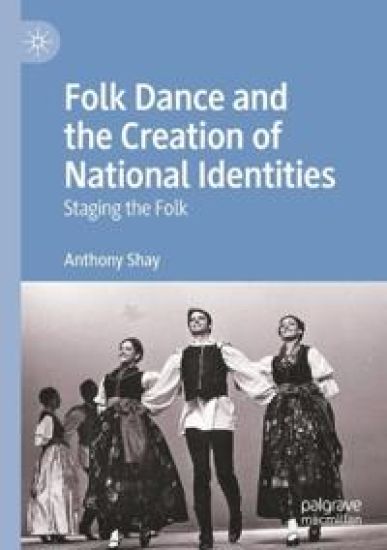
Folk Dance and the Creation of National Identities

Folk Dance and the Creation of National Identities

Anthony Shay

Springer International Publishing AG
2024
nidottu
This book is about the folk: the folk in folk dance, the folk in folklore, the folk in folk wisdom. When we see folk dance on the stage or in a tourist setting, which is the way in which many of us experience folk dance, the question arises are these the “real folk” performing their authentic dances? Or are they urban, well trained, carefully-rehearsed professional dancers who make their livelihood as representatives of a specific nation-state acting as the folk? Or something in between? This study delves more deeply into the folk, their origins, their identities in order to know the source of inspiration for ethno identity dances - dances prepared for the stage and the ballroom and for public performances from ballet, state folk dance ensembles and their amateur emulators, immigrant folk dance group performances, and tourist presentations. These dances, unlike modern dance, ballet, or most vernacular dances, always have strong ethnic references. It will also look at a gallery of choreographers and artistic directors across a wide spectrum of dance genres.
Folk Dance and the Creation of National Identities

Folk Dance and the Creation of National Identities

Anthony Shay

Springer International Publishing AG
2023
sidottu
This book is about the folk: the folk in folk dance, the folk in folklore, the folk in folk wisdom. When we see folk dance on the stage or in a tourist setting, which is the way in which many of us experience folk dance, the question arises are these the “real folk” performing their authentic dances? Or are they urban, well trained, carefully-rehearsed professional dancers who make their livelihood as representatives of a specific nation-state acting as the folk? Or something in between? This study delves more deeply into the folk, their origins, their identities in order to know the source of inspiration for ethno identity dances - dances prepared for the stage and the ballroom and for public performances from ballet, state folk dance ensembles and their amateur emulators, immigrant folk dance group performances, and tourist presentations. These dances, unlike modern dance, ballet, or most vernacular dances, always have strong ethnic references. It will also look at a gallery of choreographers and artistic directors across a wide spectrum of dance genres.
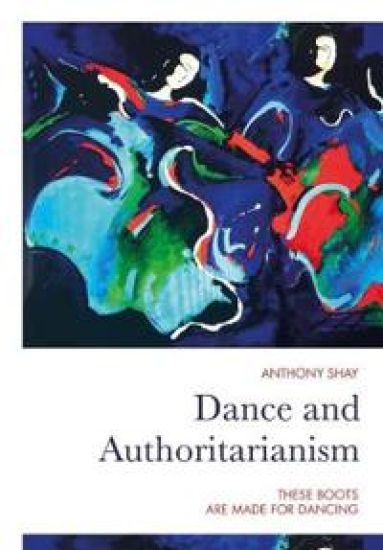
Dance and Authoritarianism

Dance and Authoritarianism

Anthony Shay

Intellect Books
2021
nidottu
Everyone who viewed the opening ceremonies of the 2008 Beijing Olympic Games can understand the power of dance and mass movement in the service of politics. While examples of such public performances and huge festivals are familiar in Nazi Germany, the former Soviet Union and today's North Korea, this new book addresses the lesser known examples of Spain under Franco, the Dominican Republic, Iran, Croatia and Uzbekistan, all of which have been subjected to various political regimes. Dance and choreographed mass movement is the newest field of serious research in dance studies, particularly in the fields of politics and international relations and gender and sexuality. The author uses dance as a lens through which to study political, ethnic, and gendered phenomena so that the reader grasps that dance constitutes an important non-verbal lens for the study of human behaviour. This is the first study on dance and political science to focus specifically on authoritarian regimes. It is a significant and original contribution to scholarship in the field, with the key studies drawn from a variety of different geographical and historical backgrounds. In Spain under Franco, the Women's Section of the fascist Falange created a folk dance program that toured widely and through the performance of Spanish regional folk dances performed by virginal young Spanish women, embodying Catholic purity, permitted the regime to re-enter the world of polite diplomacy. The Dominican Republic dictator, Rafael Trujillo, himself a gifted dancer, raised the popular folk and vernacular dance, the merengue, to the level of the "national" dance, which became a symbol of his regime and Dominican identity, which merengue it still maintains. For over a thousand years, Croatia, has endured a series of authoritarian regimes – Hapsburg, Napoleon, the Yugoslav royal dictatorship, fascist, Josip Broz Tito's communist regime, Franjo Tudjaman – that ruled that small nation. For over 70 years, Lado, the National Folk Dance Ensemble of Croatia, has served as "the light of Croatian identity." Through its public performances of folk dances and music, Lado has become the face of a series of different regimes. In Iran, dance became banned under the Islamic Republic after serving the Pahlavi regime as a form of representation of its peasant population and its historic Persian identity. Uzbekistan currently has expanded the role of the invented tradition of Uzbek "classical" dance, created during the soviet period, as a representation of Uzbek identity, in national festivals. Thus, through these examples, the reader will see how dance and mass movement have become important as political means for a variety of authoritarian regimes to represent themselves. Primary readership will be dance scholars; particularly the growing number interested in ethno-identity dances of the second half of the twentieth-century Will be of interest to academic libraries and departments, with valuable information and interest also for scholars of ethnology, anthropology, cultural studies, history.
The Igor Moiseyev Dance Company

The Igor Moiseyev Dance Company

Anthony Shay

Intellect Books
2019
nidottu
In this book Anthony Shay examines the life and works of renowned choreographer Igor Moiseyev and his dance company. Formed in 1937, The Igor Moiseyev Dance Company have performed across the globe and are the first major Soviet dance group to perform in the United States. Through The Igor Moiseyev Dance Company, dance became a vital diplomatic tool, ballerinas replaced atom bombs and helped usher in a new era of cultural exchange, formalized by an agreement signed by the United States and the Soviet Union. Through this book Shay explores the multiple lenses of spectacle, Russian nationalism and the Cultural Cold War, to describe and analyse the history of Moiseyev’s company, and the shock that ‘innocent’ folk dance gave the American government. Blending academic study and personal anecdote, Shay provides a nuanced analysis of Moiseyev’s importance and his place in the world of dance. This is the first English language study of Igor Moiseyev and his dance company.
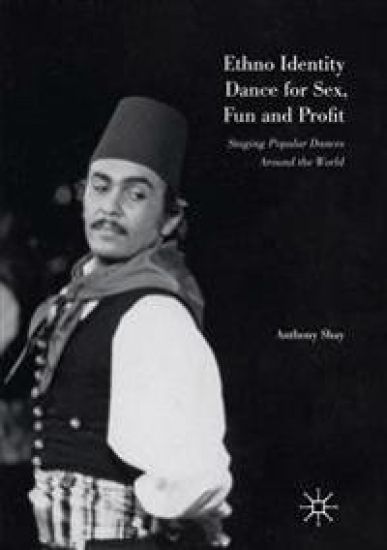
Ethno Identity Dance for Sex, Fun and Profit

Ethno Identity Dance for Sex, Fun and Profit

Anthony Shay

Palgrave Macmillan
2018
nidottu
People all over the world dance traditional and popular dances that have been staged for purposes of representing specific national and ethnic groups. Anthony Shay suggests these staged dance productions be called “ethno identity dances”, especially to replace the term “folk dance,” which Shay suggests should refer to the traditional dances found in village settings as an organic part of village and tribal life. Shay investigates the many motives that impel people to dance in these staged productions: dancing for sex or dancing sexy dances, dancing for fun and recreation, dancing for profit - such as dancing for tourists - dancing for the nation or to demonstrate ethnic pride. In this study Shay also examines belly dance, Zorba Dancing in Greek nightclubs and restaurants, Tango, Hula, Irish step dancing, and Ukrainian dancing.
Ethno Identity Dance for Sex, Fun and Profit

Ethno Identity Dance for Sex, Fun and Profit

Anthony Shay

Palgrave Macmillan
2016
sidottu
People all over the world dance traditional and popular dances that have been staged for purposes of representing specific national and ethnic groups. Anthony Shay suggests these staged dance productions be called “ethno identity dances”, especially to replace the term “folk dance,” which Shay suggests should refer to the traditional dances found in village settings as an organic part of village and tribal life. Shay investigates the many motives that impel people to dance in these staged productions: dancing for sex or dancing sexy dances, dancing for fun and recreation, dancing for profit - such as dancing for tourists - dancing for the nation or to demonstrate ethnic pride. In this study Shay also examines belly dance, Zorba Dancing in Greek nightclubs and restaurants, Tango, Hula, Irish step dancing, and Ukrainian dancing.
Dancing Across Borders

Dancing Across Borders

Anthony Shay

McFarland Co Inc
2008
pokkari
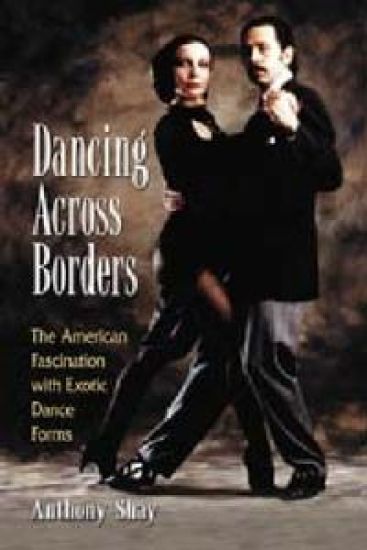
This study describes and analyzes the phenomenal popularity of exotic dance forms in America. Throughout the twentieth century and especially since 1950, millions have begun learning and performing various Balkan dances, the tango, and other Latin American dances, along with the classical dances of India, Japan, and Indonesia. Most studies in dance ethnography and anthropology have focused specifically on "dancing in the field," or the dancing that native dancers do. This study, by contrast, examines the ways in which ethnic dancing has allowed many Americans to create more exciting, "exotic" and romantic identities. The author describes the uniquely American enthusiasm for exotic dances, and cites specific deficiencies in the U.S. cultural identity that have led many people to seek new feelings and experiences through exotic dance genres.
Choreographing Identities

Choreographing Identities

Anthony Shay

McFarland Co Inc
2006
pokkari
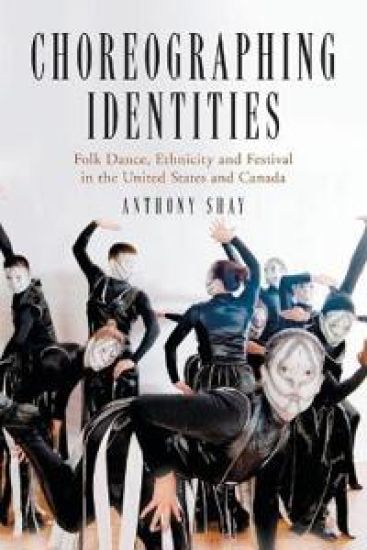
"This volume looks at how cultures use dance as a visual representation of their identity, and how "traditional" dances change. It discusses several "parallel layers" of dance: dances performed at intra-cultural social occasions, dances used for representation or presentation, and folk dance performances. An extensive bibliography encompasses concert programs and reviews as well as broader scholarly sources"--Provided by publisher.
Choreographic Politics

Choreographic Politics

Anthony Shay

Wesleyan University Press
2002
nidottu
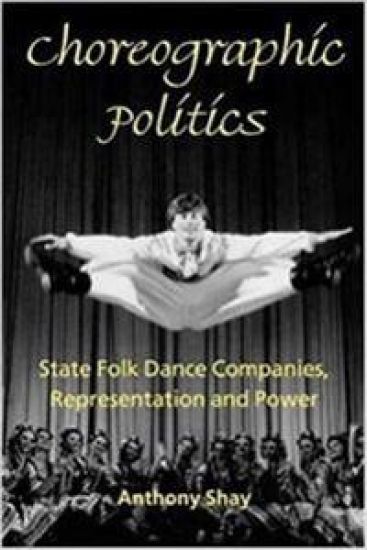
Over the past fifty years national dance companies from Turkey, Egypt, Mexico, Greece, the former USSR and Croatia have dominated concert stages throughout the world. Anthony Shay makes coherent sense of these national programs, which have previously received scant academic attention. Specifically, he looks at the ways through which these companies spread political, ethnic and cultural messages by accruing symbolic and cultural capital for their respective nation-states. In his analysis, Shay draws on cultural studies, political science and anthropology to create a work that cuts across disciplines. As the first book to address the topic of state-sponsored folk dance ensembles and their structures, Choreographic Politics examines the repertoires, performances and choreographic strategies of these companies within the political, social, gendered and ethnic contexts in which each company was created. In addition, Shay's study includes a look at music, costumes, and various artistic directors and choreographers.