Kirjojen hintavertailu. Mukana 12 595 353 kirjaa ja 12 kauppaa.

Kirjailija

Anthony Slide

Kirjat ja teokset yhdessä paikassa: 48 kirjaa, julkaisuja vuosilta 1978-2026, suosituimpien joukossa Inside the Hollywood Fan Magazine. Vertaile teosten hintoja ja tarkista saatavuus suomalaisista kirjakaupoista.

48 kirjaa

Kirjojen julkaisuhaarukka 1978-2026.

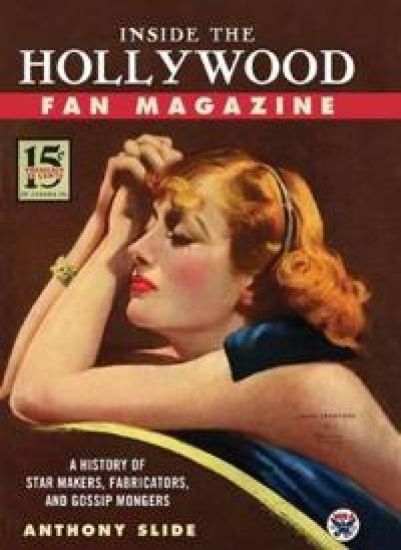
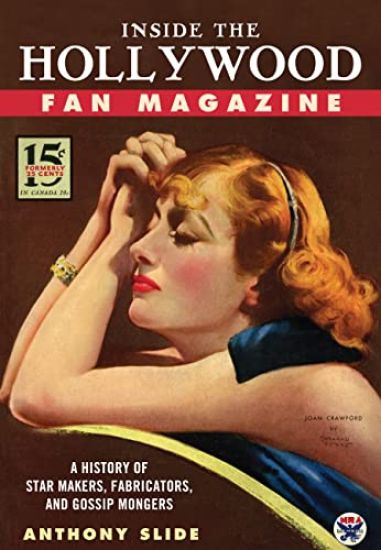
Inside the Hollywood Fan Magazine

Inside the Hollywood Fan Magazine

Anthony Slide

UNIVERSITY PRESS OF MISSISSIPPI
2026
pokkari
The fan magazine has often been viewed simply as a publicity tool, a fluffy exercise in self-promotion by the film industry. But as an arbiter of good and bad taste, as a source of knowledge, and as a gateway to the fabled land of Hollywood and its stars, the American fan magazine represents a fascinating and indispensable chapter in journalism and popular culture. Anthony Slide's Inside the Hollywood Fan Magazine provides the definitive history of this artifact. It charts the development of the fan magazine from the golden years when Motion Picture Story Magazine and Photoplay first appeared in 1911 to its decline into provocative headlines and titillation in the 1960s and afterward. Slide discusses how the fan magazines dealt with gossip and innuendo, and how they handled nationwide issues such as Hollywood scandals of the 1920s, World War II, the blacklist, and the death of President Kennedy. Fan magazines thrived in the twentieth century, and they presented the history of an industry in a unique, sometimes accurate, and always entertaining style. This major cultural history includes a new interview with 1970s media personality Rona Barrett, as well as original commentary from a dozen editors and writers. Also included is a chapter on contributions to the fan magazines from well-known writers such as Theodore Dreiser and e. e. cummings. The book is enhanced by an appendix documenting some 268 American fan magazines and includes detailed publication histories.
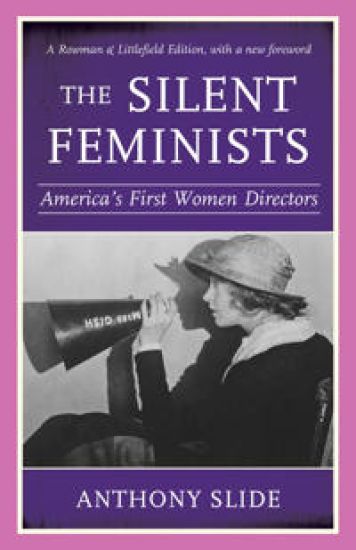
The Silent Feminists

The Silent Feminists

Anthony Slide

ROWMAN LITTLEFIELD
2022
nidottu
A timely and captivating account of America’s first women directors who, with little recognition, helped pave the way for females in the film industry today. Originally published in 1977 as Early Women Directors, Anthony Slide’s The Silent Feminists was the first volume to recognize and honor the work of female directors in the American silent film industry. This invaluable resource documents these pioneering women’s lives and careers and provides an introduction to the notable yet often overlooked history of female film directors. It introduces readers to such trailblazers of the motion picture as Alice Guy Blaché, Lois Weber, Mrs. Wallace Reid, Ida May Park, Margery Wilson, and many others. More than forty years after its original publication, The Silent Feminists remains an important and influential study, providing original documentation on a subject that has steadily and deservedly grown in significance.
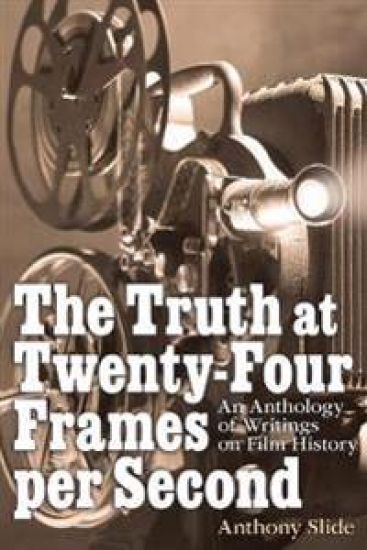
The Truth at Twenty-Four Frames per Second

The Truth at Twenty-Four Frames per Second

Anthony Slide

Bearmanor Media
2021
pokkari
Collected together here are Anthony Slide's writings on film and television history from the 1960s through the present. Subjects and individuals discussed are varied, including Lillian Gish, Val Guest, Vivienne Segal, Wendy Richard, Elisabeth Welch, Lawrence Welk, and Betty White. All illustrate the author's scholarship, dedication to the serious study of the history of popular culture, and also his unique sense of humor. The book is a reminder of a career that has included time spent as resident film historian of the Academy of Motion Picture Arts and Sciences and associate archivist of the American Film Institute. It complements Anthony Slide's work as the author or editor of more than 200 books on the history of Popular Entertainment.
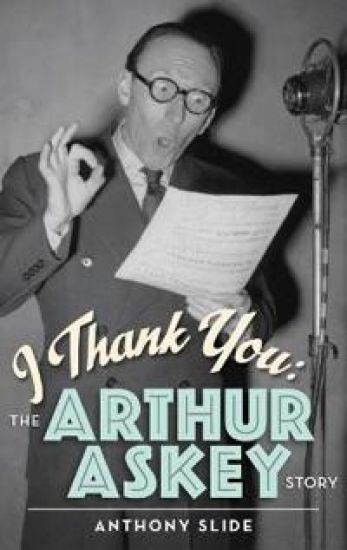
I Thank You

I Thank You

Anthony Slide

BearManor Media
2020
sidottu
A diminutive, frenetic comedian, known for catchphrases that were once part of the English language, Arthur Askey was one of Britain's most popular entertainers throughout much of the 20th Century. Immediately after World War One, Askey made his professional debut in concert parties at British seaside resorts. He began to appear on the stage and on radio, and in 1938, with Richard Murdoch, he introduced Band Wagon to BBC radio listeners. It soon became the most popular program on the air, and launched Askey's career as a film star (one of Britain's biggest), a major entertainer in pantomime and on the legitimate stage, and ensured an easy transition some years later into television.Arthur Askey's life and career is presented here in informative and readable fashion. I Thank You: The Arthur Askey Story is the first book-length biography of a great British comedian, and will, hopefully, introduce him and his humor to new audiences around the world.
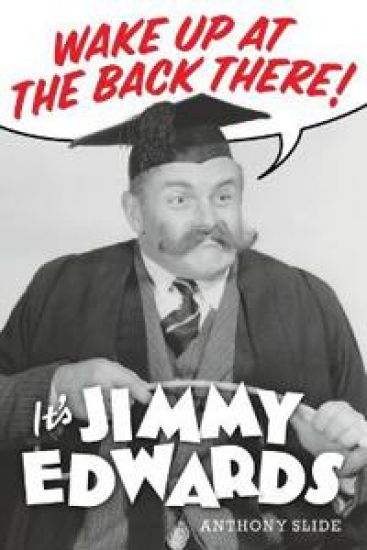
Wake Up At The Back There

Wake Up At The Back There

Anthony Slide

BearManor Media
2018
pokkari
'' Jimmy Edwards was a Great British Entertainer '' Ken Dodd'' Not merely a peculiarly British comedian but an authentic English character '' The TimesComedians in 20th Century Britain might well be divided into two categories: those who gained international fame, particularly in the United States, and those whose comedic style was so resolutely British, so insular that recognition beyond the shores of their native land was as incomprehensible as some, or perhaps much, of their humor. In the former category are those whose fame in the United States far outreached anything that might have been accomplished in the United Kingdom -- with the obvious examples being Charlie Chaplin and Stan Laurel, as well, and to a lesser extent, the likes of Terry-Thomas and Norman Wisdom. The resolutely British brigade includes brilliant stand-up comedian Ken Dodd, screwed-up magician Tommy Cooper, the stars of the "Carry On" films, Bud Flanagan, Chesney Allen and the other members of the "Crazy Gang," and those who made an easy transition from British music hall, in its dying days, to radio and/or television, including Tony Hancock, Eric Morecambe and Ernie Wise, Harry Worth, Hylda Baker, Bruce Forsyth, Ted Ray, and, of course, the "star" of this volume, Jimmy Edwards.
Magnificent Obsession

Magnificent Obsession

Anthony Slide

University Press of Mississippi
2018
sidottu
In Magnificent Obsession: The Outrageous History of Film Buffs, Collectors, Scholars, and Fanatics, author Anthony Slide looks at the way film has dominated the minds and lives of film buffs, film collectors, film academics, and just plain fans of past movies. Based on the author's more than fifty years in the field and his personal, up-front knowledge of the subject, chapters provide unique documentation on film buffs who once created a livelihood from their hobby, including long-forgotten Chaw Mank and the vast array of film clubs that he headed and New York radio and television sensation Joe Franklin. The history of fans and their fan clubs are discussed, as well as the first and only periodical, Films in Review, that catered both to film scholars and film buffs. The histories of several legendary film collectors such as David Bradley and Herb Graff are featured, as is Hollywood's Silent Movie Theatre, where film buffs found a home from the 1940s onwards, sharing it with drug dealers, male prostitutes, fantasists, and hit men.Magnificent Obsession is vast in its approach, discussing the entire history of the phenomenon of the film buff from the early 1910s through the present and documenting the manner in which film buffs have changed--thanks to the internet--from relatively gentle and kind individuals to the obsessive, sometimes overbearing, and often self-important film buffs of today.
She Could Be Chaplin!

She Could Be Chaplin!

Anthony Slide; George Stevens

University Press of Mississippi
2016
sidottu
Alice Howell (1886-1961) is slowly gaining recognition and regard as arguably the most important slapstick comedienne of the silent era. This new study, the first book-length appreciation, identifies her place in the comedy hierarchy alongside the best-known of silent comediennes, Mabel Normand. Like Normand, Howell learned her craft with Mack Sennett and Charlie Chaplin. Beginning her screen career in 1914, Howell quickly developed a distinctive style and eccentric attire and mannerisms, successfully hiding her good looks, and was soon identified as the ""Female Charlie Chaplin.""Howell became a star of comedy shorts in 1915 and continued her career through 1928 and the advent of sound in film. While she is today recognized as a pioneering female filmmaker, during her career she never expressed much interest in her work, seeing it only as a means to an end, with her income carefully invested in real estate. It has taken many years for her to gain her rightful place in film history, not only as a comedienne, but also as matriarch of a prominent American family that includes son-in-law and director George Stevens and grandson George Stevens Jr., founder of the American Film Institute and the Kennedy Center Honors, who provides a foreword.
A Special Relationship

A Special Relationship

Anthony Slide

University Press of Mississippi
2015
sidottu
A Special Relationship provides not only a historical overview of the British in Hollywood, but also a detailed study of the contributions made by American individuals and companies to British cinema from the beginning of the twentieth century onwards. The story begins with Ohio-born Charles Urban who came to London in 1898 and deserves credit for major involvement in the creation of a British film industry. While Ireland was still a part of Britain, the New York-based Kalem Company made films there from 1910 to 1913. British producers realized the importance of American stars, and many actors, beginning with Florence Turner (who was arguably also the first American star), made numerous British films. In the 1920s, such Hollywood stars as Mae Marsh, Betty Blythe, and Dorothy Gish remained active in Britain. In the 1930s, as their careers came to a halt, more than one hundred former American stars made the trip to England, partly as a vacation and partly in the hope of reenergizing their careers.Chapters discuss American cinematographers at work in Britain in the 1920s and 1930s and the introduction of Technicolor to British films. Diversity is represented by African American performers (most notably Paul Robeson), the Chinese American star Anna May Wong, along with female filmmakers from Hollywood. With Britain's declaration of war on Germany, there were Americans who stayed, such as Bebe Daniels and Ben Lyon, contributing to the war effort. America became actively involved in British cinema after World War II, with many Hollywood studios producing films there. As the years progressed, the British film industry became an international film industry. The book concludes with the Harry Potter and James Bond series, indicative of a new international cinema, with financing and behind-the-camera talent coming from the United States, but with British locales and British stars.
Hollywood Unknowns

Hollywood Unknowns

Anthony Slide

University Press of Mississippi
2012
sidottu
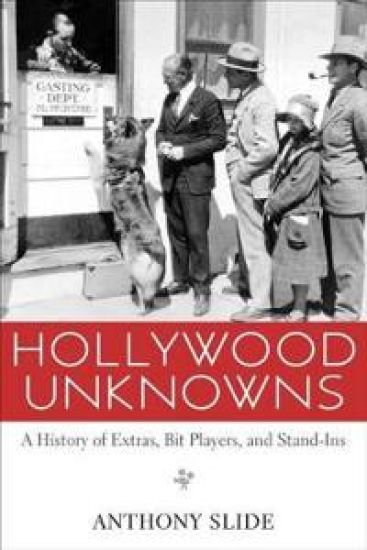
Extras, bit players, and stand-ins have been a part of the film industry almost from its conception. On a personal and a professional level, their stories are told in Hollywood Unknowns, the first history devoted to extras from the silent era through the present. Hollywood Unknowns discusses the relationship of the extra to the star, the lowly position in which extras were held, the poor working conditions and wages, and the sexual exploitation of many of the hardworking women striving for a place in Hollywood society. Though mainly anonymous, many are identified by name and, for perhaps the first time, receive equal billing with the stars. And Hollywood Unknowns does not forget the bit players, stand-ins, and doubles, who work alongside the extras facing many of the same privations. Celebrity extras, silent stars who ended their days as extras, or members of various ethnic groups--all gain a deserved luster in acclaimed film writer Anthony Slide's prose. Chapters document the lives and work of extras from the 1890s to the present. Slide also treats such subjects as the Hollywood Studio Club, Central Casting, the extras in popular literature, and the efforts at unionization through the Screen Actors Guild from the 1930s onwards.Slide chronicles events such as John Barrymore's walking off set in the middle of the day so the extras could earn another day's wages, and Cecil B. DeMille's masterful organizing of casts of thousands in films such as Cleopatra. Through personal interviews, oral histories, and the use of newly available archival material, Slide reveals in Hollywood Unknowns the story of the men, women, and even animals that completed the scenes on the silver screen.
The Encyclopedia of Vaudeville

The Encyclopedia of Vaudeville

Anthony Slide

University Press of Mississippi
2012
sidottu
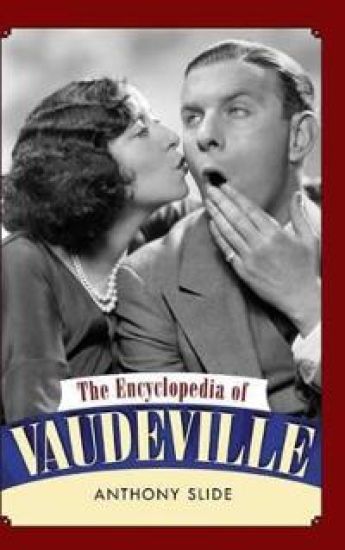
The Encyclopedia of Vaudeville provides a unique record of what was once America's preeminent form of popular entertainment from the late 1800s through the early 1930s. It includes entries not only on the entertainers themselves, but also on those who worked behind the scenes, the theatres, genres, and historical terms. Entries on individual vaudevillians include biographical information, samplings of routines and, often, commentary by the performers. Many former vaudevillians were interviewed for the book, including Milton Berle, Block and Sully, Kitty Doner, Fifi D'Orsay, Nick Lucas, Ken Murray, Fayard Nicholas, Olga Petrova, Rose Marie, Arthur Tracy, and Rudy Vallee. Where appropriate, entries also include bibliographies. The volume concludes with a guide to vaudeville resources and a general bibliography.Aside from its reference value, with its more than five hundred entries, The Encyclopedia of Vaudeville discusses the careers of the famous and the forgotten. Many of the vaudevillians here, including Jack Benny, George Burns and Gracie Allen, Jimmy Durante, W. C. Fields, Bert Lahr, and Mae West, are familiar names today, thanks to their continuing careers on screen. At the same time, and given equal coverage, are forgotten acts: legendary female impersonators Bert Savoy and Jay Brennan, the vulgar Eva Tanguay with her billing as ""The I Don't Care Girl,"" male impersonator Kitty Doner, and a host of ""freak"" acts.
Beyond Paradise

Beyond Paradise

André Soares; Anthony Slide

University Press of Mississippi
2010
nidottu
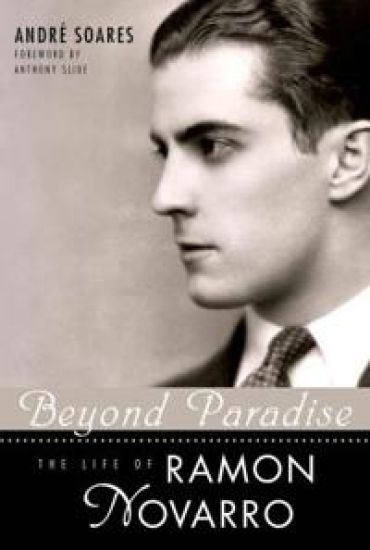
The first Latin American actor to become a superstar, Ramon Novarro was for years one of Hollywood's top actors. Born Ramon Samaniego to a prominent Mexican family, he arrived in America in 1916, a refugee from civil wars. By the mid-1920s, he had become one of MGM's biggest box office attractions, starring in now-classic films, including The Student Prince, Mata Hari, and the original version of Ben-Hur. He shared the screen with the era's top leading ladies, such as Greta Garbo, Myrna Loy, Joan Crawford, and Norma Shearer, and he became Rudolph Valentino's main rival in the ""Latin Lover"" category. Yet, despite his considerable professional accomplishments, Novarro's enduring hold on fame stems from his tragic death--his bloodied corpse was found in his house on Halloween 1968 in what has become one of Hollywood's most infamous scandals.A lifelong bachelor, Novarro carefully cultivated his image as a man deeply devoted to his family and to Catholicism. His murder shattered that persona. News reports revealed that the dashing screen hero had not only been gay, but he was dead at the hands of two young, male hustlers. Since then, details of his murder have achieved near mythic proportions, obscuring Novarro's professional legacy. Beyond Paradise presents a full picture of the man who made motion picture history. Including original interviews with Novarro's surviving friends, family, co-workers, and the two men convicted of his murder, this biography provides unique insights into an early Hollywood star--a man whose heart was forever in conflict with his image and whose myth continues to fascinate today.
Inside the Hollywood Fan Magazine

Inside the Hollywood Fan Magazine

Anthony Slide

University Press of Mississippi
2010
sidottu
The fan magazine has often been viewed simply as a publicity tool, a fluffy exercise in self-promotion by the film industry. But as an arbiter of good and bad taste, as a source of knowledge, and as a gateway to the fabled land of Hollywood and its stars, the American fan magazine represents a fascinating and indispensable chapter in journalism and popular culture.Anthony Slide's Inside the Hollywood Fan Magazine provides the definitive history of this artifact. It charts the development of the fan magazine from the golden years when Motion Picture Story Magazine and Photoplay first appeared in 1911 to its decline into provocative headlines and titillation in the 1960s and afterward. Slide discusses how the fan magazines dealt with gossip and innuendo, and how they handled nationwide issues such as Hollywood scandals of the 1920s, World War II, the blacklist, and the death of President Kennedy. Fan magazines thrived in the twentieth century, and they presented the history of an industry in a unique, sometimes accurate, and always entertaining style.This major cultural history includes a new interview with 1970s media personality Rona Barrett, as well as original commentary from a dozen editors and writers. Also included is a chapter on contributions to the fan magazines from well-known writers such as Theodore Dreiser and e. e. cummings. The book is enhanced by an appendix documenting some 268 American fan magazines and includes detailed publication histories.