Kirjojen hintavertailu. Mukana 12 657 676 kirjaa ja 12 kauppaa.

Kirjailija

Anthony Slide

Kirjat ja teokset yhdessä paikassa: 48 kirjaa, julkaisuja vuosilta 1978-2026, suosituimpien joukossa Inside the Hollywood Fan Magazine. Vertaile teosten hintoja ja tarkista saatavuus suomalaisista kirjakaupoista.

48 kirjaa

Kirjojen julkaisuhaarukka 1978-2026.

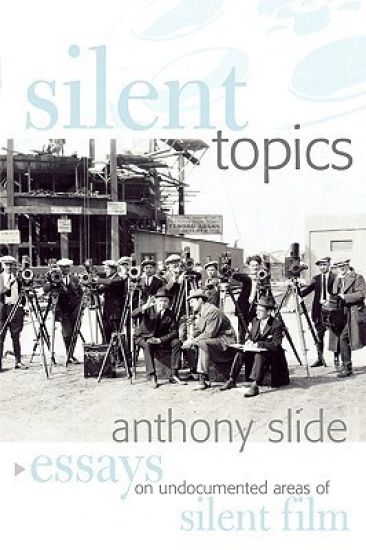
Silent Topics

Silent Topics

Anthony Slide

Scarecrow Press
2004
nidottu
In Silent Topics, film historian Anthony Slide looks at various under-discussed and generally undocumented areas of silent film. The two lengthiest essays discuss the release of British silent films in the United States and the contribution of gays and lesbians to American silent film. Other essays examine the cost of silent film production, the "Great Events" series produced by Technicolor in the 1920s, and the manner in which early sheet music exploited silent film personalities. There are career essays on the screen's first special effects specialist, Roy Pomeroy, actor/minister Neal Dodd, and Margerie Bonner, the wife of novelist Malcolm Lowry. Silent Topics also includes the only known interview with the most prominent of silent film composers, David Mendoza, as well as a personal discussion on the lack of talent among a number of silent screen actors and actresses.
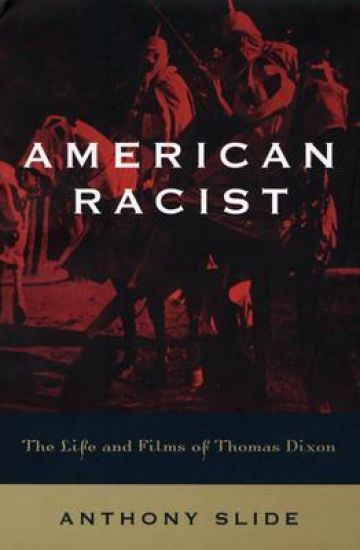
American Racist

American Racist

Anthony Slide

The University Press of Kentucky
2004
sidottu
" Thomas Dixon has a notorious reputation as the writer of the source material for D.W. Griffith's groundbreaking and controversial 1915 feature film The Birth of a Nation. Perhaps unfairly, Dixon has been branded an arch-conservative and a racist obsessed with what he viewed as "the Negro problem." As American Racist makes clear, however, Dixon was a complex, multitalented individual who, as well as writing some of the most popular novels of the early twentieth century, was involved in the production of some eighteen films. Dixon used the motion picture as a propaganda tool for his often outrageous opinions on race, communism, socialism, and feminism. His most spectacular production, The Fall of a Nation (1916), argues for American preparedness in the face of war and boasts a musical score by Victor Herbert, making it the first American feature film to have an original score by a major composer. Like the majority of Dixon's films, The Fall of a Nation has been lost, but had it survived, it might well have taken its place alongside The Birth of a Nation as a masterwork of silent film. Anthony Slide examines each of Dixon's films and discusses the novels from which they were adapted. Slide chronicles Dixon's transformation from a major supporter of the original Ku Klux Klan in his early novels to an ardent critic of the modern Klan in his last film, Nation Aflame. American Racist is the first book to discuss Dixon's work outside of literature and provide a wide overview of the life and career of this highly controversial twentieth-century southern populist. Anthony Slide is the author of numerous books, including Silent Players: A Biographical and Autobiographical Study of 100 Silent Film Actors and Actresses.
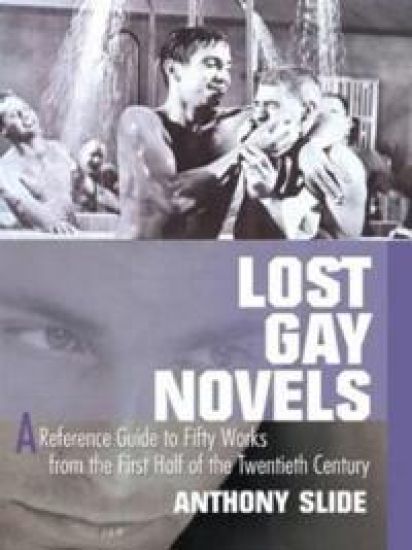
Lost Gay Novels

Lost Gay Novels

Anthony Slide

Routledge Member of the Taylor and Francis Group
2003
sidottu
Searching for an introduction to the shadowy, intriguing world of early 20th century gay-themed fiction? In Lost Gay Novels, respected pop culture historian Anthony Slide resurrects fifty early 20th century American novels with gay themes or characters and discusses them in carefully researched, engaging prose. Each entry offers you a detailed discussion of plot and characters, a summary of contemporary critical reception, and biographical information on the often-obscure writer. In Lost Gay Novels, another aspect of gay life and society is, in the words the author, uncloseted, providing you with an absorbing glimpse into the world of these nearly forgotten books. Lost Gay Novels gives you an introduction to: authors who aren't usually associated with homosexuality, including John Buchan, James M. Cain, and Rex Stout the history of gay publishing in the US and abroad gay themes in novels published between 1917 and 1950with entries from nearly every year! the ways in which the popular culture of the time shaped the authors' attitudes toward homosexuality the difficulty of finding detailed biographical information on little-known authorsIf you're interested in gay studies or history, or even if you're just looking for a comprehensive guide to titles you've probably never heard of before, Lost Gay Novels will be a welcome addition to your collection. The introduction from author Slidecalled by the Los Angeles Times a one-man publishing phenomenonprovides you with an overview to the basics of this landmark collection. Themes found in many of the titles include death, secrecy, and living a double life, and in reading the entries you will discover just why these themes are so common. As Slide says in his introduction: The approach of the novelist toward homosexuality may not always be a positive one but the works are important to an understanding of contemporary attitudes toward gay men and gay society. Lost Gay Novels will help you further your own understanding of the dynamic relationship between literature and culture, and you will finish the book with a greater appreciation of modern American gay fiction.
Lost Gay Novels

Lost Gay Novels

Anthony Slide

Routledge Member of the Taylor and Francis Group
2003
nidottu
Searching for an introduction to the shadowy, intriguing world of early 20th century gay-themed fiction? In Lost Gay Novels, respected pop culture historian Anthony Slide resurrects fifty early 20th century American novels with gay themes or characters and discusses them in carefully researched, engaging prose. Each entry offers you a detailed discussion of plot and characters, a summary of contemporary critical reception, and biographical information on the often-obscure writer. In Lost Gay Novels, another aspect of gay life and society is, in the words the author, uncloseted, providing you with an absorbing glimpse into the world of these nearly forgotten books. Lost Gay Novels gives you an introduction to: authors who aren't usually associated with homosexuality, including John Buchan, James M. Cain, and Rex Stout the history of gay publishing in the US and abroad gay themes in novels published between 1917 and 1950with entries from nearly every year! the ways in which the popular culture of the time shaped the authors' attitudes toward homosexuality the difficulty of finding detailed biographical information on little-known authorsIf you're interested in gay studies or history, or even if you're just looking for a comprehensive guide to titles you've probably never heard of before, Lost Gay Novels will be a welcome addition to your collection. The introduction from author Slidecalled by the Los Angeles Times a one-man publishing phenomenonprovides you with an overview to the basics of this landmark collection. Themes found in many of the titles include death, secrecy, and living a double life, and in reading the entries you will discover just why these themes are so common. As Slide says in his introduction: The approach of the novelist toward homosexuality may not always be a positive one but the works are important to an understanding of contemporary attitudes toward gay men and gay society. Lost Gay Novels will help you further your own understanding of the dynamic relationship between literature and culture, and you will finish the book with a greater appreciation of modern American gay fiction.
Silent Players

Silent Players

Anthony Slide

The University Press of Kentucky
2002
sidottu
" From his unique perspective of friendship with many of the actors and actresses about whom he writes, silent film historian Anthony Slide creates vivid portraits of the careers and often eccentric lives of 100 players from the American silent film industry. He profiles the era's shining stars such as Lillian Gish and Blanche Sweet; leading men including William Bakewell and Robert Harron; gifted leading ladies such as Laura La Plante and Alice Terry; ingénues like Mary Astor and Mary Brian; and even Hollywood's most famous extra, Bess Flowers. Although each original essay is accompanied by significant documentation and an extensive bibliography, Silent Players is not simply a reference book or encyclopedic recitation of facts culled from the pages of fan magazines and trade periodicals. It contains a series of insightful portraits of the characters who symbolize an original and pioneering era in motion history and explores their unique talents and extraordinary private lives. Slide offers a potentially revisionist view of many of the stars he profiles, repudiating the status of some and restoring to fame others who have slipped from view. He personally interviewed many of his subjects and knew several of them intimately, putting him in a distinctive position to tell their true stories.
The New Historical Dictionary of the American Film Industry
Now in Paperback! The New Historical Dictionary of the American Film Industry is a unique reference work, a 'what's what' of the history of filmmaking not only in Hollywood but throughout the United States. More than 750 entries document the history of studios, production companies and distributors, and provide complete information on technical innovations, genres, industry terms, and organizations. Included are entries on more than 100 film companies active in the 'teens, as well as all major Hollywood studios, and major technical innovations such as CinemaScope and Dolby Sound. General entries range from 'The Cold War' to 'Westerns' and include film series such as 'Andy Hardy' and 'The Thin Man.' Extensive cross referencing and an index help the reader locate information throughout the text. A completely revised and updated edition of The American Film Industry, this new edition furnishes an informed, experienced look behind the scenes of filmmaking and an invaluable reference source. Paperback edition available 2001.
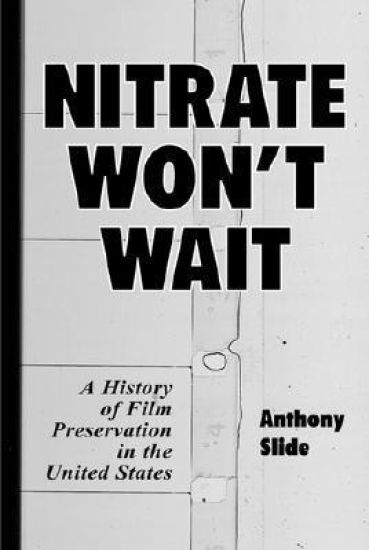
Nitrate Won't Wait

Nitrate Won't Wait

Anthony Slide

McFarland Co Inc
2000
pokkari
This study looks at the preservation process, the issue of colourisation, and commercial film archives. It also provides detailed histories of the major players in the preservation battle and the museums.
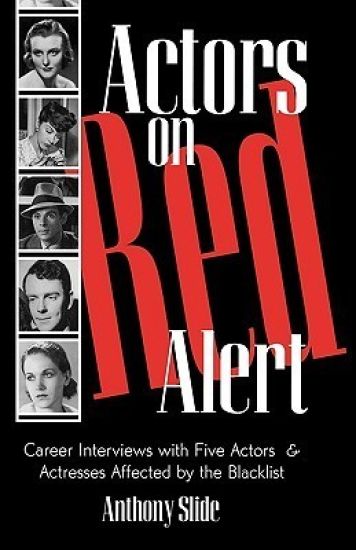
Actors on Red Alert

Actors on Red Alert

Anthony Slide

Scarecrow Press
1999
sidottu
The anti-Communist hysteria that began in the 1930s was further empowered in 1938 when the House of Representatives established the House Committee on UnAmerican Activities. Soon thereafter, the creation of the blacklist in the late 1940s brought the Hollywood film and television community into the fold. Provocatively capturing the controversy and sentiments surrounding this period of political imbalance, Actors on Red Alert explores the repercussions of the blacklist through career interviews with five prominent actors and actresses.
Banned in the U.S.A.

Banned in the U.S.A.

Anthony Slide

I.B. Tauris
1998
sidottu
Making use of the recently-opened files of the US Production Code Administration, this is a study of the way in which British films were censored in the USA between 1933 and 1960. Film by film, it tells the story of the continuing dialogue between the British film-making industry and the American censors, shows how the Production Code system operated and how the censors viewed moral issues, violence, bad language and matters of "decorum", and highlights natural differences such as American concern over what was perceived as the British preoccupation with lavatories. The book also seeks to dispel myths, depicting chief censor Joseph Breen and his staff as knowledgeable people who sympathized with and admired the British film industry.
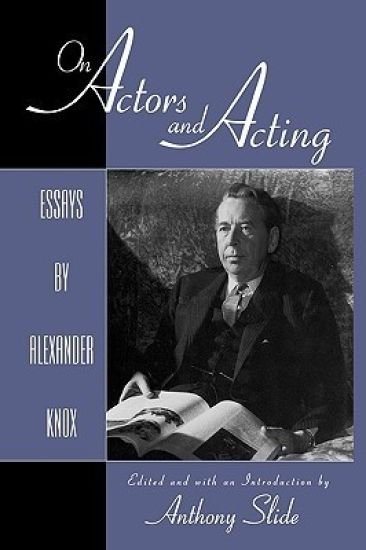
On Actors and Acting

On Actors and Acting

Anthony Slide

Scarecrow Press
1998
sidottu
Alexander Knox (1907-1995) was a distinguished stage and screen actor, who is best remembered today for his title performance in the 1944 production of Wilson. He was active both in London's West End and on Broadway, and began his Hollywood career in 1941 with The Sea Wolf. Because of his liberal activities in the film community, including co-founding of the Committee for the First Amendment, Knox was "grey-listed," and forced to settle permanently in the United Kingdom, where he became a familiar figure both in films and on television. On Actors and Acting collects together Knox's writings, published and unpublished, on various performers with whom he worked or was familiar, and on the art and craft of acting. Knox writes on Laurence Olivier, a close personal friend with whom he appeared in the memorable 1940 production of Romeo and Juliet. He discusses his performance as Wilson. Other actors and actresses about whom Knox has many original things to say include Sara Allgood, Dana Andrews, George Arliss, and Walter Huston. Anthony Slide, a film historian and a personal friend of Alexander Knox and his wife, actress Doris Nolan, edited On Actors and Acting. Slide contributes a lengthy career overview and has also compiled a complete filmography, documenting Knox's screen career from his first film, The Gaunt Stranger in 1938, through his last, Joshua Then and Now in 1985.
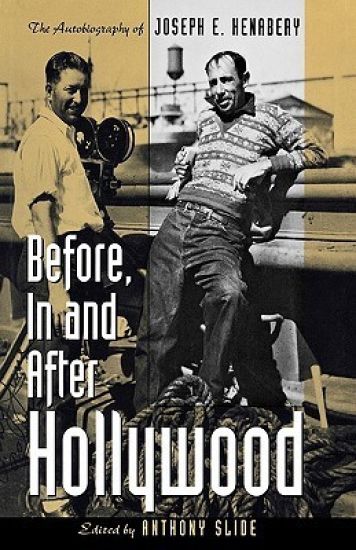
Before, In and After Hollywood

Before, In and After Hollywood

Anthony Slide

Scarecrow Press
1997
sidottu
In 1914, a young midwesterner quit his railroad job to crack the Hollywood motion picture boom. Impressed by his energy and honesty in his role as Lincoln, D.W. Griffith made him his assistant for Intolerance. Griffith then made Joe a director. He swiftly progressed to a preeminent position in the industry, directing some of the biggest Hollywood stars of the 1920's including Douglas Fairbanks, Fatty Arbuckle, and Rudolph Valentino. Versatility played an important role in Joe's rich creative life inside the studios. His understanding of the mechanics of motion-picture film led him to develop and be granted a patent for teaching speech to the deaf by visualizing sound. He pioneered sound short-subjects for the Vitaphone Studios in Brooklyn and later directed WWII training films for the Army Signal Corps in Astoria. Henabery contributed, not only as a director, but also as a researcher, writer, make-up artist/actor, architect, scenic designer, and special-effects innovator. His autobiography, Before, In and After Hollywood was completed in 1975 shortly before his death. Contains 24 black and white photographs.
Some Joe You Don't Know

Some Joe You Don't Know

Anthony Slide

Greenwood Press
1996
sidottu
Americans have been watching and enjoying British television programming since the mid-1950s, but the information on the personalities involved is difficult, if not impossible, to find in the United States. This guide provides biographical essays, complete with bibliographies, on 100 of the best known and loved actors and actresses from Richard Greene (Robin Hood) and William Russell (Sir Lancelot) in the 1950s through stars of Masterpiece Theatre, including Robin Ellis and Jean Marsh, to the new generation of British comedy performers such as Alexei Sayle and Jennifer Saunders. Not only are serious dramatic actors and actresses, such as Joan Hickson and Roy Marsden, to be found here, but also the great comedy stars, including Benny Hill and John Inman.Among the many shows discussed in the text are Absolutely Fabulous; You Being Served?; Dad's Army; Doctor Who; ; Fawlty Towers; The Good Life; The Jewel in the Crown; Poldark; Rumpole of the Bailey; Upstairs, Downstairs; and Yes, Minister. The guide offers not only factual information but also samplings of contemporary critical commentary and in-depth interviews with Terence Alexander, Richard Briers, Benny Hill, Wendy Richard, Prunella Scales, and Moray Watson. This is a reference source that also serves as fascinating entree into the wonderful world of British television, one that is as fun to browse as it is to use for factual documentation.
Selected Film Criticism

Selected Film Criticism

Anthony Slide

Scarecrow Press
1995
sidottu
Provides a cross-section of contemporary American film criticism from 1896-1960. The volumes reprint reviews in their entirety from periodicals such as Photoplay, Film Reports, The Moving Picture World, Variety, and The New York Times. Of immense value for gauging contemporary reaction_both popular and serious_to the best-known films of the past.
Selected Film Criticism

Selected Film Criticism

Anthony Slide

Scarecrow Press
1995
sidottu
Provides a cross-section of contemporary American film criticism from 1896-1960. The volumes reprint reviews in their entirety from periodicals such as Photoplay, Film Reports, The Moving Picture World, Variety, and The New York Times. Of immense value for gauging contemporary reaction_both popular and serious_to the best-known films of the past.
Early American Cinema

Early American Cinema

Anthony Slide

Scarecrow Press
1994
sidottu
A completely revised and rewritten new edition of the pioneering film book first published in 1970, Early American Cinema, New and Revised Edition provides a concise history of the American motion picture industry before 1920, documenting the work of the early production companies, releasing organizations, filmmakers, and performers, and will serve both as a textbook and a reference source. Chapters cover pre-cinema, the Motion Picture Patents Company, independent filmmaking, the birth of the feature film, Thomas H. Ince, D.W. Griffith, sound and music, the star system, the role of women, new technologies, genres, and the languge, business, and art of the film. The book includes suggestions for further reading, together wiht a general bibliography, and lengthy bibliographies on Ince and Griffith.
Robert Goldstein and 'The Spirit of '76'

Robert Goldstein and 'The Spirit of '76'

Anthony Slide; Robert Goldstein

Scarecrow Press
1993
sidottu
Impressed by the success of The Birth of a Nation, Robert Goldstein, owner of a well-known Los Angeles costume supply house, produced his own epic film drama, The Spirit of '76 and screened it in Los Angeles shortly after America's entry into World War I. The film was denounced as anti-British and treasonous. Arrested under the Espionage Act, Goldstein became the first and only American jailed for the crime of producing a patriotic film. Film historian Tony Slide includes an introductory essay, reprints contemporary documentation, and publishes a 1927 manuscript by Goldstein, in which he fully documents the background to the film, its making, his arrest and trial, and his later suffering.
Before Video

Before Video

Anthony Slide

Praeger Publishers Inc
1992
sidottu
The video revolution in the 1980s affected all areas of the American entertainment industry; its impact was most dramatic--ultimately devastating--to the non-theatrical film field. Non-theatrical film is the term used to describe motion pictures which are not shown in movie theaters, but are produced and/or distributed to markets that include the educational community, home, and business and industry. The author covers the early Hollywood-produced features and short subjects in a format other than 35mm for homes, hospitals and correctional institutions, as well as industrial films. This is also the history of two major non-theatrical libraries, Bell and Howell and Kodascope, both of which were founded to service the needs of purchasers of the then-newly introduced 16mm projectors. The book documents how the advent of the 16mm projector made possible the introduction of audio-visual aids in classrooms and offices. A number of production companies were established, primarily in Chicago, to produce films for this new outlet. In addition, Hollywood saw a new market and began licensing distribution of the films. Complete with appendices providing distributors from the 1920s-1940s and current names and addresses of non-theatrical film sources, this book-length study of the history of this film genre is both important and much needed.
The Television Industry

The Television Industry

Anthony Slide

Greenwood Press
1991
sidottu
As the title implies, the business of television rather than its programming is the focus of this historical dictionary. Its entries briefly relate the histories of production companies, networks, cable stations, industry associations, and public interest pressure groups. The focus is on the American television industry from its origins through early 1991, but it also selctively covers the industry worldwide. . . . Because entries relate only essential facts, many are amplified by brief bibliographies of books and articles, many of the latter from trade magazines. An appendix profiling Goldenson, Paley, and Sarnoff, the guiding spirits of ABC, CBS, and NBC, respectively, precedes a brief bibliography and the names index. Slide has produced another hit, another basic source on one of America's basic industries. Wilson Library BulletinThis unique dictionary is the first what's what of television. Its more than 1,000 entries provide succinct factual data on production companies, distributors, organizations, genres, historical and technical terms, and much more. All areas of the industry, including free, public, and cable television, are covered. While the majority of the entries relate to the American television industry, the book is international in scope. Following many of the entries is an address, if the company or organization is still active, and, where appropriate, a bibliography. An asterisk following a name indicates that there is a separate entry for that subject. Headings are based on the best-known name of the company or technical innovation and are not necessarily the final names by which the subjects are known. However, all such alternative names are included in the index. Wherever feasible, birth and death years are noted for key figures. A general bibliography of reference books on television appears at the end of the volume. The index provides immediate access to all the entries and to the personalities discussed in each entry. In addition, there is a program index, providing the reader with speedy information as to which company or distributor is responsible for which series.The Television Industry will serve as an essential reference tool for any scholar, student, or librarian involved in the study of the television industry. It will also prove enlightening and interesting for the casual reader.