Kirjailija
Anthony Tucker-Jones
Kirjat ja teokset yhdessä paikassa: 61 kirjaa, julkaisuja vuosilta 2009-2027, suosituimpien joukossa Rommel's Afrika Korps in Colour. Vertaile teosten hintoja ja tarkista saatavuus suomalaisista kirjakaupoista.
61 kirjaa
Kirjojen julkaisuhaarukka 2009-2027.
Take a visual journey through North Africa during the Second World War with Anthony Tucker-Jones and Ian Spring as they chart the path of Erwin Rommel and his Afrika Korps through a series of stunning, rare colour photographs. Taken from Ian Spring's incredible digital archive of over 32,000 original colour photographs dated between 1936 and 1946, more than 250 images in Rommel's Afrika Korps In Colour offer readers a vivid, detailed insight into this German expeditionary force and their long North African Campaign. Fascinating colour photographs of German soldiers, weaponry, tanks and aircraft fill these pages, and are balanced by the equally captivating and rare photographs of the people and the landscapes of North Africa. Renowned author and military historian Anthony Tucker-Jones' remarkable text accompanies Ian Spring's collection of rare photographs, together making for a highly informative and utterly engrossing read. Rommel's Afrika Korps In Colour affords readers a new way of reading and learning about one of the most unique campaigns in the Second World War, and will stay with them long after they turn the final page.
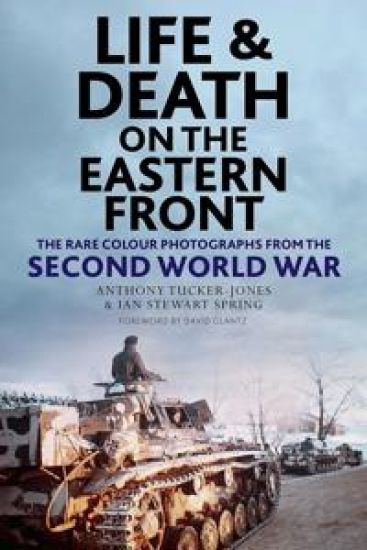
Östfronten i färg : unika fotografier från andra världskriget
Anthony Tucker-Jones; Ian Stewart Spring; David Glantz
Lind Co
2022
sidottu
Livet och döden på östfronten skildras här visuellt genom mer än 250 häpnadsväckande färgfoton. Bilderna sätts i sammanhang och förklaras kunnigt av experten Anthony Tucker-Jones. De erbjuder unika och ofta överraskande insikter om krigets brutala verklighet och människorna som hamnade i det. Boken innehåller tre tematiska delar: Den första behandlar markoffensiven, inklusive Hitlers invasion av Sovjetunionen och stridsvagnarna, fordonen, vapnen och infanteriet på både tysk och rysk sida. Den andra delen skildrar luftkriget, med bilder på bombplan och jaktflyg, Luftwaffepersonal och förödelsen som striderna förorsakade. I den tredje delen tas vi med bakom frontlinjerna till krigsfångar, partisaner och sjukvårdare, men får även se soldaternas och de civilas vardagsliv och fritidsaktiviteter vid fronten, liksom den stränga ryska vinterns effekter. Östfronten i färg belyser andra världskrigets historia på ett helt nytt sätt. ANTHONY TUCKER-JONES är militärhistorisk författare och före detta underrättelseofficer. Han har utgivit ett femtiotal böcker, de flesta om andra världskriget. IAN STEWART SPRING driver Pixpast Archive som omfattar över 32 000 bilder från 1936-1946 och anses vara världens största samling av färgfoton från andra världskriget."texten är informativ och för kalenderbitare är den en guldgruva om krigsmaterielens utveckling vad gäller vapen, fordon, transportmedel, uniformspersedlar och t.o.m. kamouflagetekniken. Intressanta bilder och text i en mycket tilltalande svensk språkdräkt av Jan Wibom." Btj, betyg 4/5
Life and Death on the Eastern Front
Anthony Tucker-Jones; Ian Spring; David Glantz
GREENHILL BOOKS
2022
sidottu
This incredible visual record of life and death along the Eastern Front features more than 250 images from the the PIXPAST Archive, a collection of more than 32,000 original colour photographs taken between 1936 and 1946\. Collated into three parts and organised thematically, the book begins with images of the ground war, including Hitler's invasion of the Soviet Union and the tanks, vehicles, weaponry and infantry on both sides. Moving into the war in the skies, the images depict aircraft in flight and on the ground, the bombers, fighters, Luftwaffe personnel and the destruction wrought from battle. And finally, the images take us behind the lines, to the prisoners of war, partisans, medics, the daily lives and leisure activities of soldiers and civilians along the front and the impact of the harsh Russian winter. Accompanied by text by renowned author and commentator Anthony Tucker-Jones, these images offer a rare, often surprising insight into the realities of the Second World War and people caught up in it, in vivid colour detail.
Along with the Tiger, Sherman and T-34, the Panther ranks as one of the most famous tanks of the Second World War. Anthony Tucker-Jones, in this comprehensive new study of a remarkable fighting vehicle, uses over 100 archive photographs, along with a selection of colour profiles, to describe its design, development and operational record. On the Eastern Front the German army needed to counter the Red Army's robust and utilitarian T-34 which began to appear in every-growing and eventually decisive numbers. The Panther, the German response, was rapidly conceived and produced under extraordinarily difficult wartime conditions. With its sloping armour and a high-velocity 75mm gun, it proved to be a better medium tank than its predecessor the Mk IV, it was more versatile than the heavyweight Tiger and it was superior to most of the Allied tanks it faced. It also had an important influence on subsequent tank design. Anthony Tucker-Jones's photographic history gives a fascinating insight into its wartime career.
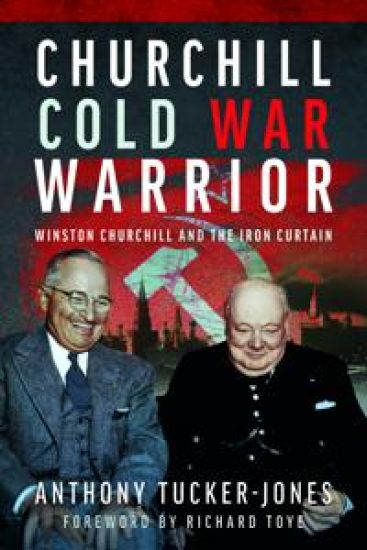
‘By focusing attention on a poorly understood but vitally important aspect of Churchill’s career, Tucker-Jones has performed an important service. Churchill Cold War Warrior should be read, not only as a commentary on the ironies of history, but also as an essay on the potential and the limits of power.’ - PROFESSOR RICHARD TOYE, AUTHOR OF WINSTON CHURCHILL: A LIFE IN THE NEWS ‘In Cold War Warrior, Anthony Tucker-Jones has excelled again. Building on his ChurchillMaster and Commander, he brings us Churchill the prophet, sage and tireless fighteragainst Communism. With Russia and China again threatening the world order, this timelyaccount of Winston's post-war life is essential reading for any student of the Iron Curtainera.’ - PETER CADDICK-ADAMS, AUTHOR OF 1945: VICTORY IN THE WEST ‘Anthony Tucker-Jones’s CHURCHILL COLD WAR WARRIORis a fascinating and highlyworthwhile addition to the well-worn sub-genre of Churchilliana. Intricately researched andpacked full of revelation and incident, it is an invaluable book for any aficionado oftwentieth century military and political history.’ - ALEXANDER LARMAN, AUTHOR OF THEWINDSORS AT WAR: THE NAZI THREAT TO THE CROWN In Churchill Cold War Warrior, renowned military historian Anthony Tucker-Jones reassesses Winston Churchill’s neglected postwar career. He explains how in an unguarded moment Winston inadvertently sowed the seeds for the Cold War by granting Stalin control of Eastern Europe. Famously Churchill, at Fulton, then warned of the growing danger created by this partition of the continent. Winston after the Second World War wanted to prove a point. Shunned by the electorate in 1945, instead of retiring he was determined to be Prime Minister for a second time. Biding his time he watched in dismay as Britain scuttled from India and Palestine and weathered the East-West confrontation over Berlin. He finally got his way in 1951 and took the reins of a country with drastically waning powers. Churchill was confronted by a world in turmoil, with an escalating Cold War that had gone hot in Korea and an unravelling British Empire. Communism and nationalism proved a heady cocktail that fanned the flames of widespread conflict. He had to contain rebellions in Kenya and Malaya while clinging on in Egypt. Desperately he also sought to avoid a Third World War and the use of nuclear weapons by reuniting the 'Big Three'.
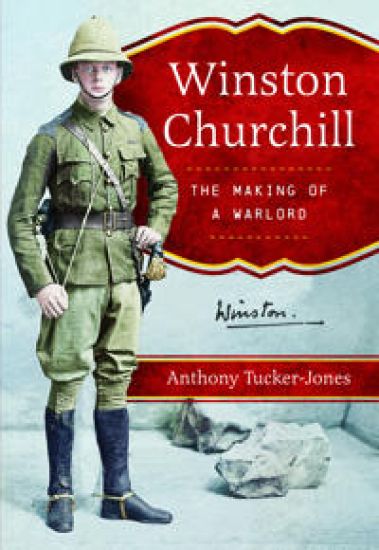
Winston Churchill: The Making of a Warlord offers a vivid, immersive journey through the extraordinary early life of one of history’s most iconic leaders. In this beautifully curated volume, acclaimed military historian and former intelligence officer Anthony Tucker-Jones reveals how Churchill’s formative years—marked by adventure, ambition, and relentless self-belief—shaped the warlord he would one day become. Through a rich collection of rare photographs, archive material, and visually striking imagery, Tucker-Jones traces Churchill’s transformation from rebellious schoolboy to cavalry officer, from daring war correspondent to emerging political force. Each chapter brings to life the campaigns and conflicts that forged Churchill’s worldview: the northwest frontier of India, the deserts of Sudan, the Boer War battlefields, and the Admiralty corridors where he first tasted the burden of command. These defining moments laid the foundations of the strategic instincts, resilience, and audacity that would later steer Britain through its darkest hour. Far more than a chronological album, this pictorial biography offers an intimate and multidimensional portrait. Tucker-Jones’s expert commentary provides crucial context and insight, revealing the experiences that shaped Churchill’s character, sharpened his instincts, and ignited the fierce determination for which he is remembered. Evocative, authoritative, and visually captivating, The Making of a Warlord enriches our understanding of Churchill not merely as a statesman, but as a young man forged by conflict and driven by destiny. This is an essential volume for history enthusiasts, Churchill admirers, and anyone drawn to the dramatic interplay of image, story, and legacy.
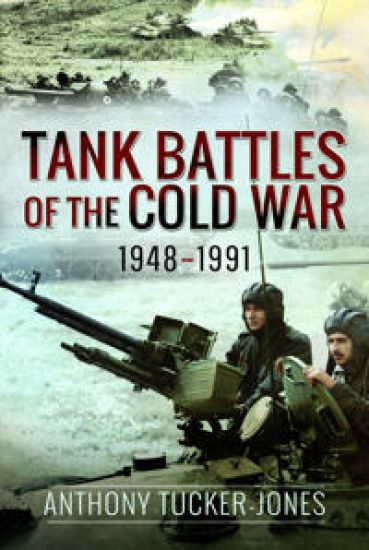
As Anthony Tucker-Jones shows in this highly illustrated, wide-ranging history, for most of the Cold War the tank retained its pre-eminence on the battlefield. The Arab-Israeli wars witnessed some of the biggest tank battles of all time, and tanks played key roles in conflicts in Korea, Vietnam and Afghanistan as well as in the Iran-Iraq War and the wars fought between India and Pakistan. But then in the mid-1960s anti-tank weapons became ever deadlier and the Mechanised Infantry Fighting Vehicle (MIFV), which was designed to support infantry and fight tanks, emerged and the heyday of the tank was over. Chapters cover each major phase in the evolution of the tank and of tank warfare during the period, from the battles fought in the late 1940s and 1950s with Second World War armoured vehicles like the T-34 and the Sherman, through to the designs common in the 1960s and 1970s like the T-55, Centurion, Challenger and M60 Patton, to the confrontation between the M1 Abrams and the T-72 during the Gulf War in 1991. Technical and design developments are important elements throughout the story, but so are dramatic changes in tactics and armaments which mean the tank has an increasingly uncertain role in modern warfare.
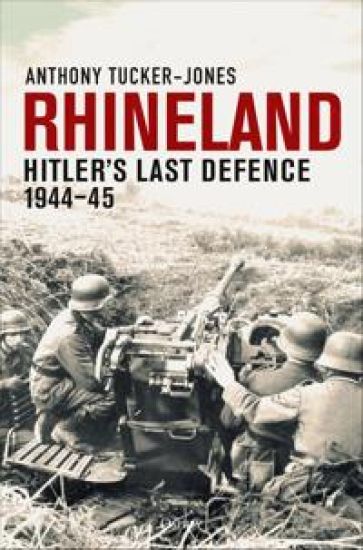
A dramatic retelling of the desperate battle of the Rhineland during World War II from the German perspective.The Rhineland was where Adolf Hitler sowed the seeds for the Second World War when he remilitarized it in breach of the Treaty of Versailles in 1936, and by late 1944 the Rhine provided the last major obstacle to the advancing Allied armies that were threatening the Fatherland itself.In this new history of this vital campaign, respected military historian Anthony Tucker-Jones describes the race against time as the Germans fought to stave off the inevitable. It was essential that the Germans held the west bank in order to protect the Rhine crossings at Cologne, Bonn, Koblenz and Remagen, but Hitler was intent on counter-attacking in the Ardennes in the winter of 1944 and this meant there was little left to bolster the defences of the Rhine.Rhineland relates the course of this desperate defence, describing the build-up of forces and operational plans before going on to tell the story of the campaign from the point of view of the forces involved, from the ordinary German soldier through to the high command.
The Secret War: Spies, Lies and the Art of Deception in World War II
Anthony Tucker-Jones
Sirius Entertainment
2025
nidottu
Written by British former intelligence officer, Anthony Tucker-Jones, this fascinating, illustrated guide takes a deep dive into the secret operations which shaped World War II. Most of the great military campaigns and breakthroughs of World War II would not have been successful without the efforts of teams of people working unsung and undercover. The codebreakers of Bletchley Park cracked codes that allowed for the interception and exploitation of German intelligence but many took the secret of their wartime activities to the grave. Others put their lives on the line to gather information for their countries, infiltrating other nations' secrets at great personal risk. This fascinating book covers some of the main campaigns carried out by the secret services such as the fabled Operation Mincemeat, and others, such as Operation Fortitude, carried out in support of D-Day. It also looks at the case of the fifth columnists and stories of double agents such as Agent GARBO. Illustrated throughout with black and white photography, this is a compelling read for anyone fascinated by espionage and wartime intelligence.
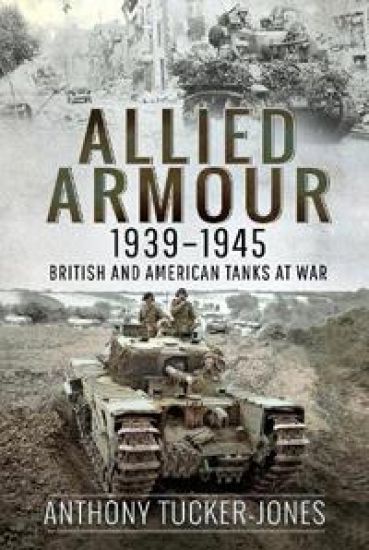
During the first years of the Second World War, Allied forces endured a series of terrible defeats at the hands of the Germans, Italians and Japanese. Their tanks were outclassed, their armoured tactics were flawed. But the advent of new tank designs and variants, especially those from the United States, turned the tables. Although German armour was arguably still superior at the end of the war, the competence of Allied designs and the sheer scale of their production gave them a decisive advantage on the armoured battlefield. This is the fascinating story that Anthony Tucker-Jones tells in this book which is part of a three-volume history of armoured warfare during the Second World War. Chapters cover each major phase of the conflict, from the early blitzkrieg years when Hitler's panzers overran Poland, France and great swathes of the Soviet Union to the Allied fight back in tank battles in North Africa, Italy and northern Europe. He also covers less-well-known aspects of the armoured struggle in sections on Allied tanks in Burma, India and during the Pacific campaign. Technical and design developments are a key element in the story, but so are changes in tactics and the role of the tanks in the integrated all-arms forces that overwhelmed the Axis.
_‘By focusing attention on a poorly understood but vitally important aspect of Churchill’s career, Tucker-Jones has performed an important service. Churchill Cold War Warrior should be read, not only as a commentary on the ironies of history, but also as an essay on the potential and the limits of power.’ - _PROFESSOR RICHARD TOYE, AUTHOR OF WINSTON CHURCHILL: A LIFE IN THE NEWS In Churchill Cold War Warrior, renowned military historian Anthony Tucker-Jones reassesses Winston Churchill’s neglected postwar career. He explains how in an unguarded moment Winston inadvertently sowed the seeds for the Cold War by granting Stalin control of Eastern Europe. Famously Churchill, at Fulton, then warned of the growing danger created by this partition of the continent. Winston after the Second World War wanted to prove a point. Shunned by the electorate in 1945, instead of retiring he was determined to be Prime Minister for a second time. Biding his time he watched in dismay as Britain scuttled from India and Palestine and weathered the East-West confrontation over Berlin. He finally got his way in 1951 and took the reins of a country with drastically waning powers. Churchill was confronted by a world in turmoil, with an escalating Cold War that had gone hot in Korea and an unravelling British Empire. Communism and nationalism proved a heady cocktail that fanned the flames of widespread conflict. He had to contain rebellions in Kenya and Malaya while clinging on in Egypt. Desperately he also sought to avoid a Third World War and the use of nuclear weapons.
The Fall of Berlin: The Final Days of Hitler's Evil Regime
Anthony Tucker-Jones
Sirius Entertainment
2024
nidottu
In April 1945, Soviet forces descended on Berlin in the final phase of the war in Europe. The fighting was fierce as soldiers fanatically loyal to the Nazi party - and those afraid of the vengeance their opponents might enact - sought to stave off the end of the regime as long as possible. Even as it became clear that defeat was inevitable, Hitler and his subordinates determined to fight to the bitter end, resulting in a bitter, brutal end to the war. As the Russian tanks crushed the remaining pockets of resistance, the city was turned into a nightmarish dystopia. Pillage, plunder, mass rape and unceasing destruction followed. In this vivid account with contemporary photographs, the author covers both German and allied viewpoints, exploring explores the strategies, the battles, the civilian experiences and the personalities involved in this fateful the final days of the Third Reich. ABOUT THE SERIES Sirius Military History provides gripping, illustrated accounts of different battles and conflicts, featuring contemporary photographs, feature spreads and fascinating testimonies.
In the summer of 1944 the Red Army crushed Army Group Centre in one of the largest offensives in military history. Operation Bagration - launched almost exactly three years after the Nazi invasion of the Soviet Union - was Stalin's retribution for Hitler's Operation Barbarossa. Earlier battles at Stalingrad and Kursk paved the way for Soviet victory, but as Anthony Tucker-Jones demonstrates in this fascinating study, Bagration ensured that the Germans would never regain the strategic initiative. In one fell swoop the Wehrmacht lost a quarter of its strength on the Eastern Front. And in a series of overwhelming assaults, the Red Army recaptured practically all the territory the Soviet Union had lost in 1941, advanced into East Prussia and reached the outskirts of Warsaw. As he reconstructs this massive and complex battle, Anthony Tucker-Jones assesses the opposing forces and their commanders and gives a vivid insight into the planning and decision-making at the highest level. He recreates the experience of the soldiers on the battlefield by using graphic contemporary accounts, and he sets the Bagration offensive in the wider context of the Soviet war effort. He also asks why Stalin's road to retribution proved to be such a long and bloody one - for the Germans, despite their crippling losses, managed to resist for another ten months.
D-Day was unprecedented. An invasion of this scale and magnitude had never been carried out before. The landings in North Africa, Sicily and Italy were of limited scope by comparison; if they had failed it would not have been a complete disaster, whereas Normandy heralded the long-awaited Second Front.D-Day 1944: The Making of Victory investigates the great feats of unique problem-solving that enabled the success of such an important invasion. Military historian Anthony Tucker-Jones brings his expert eye to bear on the D-Day landings and subsequent Normandy campaign. He reassesses the technical ingenuity required through the eyes of those who fought there, and vividly reveals how each side managed, whether dealing with the challenges of crossing the Channel safely or in defence of the French coast. Including first-hand accounts, this book places the reader in the thick of the action.
Often it is assumed that Hitler’s panzers stormed into action perfectly formed, driving through the armies of the Poles in 1939 and the French in 1940 and defeating them. The dramatic blitzkrieg victories won by the Wehrmacht early in the Second World War – in which the panzers played a leading role – tend to confirm this impression. But, as Anthony Tucker-Jones demonstrates in this illustrated, comprehensive and revealing history of the panzers, this is far from the truth. As armoured fighting vehicles the early panzers were no better than – sometimes inferior to – those of their opponents, but their tactics rather than their technology gave them an advantage. Later on German tank designers developed technically superior tanks but these could not be built fast enough or in sufficient numbers. For all their excellence, they were overwhelmed by the American Shermans and Soviet T-34s that were produced in their tens of thousands. This is the story Anthony Tucker-Jones relates as he traces the evolution of the panzers from the modest beginnings in the 1930s to the Panzer IVs, Panthers and Tigers which were the most formidable German tanks of the war. Not only does he cover their design and production history, he also assesses their combat performance and gives a fascinating insight into the decision-making at the highest level which directed German tank design.
Can air power alone win a war?That has been the question since the Second World War. Air attacks failed miserably in Vietnam: Operation Linebacker had little effect, while bombing Hanoi just increased hatred for America – yet air strikes in both Iraq and Libya helped bring about regime changes. No-fly zones may have worked in the Balkans, but they might as well not have been there for Saddam Hussein’s Iraq.From the Luftwaffe’s massed attack on Britain to NATO’s interventions in Libya, aerial warfare has changed almost beyond recognition. The piston engine has been replaced by the jet, and in some cases the pilot has been completely replaced by the microchip. Carpet bombing is now a global positioning system and laser pinpointed strikes using precision-guided munitions. Whereas a bomber’s greatest enemies were once fighters and flak, the threats have now morphed into smart missiles from half a world away.In this compelling study, celebrated defence expert Anthony Tucker-Jones charts the remarkable evolution of aerial warfare from 1940 to the present day.
The second millennium of mankind has been characterised by almost incessant warfare somewhere on the face of the globe. The Art of War in Twenty Battles serves as a snapshot of the development of warfare over the past 1,000 years, illustrating the bravery and suffering mankind has inflicted upon itself in developing what we call the ‘Art of War’.Here military historian Anthony Tucker-Jones selects twenty battles that illustrate the changing face of warfare over the past thousand years – from the Viking shield wall to long bows and knights, the emergence of gunpowder and finally the long-range faceless warfare of today. This is a look at the killing game and its devastating impact.