Kirjojen hintavertailu. Mukana 12 390 323 kirjaa ja 12 kauppaa.

Kirjailija

Anthony Webster

Kirjat ja teokset yhdessä paikassa: 16 kirjaa, julkaisuja vuosilta 2006-2024, suosituimpien joukossa Lifelines. Vertaile teosten hintoja ja tarkista saatavuus suomalaisista kirjakaupoista.

16 kirjaa

Kirjojen julkaisuhaarukka 2006-2024.

How to Love and Achieve Health and Happiness

How to Love and Achieve Health and Happiness

Anthony Webster

Crosswords Noble House
2024
pokkari
In this book, Anthony Webster offers readers a valuable resource for navigating the complexities of human relationships and life's challenges. Drawing from personal experience and practical wisdom, the book serves as a lifeline for those seeking guidance in dealing with different aspects of life and difficult people and situations. At its core, it is a modern-day compendium of practical wisdom-a roadmap for leading a more fulfilling and harmonious life amidst the myriad challenges we encounter. With each thoughtfully crafted tip and reflection, the author provides readers with actionable insights and strategies for navigating the ups and downs of interpersonal interactions. One of the book's greatest strengths lies in its accessibility and relevance to readers from all walks of life. Whether you're grappling with difficult colleagues, navigating family dynamics, or seeking to foster more meaningful connections, it offers practical advice and encouragement for facing life's challenges head-on. The author's personal endorsement of regularly reading the book underscores its value as a tool for self-reflection and personal growth. By incorporating the book into their daily routine, readers can cultivate a greater awareness of their interactions with others and strive for continuous improvement in all areas of their lives. While some readers may find the format of short thoughts and tips to be somewhat simplistic, the overarching message of remains clear: by embracing practical wisdom and approaching life's challenges with an open mind, we can cultivate greater harmony and fulfillment in our relationships and experiences. In conclusion, "How to Love and Achieve Health and Happiness" is a valuable resource for anyone seeking to navigate life's complexities with grace and resilience. With its practical insights and actionable advice, the book serves as a beacon of guidance and inspiration for readers on their journey towards personal growth and fulfillment.
The Foundation of Australia’s Capital Cities

The Foundation of Australia’s Capital Cities

Anthony Webster

BLOOMSBURY PUBLISHING PLC
2022
sidottu
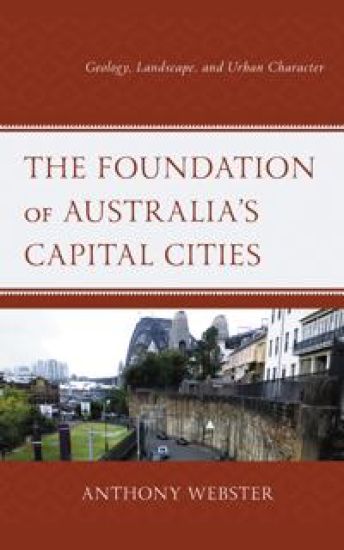
The Foundation of Australia’s Capital Cities is the story of how the places chosen for Australia’s seven colonial capitals came to shape their unique urban character and built environments. Tony Webster traces the effects of each city’s geologically diverse coastal or riverine landform and the local natural materials that were available for construction, highlighting how the geology and original landforms resulted in development patterns that have persisted today.
Gentlemen Capitalists

Gentlemen Capitalists

Anthony Webster

Bloomsbury Academic
2022
nidottu
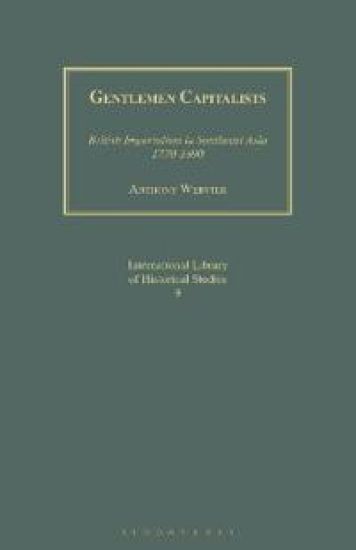
Through an exploration of British rule in southeast Asia between 1770-1890, this book shows the importance of Britain’s political and commercial hegemony in creating present-day “Asian-tiger” economies in this region.Anthony Webster stresses the importance of London capitalist interest, the role of Indian merchants and the growing Chinese community in developing regions in southeast Asia. Through this, this volume explores major events which led to this influence, including the acquisition of Penang, the defeat of European powers in the war of 1815, the growth of both British and Indian industries, the establishment of Singapore and the creation of an ‘informal empire’ in the Malay peninsular.
Oxford AQA History for A Level: The British Empire c1857-1967 Student Book Second Edition

Oxford AQA History for A Level: The British Empire c1857-1967 Student Book Second Edition

Sally Waller; Anthony Webster; Robert J Carsson; Tom Allen

Oxford University Press
2021
nidottu
Part of the Oxford AQA History for A Level series Approved by AQA Updated as part of our commitment to the inclusive presentation of diverse histories and to reflect the world around us. This Student Book covers both AS and A Level content, and supports students in exploring the complexities of the British Empire through engaging thematic questions, such as: How did the Empire influence British attitudes and culture? And how did indigenous peoples respond to British rule? - Expertly developed by a team led by Sally Waller, an experienced author with senior examination experience - With input from specialist historians, including Mishka Sinha and Emily Manktelow - Explores key themes such as change, continuity, and cause and consequence - Builds essential skills in historical source analysis with carefully selected extracts - Will enable you to understand and make connections between the key questions covered in the specification - Includes exam-style questions to practice, and study tips to support confident exam preparation Perfect for use alongside Kerboodle.
Co-operation and Globalisation

Co-operation and Globalisation

Anthony Webster

Routledge
2021
nidottu
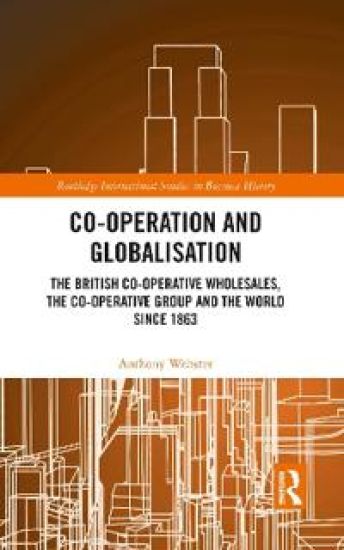
Globalisation is associated with capitalist multinationals dedicated to the enrichment of wealthy, corporate shareholders. However, less well known is that the English and Scottish Co-operative Wholesale Societies, owned by the growing number of local co-operative societies across the country, were early leaders in global commerce.Owned by their working-class members, by 1900 there were over 1,000 societies and millions of individual members. Spreading profits widely through the ‘divi’ which rewarded members shopping at the co-op store, and selling safe and wholesome food, the co-operative movement was a successful part of the emerging labour movement. This success depended on the wholesale societies supplying societies with commodities from all over the world. Because local societies were free to source produce from whoever they chose, competitive pressures required the wholesale societies to develop the world’s most formidable network of international supply chains, with branches, depots, plantations and factories in the USA, Canada, Denmark, Sweden, Spain, Greece, France, Germany, India, Ceylon, Australia, New Zealand, colonial West Africa and Argentina. This book explains how the wholesales developed and managed these networks, giving them a competitive advantage in their dealings with the local societies. It will explore why and how this ‘People’s Global Colossus’ declined in the later 20th century, and how its focus in international commerce moved onto ethical sourcing, investment and Fair Trade. Integral to these global networks were the UK movement’s relations with foreign co-operative movements, especially through involvement in the International Co-operative Alliance, and promotion of co-operatives in the Empire by successive British governments as a tool for economic development. The ‘People’s Colossus’ was thus a political as well as a commercial player in the increasingly complex world of the late 19th and 20th centuries.
Co-operation and Globalisation

Co-operation and Globalisation

Anthony Webster

Routledge
2019
sidottu
Globalisation is associated with capitalist multinationals dedicated to the enrichment of wealthy, corporate shareholders. However, less well known is that the English and Scottish Co-operative Wholesale Societies, owned by the growing number of local co-operative societies across the country, were early leaders in global commerce.Owned by their working-class members, by 1900 there were over 1,000 societies and millions of individual members. Spreading profits widely through the ‘divi’ which rewarded members shopping at the co-op store, and selling safe and wholesome food, the co-operative movement was a successful part of the emerging labour movement. This success depended on the wholesale societies supplying societies with commodities from all over the world. Because local societies were free to source produce from whoever they chose, competitive pressures required the wholesale societies to develop the world’s most formidable network of international supply chains, with branches, depots, plantations and factories in the USA, Canada, Denmark, Sweden, Spain, Greece, France, Germany, India, Ceylon, Australia, New Zealand, colonial West Africa and Argentina. This book explains how the wholesales developed and managed these networks, giving them a competitive advantage in their dealings with the local societies. It will explore why and how this ‘People’s Global Colossus’ declined in the later 20th century, and how its focus in international commerce moved onto ethical sourcing, investment and Fair Trade. Integral to these global networks were the UK movement’s relations with foreign co-operative movements, especially through involvement in the International Co-operative Alliance, and promotion of co-operatives in the Empire by successive British governments as a tool for economic development. The ‘People’s Colossus’ was thus a political as well as a commercial player in the increasingly complex world of the late 19th and 20th centuries.
The Sounds of Navajo Poetry

The Sounds of Navajo Poetry

Anthony Webster

Peter Lang Publishing Inc
2018
sidottu
The Sounds of Navajo Poetry analyzes five poems by Navajo poet Rex Lee Jim in order to think through questions of linguistic relativity and translation. In fundamentally rethinking linguistic relativity, this book argues for a humanities of speaking that attends to poetics as a key site for coming to terms with the ways languages facilitate imaginative acts. This book will be of particular interest to researchers in anthropology, linguistics, Native American studies, sound studies, and translation studies. The Sounds of Navajo Poetry will be particularly appropriate for courses on verbal art, language and culture, contemporary Native American poetry, translation, and sound studies.
Building Co-operation

Building Co-operation

John F. Wilson; Anthony Webster; Rachael Vorberg-Rugh

Oxford University Press
2013
sidottu
Building Co-operation traces the development of The Co-operative Group and its predecessor, the Co-operative Wholesale Society (CWS), over the course of 150 years. Born from the efforts of the Rochdale Pioneers and others who established successful consumer co-operatives across Britain in the mid-nineteenth century, by the 1860s the proponents of the CWS were ready to pioneer a new effort: a federation, democratically run and collectively owned, that would enable co-operatives to become their own suppliers. From humble origins, the CWS grew into one of Britain's largest businesses within a generation, pioneering modern retailing and distribution on a national scale, expanding into factory production and financial services, and establishing an international supply network that stretched across Europe, and beyond. Throughout the late nineteenth century and well into the twentieth, co-operative societies provided essential services to millions of members across Britain, ranging from food and clothing to banking, insurance, travel agency, pharmacy and even funeral services. However, in the second half of the twentieth century co-operatives experienced a protracted period of decline, facing a series of internal structural challenges, fierce competition amongst food retailers, and a rapidly-changing marketplace. By the turn of the twenty-first century, when many commentators were ready to consign co-operatives to the past, The Co-operative Group emerged with a revitalised business model that has helped to re-invigorate the British co-operative sector and bring new attention to the important role of co-operative and mutual enterprises worldwide. Based on extensive archival research, including many records available to historians for the first time, Building Co-operation is the story of a distinctive business model as it evolved over time. While since the inauguration of the CWS in 1863 the commercial landscape has changed nearly beyond recognition, the values at the heart of The Co-operative Group have remained relevant to succeeding generations, focusing on member benefits and a commitment to ethical trading.
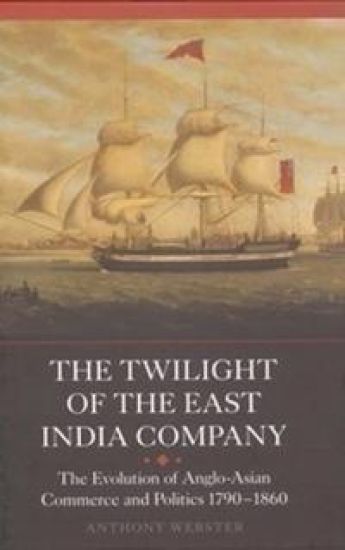
The Twilight of the East India Company

The Twilight of the East India Company

Anthony Webster

The Boydell Press
2013
pokkari
Examines how and why the East India Company was transformed from a commercial trading company to an institution of government, and then abolished. This book examines the development of British commercial, financial and political relations with India and the Far East during the final period of the East India Company's reign as the sovereign power in India. This was a most turbulent period for British commerce with India. The period began with the renewal of the East India Company's Charter and its component monopolies of trade with India and China, but this was quickly followed by the outbreak of theNapoleonic Wars, which spread to the east and saw the completion of Britain's assertion of power over India and much of Southeast Asia. However, the war also strengthened those political forces in Britain campaigning against the Company's monopolies of trade with India and China, which were consequently abolished under the Charter Acts of 1813 and 1833. The spectacular growth of the British economy following industrialisation brought new forces to bear upon India, with the rise of manufactured exports to the east. But the course of commercial relations did not run smoothly, and economic crises in Britain and India in 1833 and 1848 swept away commercial firms in both countries, andcaused severe economic retrenchments. This instability severely hampered efforts to facilitate the export of capital to India during the first half of the century. Finally the rebellion of 1857 spelt the death knell for the Company, and ushered in a new phase of Anglo-Indian economic relations, in which British foreign investment grew substantially. Anthony Webster is Programme Leader - History, in the Department of Humanities and Social Scienceat Liverpool John Moores University.
How to Love

How to Love

Anthony Webster

Xlibris Us
2010
pokkari
The first name that came to me for this book was "Things we don t talk enough about but should do" Loving encompasses more than romantic love. In fact, in a lot of instances love should be expressed in spite of feelings we have to the contrary. This can be difficult. Yes, but this is the essence of true love. This book shows you in simple practical ways how to love yourself and others. Things we don t talk enough about but should do
The Twilight of the East India Company

The Twilight of the East India Company

Anthony Webster

The Boydell Press
2009
sidottu
Examines how and why the East India Company was transformed from a commercial trading company to an institution of government, and then abolished. This book examines the development of British commercial, financial and political relations with India and the Far East during the final period of the East India Company's reign as the sovereign power in India. This was a most turbulent period for British commerce with India. The period began with the renewal of the East India Company's Charter and its component monopolies of trade with India and China, but this was quickly followed by the outbreak of theNapoleonic Wars, which spread to the east and saw the completion of Britain's assertion of power over India and much of Southeast Asia. However, the war also strengthened those political forces in Britain campaigning against the Company's monopolies of trade with India and China, which were consequently abolished under the Charter Acts of 1813 and 1833. The spectacular growth of the British economy following industrialisation brought new forces to bear upon India, with the rise of manufactured exports to the east. But the course of commercial relations did not run smoothly, and economic crises in Britain and India in 1833 and 1848 swept away commercial firms in both countries, andcaused severe economic retrenchments. This instability severely hampered efforts to facilitate the export of capital to India during the first half of the century. Finally the rebellion of 1857 spelt the death knell for the Company, and ushered in a new phase of Anglo-Indian economic relations, in which British foreign investment grew substantially. Anthony Webster is Head of the History Department at Liverpool John Moores University.
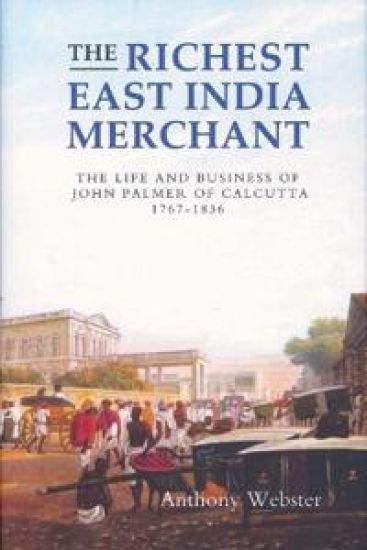
The Richest East India Merchant

The Richest East India Merchant

Anthony Webster

The Boydell Press
2007
sidottu
Biography and business history of wealthy British merchant in India reveals much about the nineteenth-century Empire. John Palmer was the most influential and wealthiest British merchant in British India for the first three decades of the nineteenth century. He ran an `agency house', a global commercial firm involved in banking, the opium trade,shipping, plantation agriculture and trade with Britain, Europe, China, south east Asia and the USA. When his firm went bankrupt in 1830, thousands of people, European and Indian, were ruined, triggering the worst commercial crisis in British India up to that time. This book, the first major study of a British agency house in India, presents an account of both of Palmer's business and personal life, showing how his personal relations and circumstances shaped his commercial strategies, with ultimately disastrous consequences for Anglo-Indian relations as well as his clients. ANTHONY WEBSTER is Head of Humanities at the University of Central Lancashire.
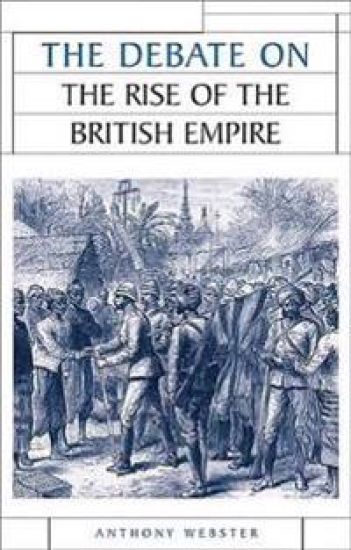
The Debate on the Rise of the British Empire

The Debate on the Rise of the British Empire

Anthony Webster

Manchester University Press
2006
nidottu
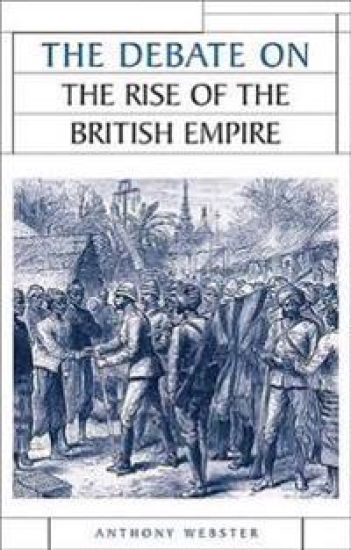
This fascinating and highly useful book examines the rise of the British empire and the various debates among historians of imperialism over the past two hundred years. It discusses why the empire is so attractive to historians, why there is so much debate and controversy surrounding the subject, and how different generations of historians have read the various episodes in the history of the empire often radically differently.Chapters look at the enduring fascination with the empire among historians; early twentieth century economic explanations for the dynamic expansion of the empire in the Victorian period; the controversies surrounding empire in the 1950s; post colonial theory and its critics; religion, race, gender and class; and debates on capitalism and the empire since the 1980. The final chapter investigates how Britain’s imperial history might be viewed in years to come.An engaging and useful work of historiography, this book will be essential reading for students of British imperialism attempting to get to grips with the subject.
The Debate on the Rise of the British Empire

The Debate on the Rise of the British Empire

Anthony Webster

Manchester University Press
2006
sidottu
This fascinating and highly useful book examines the rise of the British empire and the various debates among historians of imperialism over the past two hundred years. It discusses why the empire is so attractive to historians, why there is so much debate and controversy surrounding the subject, and how different generations of historians have read the various episodes in the history of the empire often radically differently.Chapters look at the enduring fascination with the empire among historians; early twentieth century economic explanations for the dynamic expansion of the empire in the Victorian period; the controversies surrounding empire in the 1950s; post colonial theory and its critics; religion, race, gender and class; and debates on capitalism and the empire since the 1980. The final chapter investigates how Britain’s imperial history might be viewed in years to come.An engaging and useful work of historiography, this book will be essential reading for students of British imperialism attempting to get to grips with the subject.