Kirjojen hintavertailu. Mukana 12 290 406 kirjaa ja 12 kauppaa.

Kirjailija

Antoine de Baecque

Kirjat ja teokset yhdessä paikassa: 9 kirjaa, julkaisuja vuosilta 1997-2025, suosituimpien joukossa Éric Rohmer. Vertaile teosten hintoja ja tarkista saatavuus suomalaisista kirjakaupoista.

9 kirjaa

Kirjojen julkaisuhaarukka 1997-2025.

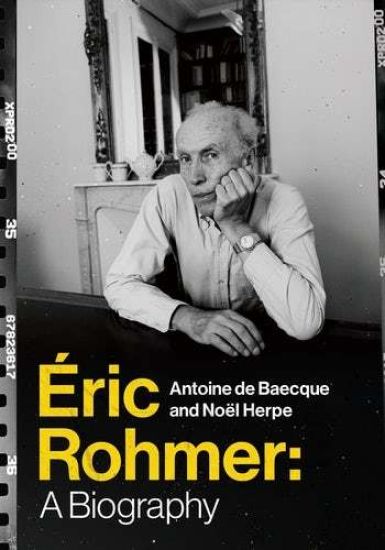
Éric Rohmer

Éric Rohmer

Antoine de Baecque; Noël Herpe

Columbia University Press
2018
pokkari
The director of twenty-five films, including My Night at Maud's (1969), which was nominated for a Best Picture Academy Award, and the editor in chief of Cahiers du cinema from 1957 to 1963, Eric Rohmer set the terms by which people watched, made, and thought about cinema for decades. Such brilliance does not develop in a vacuum, and Rohmer cultivated a fascinating network of friends, colleagues, and industry contacts that kept his outlook sharp and propelled his work forward. Despite his privacy, he cared deeply about politics, religion, culture, and fostering a public appreciation of the medium he loved. This exhaustive biography uses personal archives and interviews to enrich our knowledge of Rohmer's public achievements and lesser known interests and relations. The filmmaker kept in close communication with his contemporaries and competitors: Francois Truffaut, Jean-Luc Godard, Claude Chabrol, and Jacques Rivette. He held a paradoxical fascination with royalist politics, the fate of the environment, Catholicism, classical music, and the French nightclub scene, and his films were regularly featured at New York and Los Angeles film festivals. Despite an austere approach to life, Rohmer had a voracious appetite for art, culture, and intellectual debate captured vividly in this definitive volume.
Éric Rohmer

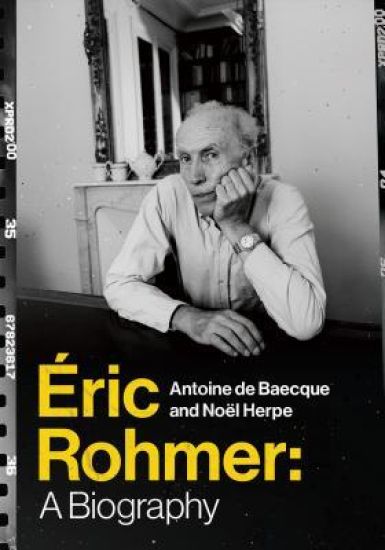
Éric Rohmer

Antoine de Baecque; Noël Herpe

Columbia University Press
2016
sidottu
The director of twenty-five films, including My Night at Maud's (1969), which was nominated for a Best Picture Academy Award, and the editor in chief of Cahiers du cinema from 1957 to 1963, Eric Rohmer set the terms by which people watched, made, and thought about cinema for decades. Such brilliance does not develop in a vacuum, and Rohmer cultivated a fascinating network of friends, colleagues, and industry contacts that kept his outlook sharp and propelled his work forward. Despite his privacy, he cared deeply about politics, religion, culture, and fostering a public appreciation of the medium he loved. This exhaustive biography uses personal archives and interviews to enrich our knowledge of Rohmer's public achievements and lesser known interests and relations. The filmmaker kept in close communication with his contemporaries and competitors: Francois Truffaut, Jean-Luc Godard, Claude Chabrol, and Jacques Rivette. He held a paradoxical fascination with royalist politics, the fate of the environment, Catholicism, classical music, and the French nightclub scene, and his films were regularly featured at New York and Los Angeles film festivals. Despite an austere approach to life, Rohmer had a voracious appetite for art, culture, and intellectual debate captured vividly in this definitive volume.
Le souffle épique du néo-péplum contemporain

Le souffle épique du néo-péplum contemporain

Frédérique Lambert; Antoine de Baecque

Editions L'Harmattan
2025
pokkari
Quel souffle traverse les formes contemporaines du r cit pique ? De Gladiator Megalopolis, en passant par 300, Noah ou The Odyssey, le n o-p plum r invente les mythes antiques l' re des effets sp ciaux, de la saturation m diatique et de l'intelligence artificielle. Cet essai propose une relecture transversale du genre, en s'appuyant sur une analyse esth tique, interm diale et politique du souffle pique - cette force narrative et sensorielle qui anime les corps, les images, les r cits et les empires. Au fil d'une travers e en archipel, l'ouvrage explore les reconfigurations successives du p plum depuis les ann es 2000: ses m tamorphoses num riques, ses hybridations avec le superh ro sme, la science-fiction et la fantasy, sa plasticit id ologique l'heure des crises globales. Il interroge l' mergence d'un hyperp plum, capable de penser le monde post-historique travers des figures neuves: architecte, proph te, survivante, hacker. Croisant tudes filmiques, narratologie et th orie critique, ce livre envisage le n o-p plum comme un v ritable laboratoire de la modernit esth tique. Il claire comment le souffle, jadis principe vital sto cien ou chant de l'a de, devient aujourd'hui une forme rythmique sp culative - un op rateur po tique pour penser l'effondrement, l'alt rit , ou les futurs possibles. Un essai pour celles et ceux qui veulent comprendre comment le cin ma populaire dialogue avec les ruines, les r voltes, et les r ves.
Camera Historica

Camera Historica

Antoine de Baecque

Columbia University Press
2012
pokkari
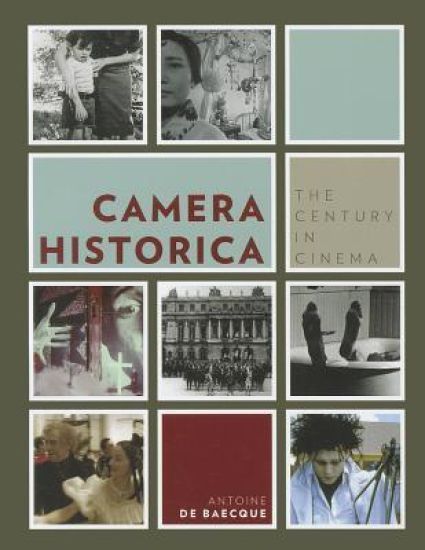
Antoine de Baecque proposes a new historiography of cinema, exploring film as a visual archive of the twentieth century, as well as history's imprint on the cinematic image. Whether portraying events that occurred in the past or stories unfolding before their eyes, certain twentieth-century filmmakers used a particular mise-en-scene to give form to history, becoming in the process historians themselves. Historical events, in turn, irrupted into cinema. This double movement, which de Baecque terms the "cinematographic form of history," disrupts the very material of film, much like historical events disturb the narrative of human progress. De Baecque defines, locates, and interprets cinematographic forms in seven distinct bodies of cinema: 1950s modern cinema and its conjuring of the morbid trauma of war; French New Wave and its style, which became the negative imprint of the malaise felt by young contemporaries of the Algerian War; post-Communist Russian films, or the "de-modern" works of catastroika; contemporary Hollywood films that attach themselves to the master fiction of 9/11; the characteristic mise en forme of filmmaker Sacha Guitry, who, in Si Versailles m'etait conte (1954), filmed French history from inside its chateau; the work of Jean-Luc Godard, who evoked history through his own museum memory of the twentieth century; and the achievements of Peter Watkins, the British filmmaker who reported on history like a war correspondent. De Baecque's introduction clearly lays out his theoretical framework, a profoundly brilliant conceptualization of the many ways cinema and history relate.
Camera Historica

Camera Historica

Antoine de Baecque

Columbia University Press
2012
sidottu
Antoine de Baecque proposes a new historiography of cinema, exploring film as a visual archive of the twentieth century, as well as history's imprint on the cinematic image. Whether portraying events that occurred in the past or stories unfolding before their eyes, certain twentieth-century filmmakers used a particular mise-en-scene to give form to history, becoming in the process historians themselves. Historical events, in turn, irrupted into cinema. This double movement, which de Baecque terms the "cinematographic form of history," disrupts the very material of film, much like historical events disturb the narrative of human progress. De Baecque defines, locates, and interprets cinematographic forms in seven distinct bodies of cinema: 1950s modern cinema and its conjuring of the morbid trauma of war; French New Wave and its style, which became the negative imprint of the malaise felt by young contemporaries of the Algerian War; post-Communist Russian films, or the "de-modern" works of catastroika; contemporary Hollywood films that attach themselves to the master fiction of 9/11; the characteristic mise en forme of filmmaker Sacha Guitry, who, in Si Versailles m'etait conte (1954), filmed French history from inside its chateau; the work of Jean-Luc Godard, who evoked history through his own museum memory of the twentieth century; and the achievements of Peter Watkins, the British filmmaker who reported on history like a war correspondent. De Baecque's introduction clearly lays out his theoretical framework, a profoundly brilliant conceptualization of the many ways cinema and history relate.
Glory and Terror

Glory and Terror

Antoine de Baecque

Routledge
2002
nidottu
Glory and Terror is a vivid and often gory history of the darker side of the French Revolution. Through an examination of contemporary visual and literary representations of executions, funerals, processions and ceremonies it brings the often horrific events of the time to life. Honing in on seven real life cases, the author recounts and interprets: * the public autopsy performed on the corpse of Mirabeau * the exhumation and transportation of Voltaire's body to the Pantheon * the public torture, murder and subsequent mutilation of the Princesse de Lamballe * the agonizingly slow death of Robespierre. Anyone who enjoys dazzling cultural history in the vein of Robert Darnton, Carlo Ginzburg and Anthony Grafton will revel in this intelligent and original work.
Glory and Terror

Glory and Terror

Antoine de Baecque

Routledge
2001
sidottu
Glory and Terror is a vivid and often gory history of the darker side of the French Revolution. Through an examination of contemporary visual and literary representations of executions, funerals, processions and ceremonies it brings the often horrific events of the time to life. Honing in on seven real life cases, the author recounts and interprets: * the public autopsy performed on the corpse of Mirabeau * the exhumation and transportation of Voltaire's body to the Pantheon * the public torture, murder and subsequent mutilation of the Princesse de Lamballe * the agonizingly slow death of Robespierre. Anyone who enjoys dazzling cultural history in the vein of Robert Darnton, Carlo Ginzburg and Anthony Grafton will revel in this intelligent and original work.
Truffaut

Truffaut

Antoine De Baecque; Serge Toubiana; Catherine (TRN) Temerson

University of California Press
2001
pokkari
Here is the definitive story of one of the most celebrated filmmakers of our time, an intensely private individual who cultivated the public image of a man consumed by his craft. But as this absorbing biography shows, Truffaut's personal story from which he drew extensively to create the characters and plots of his films is itself an extraordinary human drama.
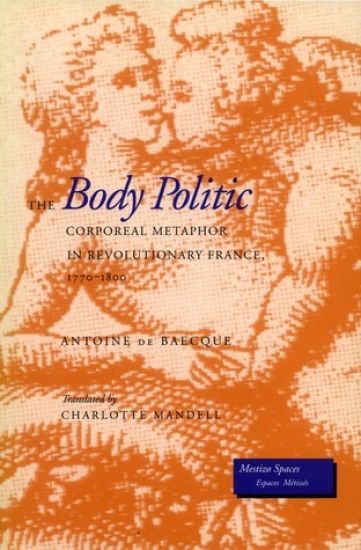
The Body Politic

The Body Politic

Antoine de Baecque

Stanford University Press
1997
sidottu
This is a remarkable history of the French Revolution told through the study of images of the body as they appeared in the popular literature of the time, showing how these images were at the very center of the metaphoric language used to describe the revolution in progress. The author draws upon some 2,000 texts, pamphlets, announcements, opinions, accounts, treatises, and journals to exhume the textual reality of the Revolution, the body of its history. The deployment of bodily images—the degeneracy of the nobility, the impotence of the king, the herculean strength of the citizenry, the goddess of politics appearing naked like Truth, the bleeding wounds of the Republican martyrs—allowed political society to represent itself at a pivotal moment in its history. Searching for "the body of history," the author finds three forms of political representation: first, the metaphysical representation of the body as an anthropomorphic symbol of the political system—the transition of sovereignty from the body of the king to the great citizen body; second, the metaphorical representation of the body as a tool of discourse for persuasion—the embodied tale of the revolutionary epic; and third, the representation of the body in public ceremonies—street carnivals and funerals. The introductory chapter studies the symbolic defeat of the king's body and the transfer of virility to the Republican body. Later chapters examine the new patriotic body as described in medical terms; paintings by David that show the revolutionary hero as "political body"; the Revolutionary subject conceived in terms of regeneration; its opposite, the aristocratic body, conceived as monstrous; and the bestial images projected onto Marie Antoinette.