Kirjojen hintavertailu. Mukana 12 390 323 kirjaa ja 12 kauppaa.

Kirjailija

Antoine Vauchez

Kirjat ja teokset yhdessä paikassa: 5 kirjaa, julkaisuja vuosilta 2015-2021, suosituimpien joukossa The Neoliberal Republic. Vertaile teosten hintoja ja tarkista saatavuus suomalaisista kirjakaupoista.

5 kirjaa

Kirjojen julkaisuhaarukka 2015-2021.

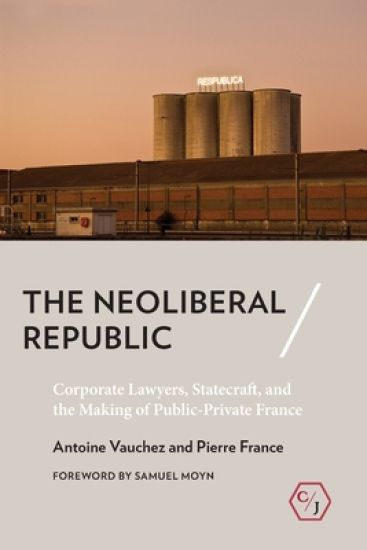
The Neoliberal Republic

The Neoliberal Republic

Antoine Vauchez; Pierre France; Samuel Moyn

Cornell University Press
2021
pokkari
The Neoliberal Republic traces the corrosive effects of the revolving door between public service and private enrichment on the French state and its ability to govern and regulate the private sector. Casting a piercing light on this circulation of influence among corporate lawyers and others in the French power elite, Antoine Vauchez and Pierre France analyze how this dynamic, a feature of all Western democracies, has developed in concert with the rise of neoliberalism over the past three decades. Based on interviews with dozens of public officials in France and a unique biographical database of more than 200 civil-servants-turned-corporate-lawyers, The Neoliberal Republic explores how the always-blurred boundary between public service and private interests has been critically compromised, enabling the transformation of the regulatory state into either an ineffectual bystander or an active collaborator in the privatization of public welfare. The cumulative effect of these developments, the authors reveal, undermines democratic citizenship and the capacity to imagine the public good.
The Neoliberal Republic

The Neoliberal Republic

Antoine Vauchez; Pierre France; Samuel Moyn

Cornell University Press
2021
sidottu
The Neoliberal Republic traces the corrosive effects of the revolving door between public service and private enrichment on the French state and its ability to govern and regulate the private sector. Casting a piercing light on this circulation of influence among corporate lawyers and others in the French power elite, Antoine Vauchez and Pierre France analyze how this dynamic, a feature of all Western democracies, has developed in concert with the rise of neoliberalism over the past three decades. Based on interviews with dozens of public officials in France and a unique biographical database of more than 200 civil-servants-turned-corporate-lawyers, The Neoliberal Republic explores how the always-blurred boundary between public service and private interests has been critically compromised, enabling the transformation of the regulatory state into either an ineffectual bystander or an active collaborator in the privatization of public welfare. The cumulative effect of these developments, the authors reveal, undermines democratic citizenship and the capacity to imagine the public good.
How to Democratize Europe

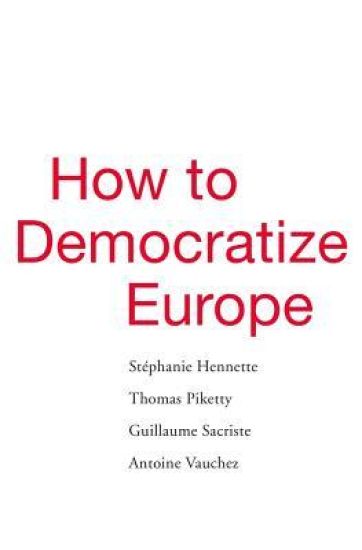
How to Democratize Europe

Stephanie Hennette; Thomas Piketty; Guillaume Sacriste; Antoine Vauchez

Harvard University Press
2019
sidottu
An all-star cast of scholars and politicians from Europe and America propose and debate the creation of a new European parliament with substantial budgetary and legislative power to solve the crisis of governance in the Eurozone and promote social and fiscal justice and public investment. The European Union is struggling. The rise of Euroskeptic parties in member states, economic distress in the south, the migrant crisis, and Brexit top the news. But deeper structural problems may be a greater long-term peril. Not least is the economic management of the Eurozone, the nineteen countries that use the Euro. How can this be accomplished in a way generally acceptable to members, given a political system whose structures are routinely decried for a lack of democratic accountability? How can the EU promote fiscal and social justice while initiating the long-term public investments that Europe needs to overcome stagnation? These are the problems a distinguished group of European and American scholars set out to solve in this short but valuable book. Among many longstanding grievances is the charge that Eurozone policies serve large and wealthy countries at the expense of poorer nations. It is also unclear who decides economic policy, how the interests of diverse member states are balanced, and to whom the decision-makers are accountable. The four lead authors-Stephanie Hennette, Thomas Piketty, Guillaume Sacriste, and Antoine Vauchez-describe these and other problems, and respond with a draft treaty establishing a parliament for economic policy, its members drawn from national parliaments. We then hear from invited critics, who express support, objections, or alternative ideas. How to Democratize Europe offers a chance to observe how major thinkers view some of the Continent's most pressing issues and attempt to connect democratic reform with concrete changes in economic and social policies.
Brokering Europe

Brokering Europe

Antoine Vauchez

Cambridge University Press
2018
pokkari
Since the 1960s, the nature and the future of the European Union have been defined in legal terms. Yet, we are still in need of an explanation as to how this entanglement between law and EU polity-building emerged and how it was maintained over time. While most of the literature offers a disembodied account of European legal integration, Brokering Europe reveals the multifaceted roles Euro-lawyers have played in EU polity, notably beyond the litigation arena. In particular, the book points at select transnational groups of multipositioned legal entrepreneurs which have been in a situation to elevate the role of law in all sorts of EU venues. In doing so, it draws from a new set of intellectual resources (field theory) and empirical strategies only very recently mobilized for the study of the EU. Grounded on an extensive historical investigation, Brokering Europe provides a revised narrative of the 'constitutionalization of Europe'.
Brokering Europe

Brokering Europe

Antoine Vauchez

Cambridge University Press
2015
sidottu
Since the 1960s, the nature and the future of the European Union have been defined in legal terms. Yet, we are still in need of an explanation as to how this entanglement between law and EU polity-building emerged and how it was maintained over time. While most of the literature offers a disembodied account of European legal integration, Brokering Europe reveals the multifaceted roles Euro-lawyers have played in EU polity, notably beyond the litigation arena. In particular, the book points at select transnational groups of multipositioned legal entrepreneurs which have been in a situation to elevate the role of law in all sorts of EU venues. In doing so, it draws from a new set of intellectual resources (field theory) and empirical strategies only very recently mobilized for the study of the EU. Grounded on an extensive historical investigation, Brokering Europe provides a revised narrative of the 'constitutionalization of Europe'.