Kirjojen hintavertailu. Mukana 12 390 323 kirjaa ja 12 kauppaa.

Kirjailija

Antoine Volodine

Kirjat ja teokset yhdessä paikassa: 10 kirjaa, julkaisuja vuosilta 2008-2026, suosituimpien joukossa Post Exoticism In Ten Lessons, Lesson Eleven. Vertaile teosten hintoja ja tarkista saatavuus suomalaisista kirjakaupoista.

10 kirjaa

Kirjojen julkaisuhaarukka 2008-2026.

Living in Fire

Living in Fire

Antoine Volodine

UNIVERSITY OF MINNESOTA PRESS
2026
nidottu
A soldier engulfed in napalm suspends his death by composing a family saga in which he learns to live within the flames Do not remain on the fire's edge, find your way to the heart of the fire and do not leave. . . . Death does not exist as long as you reject it. A soldier watches an airplane dropping napalm on his position. In the instant before his fiery death, he does not see his life flash before his eyes. Instead, he improvises a novel, one that screams out of him at high speed. In his story, Sam wanders a postapocalyptic landscape of broken cities and empty steppes for days, years, centuries. Through a series of blackly comic, dreamlike, bizarre scenes, he gleans lessons imparted by the weird and violent members of his family, including sorceress Aunt Yoanna, doomed Uncle Slutov, and two sharp-shooting cousins who try to persuade him to kill their mother. Sam's clan teaches him how to accept his fate and live in the world of flames with no fear for the future. The forty-ninth novel in the post-exotic series and the last to appear under the name Antoine Volodine, Living in Fire includes an interview with the writer about this book's place in his overall project, its literary and cinematic influences, and its thematic connections with other works in the sequence. A triumphant conclusion to an epic experiment, Living in Fire cuts through a world aflame using dark humor, flights of fantasy, and radical acceptance. Retail e-book files for this title are screen-reader friendly.
The Inner Harbour

The Inner Harbour

Antoine Volodine

UNIVERSITY OF MINNESOTA PRESS
2025
nidottu
A beguiling, perspective-shifting story of obsession and loss set in the grimy, late-colonial decadence of Macau at the end of the twentieth century In The Inner Harbour, Antoine Volodine focuses his literary investigations away from dystopian futures to a specific place at a particular historical moment: Macau on the eve of the Portuguese colony’s transfer to China. In a seedy flat in one of the city’s slums, a hired assassin named Kotter interrogates Breughel, a writer on the run from a mysterious organization code-named Paradise. Breughel has been hiding out in Macau with his lover, Gloria Vancouver, and a significant sum of the organization’s money. But Gloria is dead and the money spent-or so Breughel claims-and now he lives alone in humid squalor. With increasing severity, Kotter extracts Breughel’s confessions, but are they truth or subterfuge? Or are the confessions an elaborate work of fiction by a writer aware that they are no longer able to differentiate between memory and fantasy? Volodine brilliantly blurs the levels of narration-between what Breughel tells his interrogator, what he remembers or invents, and the stories he has written, including his accounts of Gloria’s hallucinatory visions of an apocalyptic war between military forces and the “chrysalids.” Interweaving threads of fiction and truth, lies and hallucinations, The Inner Harbour evokes many of the themes found in Volodine’s other “post-exotic” works: the slippage between dreams and reality, the nightmares of history, the exhaustion of literature and politics, and questions about what it means to be faithful to people or ideas long since vanished. But Volodine also uses the setting of Macau’s late-colonial decadence to explore new sensations of foreignness, alienation, and resignation, all of which coalesce into a nesting doll of narrative that houses an unconventional and tragic love story. Retail e-book files for this title are screen-reader friendly.
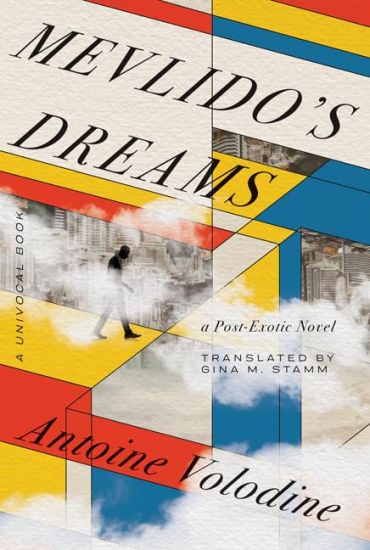
Mevlido's Dreams

Mevlido's Dreams

Antoine Volodine

UNIVERSITY OF MINNESOTA PRESS
2024
nidottu
A postapocalyptic noir that asks if love and political ideals can survive civilizational collapse A meditative, postapocalyptic noir, Mevlido’s Dreams is an urgent communiquÉ from a far-future reality of irreversible environmental damage and civilizational collapse. Mevlido is a double agent working for the police and living in the last habitable city on the planet, a sprawling abyssal ruin marked by war and ruled by criminals. Suspended in the bardo between his loyalty to the surveillance state and to the anarchists, communists, and other rebels he monitors, Mevlido clings to life and hope-barely-in the city’s vast slums, haunted by the memory of the wife he failed to save during the last war and dreaming of a mysterious mission he is told he must accomplish. At the same time, an enigmatic organization existing elsewhere-the Organs-observes Mevlido’s actions and debates its responsibility to him and to humanity as a whole. Asking what it means to love and care for others at the end of the world, this dense, brilliantly detailed postcollapse reality imagined by Antoine Volodine is one that grows ever more relevant amidst intensifying climate and political catastrophes. A key work in Volodine’s post-exotic fictional universe, Mevlido’s Dreams envisions a world changed beyond recognition and ruled under irrational authoritarianism in which dreams nest within dreams and the boundaries between life and death are fluid and uncertain.
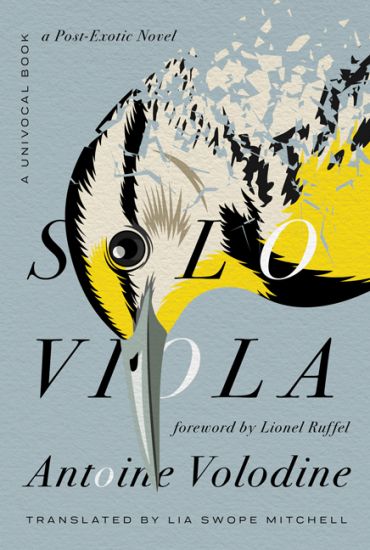
Solo Viola

Solo Viola

Antoine Volodine

University of Minnesota Press
2021
nidottu
A harrowing early novel by one of France’s most unusual contemporary writers At once humorous and horrifying, Solo Viola is one of Antoine Volodine’s first forays into post-exoticism. He takes the reader into a fictional world where a variety of characters collide: three prisoners just released from jail, a band of circus performers, a string quartet, a writer, and a bird. All are trying to survive in an absurd and hostile environment of authoritarian spectacle, at the mercy of a tyrannical buffoon, and seeking the strange counterbalance of hope in a viola player, whose stunning music just might save them all, if only for a moment.
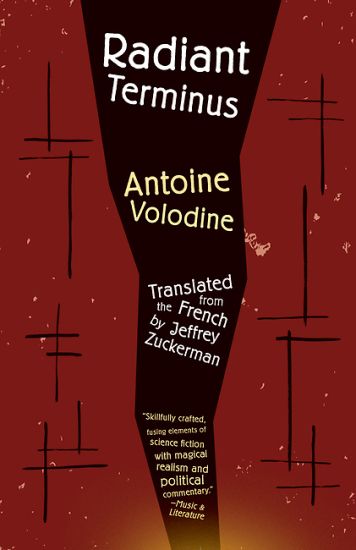
Radiant Terminus

Radiant Terminus

Antoine Volodine

Open Letter
2017
nidottu
"Irreducible to any single literary genre, the Volodinian cosmos is skillfully crafted, fusing elements of science fiction with magical realism and political commentary."-- Music & LiteratureThe most patently sci-fi work of Antoine Volodine's to be translated into English, Radiant Terminus takes place in a Tarkovskian landscape after the fall of the Second Soviet Union. Most of humanity has been destroyed thanks to a number of nuclear meltdowns, but a few communes remain, including one run by Solovyei, a psychotic father with the ability to invade people's dreams--including those of his daughters--and torment them for thousands of years.When a group of damaged individuals seek safety from this nuclear winter in Solovyei's commune, a plot develops to overthrow him, end his reign of mental abuse, and restore humanity.Fantastical, unsettling, and occasionally funny, Radiant Terminus is a key entry in Volodine's epic literary project that--with its broad landscape, ambitious vision, and interlocking characters and ideas--calls to mind the best of David Mitchell.Antoine Volodine (a.k.a. Lutz Bassmann, a.k.a. Manuela Draeger) is the primary pseudonym of a French writer who has published more than forty books, over twenty under this name. Seven of his titles are currently available in English translation, including Minor Angels, Bardo or Not Bardo, and Post-Exoticism in Ten Lessons, Lesson Eleven.Jeffrey Zuckerman is digital editor of Music & Literature. His writing and translations have appeared in Best European Fiction, 3: AM Magazine, the Rumpus, and the Los Angeles Review of Books.
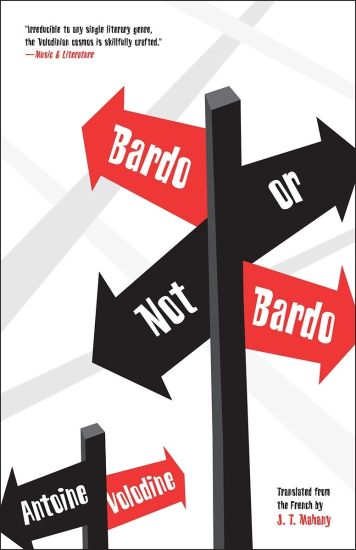
Bardo Or Not Bardo

Bardo Or Not Bardo

Antoine Volodine

Open Letter
2016
nidottu
"Irreducible to any single literary genre, the Volodinian cosmos is skillfully crafted, fusing elements of science fiction with magical realism and political commentary." Nicholas Hauck, "Music & Literature"One of Volodine's funniest books, "Bardo or Not Bardo "takes place in his universe of failed revolutions, radical shamanism, and off-kilter nomenclature.In each of these seven vignettes, someone dies and has to makehis way through the Tibetan afterlife, also known as the Bardo. In the Bardo, souls wander for forty-nine days before being reborn, helped along on their journey by the teachings of the "Book of the Dead."Unfortunately, Volodine's characters bungle their chances at enlightenment, with the recently dead choosing to waste away their afterlife sleeping, or choosing to be reborn as an insignificant spider. The still-living aren't much better off, making a mess of things in their own ways, such as erroneously reciting a Tibetan cookbook to a lost comrade instead of the holy book.Once again, Volodine has demonstrated his range and ambition, crafting a moving, hysterical work about transformations and the power of the book.Antoine Volodine is the primary pseudonym of a French writer who has published twenty books under this name, several of which are available in English translation, such as "Minor Angels," and "Writers." He also publishes under the names Lutz Bassmann and Manuela Draeger.J. T. Mahany is a graduate of the Master of Arts in Literary Translation Studies program at the University of Rochester and is currently studying for his MFA at the University of Arkansas."
We Monks and Soldiers

We Monks and Soldiers

Lutz Bassmann; Antoine Volodine

University of Nebraska Press
2012
pokkari
From one of the most original French writers of our day comes a mysterious, prismatic, and at times profoundly sad reflection on humanity in its darker moments—one of which may very well be our own. In a collection of fictions that blur distinctions between dreaming and waking reality, Lutz Bassmann sets off a series of echoes—the "entrevoutes" that conduct us from one world to another in a journey as viscerally powerful as it is intellectually heady. While humanity seems to be fading around them, the members of a shadowy organization are doing their inadequate best to assist those experiencing their last moments. From a soldier-monk exorcising what seem to be spirits (but are they?) from an abandoned house, to a spy executing a mission whose meaning eludes him, to characters exploring cells, wandering through ruins, confronting political dissent and persecution, encountering—perhaps—the spirits once exorcised, these stories conduct us through a world at once ambiguous and sharply observed. This remarkable work, in Jordan Stump's superb translation, offers readers a thrilling entry into Bassmann's numinous world.
Minor Angels

Minor Angels

Antoine Volodine

University of Nebraska Press
2008
pokkari
From Antoine Volodine comes a deeply disturbing and darkly hilarious novel whose full meaning, its author asserts, will be found not in the book's pages but in the dreams people will have after reading it. In Minor Angels Volodine depicts a postcataclysmic world in which the forces of capitalism have begun to reestablish themselves. Sharply opposed to such a trend, a group of crones confined to a nursing home—all of them apparently immortal—resolves to create an avenging grandson fashioned of lint and rags. Though conjured to crush the rebirth of capitalism, the grandson is instead seduced by its charms—only to fall back into the hands of his creators, where he manages to forestall his punishment by reciting one "narract" a day. It is these narracts, or prose poems, that compose the text of Minor Angels.