Kirjojen hintavertailu. Mukana 12 595 353 kirjaa ja 12 kauppaa.

Kirjailija

Antoinette Burton

Kirjat ja teokset yhdessä paikassa: 25 kirjaa, julkaisuja vuosilta 1998-2024, suosituimpien joukossa Reading from the South. Vertaile teosten hintoja ja tarkista saatavuus suomalaisista kirjakaupoista.

25 kirjaa

Kirjojen julkaisuhaarukka 1998-2024.

Reading from the South

Reading from the South

Charne Lavery; Sarah Nuttall; Sunil Amrith; Gabeba Baderoon; Karin Barber; Rimli Bhattacharya; Antoinette Burton; Pumla Dineo Gqola; Carolyn Hamilton; Khwezi Mkhize; Danai S Mupotsa; James Ogude; Christopher Ew Ouma; Ranka Primorac; Madhumita Lahiri; Meg Samuelson; Lakshmi Subramanian

WITS UNIVERSITY PRESS
2023
sidottu
This set of essays analyses the work of Isabel Hofmeyr, globally recognised as one of South Africa's foremost literary and Indian Ocean scholars. The essays elucidate Hofmeyr's path-breaking studies of transnational histories of the book, African print cultures, and cultural circulations in the Indian Ocean world. This book draws together reflective and analytical essays by renowned intellectuals from around the world who critically engage with the work of one of the global South's leading scholars of African print cultures and the oceanic humanities. Isabel Hofmeyr's scholarship spans more than four decades, and its sustained and long-term influence on her discipline and beyond is formidable. While much of the history of print cultures has been written primarily from the North, Isabel Hofmeyr is one of the leading thinkers producing new knowledge in this area from Africa, the Indian Ocean world and the global South. Her major contribution encompasses the history of the book as well as shorter textual forms and abridged iterations of canonical works such as John Bunyan's The Pilgrim's Progress. She has done pioneering research on the ways in which such printed matter moves across the globe, focusing on intra-African trajectories and circulations as well as movements across land and sea, port and shore. The essays gathered here are written in a blend of intellectual and personal modes, and mostly by scholars of Indian and African descent. Via their engagement with Hofmeyr's path-breaking work, the essays in turn elaborate and contribute to studies of print culture as well as critical oceanic studies, consolidating their findings from the point of view of global South historical contexts and textual practices.
Reading from the South

Reading from the South

Charne Lavery; Sarah Nuttall; Sunil Amrith; Gabeba Baderoon; Karin Barber; Rimli Bhattacharya; Antoinette Burton; Pumla Dineo Gqola; Carolyn Hamilton; Khwezi Mkhize; Danai S Mupotsa; James Ogude; Christopher EW Ouma; Ranka Primorac; Madhumita Lahiri; Meg Samuelson; Lakshmi Subramanian

WITS UNIVERSITY PRESS
2023
pokkari
This book covers concepts and methods from the work of Isabel Hofmeyr, a leading South African scholar of print cultures and intellectual trajectories in the Atlantic and Indian oceans.
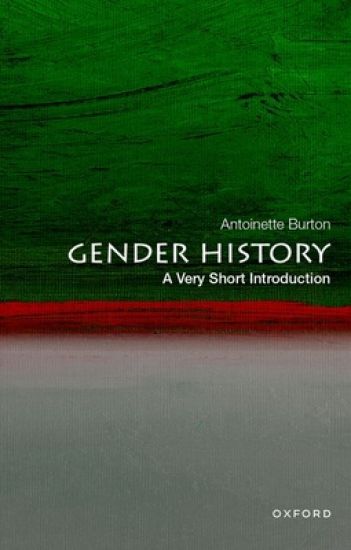
Gender History

Gender History

Antoinette Burton

OXFORD UNIVERSITY PRESS INC
2024
nidottu
Antoinette Burton argues that gender history is hiding in plain sight, at work everywhere we look. This volume introduces the field of gender history--its origins, development, reception, recalibrations, and frictions. It offers a set of working definitions of gender as a descriptive category and as a category of historical analysis, tracing the emergence, usage, and applicability of these entwined subjects across a range of times and places since the 1970s. Inevitably political, gender history has taken aim at the broader field of historical narrative by asking who counts as a historical subject, what difference gender makes, and how attention to it subverts reigning assumptions of what power, culture, economics, and identity have been in the past--and what they are today. The book explores how gender analysis has changed interpretations of the histories of slavery, capitalism, migration, and empire. As a field, gender history has been extraordinarily influential in shaping several generations of scholars and students. The fact that its early emphasis on the relationship between masculinity and femininity was part of a larger set of challenges to universal history by poststructuralism, postmodernism, and postcolonialism positions it at the heart of some of the most fractious intellectual debates of the late twentieth and early twenty-first centuries. And, as part of the movement toward gender equality that is key to modern western progress, gender history has been caught up in the culture wars that continue to shape post-global society. What is intriguing and ultimately defining about gender history is the way that the centrality of gender, so important for revealing how identity is structured in and through regimes of power, has been unable to hold its own over the half century of the field's own history. The practice of gender history has always run up against the forces of race, class, and sexuality that challenge the singularity of gender itself as an explanatory category of historical analysis. That powerful, unruly tension is at the heart of this Very Short Introduction.
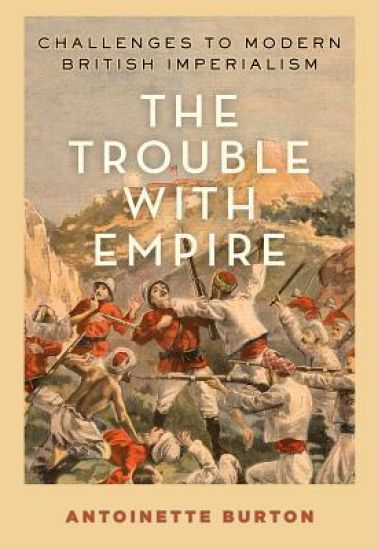
The Trouble with Empire

The Trouble with Empire

Antoinette Burton

Oxford University Press Inc
2017
nidottu
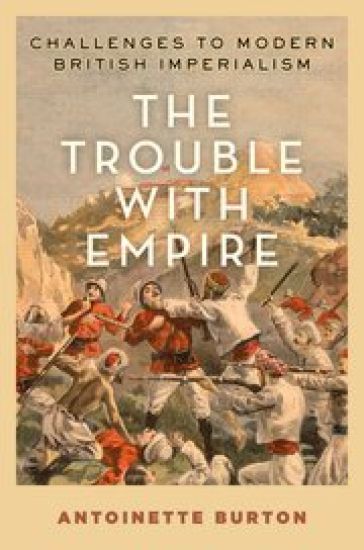
The Trouble with Empire contends that dissent and disruption were constant features of imperial experience and that they should, therefore, drive narratives of the modern British imperial past. Moving across the one hundred years between the first Anglo-Afghan war and Gandhi's salt marches, the book tracks commonalities between different forms of resistance in order to understand how regimes of imperial security worked in practice. This emphasis on protest and struggle is intended not only to reveal indigenous agency but to illuminate the limits of imperial power, official and unofficial, as well. "Pax Britannica"-the conviction that peace was the dominant feature of modern British imperialism-remains the working presumption of most empire histories in the twenty-first century. The Trouble with Empire, in contrast, originates from skepticism about the ability of hegemons to rule unchallenged and about the capacity of imperial rule to finally and fully subdue those who contested it. The book follows various forms of dissent and disruption, both large and small, in three domains: the theater of war, the arena of market relations, and the realm of political order. Tracking how empire did and did not work via those who struggled against it recasts ways of measuring not simply imperial success or failure, but its very viability across the uneven terrain of daily power. The Trouble with Empire argues that empires are never finally or fully accomplished but are always in motion, subject to pressures from below as well as above. In an age of spectacular insurgency and counterinsurgency across many of the former possessions of Britain's global empire, such a genealogy of the forces that troubled imperial hegemony are needed now more than ever.
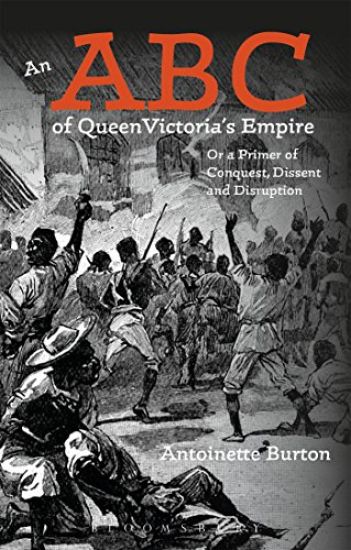
An ABC of Queen Victoria's Empire

An ABC of Queen Victoria's Empire

Antoinette Burton

Bloomsbury Academic
2017
sidottu
An ABC of Queen Victoria's Empire offers a provocative rewriting of Mrs. Ernest Ames’ ABCs for Baby Patriots (1899). Whimsically illustrated for the nursery or primary school child, Ames’ book demonstrates how deeply imperialism reached into popular culture during Victoria’s reign.This book presents a rather darker view of Victoria’s empire, beginning with the wars in Afghanistan and ending with Zam-Zammeh, the large-bore cannon that Kipling’s hero sat astride at the opening of his 1901 novel, Kim. It signposts some of the key events, concepts, places and people that shaped the turbulent ground of empire across the long 19th century, providing a serious counterweight to the notion of imperial conquest as child’s play.With each letter accompanied by a crisp yet historically nuanced account of its subject, this unique account is the perfect primer for students taking courses on global, imperial and British history.
An ABC of Queen Victoria's Empire

An ABC of Queen Victoria's Empire

Antoinette Burton

Bloomsbury Academic
2017
nidottu
An ABC of Queen Victoria's Empire offers a provocative rewriting of Mrs. Ernest Ames’ ABCs for Baby Patriots (1899). Whimsically illustrated for the nursery or primary school child, Ames’ book demonstrates how deeply imperialism reached into popular culture during Victoria’s reign.This book presents a rather darker view of Victoria’s empire, beginning with the wars in Afghanistan and ending with Zam-Zammeh, the large-bore cannon that Kipling’s hero sat astride at the opening of his 1901 novel, Kim. It signposts some of the key events, concepts, places and people that shaped the turbulent ground of empire across the long 19th century, providing a serious counterweight to the notion of imperial conquest as child’s play.With each letter accompanied by a crisp yet historically nuanced account of its subject, this unique account is the perfect primer for students taking courses on global, imperial and British history.
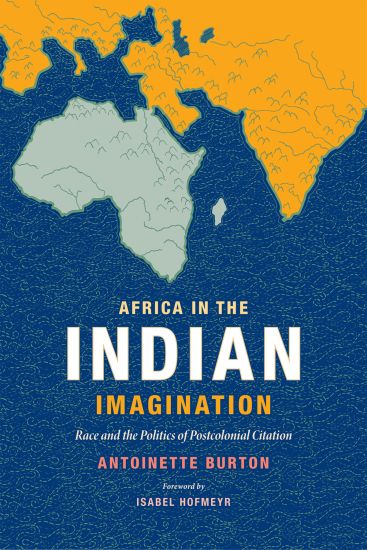
Africa in the Indian Imagination

Africa in the Indian Imagination

Antoinette Burton

Duke University Press
2016
pokkari
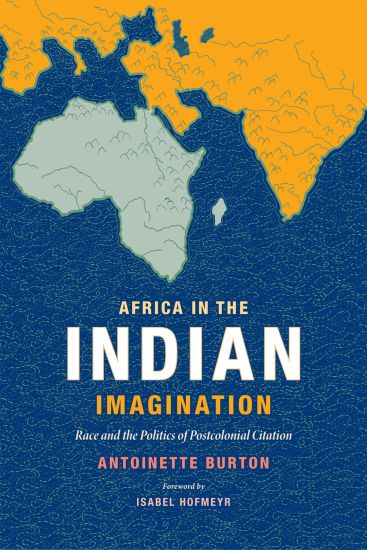
In Africa in the Indian Imagination Antoinette Burton reframes our understanding of the postcolonial Afro-Asian solidarity that emerged from the 1955 Bandung conference. Afro-Asian solidarity is best understood, Burton contends, by using friction as a lens to expose the racial, class, gender, sexuality, caste, and political tensions throughout the postcolonial global South. Focusing on India's imagined relationship with Africa, Burton historicizes Africa's role in the emergence of a coherent postcolonial Indian identity. She shows how-despite Bandung's rhetoric of equality and brotherhood-Indian identity echoed colonial racial hierarchies in its subordination of Africans and blackness. Underscoring Indian anxiety over Africa and challenging the narratives and dearly held assumptions that presume a sentimentalized, nostalgic, and fraternal history of Afro-Asian solidarity, Burton demonstrates the continued need for anti-heroic, vexed, and fractious postcolonial critique.
Africa in the Indian Imagination

Africa in the Indian Imagination

Antoinette Burton

Duke University Press
2016
sidottu
In Africa in the Indian Imagination Antoinette Burton reframes our understanding of the postcolonial Afro-Asian solidarity that emerged from the 1955 Bandung conference. Afro-Asian solidarity is best understood, Burton contends, by using friction as a lens to expose the racial, class, gender, sexuality, caste, and political tensions throughout the postcolonial global South. Focusing on India's imagined relationship with Africa, Burton historicizes Africa's role in the emergence of a coherent postcolonial Indian identity. She shows how-despite Bandung's rhetoric of equality and brotherhood-Indian identity echoed colonial racial hierarchies in its subordination of Africans and blackness. Underscoring Indian anxiety over Africa and challenging the narratives and dearly held assumptions that presume a sentimentalized, nostalgic, and fraternal history of Afro-Asian solidarity, Burton demonstrates the continued need for anti-heroic, vexed, and fractious postcolonial critique.
The Trouble with Empire

The Trouble with Empire

Antoinette Burton

Oxford University Press Inc
2015
sidottu
Incredibly, there is no comprehensive history dedicated to resistance in the 19th and 20th century British empire. This is not for want of attention to the enemies of imperialism. There are accounts of the nature and character of colonial discourse and of the response of discrete nationalist figures and organizations to the incursions of the colonial state. There are narratives of episodic rebellion and uprising and diagnoses of imperial fatigue and decline. There are even a few choice histories of metropolitan anti-imperialism. But synthetic analyses of those who struggled with and against imperial power have failed to materialize, even as imperial blockbusters fly off the shelves, both virtual and real. This is particularly striking in an era of spectacular and empire-humbling counterinsurgency like our own. The "Pax Britannica" is thus not simply an ornamental trace of mid- to high-Victorian optimism that guaranteed the benefits of the civilizing mission. In the absence of counter-narratives of protest, resistance and revolution, it remains the working presumption of British imperial history in the 21st century. This project offers the first thoroughgoing account of what British imperialism looked like from below and of how tenuous its hold on alien populations was throughout its long, unstable life. The Trouble with Empire is intended as a brief but thorough introduction to the nature and consequences of resistance to British imperialism. It spans the 19th and 20th centuries, when discontented subjects of empire made their unhappiness felt across the globe, from Ireland to Canada to India to Africa to Australasia, in direct response to incursions of military might and imperial capitalism. Some of these instances, such as the Indian Mutiny and the Anglo-Zulu War, are extremely well known. Those deemed "lesser" -- the first and second Afghan Wars and the Opium War, for example -- have also gained notoriety as Queen Victoria's "little wars." By taking the long view, moving not just across a variety of geopolitical sites but also across the whole of the period 1840-1955, the commonalities between ostensibly different forms of resistance-in political settings, at workplaces, and at borders--can be better seen and, thus, the structural weaknesses of imperial formations can be examined. The emphasis on the power of protest is intended, in other words, not only to reveal indigenous agency but to illuminate the limits of imperial power, official and unofficial, as well.
Empires and the Reach of the Global

Empires and the Reach of the Global

Tony Ballantyne; Antoinette Burton

The Belknap Press
2014
nidottu
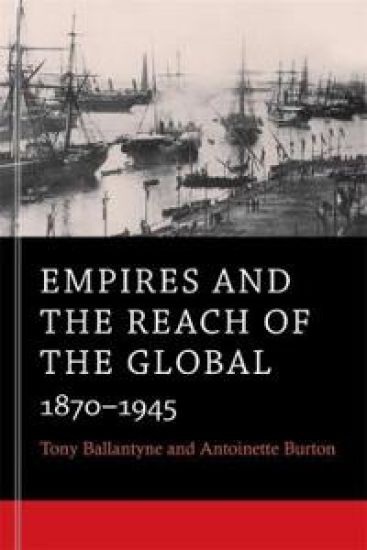
Empires and the Reach of the Global brings the history of empires into sharp focus by showing how imperialism has been a shaping force not just in international politics but in the economies and cultures of today’s world. Focusing on both the strengths and limits of imperial power, Tony Ballantyne and Antoinette Burton describe the creation and disintegration of the reigning world order in the period from 1870 to 1945.Using the British, Japanese, and Ottoman empires as case studies, the authors trace the communication, transportation, and economic networks that were instrumental to empire building. They highlight the role of empires as place-making regimes that organize geographic space as distinct territories. Militaries and missionaries, workplaces and households, all served as key domains of interaction within these territories, as colonial officials sought to manage the customs and lifeways of indigenous populations. Imperial connections contributed to the shrinking of time and space, but colonial encroachments also provoked opposition, which often played out in locations of everyday activity, from fields and factories to schools and prisons. Colonized territories sponsored a variety of forms of organized resistance, with full-fledged nationalist movements erupting onto the global scene in the interwar period.Ballantyne and Burton stress that empire was not something fabricated in European capitals and implemented “out there.” Rather, imperial systems, with their many racial, gendered, and economic forms, affected empires in all of their parts—the metropole as well as the farthest outpost.
A Primer for Teaching World History

A Primer for Teaching World History

Antoinette Burton

Duke University Press
2011
sidottu
A Primer for Teaching World History is a guide for college and high school teachers who are designing an introductory-level world history syllabus for the first time, for those who already teach world history and are seeking new ideas or approaches, and for those who train future teachers to prepare any history course with a global or transnational focus. Drawing on her own classroom practices, as well as her career as a historian, Antoinette Burton offers a set of principles to help instructors think about how to design their courses with specific goals in mind, whatever those may be. She encourages teachers to envision the world history syllabus as having an architecture: a fundamental, underlying structure or interpretive focus that runs throughout the course, shaping students' experiences, offering pathways in and out of "the global," and reflecting the teacher's convictions about the world and the work of history.
A Primer for Teaching World History

A Primer for Teaching World History

Antoinette Burton

Duke University Press
2011
pokkari
A Primer for Teaching World History is a guide for college and high school teachers who are designing an introductory-level world history syllabus for the first time, for those who already teach world history and are seeking new ideas or approaches, and for those who train future teachers to prepare any history course with a global or transnational focus. Drawing on her own classroom practices, as well as her career as a historian, Antoinette Burton offers a set of principles to help instructors think about how to design their courses with specific goals in mind, whatever those may be. She encourages teachers to envision the world history syllabus as having an architecture: a fundamental, underlying structure or interpretive focus that runs throughout the course, shaping students' experiences, offering pathways in and out of "the global," and reflecting the teacher's convictions about the world and the work of history.
Empire in Question

Empire in Question

Antoinette Burton

Duke University Press
2011
pokkari
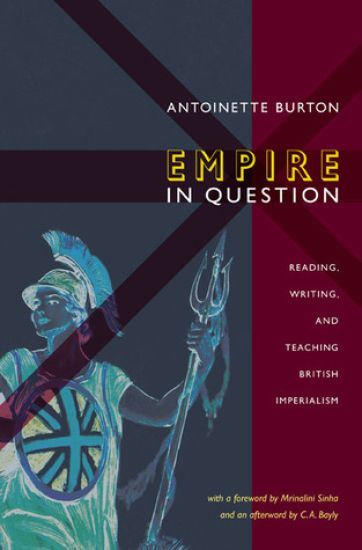
Featuring essays written by the influential historian Antoinette Burton since the mid-1990s, Empire in Question traces the development of a particular, contentious strand of modern British history, the “new imperial history,” through the eyes of a scholar who helped to shape the field. In her teaching and writing, Burton has insisted that the vectors of imperial power run in multiple directions, argued that race must be incorporated into history writing, and emphasized that gender and sexuality are critical dimensions of imperial history. Empire in Question includes Burton’s groundbreaking critiques of British historiography, as well as essays in which she brings theory to bear on topics from Jane Eyre to nostalgia for colonial India. Burton’s autobiographical introduction describes how her early encounters with feminist and postcolonial critique led to her convictions that we must ask who counts as a subject of imperial history, and that we should maintain a healthy skepticism regarding the claims to objectivity that shape much modern history writing. In the coda, she candidly reflects on shortcomings in her own thinking and in the new imperial history, and she argues that British history must be repositioned in relation to world history. Much of Burton’s writing emerged from her teaching; Empire in Question is meant to engage students and teachers in debates about how to think about British imperialism in light of contemporary events.
Empire in Question

Empire in Question

Antoinette Burton

Duke University Press
2011
sidottu
Featuring essays written by the influential historian Antoinette Burton since the mid-1990s, Empire in Question traces the development of a particular, contentious strand of modern British history, the “new imperial history,” through the eyes of a scholar who helped to shape the field. In her teaching and writing, Burton has insisted that the vectors of imperial power run in multiple directions, argued that race must be incorporated into history writing, and emphasized that gender and sexuality are critical dimensions of imperial history. Empire in Question includes Burton’s groundbreaking critiques of British historiography, as well as essays in which she brings theory to bear on topics from Jane Eyre to nostalgia for colonial India. Burton’s autobiographical introduction describes how her early encounters with feminist and postcolonial critique led to her convictions that we must ask who counts as a subject of imperial history, and that we should maintain a healthy skepticism regarding the claims to objectivity that shape much modern history writing. In the coda, she candidly reflects on shortcomings in her own thinking and in the new imperial history, and she argues that British history must be repositioned in relation to world history. Much of Burton’s writing emerged from her teaching; Empire in Question is meant to engage students and teachers in debates about how to think about British imperialism in light of contemporary events.
Contesting Archives

Contesting Archives

Antoinette Burton

University of Illinois Press
2010
nidottu
The contributors of Contesting Archives challenge the assumption that an archive is a neutral, immutable, and a historical repository of information. Instead, these historians view it as a place where decisions are made about whose documents--and therefore whose history--is important. Finding that women's voices and their texts were often obscured or lost altogether, they have developed many new methodologies for creating unique archives and uncovering more evidence by reading documents "against the grain," weaving together many layers of information to reveal complexities and working collectively to reconstruct the lives of women in the past. Global in scope, this volume demonstrates innovative research on diverse women from the sixteenth century to the present in Spain, Mexico, Tunisia, India, Iran, Poland, Mozambique, and the United States. Addressing gender, race, class, nationalism, transnationalism, and migration, these essays' subjects include indigenous women of colonial Mexico, Muslim slave women, African American women of the early twentieth century, Bengali women activists of pre-independence India, wives and daughters of Qajar rulers in Iran, women industrial workers in communist Poland and socialist Mozambique, and women club owners in modern Las Vegas. A foreword by Antoinette Burton adroitly synthesizes the disparate themes woven throughout the book.Contributors are Janet Afary, Maryam Ameli-Rezai, Antoinette Burton, Nupur Chaudhuri, Julia Clancy-Smith, Mansoureh Ettehadieh, Malgorzata Fidelis, Joanne L. Goodwin, Kali Nicole Gross, Daniel S. Haworth, Sherry J. Katz, Elham Malekzadeh, Mary Elizabeth Perry, Kathleen Sheldon, Lisa Sousa, and Ula Y. Taylor.
Contesting Archives

Contesting Archives

Antoinette Burton

University of Illinois Press
2010
sidottu
The contributors of Contesting Archives challenge the assumption that an archive is a neutral, immutable, and a historical repository of information. Instead, these historians view it as a place where decisions are made about whose documents--and therefore whose history--is important. Finding that women's voices and their texts were often obscured or lost altogether, they have developed many new methodologies for creating unique archives and uncovering more evidence by reading documents "against the grain," weaving together many layers of information to reveal complexities and working collectively to reconstruct the lives of women in the past. Global in scope, this volume demonstrates innovative research on diverse women from the sixteenth century to the present in Spain, Mexico, Tunisia, India, Iran, Poland, Mozambique, and the United States. Addressing gender, race, class, nationalism, transnationalism, and migration, these essays' subjects include indigenous women of colonial Mexico, Muslim slave women, African American women of the early twentieth century, Bengali women activists of pre-independence India, wives and daughters of Qajar rulers in Iran, women industrial workers in communist Poland and socialist Mozambique, and women club owners in modern Las Vegas. A foreword by Antoinette Burton adroitly synthesizes the disparate themes woven throughout the book.Contributors are Janet Afary, Maryam Ameli-Rezai, Antoinette Burton, Nupur Chaudhuri, Julia Clancy-Smith, Mansoureh Ettehadieh, Malgorzata Fidelis, Joanne L. Goodwin, Kali Nicole Gross, Daniel S. Haworth, Sherry J. Katz, Elham Malekzadeh, Mary Elizabeth Perry, Kathleen Sheldon, Lisa Sousa, and Ula Y. Taylor.
The Postcolonial Careers of Santha Rama Rau

The Postcolonial Careers of Santha Rama Rau

Antoinette Burton

Duke University Press
2007
pokkari
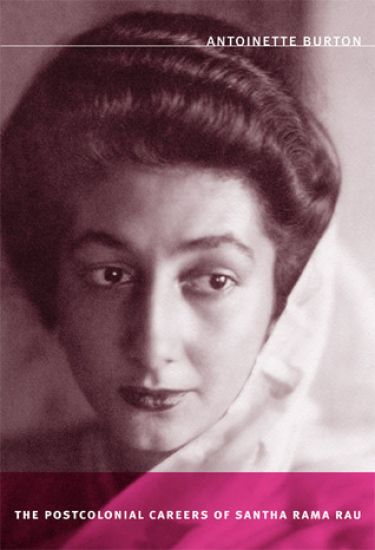
Santha Rama Rau was one of the best known South Asian writers in postwar America. Born into India’s elite in 1923, Rama Rau has lived in the United States since the 1940s. Although she is no longer well known, she was for several decades a popular expert on India. She provided an insider’s view of Indian cultures, traditions, and history to an American public increasingly aware of the expanded role of the United States on the world stage. Between 1945 and 1970, Rama Rau published half a dozen books, including travelogues, novels, a memoir, and a Time-Life cookbook; she was a regular contributor to periodicals such as the New Yorker, the New York Times, McCall’s, and Reader’s Digest.Drawing on archival research and interviews with Rama Rau, historian Antoinette Burton opens Rama Rau’s career into an examination of orientalism in the postwar United States, the changing idioms of cosmopolitanism in the postcolonial era, and the afterlife of British colonialism in the American public sphere. Burton describes how Rama Rau’s career was shaped by gendered perceptions of India and “the East” as well as by the shifting relationships between the United States, India, Pakistan, and Great Britain during the Cold War. Exploring how Rama Rau positioned herself as an expert on both India and the British empire, Burton analyzes the correspondence between Rama Rau and her Time-Life editors over the contents of her book The Cooking of India (1969), and Rama Rau’s theatrical adaptation of E. M. Forster’s A Passage to India, which played on Broadway in 1961 and was the basis for David Lean’s 1985 film. Burton assesses the critical reception of Rama Rau’s play as well as her correspondence with Forster and Lean.
The Postcolonial Careers of Santha Rama Rau

The Postcolonial Careers of Santha Rama Rau

Antoinette Burton

Duke University Press
2007
sidottu
Santha Rama Rau was one of the best known South Asian writers in postwar America. Born into India’s elite in 1923, Rama Rau has lived in the United States since the 1940s. Although she is no longer well known, she was for several decades a popular expert on India. She provided an insider’s view of Indian cultures, traditions, and history to an American public increasingly aware of the expanded role of the United States on the world stage. Between 1945 and 1970, Rama Rau published half a dozen books, including travelogues, novels, a memoir, and a Time-Life cookbook; she was a regular contributor to periodicals such as the New Yorker, the New York Times, McCall’s, and Reader’s Digest.Drawing on archival research and interviews with Rama Rau, historian Antoinette Burton opens Rama Rau’s career into an examination of orientalism in the postwar United States, the changing idioms of cosmopolitanism in the postcolonial era, and the afterlife of British colonialism in the American public sphere. Burton describes how Rama Rau’s career was shaped by gendered perceptions of India and “the East” as well as by the shifting relationships between the United States, India, Pakistan, and Great Britain during the Cold War. Exploring how Rama Rau positioned herself as an expert on both India and the British empire, Burton analyzes the correspondence between Rama Rau and her Time-Life editors over the contents of her book The Cooking of India (1969), and Rama Rau’s theatrical adaptation of E. M. Forster’s A Passage to India, which played on Broadway in 1961 and was the basis for David Lean’s 1985 film. Burton assesses the critical reception of Rama Rau’s play as well as her correspondence with Forster and Lean.
Harriet Martineau's Writing on the British Empire, vol 5

Harriet Martineau's Writing on the British Empire, vol 5

Deborah Logan; Antoinette Burton; Kitty Sklar; Patrick Brantlinger

Routledge
2004
sidottu
The literary presence of Harriet Martineau pervades 19th-century English and American culture. This edition makes her work available, and focuses on her writings on imperialism. It should be of interest to scholars of colonialism, women's writing, Victorian studies, sociology and journalism.
Harriet Martineau's Writing on the British Empire, vol 1

Harriet Martineau's Writing on the British Empire, vol 1

Deborah Logan; Antoinette Burton; Kitty Sklar; Patrick Brantlinger

Routledge
2004
sidottu
The literary presence of Harriet Martineau pervades 19th-century English and American culture. This edition makes her work available, and focuses on her writings on imperialism. It should be of interest to scholars of colonialism, women's writing, Victorian studies, sociology and journalism.