Kirjojen hintavertailu. Mukana 12 595 353 kirjaa ja 12 kauppaa.

Kirjailija

Anton C. de Groot

Kirjat ja teokset yhdessä paikassa: 15 kirjaa, julkaisuja vuosilta 2011-2024, suosituimpien joukossa Voeten En Kanker. Vertaile teosten hintoja ja tarkista saatavuus suomalaisista kirjakaupoista.

Mukana myös kirjoitusasut: Anton C de Groot

15 kirjaa

Kirjojen julkaisuhaarukka 2011-2024.

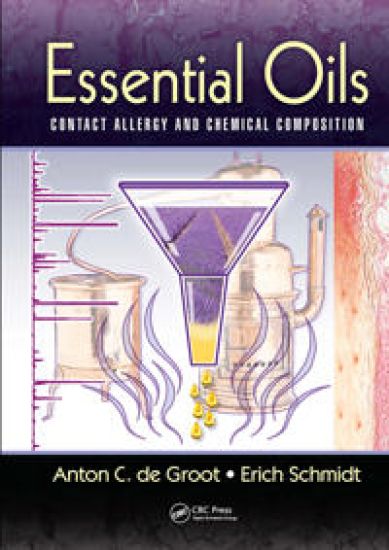
Essential Oils

Essential Oils

Anton C. de Groot; Erich Schmidt

TAYLOR FRANCIS LTD
2024
nidottu
Essential Oils: Contact Allergy and Chemical Composition provides a full review of contact allergy to essential oils along with detailed analyses of the chemical composition of essential oils known to cause contact allergy. In addition to literature data, this book presents the results of nearly 6,400 previously unpublished sample analyses, by far the largest set of essential oils analyses ever reported in a single source of scientific literature.Covering 91 essential oils and two absolutes, the book presents an alphabetical list of all 4,350 ingredients that have been identified in them, a list of chemicals known to cause contact allergy and allergic contact dermatitis, and tabular indications of the ingredients that can be found in each essential oil.The book discusses contact allergy and allergic contact dermatitis for each of the oils and absolutes, sometimes able to provide only one or two reports but drawing upon considerable amounts of literature in other cases, such as with tea tree oil, ylang-ylang oil, lavender oil, rose oil, turpentine oil, jasmine absolute, and sandalwood oil.While limited information on the main components and their concentrations would be enough for most dermatologists, this book gives extensive coverage not only to improve levels of medical knowledge and quality of patient care, but also for the benefit of professionals beyond clinical study and practice, such as chemists in the perfume and cosmetics industries, perfumers, academic scientists working with essential oils and fragrances, aromatherapists, legislators, and those involved in the production, sale, and acquisition of essential oils.Key Features:Provides a full literature review of contact allergy to and chemical composition of 91 essential oils and two absolutesPresents the largest set of analytical reports on essential oils in scientific literature to dateProvides tables of all chemicals which can be found in each essential oil with concentrationsPresents an alphabetical list of 4,350 ingredients identified in the oils and absolutes with their synonyms and specifying in which oils each chemical can be present Provides a tabular list of all known allergens to the oils discussedIncludes reference tables on the quantitative composition of essential oils that are of regulatory use to the fragrance industryCovers an extensive amount of information to benefit non-medical professionals involved with the research, production, distribution, and use of essential oils and products containing essential oils
Monographs in Contact Allergy, Volume 4

Monographs in Contact Allergy, Volume 4

Anton C. de Groot

TAYLOR FRANCIS LTD
2024
nidottu
This fourth volume in an exciting and detailed series on contact allergens and drug allergy provides monographs of all 507 systemic drugs which have caused delayed-type cutaneous drug hypersensitivity reactions and/or occupational allergic contact dermatitis. The monographs present: Identification section; Occupational allergic contact dermatitis; and Cutaneous adverse drug reactions from systemic drugs caused by type IV (delayed-type) hypersensitivity, as shown by positive patch tests (e.g. maculopapular eruption, acute generalized exanthematous pustulosis [AGEP], symmetrical drug-related intertriginous and flexural exanthema [SDRIFE], fixed drug eruption, drug reaction with eosinophilia and systemic symptoms [DRESS], and photosensitivity). Separate chapters present an overview of the spectrum of allergic cutaneous drug reactions, diagnostic tests, immediate contact reactions (contact urticaria), and systemic drugs that have acquired delayed-type hypersensitivity only by cross-reactivity.Key Features: Presents monographs of all known systemic drugs which have caused delayed allergic cutaneous drug reactions and/or occupational allergic contact dermatitis Provides an extensive literature review of relevant topics of allergenic systemic drugs, part of which is hard or impossible to find in database searches Identifies IUPAC names, synonyms, CAS and EC numbers, structural and chemical formulas, Merck Index monographs, and advises on patch testing Presents immediate contact reactions (contact urticaria) from systemics drugs and delayed-type hypersensitivity in drugs caused only by cross-reactivity Covers an extensive amount of information to benefit dermatologists, allergists, and all others interested in drug allergy
Monographs in Contact Allergy, Volume 3

Monographs in Contact Allergy, Volume 3

Anton C. de Groot

TAYLOR FRANCIS LTD
2022
nidottu
This third volume in an exciting and detailed series on contact allergens provides monographs of all 384 topical drugs which have caused contact allergy/allergic contact dermatitis. The monographs present: Identification section; Contact allergy (general population, patients with dermatitis, case reports and case series); Cross-reactions; Patch test sensitization; Photocontact allergy; and Immediate contact reactions (contact urticaria). Separate chapters present an overview of all aspects of allergic contact dermatitis to topical drugs, contact allergy to non-drug ingredients in topical pharmaceuticals and a preview of delayed-type allergy to systemic drugs (to be discussed in Volume 4).Key Features: Presents monographs of all known topical drugs which have caused contact allergy/allergic contact dermatitis Provides a full literature review of relevant topics of allergenic topical drugs Identifies IUPAC names, synonyms, CAS and EC numbers, structural and chemical formulas, Merck Index monographs, and advises on patch testing Presents non-drug allergens in topical pharmaceuticals Covers an extensive amount of information to benefit dermatologists, allergists, and all others interested in drug allergy
Monographs in Contact Allergy, Volume 4

Monographs in Contact Allergy, Volume 4

Anton C. de Groot

TAYLOR FRANCIS LTD
2022
sidottu
This fourth volume in an exciting and detailed series on contact allergens and drug allergy provides monographs of all 507 systemic drugs which have caused delayed-type cutaneous drug hypersensitivity reactions and/or occupational allergic contact dermatitis. The monographs present: Identification section; Occupational allergic contact dermatitis; and Cutaneous adverse drug reactions from systemic drugs caused by type IV (delayed-type) hypersensitivity, as shown by positive patch tests (e.g. maculopapular eruption, acute generalized exanthematous pustulosis [AGEP], symmetrical drug-related intertriginous and flexural exanthema [SDRIFE], fixed drug eruption, drug reaction with eosinophilia and systemic symptoms [DRESS], and photosensitivity). Separate chapters present an overview of the spectrum of allergic cutaneous drug reactions, diagnostic tests, immediate contact reactions (contact urticaria), and systemic drugs that have acquired delayed-type hypersensitivity only by cross-reactivity.Key Features: Presents monographs of all known systemic drugs which have caused delayed allergic cutaneous drug reactions and/or occupational allergic contact dermatitis Provides an extensive literature review of relevant topics of allergenic systemic drugs, part of which is hard or impossible to find in database searches Identifies IUPAC names, synonyms, CAS and EC numbers, structural and chemical formulas, Merck Index monographs, and advises on patch testing Presents immediate contact reactions (contact urticaria) from systemics drugs and delayed-type hypersensitivity in drugs caused only by cross-reactivity Covers an extensive amount of information to benefit dermatologists, allergists, and all others interested in drug allergy
Monographs in Contact Allergy: Volume 2

Monographs in Contact Allergy: Volume 2

Anton C. de Groot

Taylor Francis Ltd
2021
nidottu
This second volume in an exciting and detailed series on contact allergens provides monographs of all 181 fragrances and 79 essential oils which have caused contact allergy / allergic contact dermatitis, including the indicators for fragrance allergy (fragrance mixes I and II and Myroxylon pereirae resin [Balsam of Peru]) and non-fragrance allergens in botanical products used in the perfume industry. The monographs present: Identification section; Contact allergy (general population, patients with dermatitis, case reports and case series); Cross-reactions; Patch test sensitization; Presence in products and chemical analyses; Other side effects (irritant contact dermatitis, photosensitivity, immediate-type reactions, systemic side effects) and more.Key Features:Presents monographs of all known fragrance chemicals and essential oils which have caused contact allergy / allergic contact dermatitisProvides a full literature review of relevant topics of allergenic fragrances and essential oilsIdentifies INCI and IUPAC names, synonyms, CAS and EC numbers, structural formulas, RIFM and Merck Index monographs, SCCS opinions, IFRA and EU restrictions and advises on patch testingPresents an alphabetical list of all synonyms indicating their INCI namesCovers an extensive amount of information to benefit dermatologists, allergists, and non-medical professionals involved with the research, development and marketing of fragrances and essential oils
Monographs in Contact Allergy, Volume 1

Monographs in Contact Allergy, Volume 1

Anton C. de Groot

Taylor Francis Ltd
2021
muu
Monographs in Contact Allergy, Volume 1: Non-Fragrance Allergens in Cosmetics (Part 1 and Part 2) is the first 2-part volume in an exciting series on contact allergy.It presents over 500 natural or synthetic chemicals and compounds which have caused allergic contact dermatitis in cosmetic products. Included here are INCI names, synonyms, description/definition, CAS and EU numbers, chemical class, function in cosmetics, molecular formula, structural formula and advice on patch tests. A full literature review is given of patch testing in patients, case reports of cosmetic allergic contact dermatitis, irritant contact dermatitis, photosensitivity, immediate contact reactions and systemic side effects. This text is suitable for anyone with an interest in contact allergy, from university students to professionals, and all readers will find this informative and detailed series an invaluable resource.Key Features:Monographs of all known non-fragrance chemicals and substances which have caused allergic contact dermatitis from their presence in cosmetic productsProvides lists of all functional groups (such as antioxidants, preservatives, artificial nail building, emollients, hair dyeing, hair colorants) in both the EU and US formats and all chemicals in these groups which have caused cosmetic allergyPresents an alphabetical list of all synonyms indicating their INCI namesReported cross-reactions, pseudo-cross-reactions and co-reactions, patch test sensitization and presence in cosmetic products (including data from FDA’s Voluntary Cosmetic Registration Program) and chemical analyses are discussedCovers an extensive amount of information to benefit dermatologists, allergists, and non-medical professionals involved with the research, development and marketing of cosmetic products
Monographs in Contact Allergy, Volume 3

Monographs in Contact Allergy, Volume 3

Anton C. de Groot

CRC Press
2021
sidottu
This third volume in an exciting and detailed series on contact allergens provides monographs of all 384 topical drugs which have caused contact allergy/allergic contact dermatitis. The monographs present: Identification section; Contact allergy (general population, patients with dermatitis, case reports and case series); Cross-reactions; Patch test sensitization; Photocontact allergy; and Immediate contact reactions (contact urticaria). Separate chapters present an overview of all aspects of allergic contact dermatitis to topical drugs, contact allergy to non-drug ingredients in topical pharmaceuticals and a preview of delayed-type allergy to systemic drugs (to be discussed in Volume 4).Key Features: Presents monographs of all known topical drugs which have caused contact allergy/allergic contact dermatitis Provides a full literature review of relevant topics of allergenic topical drugs Identifies IUPAC names, synonyms, CAS and EC numbers, structural and chemical formulas, Merck Index monographs, and advises on patch testing Presents non-drug allergens in topical pharmaceuticals Covers an extensive amount of information to benefit dermatologists, allergists, and all others interested in drug allergy
Verdachte Huidafwijkingen: Casuïstiek, Differentiaaldiagnoses En Achtergrondinformatie
Dit boek leert huisartsen op een educatieve, visueel aantrekkelijke en stimulerende wijze huidkanker te onderscheiden van goedaardige huidafwijkingen. In dertig casu stieken komt - in een vraag en antwoord vorm - het gehele spectrum van maligniteiten en premaligniteiten die besproken worden in de gelijknamige NHG-Standaard aan de orde. De nadruk ligt daarbij op de klinische en onderscheidende kenmerken van de afwijkingen in de differentiaaldiagnose. Een groot aantal close-up afbeeldingen illustreert de teksten en maakt herkenning bij pati nten en het stellen van de juiste diagnose eenvoudiger. Daarnaast kan de huisarts haar/zijn kennis van de aanbevelingen voor de diagnostiek, behandeling en verwijzing uit de NHG-Standaard toetsen en verbeteren.In de tweede helft van het boek worden alle (pre)maligniteiten in aparte hoofdstukken gepresenteerd, wederom met vele gedetailleerde afbeeldingen. Het - herhaaldelijk - bestuderen van de ziektegeschiedenissen, het beantwoorden van de vragen en de toegang tot relevante achtergrondinformatie zal de diagnostische vaardigheden van de huisarts met betrekking tot huidkanker verbeteren evenals de kennis van de inhoud van de NHG-Standaard, die maatgevend is voor het adequaat diagnostisch en therapeutisch handelen in de huisartsenpraktijk.Dr. Anton de Groot en dr. Johan Toonstra zijn beiden dermatoloog np. Zij schreven eerder samen tien boeken, waaronder vier voor huisartsen. ​
Voeten En Vaten

Voeten En Vaten

Johan Toonstra; Anton C. de Groot

Bohn Stafleu Van Loghum
2019
nidottu
In dit boek worden afwijkingen aan de bloed- en lymfevaten, die aan de voeten en onderbenen kunnen voorkomen, besproken. De belangrijkste zijn perifeer arterieel vaatlijden en chronische veneuze ziekte, maar ook minder frequente vaatpathologie wordt gepresenteerd. Voetzorgverleners kunnen bij vaatziekten een belangrijke signalerende functie hebben. Subtiele afwijkingen zoals een bleke huid of blauwige verkleuring, verminderde haargroei op de tenen of een droge en dunne huid kunnen wijzen op beginnende arteri le insuffici ntie en aanleiding zijn om gericht te vragen naar koude voeten, pijn bij het lopen of mogelijke symptomen van diabetes mellitus. Licht oedeem en uitgezette aderen aan de voeten zijn vaak de eerste tekenen van chronische veneuze ziekte en bij herkenning daarvan is verergering nog eenvoudig te voorkomen. De opzet van het boek maakt herkenning van ziektebeelden door de gebruiker eenvoudig, onder meer door een groot aantal gedetailleerde afbeeldingen. Ook is er een apart hoofdstuk waarin niet de ziektebeelden centraal staan, maar de symptomen van vaatafwijkingen. Zo wordt bij elk symptoom (cyanose, oedeem, necrose, ulcus, hyperpigmentatie, nagelafwijkingen etc.) opgesomd bij welke vaataandoeningen deze kunnen passen en wordt via kruisverwijzingen aangegeven waar de betreffende ziektebeelden in het boek besproken worden. De auteurs, beiden (voormalig) dermatoloog, schreven eerder voor voetzorgverleners Voeten en Huid (2009, tweede editie 2016), Nagelaandoeningen (2010, tweede editie verscheen als Voeten en Nagels in 2016), Voeten en Kanker (2016) en Voeten en Schimmels (2016).
Monographs in Contact Allergy: Volume 2

Monographs in Contact Allergy: Volume 2

Anton C. de Groot

CRC Press
2019
sidottu
This second volume in an exciting and detailed series on contact allergens provides monographs of all 181 fragrances and 79 essential oils which have caused contact allergy / allergic contact dermatitis, including the indicators for fragrance allergy (fragrance mixes I and II and Myroxylon pereirae resin [Balsam of Peru]) and non-fragrance allergens in botanical products used in the perfume industry. The monographs present: Identification section; Contact allergy (general population, patients with dermatitis, case reports and case series); Cross-reactions; Patch test sensitization; Presence in products and chemical analyses; Other side effects (irritant contact dermatitis, photosensitivity, immediate-type reactions, systemic side effects) and more.Key Features: Presents monographs of all known fragrance chemicals and essential oils which have caused contact allergy / allergic contact dermatitis Provides a full literature review of relevant topics of allergenic fragrances and essential oils Identifies INCI and IUPAC names, synonyms, CAS and EC numbers, structural formulas, RIFM and Merck Index monographs, SCCS opinions, IFRA and EU restrictions and advises on patch testing Presents an alphabetical list of all synonyms indicating their INCI names Covers an extensive amount of information to benefit dermatologists, allergists, and non-medical professionals involved with the research, development and marketing of fragrances and essential oils
Monographs in Contact Allergy, Volume 1
Monographs in Contact Allergy, Volume 1: Non-Fragrance Allergens in Cosmetics (Part 1 and Part 2) is the first 2-part volume in an exciting series on contact allergy.It presents over 500 natural or synthetic chemicals and compounds which have caused allergic contact dermatitis in cosmetic products. Included here are INCI names, synonyms, description/definition, CAS and EU numbers, chemical class, function in cosmetics, molecular formula, structural formula and advice on patch tests. A full literature review is given of patch testing in patients, case reports of cosmetic allergic contact dermatitis, irritant contact dermatitis, photosensitivity, immediate contact reactions and systemic side effects. This text is suitable for anyone with an interest in contact allergy, from university students to professionals, and all readers will find this informative and detailed series an invaluable resource.Key Features:Monographs of all known non-fragrance chemicals and substances which have caused allergic contact dermatitis from their presence in cosmetic productsProvides lists of all functional groups (such as antioxidants, preservatives, artificial nail building, emollients, hair dyeing, hair colorants) in both the EU and US formats and all chemicals in these groups which have caused cosmetic allergyPresents an alphabetical list of all synonyms indicating their INCI namesReported cross-reactions, pseudo-cross-reactions and co-reactions, patch test sensitization and presence in cosmetic products (including data from FDA’s Voluntary Cosmetic Registration Program) and chemical analyses are discussedCovers an extensive amount of information to benefit dermatologists, allergists, and non-medical professionals involved with the research, development and marketing of cosmetic products
Essential Oils

Essential Oils

Anton C. de Groot; Erich Schmidt

Apple Academic Press Inc.
2016
sidottu
Essential Oils: Contact Allergy and Chemical Composition provides a full review of contact allergy to essential oils along with detailed analyses of the chemical composition of essential oils known to cause contact allergy. In addition to literature data, this book presents the results of nearly 6,400 previously unpublished sample analyses, by far the largest set of essential oils analyses ever reported in a single source of scientific literature.Covering 91 essential oils and two absolutes, the book presents an alphabetical list of all 4,350 ingredients that have been identified in them, a list of chemicals known to cause contact allergy and allergic contact dermatitis, and tabular indications of the ingredients that can be found in each essential oil.The book discusses contact allergy and allergic contact dermatitis for each of the oils and absolutes, sometimes able to provide only one or two reports but drawing upon considerable amounts of literature in other cases, such as with tea tree oil, ylang-ylang oil, lavender oil, rose oil, turpentine oil, jasmine absolute, and sandalwood oil.While limited information on the main components and their concentrations would be enough for most dermatologists, this book gives extensive coverage not only to improve levels of medical knowledge and quality of patient care, but also for the benefit of professionals beyond clinical study and practice, such as chemists in the perfume and cosmetics industries, perfumers, academic scientists working with essential oils and fragrances, aromatherapists, legislators, and those involved in the production, sale, and acquisition of essential oils.Key Features:Provides a full literature review of contact allergy to and chemical composition of 91 essential oils and two absolutesPresents the largest set of analytical reports on essential oils in scientific literature to dateProvides tables of all chemicals which can be found in each essential oil with concentrationsPresents an alphabetical list of 4,350 ingredients identified in the oils and absolutes with their synonyms and specifying in which oils each chemical can be present Provides a tabular list of all known allergens to the oils discussedIncludes reference tables on the quantitative composition of essential oils that are of regulatory use to the fragrance industryCovers an extensive amount of information to benefit non-medical professionals involved with the research, production, distribution, and use of essential oils and products containing essential oils
Voeten En Kanker

Voeten En Kanker

Johan Toonstra; Anton C. de Groot

Bohn Stafleu Van Loghum
2016
nidottu
In dit boek worden de belangrijkste vormen van huidkanker aan de voeten en hun voorstadia beschreven. Daarnaast presenteert het de bijwerkingen van medicamenteuze behandeling van kanker (zowel van cytostatica als van doelgerichte medicijnen), met nadruk op afwijkingen aan de voeten. De informatie over de steeds vaker voorkomende kwaadaardige tumoren van de huid stelt voetzorgverleners zoals pedicures, medisch pedicures, podotherapeuten en podologen in staat om voor huidkanker verdachte afwijkingen in een vroeg stadium te signaleren. Tijdige behandeling door de arts, aldus mogelijk gemaakt door de voetzorgprofessional, kan complicaties voorkomen en zelfs levensreddend zijn. De hoofdstukken over cytostatica, doelgerichte medicijnen en hun bijwerkingen stellen de voetzorgverlener in staat preventieve maatregelen te nemen en optredende bijwerkingen te herkennen (en eventueel te rapporteren aan de behandelend arts of oncologisch verpleegkundige). Voor de oncologie bestaat groeiende belangstelling bij voetzorgverleners. Voeten en kanker voorziet, als eerste en enige boek, in de dermato-oncologische kennis die nodig is voor het ontwikkelen van optimale oncologische voetzorgtrajecten door de beroepsgroep. Meer dan 100 afbeeldingen van hoge kwaliteit maken de teksten inzichtelijk en vergemakkelijken het herkennen van specifieke beelden aan de voeten.De auteurs, beiden (voormalig) dermatoloog, schreven eerder voor voetzorgverleners Voeten en Huid (2009, tweede editie 2015) en Nagelaandoeningen (2010).
Voeten En Huid: Dermatologie Voor Pedicures, Podotherapeuten En Andere Voetspecialisten
Pedicures en podotherapeuten zijn onmisbaar in de voetverzorging (of voetbehandeling)van pati nten met een slechte bloedvoorziening. Hun belangrijke inbreng kan complicatiesvoorkomen. Minder bekend is de rol die ze kunnen spelen in het voorkomen van, mogelijke ernstige, huidziekten. Het herkennen hiervan is belangrijk voor een snelle doorverwijzing naar de huisarts en om besmetting van de zorgverlener zelf te voorkomen.Voeten en Huid, 2e editie is een encyclopedisch handboek, met een overzicht van ongeveer 160 ziektebeelden aan de voet, rijkelijk ge llustreerd met meer dan 400 gedetailleerde afbeeldingen van hoge kwaliteit. Van alle huidafwijkingen worden in het kort het klinisch beeld, de oorzaak, de gevolgen en eventueel de behandeling besproken. Daardoor kan het boek ook dienen als naslagwerk voor hen die meer willen weten over een reeds vastgestelde huidziekte van een cli nt. Dit boek is bij uitstek geschikt voor (aankomende) pedicures, podotherapeuten en andere voetprofessionals.