Kirjojen hintavertailu. Mukana 12 595 353 kirjaa ja 12 kauppaa.

Kirjailija

Anton Pelinka

Kirjat ja teokset yhdessä paikassa: 21 kirjaa, julkaisuja vuosilta 1996-2021, suosituimpien joukossa Zur Aktualität von Paul F. Lazarsfeld. Vertaile teosten hintoja ja tarkista saatavuus suomalaisista kirjakaupoista.

21 kirjaa

Kirjojen julkaisuhaarukka 1996-2021.

Zur Aktualität von Paul F. Lazarsfeld

Zur Aktualität von Paul F. Lazarsfeld

Anton Pelinka

Springer Fachmedien Wiesbaden
2021
nidottu
Dieses Buch führt umfassend und gut lesbar in Leben und Werk von Paul F. Lazarsfeld ein. Es werden vor allem zwei von Lazarsfelds Forschungsarbeiten und deren Publikation in Buchform als zentrale Werke vorgestellt: „Die Arbeitslosen von Marienthal“ als Beispiel für den auch politisch motivierten Übergang seines Forschungsinteresses von der Psychologie zur Soziologie; und die Studie „The People’s Choice“ – eine bahnbrechende Arbeit, die mit einem neu entwickelten Instrumentarium empirischer Sozialforschung politisches Verhalten beschreibt und erklärt; eine Forschungsarbeit, die sowohl von der Soziologie als auch von der Politikwissenschaft beansprucht wird. In beiden Projekten betrat Lazarsfeld methodisches Neuland.Paul Lazarsfeld überschritt viele Grenzen. Von intellektueller Neugierde bestimmt, widmete er sich der Forschung und der akademischen Lehre. Als Homo Politicus nahm er – in verschiedenen Lebensabschnitten und in unterschiedlicher Form – Anteil an der Politik. Als Europäer war er von der „Alten Welt“ geprägt. Aber er ging voll und ganz in der „Neuen“ auf: in Amerika. Lazarsfelds persönliches Leben und seine wissenschaftliche Karriere passen in kein exklusiv etikettierbares Muster.
The Austrian Party System

The Austrian Party System

Anton Pelinka; Fritz Plasser

Routledge
2021
nidottu
First published in 1989. Political science in Austria is a relatively young discipline. It began to gradually establish itself in the 60's and only as recently as 1971 was it anchored in the curriculum of Austrian universities as a separate field of study. With the present book in English the editors hope to stimulate the interest of international social scientists in Austria, to overcome language barriers, and to make the topical problems and developments of Austrian democracy accessible to an international reading public. The book is intended to reflect the current state of a discipline-political science. However, it is also to be a contribution to the further development of this discipline. It should stimulate further, intensive and critical occupation with the theme "parties and the party system in Austria."
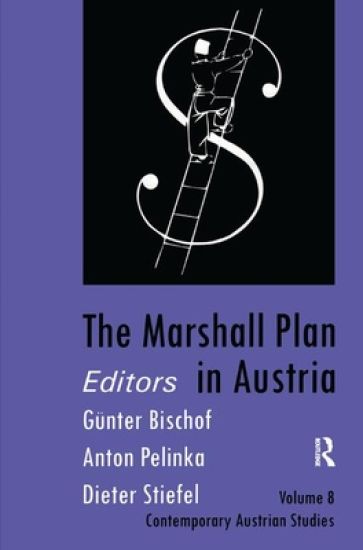
The Marshall Plan in Austria

The Marshall Plan in Austria

Anton Pelinka

Routledge
2020
sidottu
Perhaps no country benefitted more from the Marshall Plan for assistance in reconstruction of Europe after World War II than Austria. On a per capita basis, each American taxpayer invested $80 per person in the Plan; each Austrian received $133 from the European recovery program, more than any other of the sixteen participating countries. Without the Marshall Plan, the Austrian economic miracle of the 1950s would have been unthinkable. Despite this, contemporary Austria seems to have forgotten this essential American contribution to its postwar reconstruction. This volume in the Contemporary Austrian Studies series examines how the plan affected Austria, and how it is perceived today.The political context of the Marshall Plan in Austria is addressed in essays by Jill Lewis and Matthew Berg. Dieter Stiefer describes the vast Soviet economic exploitation of their Austrian occupation zone. Andrea Komlosy shows how the Marshall Plan helped complete the division of Europe. Siegfried Beer suggests the secret involvement of the CIA in the Marshall Plan, while Hans J³rgen Schr÷der analyzes the effectiveness of Marshall Plan propaganda programs in Germany and Austria.The macroeconomic impact of Marshall Plan funds on Austrian economic policy is outlined by Hans Seidel. Kurt Tweraser, Georg Rigele and G³nter Bischof suggest the microeconomic importance of funds for the steel, electricity and tourist sectors of the Austrian economy. Wilhelm Kohler's sweeping analysis compares the American transfer of funds to postwar Europe with current debates about the cost of European Union enlargement. The legacy of the Marshall Plan is addressed by former Austrian Finance Minister Ferdinand Lacina. Kurt Loffler and Hans Fubenegger summarize the activities of the Economic Recovery Program Fund. Coming on the heels of the fiftieth anniversary of the Marshall Plan, this compelling overview of the Plan and its impact will be important for historians, those interested in international politics, and Austrian scholars.G³nter Bischof is professor of history and associate director of Center-Austria at the University of New Orleans; Anton Pelinka is professor of political science at the University of Innsbruck and director of the Institute of Conflict Research in Vienna; Dieter Stiefel is professor of social and economic history at the University of Vienna and executive secretary of the Schumpeter Society in Vienna.This volume offers a collection of articles, mostly by contemporary Austrian-born historians, touching on various phases of the Marshall Plan administered through the European Recovery Program (ERP) and its successors counterfunds' assistance to the present. A splendid introduction followed by the key thirteen articles on the plan is augmented by several nontopical essays and book reviews, along with a survey of Austrian politics in 1998. A number of articles emanated from a 1998 conference at the University of New Orleans. Both novice and specialist will appreciate this book."-The Historian
Austria

Austria

Anton Pelinka

Routledge
2020
nidottu
This book compares contemporary Austria with other political systems and with the Austrias that existed in the past. The dynamism of the changes taking place in Austria can be described and analyzed with this double focus of comparison.
The Austrian Party System

The Austrian Party System

Anton Pelinka; Fritz Plasser

Routledge
2019
sidottu
First published in 1989. Political science in Austria is a relatively young discipline. It began to gradually establish itself in the 60's and only as recently as 1971 was it anchored in the curriculum of Austrian universities as a separate field of study. With the present book in English the editors hope to stimulate the interest of international social scientists in Austria, to overcome language barriers, and to make the topical problems and developments of Austrian democracy accessible to an international reading public. The book is intended to reflect the current state of a discipline-political science. However, it is also to be a contribution to the further development of this discipline. It should stimulate further, intensive and critical occupation with the theme "parties and the party system in Austria."
Austria

Austria

Anton Pelinka

Routledge
2019
sidottu
This book compares contemporary Austria with other political systems and with the Austrias that existed in the past. The dynamism of the changes taking place in Austria can be described and analyzed with this double focus of comparison.
Neutrality in Austria

Neutrality in Austria

Anton Pelinka

Routledge
2018
sidottu
After Stalin's death, during a respite in Cold War tensions in 1955, Austria managed to rid itself of a quadripartite occupation regime and become a neutral state. As the Cold War continued, Austria's policy of neutrality helped make this small country into an important mediator of East-West differences, and neutrality became a crucial part of Austria's postwar identity. In the post-Cold War era Austrian neutrality seems to demand redefinition. The work addresses such issues as what neutrality means when Austria's neighbors are joining NATO? What is the difference between Austrian neutrality in 1955 and 2000? In remaining apart from NATO, do Austrian elites risk their nation's national security? Is Austria a "free rider," too stingy to contribute to Western defense? Has the neutralist mentalit become such a crucial part of Austrian postwar identity that its abandonment will threaten civil society? These questions are addressed in this latest in the prestigious Contemporary Austrian Studies series.The volume emerged from the Wittgenstein Research Center project on "Discourse, Politics, and Identity," an interdisciplinary investigation of the meaning of Austrian neutrality. The first two chapters analyze the current meaning of Austrian neutrality. Karin Liebhart records narrative interviews with former presidents Rudolf Kirchschlger and Kurt Waldheim, both central political actors present at the creation and implementation of Austria's postwar neutrality. Gertraud Benke and Ruth Wodak provide in-depth analysis of a debate on Austrian National Television on "NATO and Neutrality," a microcosm of Austrian popular opinion that exposed all positions and ideological preferences on neutrality. The historian Oliver Rathkolb surveys international perceptions of Austrian neutrality over the past half-century. For comparative contrast David Irwin and John Wilson apply Foucault's theoretical framework to the history and debates on neutrality in Ireland. Political scientists Heinz Grtner and Paul Luif provide examples of how Austrian neutrality has been handled in the past and today. Michael Gehler analyzes Austria's response to the Hungarian crisis of 1956 and Klaus Eisterer reviews the Austrian legation's handling of the 1968 Czechoslovak crisis. Gnter Bischof is professor of history and executive director of Center Austria at the University of New Orleans. Anton Pelinka is professor of political science at the University of Innsbruck and director of the Institute of Conflict Research in Vienna. Ruth Wodak is professor in the linguistics department at the University of Vienna and director of the research center "Discourse, Politics, Identity" at the Austrian Academy of Science.
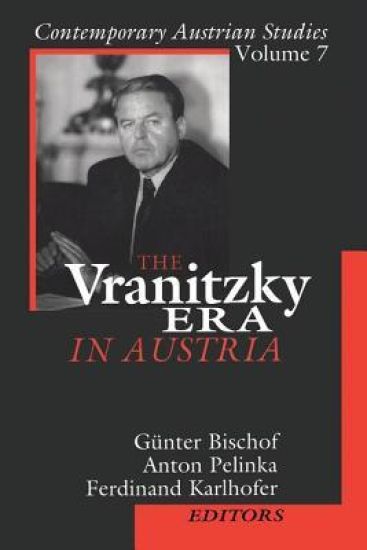
The Vranitzky Era in Austria

The Vranitzky Era in Austria

Anton Pelinka

Routledge
2018
sidottu
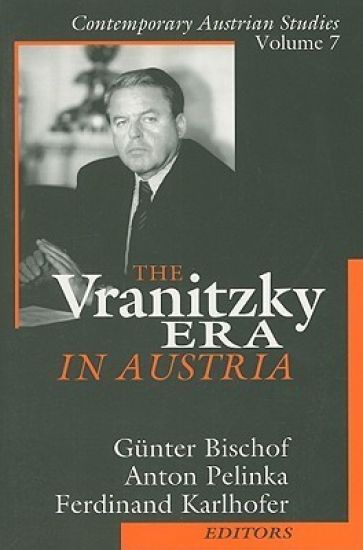
Franz Vranitzky, the banker turned politician, was chancellor during the ten years (1986-96) when the world dramatically changed in the aftermath of the cold war. Among postwar chancellors, only Bruno Kreisky held office longer. The Austrian Social Democratic Party has been in power since 1970. Such longevity is unique in postwar European politics. The dominance of Social Democracy in particular is noteworthy when compared to the general decline of traditional leftist politics in Europe. The chapters in this volume try to assess Vranitzky's central role in recent Austrian and European history.Richard Luther presents the general European political context in which Vranitzky operated. Eva Nowotny, Vranitzky's former principal foreign policy adviser and Austria's current ambassador to the United Kingdom, analyzes his struggle over joining the European Union as well as Austria's security dilemmas following the cold war. Fritz Plasser looks at the changing electoral behavior of Austrians and the ascendancy of new parties. Irene Etzerdorfer concentrates on the long hegemony of Austrian Social Democratic leadership by comparing Vranitzky's and Kreisky's leadership styles. Other contributors include Sonja Puntscher-Riekmann, Brigitte Unger, Peter Rosner, Alexander van der Bellen, and George Winkler.A forum on postwar Austrian memory of World War II from a comparative perspective, which continues the theme of previous volumes in this series, is also included. Jonathan Petropoulos demonstrates how Swiss middlemen were in the center of dealing with stolen Nazi art during and after the war, while Olive Rathkolb describes the shameful legacy of the Austrian government's procrastination in resolving the issue of Jewish "heirless art." Peter Utgaard shows how in Austria's postwar high school textbooks the American bombing of Hiroshima often figured more prominently than the Holocaust. Review essays and book reviews complete the volume. The Vranitzky Era in Austria is a compelling work for political scientists, historians, and Austria studies scholars.Gnter Bischof is associate director of Center Austria and associate professor of history at the University of New Orleans, and former visiting professor at the University of Salzburg. Anton Pelinka is director of the Austrian Institute of Conflict Research in Vienna, professor of political science at the University of Innsbruck, and former visiting professor at Stanford University. Ferdinand Karlhofer is associate professor of political science at the University of Innsbruck and former visiting professor at the University of New Orleans.
Austrian Foreign Policy in Historical Context

Austrian Foreign Policy in Historical Context

Anton Pelinka; Gunter Bischof; Michael Gehler

Routledge
2018
sidottu
In 2005, Austria celebrated the sixtieth anniversary of its liberation from the Nazi regime and the fiftieth anniversary of the State Treaty that ended the occupation and returned full sovereignty to the country. This volume of Contemporary Austrian Studies covers foreign policy in the twentieth century. It offers an up-to-date status report of Austria's foreign policy trajectories and diplomatic options.Eva Nowotny, the current Austrian ambassador to the United States, introduces the volume with an analysis of the art and practice of Austrian diplomacy in historical perspective. Ambassador Wolfgang Petritsch analyzes recent Balkans diplomacy as an EU emissary in the Bosnian and Kosovo crises. Historians Günther Kronenbitter, Alexander Lassner, Günter Bischof, Joanna Granville, and Martin Kofler provide historical case studies of pre-and post-World War I and World War II Austrian diplomacy, Austria's dealings with the Hungarian crisis of 1956, and its mediation between Kennedy and Khrushchev in the early 1960s. Political scientists Romain Kirt, Stefan Mayer, and Gunther Hauser analyze small states' foreign policymaking in a globalizing world, Austrian federal states' separate regional policy initiatives abroad and Austria's role vis-à-vis current European security initiatives. Michael Gehler periodizes post-World War II Austrian foreign policy regimes and provides a valuable summary of both the available archival and printed diplomatic source collections. A "Historiography Roundtable" is dedicated to the Austrian Occupation decade. Günter Bischof reports on the state of occupation historiography; Oliver Rathkolb on the historical memory of the occupation; Michael Gehler on the context of the German question; and Wolfgang Mueller and Norman Naimark on Stalin's Cold War and Soviet policies towards Austria during those years. Review essays and book reviews on art theft, anti-Semitism, the Hungarian crisis of 1956, among other topics, complete the volume.
Politics of the Lesser Evil

Politics of the Lesser Evil

Anton Pelinka

Routledge
2018
nidottu
In his pathbreaking book, Leadership, James MacGregor Burns defines a kind of leadership with an indistinguishable personal impact on society. He calls this "transformal" leadership, and sees it as more than routine and calculable responses to demands. In fact, he argues, the more stable a liberal democracy, the less freedom of action for transformal leadership. Anton Pelinka uses a wellspring of historical fact to argue that politics always means having to choose between the lesser of two evils and that democracy reduces any possibility of personal leadership.According to Pelinka, Jaruzelski's politics of democratization in Poland in the 1980s (which led to the first free and competitive elections in a communist system) illustrate personal leadership hampered by democracy. Jaruzelski initiated the roundtable process that transformed Poland into a democracy; yet, this process ultimately ended with his abdication. Pelinka further emphasizes contradictions between transformal leadership and democracy by comparing the leadership styles of Hitler, Stalin, and Mao. He de-.scribes collaboration, resistance, and tensions between domestic and international leadership, using the American examples of Presidents Wilson, Roosevelt, Kennedy, Johnson, and Nixon and the European examples of Petain and Churchill. Pelinka then turns to the tragic fate of the Judenrate under the Nazi regime to illustrate the "lesser-evil" approach. He closes with a discussion of "moral leadership" and how abstaining from office, just as Gandhi and King did, may be particularly suited to stable democracies.Pelinka's unique use of rich empirical evidence from twentieth-century history is this volume's hallmark. He is critical of mainstream political theory and its neglect of deviant examples of democracies - such as Switzerland, Italy, and Japan, where there is traditionally much less emphasis placed on leadership. Pelinka's noteworthy study will be essential reading for political scientists and theorists, political philosophers and political sociologists with special interest in political ethics, and contemporary historians.
The Dollfuss/Schuschnigg Era in Austria
The years of Chancellors Dollfuss and Schuschnigg's authoritarian governments (1933/34-1938) have been denounced as "Austrofascism" from the left, or defended as a Christian corporate state ("Stondestaat") from the right. During this period, Austria was in a desperate struggle to maintain its national independence vis-o-vis Hitler's Germany, a struggle that ultimately failed. In the end, the Nazis invaded and annexed Austria (Anschluss").Volume 11 of the Contemporary Austrian Studies series stays away from these heated historiographical debates and looks at economic, domestic, and international politics sine ira et studio. Timothy Kirk opens with an assessment of "Austrofascism" in light of recent discourse on interwar European fascism. Three scholars from the Economics University of Vienna analyze the macroeconomic climate of the 1930s: Hansjrg Klausinger the "Vienna School's" theoretical contributions to end the "Great Depression"; Gerhard Senft the economic policies of the Stondestaat; and Peter Berger the financial aid from the League of Nations. Jens Wessels delves into the microeconomic arena and presents case studies of leading Austrian businesses and their performance during the depression. Jim Miller looks at Dollfuss, the agrarian reformer. Alexander Lassner and Erwin Schmidl deal with the context of the international arena and Austria's desperate search for protection against Nazi Anschluss-pressure and military preparedness against foreign aggression.In a comparativist essay Megan Greene compares the policies of Austria's Haider and Italy's Berlusconi and recent EU responses to threats from the Right. The "FORUM" looks at various recent historical commissions in Austria dealing with Holocaust-era assets and their efforts to provide restitution to victims of Nazism. Two review essays, by Evan Burr Bukey and Hermann Freudenberger, survey recent scholarly literature on Austria(ns) during World War II. This addition to the Contemporary Austrian Studies series will be welcomed by political scientists, historians and scholars with a strong interest in European affairs.
Austrian Foreign Policy in Historical Context

Austrian Foreign Policy in Historical Context

Anton Pelinka; Gunter Bischof; Michael Gehler

AldineTransaction
2005
nidottu
In 2005, Austria celebrated the sixtieth anniversary of its liberation from the Nazi regime and the fiftieth anniversary of the State Treaty that ended the occupation and returned full sovereignty to the country. This volume of Contemporary Austrian Studies covers foreign policy in the twentieth century. It offers an up-to-date status report of Austria's foreign policy trajectories and diplomatic options.Eva Nowotny, the current Austrian ambassador to the United States, introduces the volume with an analysis of the art and practice of Austrian diplomacy in historical perspective. Ambassador Wolfgang Petritsch analyzes recent Balkans diplomacy as an EU emissary in the Bosnian and Kosovo crises. Historians Günther Kronenbitter, Alexander Lassner, Günter Bischof, Joanna Granville, and Martin Kofler provide historical case studies of pre-and post-World War I and World War II Austrian diplomacy, Austria's dealings with the Hungarian crisis of 1956, and its mediation between Kennedy and Khrushchev in the early 1960s. Political scientists Romain Kirt, Stefan Mayer, and Gunther Hauser analyze small states' foreign policymaking in a globalizing world, Austrian federal states' separate regional policy initiatives abroad and Austria's role vis-à-vis current European security initiatives. Michael Gehler periodizes post-World War II Austrian foreign policy regimes and provides a valuable summary of both the available archival and printed diplomatic source collections. A "Historiography Roundtable" is dedicated to the Austrian Occupation decade. Günter Bischof reports on the state of occupation historiography; Oliver Rathkolb on the historical memory of the occupation; Michael Gehler on the context of the German question; and Wolfgang Mueller and Norman Naimark on Stalin's Cold War and Soviet policies towards Austria during those years. Review essays and book reviews on art theft, anti-Semitism, the Hungarian crisis of 1956, among other topics, complete the volume.
The Dollfuss/Schuschnigg Era in Austria

The Dollfuss/Schuschnigg Era in Austria

Anton Pelinka

Transaction Publishers
2003
nidottu
The years of Chancellors Dollfuss and Schuschnigg's authoritarian governments (1933/34-1938) have been denounced as "Austrofascism" from the left, or defended as a Christian corporate state ("Stondestaat") from the right. During this period, Austria was in a desperate struggle to maintain its national independence vis-o-vis Hitler's Germany, a struggle that ultimately failed. In the end, the Nazis invaded and annexed Austria (Anschluss").Volume 11 of the Contemporary Austrian Studies series stays away from these heated historiographical debates and looks at economic, domestic, and international politics sine ira et studio. Timothy Kirk opens with an assessment of "Austrofascism" in light of recent discourse on interwar European fascism. Three scholars from the Economics University of Vienna analyze the macroeconomic climate of the 1930s: Hansjrg Klausinger the "Vienna School's" theoretical contributions to end the "Great Depression"; Gerhard Senft the economic policies of the Stondestaat; and Peter Berger the financial aid from the League of Nations. Jens Wessels delves into the microeconomic arena and presents case studies of leading Austrian businesses and their performance during the depression. Jim Miller looks at Dollfuss, the agrarian reformer. Alexander Lassner and Erwin Schmidl deal with the context of the international arena and Austria's desperate search for protection against Nazi Anschluss-pressure and military preparedness against foreign aggression.In a comparativist essay Megan Greene compares the policies of Austria's Haider and Italy's Berlusconi and recent EU responses to threats from the Right. The "FORUM" looks at various recent historical commissions in Austria dealing with Holocaust-era assets and their efforts to provide restitution to victims of Nazism. Two review essays, by Evan Burr Bukey and Hermann Freudenberger, survey recent scholarly literature on Austria(ns) during World War II. This addition to the Contemporary Austrian Studies series will be welcomed by political scientists, historians and scholars with a strong interest in European affairs.
The Haider Phenomenon

The Haider Phenomenon

Anton Pelinka

Transaction Publishers
2001
nidottu
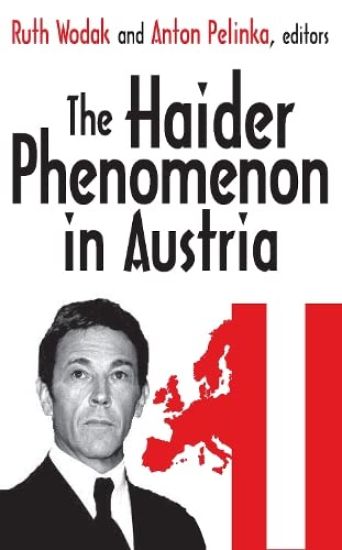
Austria does not often make political headlines. It has at least twice in recent years: in 1986, when the "Waldheim Affair" was debated worldwide, and in 1999, when the Austrian Freedom Party (FPOe) under Joerg Haider received 27 percent of the vote in national elections. Established by former Nazis for former Nazis, the FPOe entered the mainstream of Austrian politics when it became part of a coalition government. This volume explores whether its rise is a uniquely Austrian phenomenon or corresponds to broader social and political changes in Europe.Parallels to Haider's party can be found in other European countries. Its anti-immigration agenda and rhetoric are similar to those of the French FN, the Belgian Vlaams Bloc, and the Italian Lega Nord. And its anti-European Union posture is similar to the sentiments of the "anti-Maastrich" wing of the British conservative party. However, European reaction to the FPOe's rise derives not only from its policies, but its linkage to past suspicions that the Austrians have not learned the lessons of history as had the Germans. The FPOe's success strengthened that impression. In response, 14 European Union governments downgraded their bilateral relations with the Austrian government to a purely technical level. Although the sanctions were lifted in September 2000, the spotlight is still very much on Austria, and concern about the FPOe remains high.This important volume contains eleven chapters by internationally prominent scholars from a broad spectrum of the social sciences. Its cross-disciplinary approach provides perspective on the Haider phenomenon, its rhetoric, and its impact on daily life in Austria. It also analyzes the influence of right-wing populism on politics, culture, and society, and its implications in Austria as well as elsewhere in Europe. The Haider Phenomenon will be of interest to historians, political scientists, those in European studies, and scholars in contemporary political extremism.
The Haider Phenomenon

The Haider Phenomenon

Anton Pelinka

Transaction Publishers
2001
sidottu
Austria does not often make political headlines. It has at least twice in recent years: in 1986, when the "Waldheim Affair" was debated worldwide, and in 1999, when the Austrian Freedom Party (FPOe) under Joerg Haider received 27 percent of the vote in national elections. Established by former Nazis for former Nazis, the FPOe entered the mainstream of Austrian politics when it became part of a coalition government. This volume explores whether its rise is a uniquely Austrian phenomenon or corresponds to broader social and political changes in Europe.Parallels to Haider's party can be found in other European countries. Its anti-immigration agenda and rhetoric are similar to those of the French FN, the Belgian Vlaams Bloc, and the Italian Lega Nord. And its anti-European Union posture is similar to the sentiments of the "anti-Maastrich" wing of the British conservative party. However, European reaction to the FPOe's rise derives not only from its policies, but its linkage to past suspicions that the Austrians have not learned the lessons of history as had the Germans. The FPOe's success strengthened that impression. In response, 14 European Union governments downgraded their bilateral relations with the Austrian government to a purely technical level. Although the sanctions were lifted in September 2000, the spotlight is still very much on Austria, and concern about the FPOe remains high.This important volume contains eleven chapters by internationally prominent scholars from a broad spectrum of the social sciences. Its cross-disciplinary approach provides perspective on the Haider phenomenon, its rhetoric, and its impact on daily life in Austria. It also analyzes the influence of right-wing populism on politics, culture, and society, and its implications in Austria as well as elsewhere in Europe. The Haider Phenomenon will be of interest to historians, political scientists, those in European studies, and scholars in contemporary political extremism.
Neutrality in Austria

Neutrality in Austria

Anton Pelinka

Transaction Publishers
2001
nidottu
After Stalin's death, during a respite in Cold War tensions in 1955, Austria managed to rid itself of a quadripartite occupation regime and become a neutral state. As the Cold War continued, Austria's policy of neutrality helped make this small country into an important mediator of East-West differences, and neutrality became a crucial part of Austria's postwar identity. In the post-Cold War era Austrian neutrality seems to demand redefinition. The work addresses such issues as what neutrality means when Austria's neighbors are joining NATO? What is the difference between Austrian neutrality in 1955 and 2000? In remaining apart from NATO, do Austrian elites risk their nation's national security? Is Austria a "free rider," too stingy to contribute to Western defense? Has the neutralist mentalit become such a crucial part of Austrian postwar identity that its abandonment will threaten civil society? These questions are addressed in this latest in the prestigious Contemporary Austrian Studies series.The volume emerged from the Wittgenstein Research Center project on "Discourse, Politics, and Identity," an interdisciplinary investigation of the meaning of Austrian neutrality. The first two chapters analyze the current meaning of Austrian neutrality. Karin Liebhart records narrative interviews with former presidents Rudolf Kirchschlger and Kurt Waldheim, both central political actors present at the creation and implementation of Austria's postwar neutrality. Gertraud Benke and Ruth Wodak provide in-depth analysis of a debate on Austrian National Television on "NATO and Neutrality," a microcosm of Austrian popular opinion that exposed all positions and ideological preferences on neutrality. The historian Oliver Rathkolb surveys international perceptions of Austrian neutrality over the past half-century. For comparative contrast David Irwin and John Wilson apply Foucault's theoretical framework to the history and debates on neutrality in Ireland. Political scientists Heinz Grtner and Paul Luif provide examples of how Austrian neutrality has been handled in the past and today. Michael Gehler analyzes Austria's response to the Hungarian crisis of 1956 and Klaus Eisterer reviews the Austrian legation's handling of the 1968 Czechoslovak crisis. Gnter Bischof is professor of history and executive director of Center Austria at the University of New Orleans. Anton Pelinka is professor of political science at the University of Innsbruck and director of the Institute of Conflict Research in Vienna. Ruth Wodak is professor in the linguistics department at the University of Vienna and director of the research center "Discourse, Politics, Identity" at the Austrian Academy of Science.
The Marshall Plan in Austria

The Marshall Plan in Austria

Anton Pelinka

Transaction Publishers
2000
nidottu
Perhaps no country benefitted more from the Marshall Plan for assistance in reconstruction of Europe after World War II than Austria. On a per capita basis, each American taxpayer invested $80 per person in the Plan; each Austrian received $133 from the European recovery program, more than any other of the sixteen participating countries. Without the Marshall Plan, the Austrian economic miracle of the 1950s would have been unthinkable. Despite this, contemporary Austria seems to have forgotten this essential American contribution to its postwar reconstruction. This volume in the Contemporary Austrian Studies series examines how the plan affected Austria, and how it is perceived today.The political context of the Marshall Plan in Austria is addressed in essays by Jill Lewis and Matthew Berg. Dieter Stiefer describes the vast Soviet economic exploitation of their Austrian occupation zone. Andrea Komlosy shows how the Marshall Plan helped complete the division of Europe. Siegfried Beer suggests the secret involvement of the CIA in the Marshall Plan, while Hans J³rgen Schr÷der analyzes the effectiveness of Marshall Plan propaganda programs in Germany and Austria.The macroeconomic impact of Marshall Plan funds on Austrian economic policy is outlined by Hans Seidel. Kurt Tweraser, Georg Rigele and G³nter Bischof suggest the microeconomic importance of funds for the steel, electricity and tourist sectors of the Austrian economy. Wilhelm Kohler's sweeping analysis compares the American transfer of funds to postwar Europe with current debates about the cost of European Union enlargement. The legacy of the Marshall Plan is addressed by former Austrian Finance Minister Ferdinand Lacina. Kurt Loffler and Hans Fubenegger summarize the activities of the Economic Recovery Program Fund. Coming on the heels of the fiftieth anniversary of the Marshall Plan, this compelling overview of the Plan and its impact will be important for historians, those interested in international politics, and Austrian scholars.G³nter Bischof is professor of history and associate director of Center-Austria at the University of New Orleans; Anton Pelinka is professor of political science at the University of Innsbruck and director of the Institute of Conflict Research in Vienna; Dieter Stiefel is professor of social and economic history at the University of Vienna and executive secretary of the Schumpeter Society in Vienna.This volume offers a collection of articles, mostly by contemporary Austrian-born historians, touching on various phases of the Marshall Plan administered through the European Recovery Program (ERP) and its successors counterfunds' assistance to the present. A splendid introduction followed by the key thirteen articles on the plan is augmented by several nontopical essays and book reviews, along with a survey of Austrian politics in 1998. A number of articles emanated from a 1998 conference at the University of New Orleans. Both novice and specialist will appreciate this book."-The Historian
The Vranitzky Era in Austria

The Vranitzky Era in Austria

Anton Pelinka

Transaction Publishers
1999
nidottu
Franz Vranitzky, the banker turned politician, was chancellor during the ten years (1986-96) when the world dramatically changed in the aftermath of the cold war. Among postwar chancellors, only Bruno Kreisky held office longer. The Austrian Social Democratic Party has been in power since 1970. Such longevity is unique in postwar European politics. The dominance of Social Democracy in particular is noteworthy when compared to the general decline of traditional leftist politics in Europe. The chapters in this volume try to assess Vranitzky's central role in recent Austrian and European history.Richard Luther presents the general European political context in which Vranitzky operated. Eva Nowotny, Vranitzky's former principal foreign policy adviser and Austria's current ambassador to the United Kingdom, analyzes his struggle over joining the European Union as well as Austria's security dilemmas following the cold war. Fritz Plasser looks at the changing electoral behavior of Austrians and the ascendancy of new parties. Irene Etzerdorfer concentrates on the long hegemony of Austrian Social Democratic leadership by comparing Vranitzky's and Kreisky's leadership styles. Other contributors include Sonja Puntscher-Riekmann, Brigitte Unger, Peter Rosner, Alexander van der Bellen, and George Winkler.A forum on postwar Austrian memory of World War II from a comparative perspective, which continues the theme of previous volumes in this series, is also included. Jonathan Petropoulos demonstrates how Swiss middlemen were in the center of dealing with stolen Nazi art during and after the war, while Olive Rathkolb describes the shameful legacy of the Austrian government's procrastination in resolving the issue of Jewish "heirless art." Peter Utgaard shows how in Austria's postwar high school textbooks the American bombing of Hiroshima often figured more prominently than the Holocaust. Review essays and book reviews complete the volume. The Vranitzky Era in Austria is a compelling work for political scientists, historians, and Austria studies scholars.Gnter Bischof is associate director of Center Austria and associate professor of history at the University of New Orleans, and former visiting professor at the University of Salzburg. Anton Pelinka is director of the Austrian Institute of Conflict Research in Vienna, professor of political science at the University of Innsbruck, and former visiting professor at Stanford University. Ferdinand Karlhofer is associate professor of political science at the University of Innsbruck and former visiting professor at the University of New Orleans.
Politics of the Lesser Evil

Politics of the Lesser Evil

Anton Pelinka

Transaction Publishers
1998
sidottu
In his pathbreaking book, Leadership, James MacGregor Burns defines a kind of leadership with an indistinguishable personal impact on society. He calls this "transformal" leadership, and sees it as more than routine and calculable responses to demands. In fact, he argues, the more stable a liberal democracy, the less freedom of action for transformal leadership. Anton Pelinka uses a wellspring of historical fact to argue that politics always means having to choose between the lesser of two evils and that democracy reduces any possibility of personal leadership.According to Pelinka, Jaruzelski's politics of democratization in Poland in the 1980s (which led to the first free and competitive elections in a communist system) illustrate personal leadership hampered by democracy. Jaruzelski initiated the roundtable process that transformed Poland into a democracy; yet, this process ultimately ended with his abdication. Pelinka further emphasizes contradictions between transformal leadership and democracy by comparing the leadership styles of Hitler, Stalin, and Mao. He de-.scribes collaboration, resistance, and tensions between domestic and international leadership, using the American examples of Presidents Wilson, Roosevelt, Kennedy, Johnson, and Nixon and the European examples of Petain and Churchill. Pelinka then turns to the tragic fate of the Judenrate under the Nazi regime to illustrate the "lesser-evil" approach. He closes with a discussion of "moral leadership" and how abstaining from office, just as Gandhi and King did, may be particularly suited to stable democracies.Pelinka's unique use of rich empirical evidence from twentieth-century history is this volume's hallmark. He is critical of mainstream political theory and its neglect of deviant examples of democracies - such as Switzerland, Italy, and Japan, where there is traditionally much less emphasis placed on leadership. Pelinka's noteworthy study will be essential reading for political scientists and theorists, political philosophers and political sociologists with special interest in political ethics, and contemporary historians.
The Challenge of Ethnic Conflict, Democracy and Self-determination in Central Europe
This volume provides an overall assessment of ethnic diversity in central Europe in historical context and presents a critical assessment of the conflict in former Yugoslavia. It advances a hypothesis on the origins of ethnic conflict, proposes an approach to the prevention and reduction of ethnic conflict in general and in central Europe in particular, and forwards concrete policy recommendations for the region of east and central Europe and beyond.