Kirjojen hintavertailu. Mukana 12 390 323 kirjaa ja 12 kauppaa.

Kirjailija

Anton Rippon

Kirjat ja teokset yhdessä paikassa: 15 kirjaa, julkaisuja vuosilta 2005-2026, suosituimpien joukossa Wartime Entertainment. Vertaile teosten hintoja ja tarkista saatavuus suomalaisista kirjakaupoista.

15 kirjaa

Kirjojen julkaisuhaarukka 2005-2026.

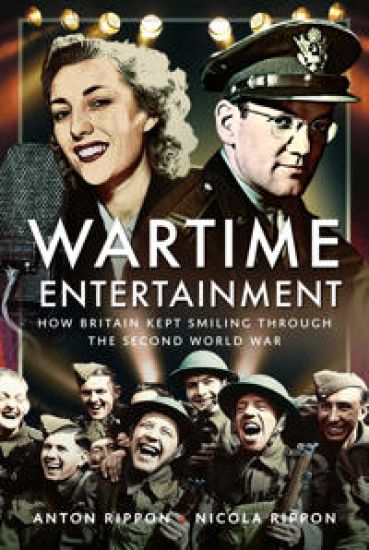
Wartime Entertainment

Wartime Entertainment

Anton Rippon; Nicola Rippon

PEN SWORD BOOKS LTD
2026
nidottu
It might have ended 80 years ago, but we still have a warm, nostalgic relationship with the Second World War, due in no small part to the love we have for the entertainment from those turbulent times. Singers like Vera Lynn – the ‘Forces Sweetheart’ – Gracie Fields, Anne Shelton, and the Andrews Sisters, bandleader Glenn Miller whose fate is still a mystery, films like Gone With The Wind, Casablanca, Mrs Miniver, In Which We Serve, Goodbye Mr Chips, and morale-boosting radio programmes like ITMA, Music While You Work and Hi Gang! all helped Britain to stay calm and carry on as it sheltered from the bombs, worked long hours in munitions factories, and prayed that its menfolk fighting on land, sea and in the air to bring about victory would one day return home safely. Wartime Entertainment: How Britain Kept Smiling Through the Second World War relives the wartime years, looking at the songs and the singers, at the role that the BBC – ‘Auntie’ – played not only in entertaining the nation but also in keeping it informed, at how West End theatre survived the Blitz, and at the bands that played both the big dance venues and the village halls to raise spirits and, for a few hours at least, lighten the mood of those dark and dangerous days. The book considers the work of the Crown Film Unit that made short information and documentary films as well as longer drama-documentaries and even a few straight drama productions for the public in Britain and abroad, and at ENSA – the Entertainments National Service Association – that provided entertainment for British armed forces personnel both at home and abroad.
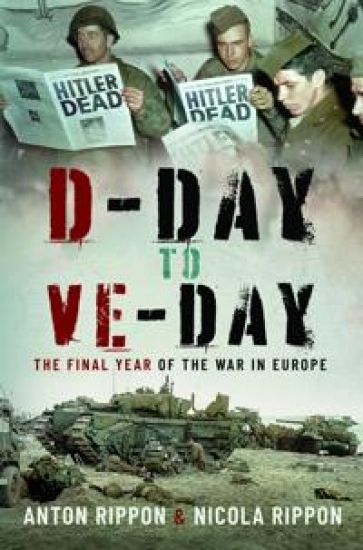
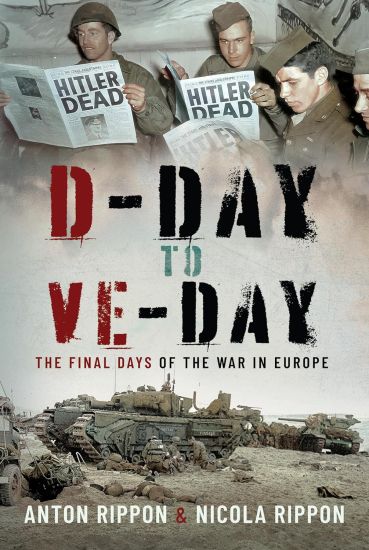
D-Day to VE Day

D-Day to VE Day

Anton Rippon

PEN SWORD BOOKS LTD
2026
nidottu
On the evening of Monday, 5th June 1944, the people of Britain went to bed with a sense of great events impending. They knew that any day now would come news of the battle that would forever alter the course of their lives, and the lives of their children and their grandchildren. The following day’s morning newspapers and early radio news bulletins were full of the fall of Rome to the Allies, which had been announced the day before. But then, at 9.33 am on that Tuesday, came the brief announcement: Allied naval forces, supported by strong air forces, had begun landing Allied armies on the coast of France.’ D-Day had finally dawned. D-Day to VE Day tells the story of the last year of the Second World War in Europe, from the Normandy landings and on through the hard slog to that long-awaited day – 8th May 1945 – when Britain broke out the bunting, rolled out the barrel, and celebrated victory over Hitler. The air-raid sirens were silenced, the lights could be switched on again, and the boys would be coming home. In many homes, festivities were muted because the war in the Far East was still to be won, but for a few short hours at least, the nation could afford to let its hair down and dance in the streets. Using contemporary accounts – interviews, newspaper reports and official documents – of those final months, D-Day to VE Day looks at life in Britain during those vital months, at the events that brought an end to war in Europe, and at the redrawing of national borders that would shape a new world order.
Soccer Scandals

Soccer Scandals

Anton Rippon

PEN SWORD BOOKS LTD
2025
nidottu
It was Pelé who popularised the idea of football as ‘the Beautiful Game’ and so it is. But football also has its uglier side. As far back as the Edwardian era matches were ‘fixed’ to benefit gamblers, or to help clubs desperately in need of points to win promotion or to avoid relegation. There have been matches so brutal that on one occasion it was necessary for the BBC to precede televised highlights with a warning to viewers that what they were about see was ‘appalling, disgusting, disgraceful’. Crowd disorders, inadequate policing, and stadiums left in disrepair have resulted in loss of life and added to the scandals that have scarred ‘the Beautiful Game’ and caused public outrage. From Bolton to Brussels, Manchester to Montevideo, Seoul to Santiago, football has seen many dark chapters, many tragedies and more than a few shady characters, from the goalkeeper who offered not to ‘accidently’ let in goals to the referee who was arrested with 13lbs of heroin hidden in his underpants. Soccer Scandals: When the Beautiful Game Turned Ugly tells of the high-ranking officials who were at the centre of some of the most remarkable widespread corruptions that football has ever seen, of the betting rings involving unscrupulous players and referees, of doping, blackmail and phone taps, of ‘shameful savagery’ on the pitch and riots off it, even of suicide and attempted murder. It is the stuff of pulp fiction rather than of just games and goals and Saturday heroes. It is the ugly side of the game that Pelé found so beautiful.
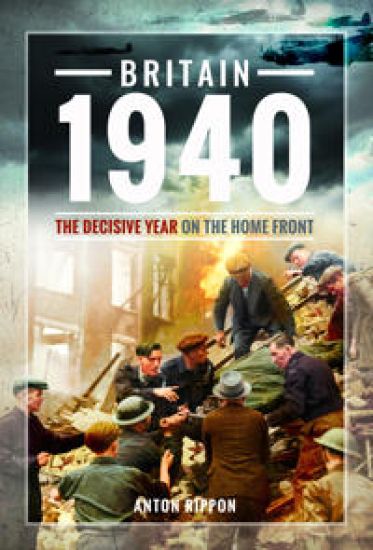
Britain 1940

Britain 1940

Anton Rippon

PEN SWORD BOOKS LTD
2024
nidottu
On New Year’s Day 1940, the people of Britain looked back on the first four months of the Second World War with a sort of puzzled unease. Wartime life was nothing like what they had imagined. Unlike the First World War there was no fighting on the Western Front. Indeed, there was no Western Front. There had been no major air attacks. Four days into the war German bombers had approached the East Coast but no bombs were dropped. Everyone carried their gasmask but there was no poison gas. Petrol was the only commodity rationed. There was no noticeable shortage of food, which was as available now as it had been before Hitler invaded Poland. Young men called up to join the forces were largely idle. They certainly were not fighting the Germans. In January 1940, life in wartime Britain was simply an inconvenient version of life in peacetime. Even the hitherto strictly enforced blackout regulations were relaxed when it became obvious that, because of them, people were being killed in road accidents. On New Year’s Eve 1940, Britain was deep in the throes of war. In September the Germans had launched what was to be an eight-month bombing campaign that targeted every one of Britain’s major cities. By the end of 1940, German air raids had killed 15,000 British civilians. The so-called Phoney War had ended in May, when Hitler attacked the Low Countries. After Dunkirk, with the Luftwaffe poised just across the English Channel, and with the very real threat of invasion, the Second World War was now anything but phoney.
Wartime Entertainment

Wartime Entertainment

Anton Rippon; Nicola Rippon

PEN SWORD BOOKS LTD
2024
sidottu
It might have ended 80 years ago, but we still have a warm, nostalgic relationship with the Second World War, due in no small part to the love we have for the entertainment from those turbulent times. Singers like Vera Lynn – the ‘Forces Sweetheart’ – Gracie Fields, Anne Shelton, and the Andrews Sisters, bandleader Glenn Miller whose fate is still a mystery, films like _Gone With The Wind_, _Casablanca_, _Mrs Miniver_, _In Which We Serve_, _Goodbye Mr Chips_, and morale-boosting radio programmes like _ITMA_, _Music While You Work_ and _Hi Gang!_ all helped Britain to stay calm and carry on as it sheltered from the bombs, worked long hours in munitions factories, and prayed that its menfolk fighting on land, sea and in the air to bring about victory would one day return home safely. _Wartime Entertainment: How Britain Kept Smiling Through the Second World War_ relives the wartime years, looking at the songs and the singers, at the role that the BBC – ‘Auntie’ – played not only in entertaining the nation but also in keeping it informed, at how West End theatre survived the Blitz, and at the bands that played both the big dance venues and the village halls to raise spirits and, for a few hours at least, lighten the mood of those dark and dangerous days. The book considers the work of the Crown Film Unit that made short information and documentary films as well as longer drama-documentaries and even a few straight drama productions for the public in Britain and abroad, and at ENSA – the Entertainments National Service Association – that provided entertainment for British armed forces personnel both at home and abroad.

D-Day to VE Day

D-Day to VE Day

Anton Rippon; Nicola Rippon

PEN SWORD BOOKS LTD
2024
sidottu
On the evening of Monday, 5th June 1944, the people of Britain went to bed with a sense of great events impending. They knew that any day now would come news of the battle that would forever alter the course of their lives, and the lives of their children and their grandchildren. The following day’s morning newspapers and early radio news bulletins were full of the fall of Rome to the Allies, which had been announced the day before. But then, at 9.33 am on that Tuesday, came the brief announcement: Allied naval forces, supported by strong air forces, had begun landing Allied armies on the coast of France.’ D-Day had finally dawned. _D-Day to VE Day_ tells the story of the last year of the Second World War in Europe, from the Normandy landings and on through the hard slog to that long-awaited day – 8th May 1945 – when Britain broke out the bunting, rolled out the barrel, and celebrated victory over Hitler. The air-raid sirens were silenced, the lights could be switched on again, and the boys would be coming home. In many homes, festivities were muted because the war in the Far East was still to be won, but for a few short hours at least, the nation could afford to let its hair down and dance in the streets. Using contemporary accounts – interviews, newspaper reports and official documents – of those final months, _D-Day to VE Day_ looks at life in Britain during those vital months, at the events that brought an end to war in Europe, and at the redrawing of national borders that would shape a new world order.
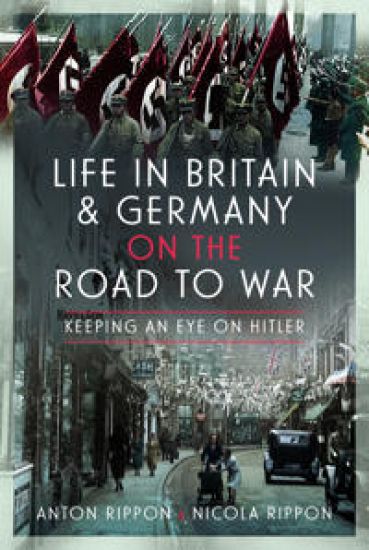
Life in Britain and Germany on the Road to War

Life in Britain and Germany on the Road to War

Anton Rippon; Nicola Rippon

PEN SWORD BOOKS LTD
2024
sidottu
In December 1922, the distinguished foreign correspondent Leonard Spray warned Britain to ‘keep your eye on Hitler’. The carnage of the so-called ‘war to end all wars’ had left 900,000 British servicemen dead, and more than 2 million suffering physical and psychological wounds, but there was hope. The vanquished had been left with no military capacity to wage another war, and with a huge debt to pay to the victors. The Treaty of Versailles had surely made it impossible for the world to ever again be threatened by Germany? Safe in that knowledge, Britain now had her eye firmly set on new challenges. The cost of the war had already triggered her decline as the world’s greatest economic power. The Great Depression that followed the Wall Street Crash of 1929 now saw Britain riven by unemployment and poverty. Seven General Elections between 1918 and 1935 resulted in mostly minority and coalition governments, bringing further uncertainty. And all the time, an Austrian ex-corporal by the name of Adolf Hitler was on the rampage, first with his ‘swashbuckling gangs’ in Bavaria, and then on an inexorable march to power throughout the rest of Germany and beyond. Life in Britain and Germany on the Road to War tells the story of one of the most eventful, tumultuous and heart-breaking periods in history. The twenty-one years that separated the First and Second World Wars and that eventually saw everyone’s eyes firmly fixed on Hitler.
Life in Post-War Britain

Life in Post-War Britain

Anton Rippon; Nicola Rippon

PEN SWORD BOOKS LTD
2023
sidottu
On New Year's Day 1946, the people of Britain desperately wanted to look forward to a new and better life. The Second World War had ended four months earlier with the formal surrender of Imperial Japan. The war in Europe had been over for eight months. But, upon announcing to Parliament the German surrender, Winston Churchill had told the nation: "Let us not forget the toils and efforts that lie ahead." In 1946, Clement Attlee, leader of the newly elected Labour Government, underlined Churchill's words, warning the nation that victory over Nazi Germany and Japan had heralded not a future of plenty - but one of greater austerity. The huge debt left by the war had crippled the British economy. Those who fought in the Great War had been promised a land fit for heroes. That had not happened. After another world war, people now expected a better life than the poverty and hardship that had characterised much of the 1920s and 1930s, and Attlee pledged to end society's five "Giant Evils" - squalor, ignorance, want, idleness, and disease - and to provide for the people "from the cradle to the grave". It was going to be far from easy. Life in Post-War Britain: "Toils and Efforts Ahead" tells what it was like to live in Britain as the nation battled to recover while still facing many hardships, including food rationing that, ironically, was to become more severe than that in wartime. This was a unique time in British history and Life in Post-War Britain: "Toils and Efforts Ahead" captures the mood of the nation, examining all the great events of the post-war years and the effect that they had on the everyday life of the people who had won a war but who now faced an uncertain peace both at home and abroad.
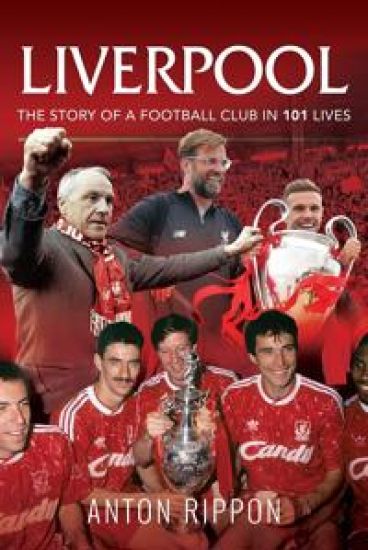
Liverpool: The Story of a Football Club in 101 Lives
LIVERPOOL: THE STORY OF A FOOTBALL CLUB IN 101 LIVES tells the history of the Anfield club through the biographies of key individuals associated with the Merseysiders from their formation in the gas-lit days of Victorian Britain through to the present day. From John Houlding, the Lord Mayor of Liverpool who was the founder of the club in controversial circumstances, to their greatest manager Bill Shankly, and the great players who have worn the famous red shirt throughout its history, the in-depth stories of the characters - players and managers - here paint a fascinating picture of how the club - indeed, the game of football itself - has developed from workers playing for fun to today's multi-million-pound business.
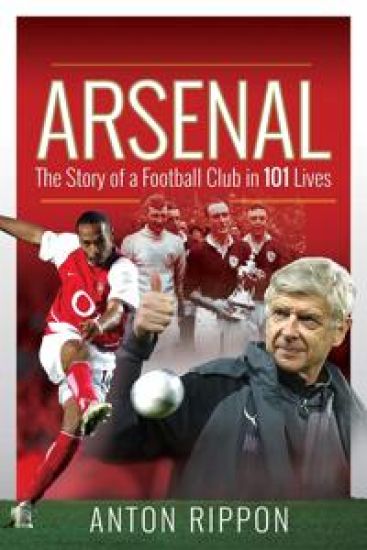
Arsenal: The Story of a Football Club in 101 Lives
ARSENAL: THE STORY OF A FOOTBALL CLUB IN 101 LIVES tells the history of the Gunners through the biographies of key individuals associated with the club from its formation in the gas-lit days of Victorian Britain through to the present day. From David Danskin, the Scottish mechanical engineer and footballer who was the driving force behind the team raised at Dial Square, a workshop at the Royal Arsenal in Woolwich, to Arsene Wenger, the longest-serving and most successful manager in Arsenal's history. The in-depth stories of the characters - players, managers, chairmen - here paint a fascinating picture of how the club - indeed, the game of football itself - has developed from workers playing for fun to today's multi-million-pound business.
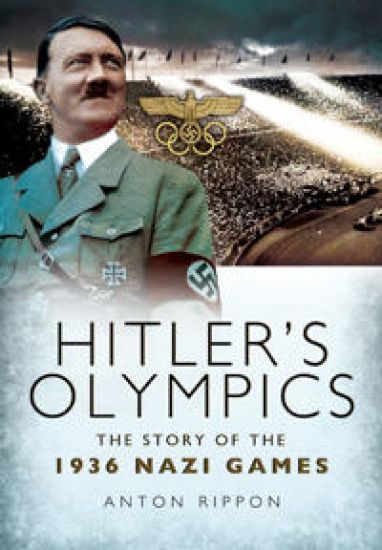
Hitler's Olympics: The Story of the 1936 Nazi Games
For two weeks in August 1936, Nazi Germany achieved an astonishing propaganda coup when it staged the Olympic Games in Berlin. Hiding their anti-Semitism and plans for territorial expansion, the Nazis exploited the Olympic ideal, dazzling visiting spectators and journalists alike with an image of a tolerant country. Thousands of foreigners went away wondering why the Hitler regime had been vilified, unaware that not far from the stunning Olympic Stadium lay a concentration camp full of 'enemies of the state'. In Hitler's Olympics, Anton Rippon tells the story of those remarkable Games, the first to overtly use the Olympic festival for political purposes. His account looks at how the rise of the Nazis affected German sportsmen and women in the early 1930s. And it reveals how the rest of the world allowed the Berlin Olympics to go ahead despite the knowledge that Nazi Germany was a police state.The Nazis threw all their resources into staging the most remarkable Olympics seen so far. Hitler was closely involved in the grandiose planning of an event that was designed to glorify the new Nazi state, and this book describes the process in fascinating detail. The political drama of the event is matched by the intense competition of the athletes on the field and track. Here the two sides of the story come together, most famously in the person of Jessie Owens, the black quadruple gold medal winner.Hitler's Olympics is featured on the Sports Journalists' Association website:www.sportsjournalists.co.uk/olympics/should-we-send-a-jew-to-cover-the-berlin-olympics/
Gas Masks for Goal Posts

Gas Masks for Goal Posts

Anton Rippon; Tom Finney

The History Press Ltd
2007
nidottu
'I was 12th man for England against Wales at Wembley. Within a few minutes, the Welsh half-back broke his collar bone. They had no reserves and I as the only spare player to hand. That's how I made my international debut - for Wales.' - Stan Mortensen, Blackpool and England. When Britain declared war on Germany in September 1939, football came to an abrupt halt. Large crowds were banned, stadiums were given over to military use, most players joined up. Then it was realised that if victory was the national goal, soccer could help - and football went to war. For the next six years the game became hugely important to Britain. Boosting morale among servicemen, munitions workers and beleaguered citizens alike - and raising hundreds of thousands of pounds for war funds. It was a game with plenty of human stories. Some footballers were dubbed 'PT commandos' or 'D-Day dodgers'. Others, however, saw action. Pre-war heroes on the pitch became wartime heroes off it. This book captures the atmosphere of the time and tells the story of a unique period in football's history.
Derbyshire's Own

Derbyshire's Own

Anton Rippon

The History Press Ltd
2006
nidottu
Did you know that Derbyshire can boast at least three Nobel Laureates and numerous Olympians? This book features more than 100 of the most interesting and influential people of Derbyshire from the fifteenth to the twenty-first century.
Gas Masks for Goal Posts

Gas Masks for Goal Posts

Anton Rippon; Tom Finney

The History Press Ltd
2005
sidottu
When Britain declared war on Germany in September 1939, football came to an abrupt halt. Large crowds were banned, stadiums were given over to military use, most players joined up. This book captures the atmosphere of the time and tells the story of a unique period in football's history.