Kirjojen hintavertailu. Mukana 12 390 323 kirjaa ja 12 kauppaa.

Kirjailija

Antonia Fraser

Kirjat ja teokset yhdessä paikassa: 36 kirjaa, julkaisuja vuosilta 1986-2025, suosituimpien joukossa The House that Spoke. Vertaile teosten hintoja ja tarkista saatavuus suomalaisista kirjakaupoista.

36 kirjaa

Kirjojen julkaisuhaarukka 1986-2025.

Marie Antoinette Style

Marie Antoinette Style

Manolo Blahnik; Sofia Coppola; Antonia Fraser

V A PUBLISHING
2025
sidottu
'Marie Antoinette' - the very name conjures up a vibrant pastel-coloured world of excess, filled with satin shoes, rustling silks, gravity-defying hairstyles, decadent macarons, delicious intrigue and then, of course, bloody Revolution.This ground-breaking volume first reconstructs the life and style of the captivating yet tragic Marie Antoinette - married at 14, queen at 18 and guillotined at 37 - from the intimate apartments she lived in to the scent she wore, the trends she led and the complexities of French court life. The authors draw on contemporary accounts, interiors, letters, portraits and the tantalisingly few personal possessions that remain, her shoes and fans, and fragments of cloth from her dresses. But Marie Antoinette has remained influential long beyond her death in 1793. The book uncovers how the ill-fated Queen of France has provided a constant source of inspiration to the worlds of design, fashion, film and decorative arts - from nineteenth-century fancy dress balls, to Art Deco illustration, to the couture of John Galliano for Dior and the sumptuous movie by Sofia Coppola. It considers afresh the legacy of a complex and mis-understood figure whose style, youth and notoriety have contributed to her timeless appeal.
Lady Caroline Lamb: A Free Spirit

Lady Caroline Lamb: A Free Spirit

Antonia Fraser

Pegasus Books
2024
nidottu
The vivid and dramatic life of Lady Caroline Lamb, whose scandalous love affair with Lord Byron overshadowed her own creativity and desire to break free from society's constraints. From the outset, Caroline Lamb had a rebellious nature. From childhood she grew increasingly troublesome, experimenting with sedatives like laudanum, and she had a special governess to control her. She also had a merciless wit and talent for mimicry. She spoke French and German fluently, knew Greek and Latin, and sketched impressive portraits. As the niece of Georgiana, Duchess of Devonshire, she was already well connected, and her courtly skills resulted in her marriage to the Hon. William Lamb (later Lord Melbourne) at the age on nineteen. For a few years they enjoyed a happy marriage, despite Lamb's siblings and mother-in-law detesting her and referring to her as "the little beast." In 1812 Caroline embarked on a well-publicised affair with the poet Lord Byron - he was 24, she 26. Her phrase 'mad, bad and dangerous to know' became his lasting epitaph. When he broke things off, Caroline made increasingly public attempts to reunite. Her obsession came to define much of her later life, as well as influencing her own writing - most notably the Gothic novel Glenarvon - and Byron's. Antonia Fraser's vividly compelling biography animates the life of "a free spirit" who was far more than mad, bad and dangerous to know.
Lady Caroline Lamb

Lady Caroline Lamb

Antonia Fraser

ORION PUBLISHING CO
2024
nidottu
From the outset, Caroline Lamb had a rebellious nature. From childhood she grew increasingly troublesome, experimenting with sedatives like laudanum, and she had a special governess to control her. She also had a merciless wit and talent for mimicry. She spoke French and German fluently, knew Greek and Latin, and sketched impressive portraits. As the niece of Georgiana, Duchess of Devonshire, she was already well connected, and her courtly skills resulted in her marriage to the Hon. William Lamb (later Lord Melbourne) at the age on nineteen. For a few years they enjoyed a happy marriage, despite Lamb's siblings and mother-in-law detesting her and referring to her as 'the little beast'. In 1812 Caroline embarked on a well-publicised affair with the poet Lord Byron - he was 24, she 26. Her phrase 'mad, bad and dangerous to know' became his lasting epitaph. When he broke things off, Caroline made increasingly public attempts to reunite. Her obsession came to define much of her later life, as well as influencing her own writing - most notably the Gothic novel Glenarvon - and Byron's. Antonia Fraser's vividly compelling biography animates the life of 'a free spirit' who was far more than mad, bad and dangerous to know.
Lady Caroline Lamb: A Free Spirit

Lady Caroline Lamb: A Free Spirit

Antonia Fraser

Pegasus Books
2023
sidottu
The vivid and dramatic life of Lady Caroline Lamb, whose scandalous love affair with Lord Byron overshadowed her own creativity and desire to break free from society's constraints. From the outset, Caroline Lamb had a rebellious nature. From childhood she grew increasingly troublesome, experimenting with sedatives like laudanum, and she had a special governess to control her. She also had a merciless wit and talent for mimicry. She spoke French and German fluently, knew Greek and Latin, and sketched impressive portraits. As the niece of Georgiana, Duchess of Devonshire, she was already well connected, and her courtly skills resulted in her marriage to the Hon. William Lamb (later Lord Melbourne) at the age on nineteen. For a few years they enjoyed a happy marriage, despite Lamb's siblings and mother-in-law detesting her and referring to her as 'the little beast'. In 1812 Caroline embarked on a well-publicised affair with the poet Lord Byron - he was 24, she 26. Her phrase 'mad, bad and dangerous to know' became his lasting epitaph. When he broke things off, Caroline made increasingly public attempts to reunite. Her obsession came to define much of her later life, as well as influencing her own writing - most notably the Gothic novel Glenarvon - and Byron's. Antonia Fraser's vividly compelling biography animates the life of 'a free spirit' who was far more than mad, bad and dangerous to know.
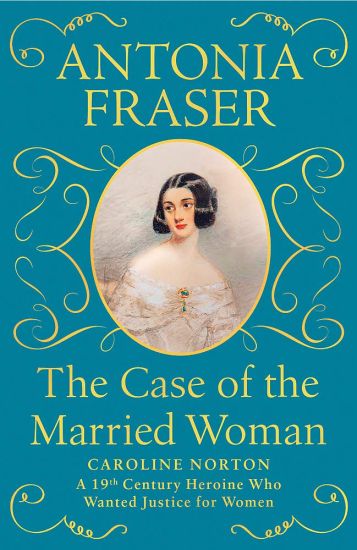
The Case of the Married Woman

The Case of the Married Woman

Antonia Fraser

ORION PUBLISHING CO
2022
pokkari
'Before biography was fashionable, Antonia Fraser made the past popular' Guardian'As a pure storyteller, Antonia Fraser has few equals' Sunday TimesCAROLINE NORTON, a nineteenth-century heroine who wanted justice for women.Poet, pamphleteer and artist's muse, Caroline Norton dazzled 19-century society with her vivacity and intelligence. In 1836 Caroline underwent a dramatic trial when her jealous husband sued the Prime Minister, Lord Melbourne, for adultery. Provisions which are now taken for granted - such as the right of a mother to have access to her children - owe much to Caroline, who was determined to secure justice for women at all levels of society. Award-winning historian Antonia Fraser brilliantly portrays a woman who refused to be curbed by the personal and political constraints of her time.
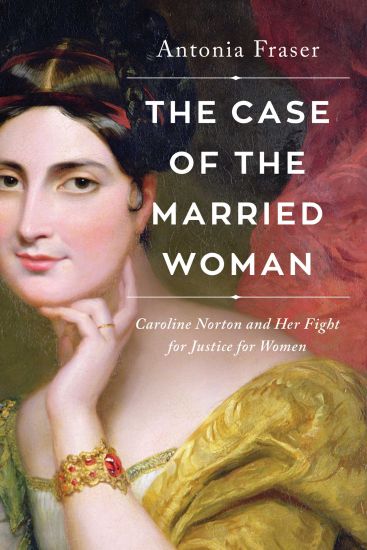
The Case of the Married Woman: Caroline Norton and Her Fight for Women's Justice
Award-winning historian Antonia Fraser brilliantly portrays a courageous and compassionate woman who refused to be curbed by the personal and political constraints of her time. Caroline Norton dazzled nineteenth-century society with her vivacity, her intelligence, her poetry, and in her role as an artist's muse. After her marriage in 1828 to the MP George Norton, she continued to attract friends and admirers to her salon in Westminster, which included the young Disraeli. Most prominent among her admirers was the widowed Prime Minister, Lord Melbourne. Racked with jealousy, George Norton took the Prime Minister to court, suing him for damages on account of his 'Criminal Conversation' (adultery) with Caroline. A dramatic trial followed. Despite the unexpected and sensational result--acquittal--Norton was still able to legally deny Caroline access to her three children, all under seven. He also claimed her income as an author for himself, since the copyrights of a married woman belonged to her husband. Yet Caroline refused to despair. Beset by the personal cruelties perpetrated by her husband and a society whose rules were set against her, she chose to fight, not surrender. She channeled her energies in an area of much-needed reform: the rights of a married woman and specifically those of a mother. Over the next few years she campaigned tirelessly, achieving her first landmark victory with the Infant Custody Act of 1839. Provisions which are now taken for granted, such as the right of a mother to have access to her own children, owe much to Caroline, who was determined to secure justice for women at all levels of society from the privileged to the dispossessed.
The Case of the Married Woman

The Case of the Married Woman

Antonia Fraser

Weidenfeld Nicolson
2021
sidottu
'Before biography was fashionable, Antonia Fraser made the past popular' Guardian'As a pure storyteller, Antonia Fraser has few equals' Sunday TimesCAROLINE NORTON, a nineteenth-century heroine who wanted justice for women.Poet, pamphleteer and artist's muse, Caroline Norton dazzled nineteenth-century society with her vivacity and intelligence. After her marriage in 1828 to the MP George Norton, she continued to attract friends and admirers to her salon in Westminster, which included the young Disraeli. Most prominent among her admirers was the widowed Prime Minister, Lord Melbourne. Racked with jealousy, George Norton took the Prime Minister to court, suing him for damages on account of his 'Criminal Conversation' (adultery) with Caroline. A dramatic trial followed. Despite the unexpected and sensational result - acquittal - Norton legally denied Caroline access to her three children under seven. He also claimed her income as an author for himself, since the copyrights of a married woman belonged to her husband.Yet Caroline refused to despair. Beset by the personal cruelties perpetrated by her husband and a society whose rules were set against her, she chose to fight, not surrender. She channelled her energies in an area of much-needed reform: the rights of a married woman and specifically those of a mother. Over the next few years she campaigned tirelessly, achieving her first landmark victory with the Infant Custody Act of 1839. Provisions which are now taken for granted, such as the right of a mother to have access to her own children, owe much to Caroline, who was determined to secure justice for women at all levels of society from the privileged to the dispossessed.Award-winning historian Antonia Fraser brilliantly portrays a woman, at once courageous and compassionate, who refused to be curbed by the personal and political constraints of her time.
The King and the Catholics

The King and the Catholics

Antonia Fraser

Weidenfeld Nicolson
2019
pokkari
The story of Catholic Emancipation begins with the violent Anti-Catholic Gordon Riots in 1780, fuelled by the reduction in Penal Laws against the Roman Catholics harking back to the sixteenth century. Some fifty years later, the passing of the Emancipation Bill was hailed as a 'bloodless revolution'. Had the Irish Catholics been a 'millstone', as described by an English aristocrat, or were they the prime movers? While the English Catholic aristocracy and the Irish peasants and merchants approached the Catholic Question in very different ways, they manifestly shared the same objective. Antonia Fraser brings colour and humour to the vivid drama with its huge cast of characters: George III, who opposed Emancipation on the basis of the Coronation Oath; his son, the indulgent Prince of Wales, who was enamoured with the Catholic Maria Fitzherbert before the voluptuous Lady Conyngham; Wellington and the 'born Tory' Peel vying for leadership; 'roaring' Lord Winchilsea; the heroic Daniel O'Connell. Expertly written and deftly argued, THE KING AND THE CATHOLICS is also a distant mirror of our times, reflecting the political issues arising from religious intolerance.
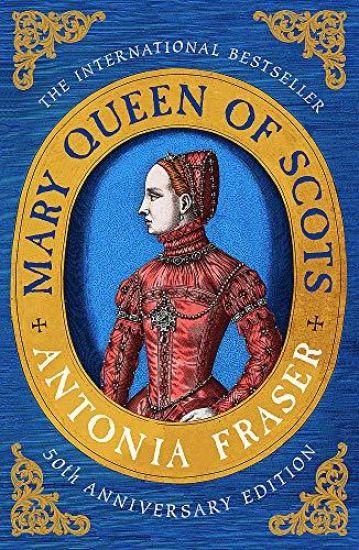
Mary Queen Of Scots

Mary Queen Of Scots

Antonia Fraser

Weidenfeld Nicolson
2018
pokkari
'Ground-breaking ... One of the greatest international bestsellers of the post-war period' Andrew Roberts, Daily Telegraph'Reads like an engrossing novel' Sunday TimesAn infant queen. A teenage widow. Beautiful, flamboyant Mary Queen of Scots had a formidable intellect but her political sense - formed at the absolute court of France - plunged her country into a maelstrom of intrigue, marriage and murder. Upon fleeing to England she was held captive by her cousin Elizabeth I. In this classic biography, reissued for the fiftieth anniversary of its publication, acclaimed historian Antonia Fraser relates the enthralling story of Mary's life and untimely end.
Our Israeli Diary

Our Israeli Diary

Antonia Fraser

Oneworld Publications
2017
sidottu
In May 1978 Harold Pinter and Antonia Fraser visited Israel at the time of the 30th Anniversary of Independence. It was three years after they first lived together; neither had set foot in Israel before. Based in Jerusalem, they toured many of the country’s historic sites: from Bethlehem to the fortress of Masada, encountering future Prime Minister Shimon Peres, Mayor of Jerusalem Teddy Kollek, Jackie Kennedy and a long-lost cousin of Harold’s on a kibbutz. It was a trip during which Pinter’s feelings about his heritage emerged for the first time. As he said himself: ‘For the first time I feel Jewish’. This diary was kept daily by Antonia Fraser: the vivid narrative and descriptions (Antonia swimming in the Dead Sea while Harold had a beer) are leavened with humour, occasionally wry where Harold’s quirks were concerned, and always tender. Above all, it is a unique picture of a time and place – and a touching insight into fifteen days in the lives of two writers, one Jewish, one Catholic, one a playwright and one a biographer, who were also a devoted couple.
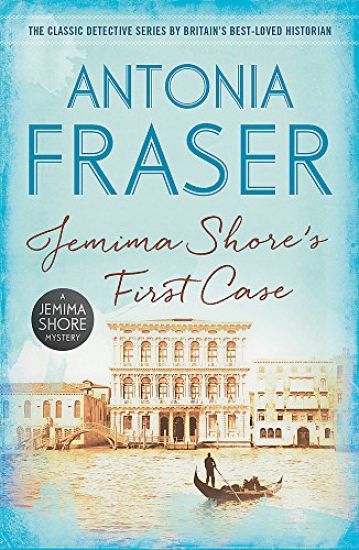
Jemima Shore's First Case

Jemima Shore's First Case

Antonia Fraser

Weidenfeld Nicolson
2015
pokkari
'The screams came again: by now they sounded quite blood-curdling to the girl alone in the small room - or was it that they were getting nearer?'From murders and ghostly visitors to devious plots and family feuds, Antonia Fraser's first collection of short stories is a feast of mingled delight and suspense.There are five Jemima Shore stories including the first ever Jemima Shore mystery in which the fifteen-year-old Jemima is confronted by blood-curdling screams and miraculous moving statues in the dead of night. Jemima is at her sparkling best as she solves the case of the Parr children in a remote corner of the Scottish Highlands and elegantly deals with a missing bride on a romantic Venetian honeymoon.
Jemima Shore at the Sunny Grave

Jemima Shore at the Sunny Grave

Antonia Fraser

Weidenfeld Nicolson
2015
pokkari
From treachery in the Caribbean to mischief in the Mediterranean, from murderous drama to sleek black comedy, from a baffling number of suspects to a single confrontation with a maniacal rapist, here is a tantalising and varied excursion round motives and methods in the realm of crime - a collection of wittily told and deftly turned stories, with a twist.
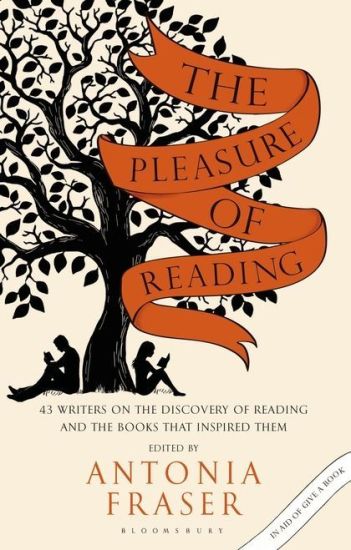
The Pleasure of Reading

The Pleasure of Reading

Antonia Fraser

Bloomsbury Publishing PLC
2015
nidottu
The inspiration for the annual Pleasure of Reading PrizeA charming and revealing collection of essays from some of our best-loved writers about the pleasures of reading, with royalties donated to the Give a Book charityIn this delightful collection forty-three acclaimed writers explain what first made them interested in literature, what inspired them to read and what makes them continue to do so. Original contributors include Margaret Atwood, J. G. Ballard, Melvyn Bragg, A. S. Byatt, Carol Ann Duffy, Simon Gray, Germaine Greer, Alan Hollinghurst, Doris Lessing, Candia McWilliam, Edna O’Brien, Ruth Rendell, Tom Stoppard, Sue Townsend and Jeanette Winterson, while this new edition includes essays from five new writers, Emily Berry, Kamila Shamsie, Rory Stewart, Katie Waldegrave and Tom Wells.Royalties generated from this project will go to Give a Book, www.giveabook.org.uk, a charity set up in 2011 that seeks to get books to places where they will be of particular benefit. Give a Book works in conjunction with Age UK, Prison Reading Groups, Maggie’s Centres, which help people affected by cancer, and various schools and literacy projects, such as Beanstalk, where many pupils have never had a book of their own in their lives.
Political Death

Political Death

Antonia Fraser

Weidenfeld Nicolson
2015
pokkari
Summoned by the wayward Lady Imogen Swain, Jemima is entrusted with the diaries she kept in 1964, diaries which contain an account of her passionate affair with Burgo Smyth MP; now Foreign Secretary but then a rising young Conservative politician.With the increasingly eccentric Lady Imogen threatening to reveal details about the affair, and of the subsequent disappearance of a young journalist, Jemima's meeting with Lady Imogen is the first step in a sinister series of events which leads to political scandal, blackmail and murder.
Cool Repentance

Cool Repentance

Antonia Fraser

Weidenfeld Nicolson
2014
pokkari
An atmospheric and gripping mystery from Lady Antonia Fraser's Jemima Shore series.'Was that what you thought - that you would come back, come back here to beautiful Lark, and get away with it, did you expect that? I can hardly believe it, even of you...'A series of murders have shocked the sleepy, rural village of Lark. The deaths all coincide with the reappearance of actress Christabel Herriot - it is clear that someone has decided her return is not to be tolerated.Amidst the gossip surrounding her reckless affair, Christabel decides to resume her theatrical career, joining a company performing at the Larminster Festival. Jemima Shore has been asked to present a programme on the Festival, so when it becomes clear that Christabel's life is in serious danger, Jemima is on the case again.
Quiet as a Nun

Quiet as a Nun

Antonia Fraser

Weidenfeld Nicolson
2014
pokkari
One of Lady Antonia Fraser's gripping Jemima Shore mysteries, set in a secluded nunnery.'I lit the candle and began rather gingerly to climb up the ladder. Then I heard a distinct sound above my head. A scrape on the floor, an irregular jarring on the floor above my head, like something rocking . . .'A nun is dead - her emaciated corpse has been discovered locked in the tower of Blessed Eleanor's Convent. The tragic consequence of a neurotic young woman committing to a life of isolation and piety, the inquest concludes. But this young woman held unusual power over the convent - power she was planning to use.Jemima Shore tries to keep her distance from the case, but when her lover cancels their holiday she finds herself reluctantly getting involved. A violent attack in the dead of night and another death convinces her that the convent is not the haven of peace it appears to be. Suspicion and fear hang heavy in the air but how do you solve a murder no-one will admit happened?
Perilous Question: Reform or Revolution? Britain on the Brink, 1832
Antonia Fraser's Perilous Question is a dazzling re-creation of the tempestuous two-year period in Britain's history leading up to the passing of the Great Reform Bill in 1832, a narrative which at times reads like a political thriller. The era, beginning with the accession of William IV, is evoked in the novels of Trollope and Thackeray, and described by the young Charles Dickens as a cub reporter. It is lit with notable characters. The reforming heroes are the Whig aristocrats led by Lord Grey, members of the richest and most landed cabinet in history yet determined to bring liberty, which would whittle away their own power, to the country. The all-too-conservative opposition was headed by the Duke of Wellington, supported by the intransigent Queen Adelaide, with hereditary memories of the French Revolution. Finally, there were revolutionaries, like William Cobbett, the author of Rural Rides, the radical tailor Francis Place, and Thomas Attwood of Birmingham, the charismatic orator. The contest often grew violent. There were urban riots put down by soldiers and agricultural riots led by the mythical Captain Swing. The underlying grievance was the fate of the many disfranchised people. They were ignored by a medieval system of electoral representation that gave, for example, no votes to those who lived in the new industrial cities of Manchester, Leeds, Sheffield, and Birmingham, while allocating two parliamentary representatives to a village long since fallen into the sea and, most notoriously, Old Sarum, a green mound in a field. Lord John Russell, a Whig minister, said long afterwards that it was the only period when he genuinely felt popular revolution threatened the country. The Duke of Wellington declared intractably in November 1830 that "The beginning of reform is the beginning of revolution." So it seemed that disaster must fall on the British Parliament, or the monarchy, or both. The question was: Could a rotten system reform itself in time? On June 7, 1832, the date of the extremely reluctant royal assent by William IV to the Great Reform Bill, it did. These events led to a total change in the way Britain was governed, and set the stage for its growth as the world's most successful industrial power; admired, among other things, for its traditions of good governance -- a two-year revolution that Antonia Fraser brings to vivid dramatic life.