Kirjojen hintavertailu. Mukana 12 390 323 kirjaa ja 12 kauppaa.

Kirjailija

antonio c. cuyler

Kirjat ja teokset yhdessä paikassa: 3 kirjaa, julkaisuja vuosilta 2020-2025, suosituimpien joukossa Achieving Creative Justice in the U.S. Creative Sector. Vertaile teosten hintoja ja tarkista saatavuus suomalaisista kirjakaupoista.

3 kirjaa

Kirjojen julkaisuhaarukka 2020-2025.

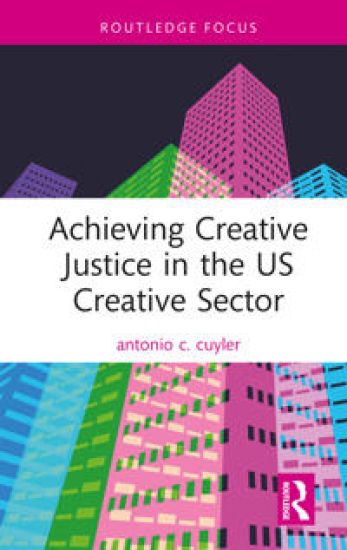
Achieving Creative Justice in the U.S. Creative Sector
Caste and the discrimination, exclusion, marginalization, othering, oppression, subalterning, and subjugation that it produces continue to challenge creative industries compromising culture’s verisimilitude as a public good. Achieving Creative Justice in the U.S. Creative Sector explores the relationships between access, diversity, equity, and inclusion (ADEI), and creative justice in the U.S. creative sector as a solution to meaningfully address enduring creative injustices.Whether it’s the #BlackLivesMatter, #LandBack, or #MeToo movements, caste remains structurally and systemically built into U.S. Society, and thereby the creative sector. Acknowledging this realization after George Floyd’s murder in 2020 has galvanized a quest for solutions. This book encourages sincere consideration for the human toll of insisting on artistic excellence and artistic merit at the expense of profound and unnecessary identity-based human suffering.Providing a practical guide on how to activate ADEI to achieve creative justice and a research agenda, this book is an essential reading for practitioners and scholars who feel compelled to address creative injustices that constrain the creative flourishing of historically and continuously low-casted peoples throughout the entire cultural ecosystem that defines the U.S. creative sector.The Open Access version of this book, available at http://www.taylorfrancis.com, has been made available under a Creative Commons [Attribution-Non Commercial-No Derivatives (CC BY-NC-ND)] 4.0 license.

Access, Diversity, Equity and Inclusion in Cultural Organizations
Analyzing the lack of diversity among opera executives, this book examines the careers of executive opera managers of color in the U.S. By interrogating the impact of race on arts managers’ careers, the author contemplates how opera might attract and retain more racially diverse arts managers to ensure its future.With a focus on the U.S., research is contextualized via qualitative data to explore, enhance, and institutionalize access, diversity, equity, and inclusion (ADEI) in the opera industry. In a revealing series of expert-conducted interviews, the author poses illuminating questions, such as: what if an inability to recruit and retain diverse executives is the primary source of opera’s challenges?if more racially diverse opera executives existed, would the art form persist in struggling to find its place in contemporary society?from where will the next generation of diverse opera managers emerge?As the magnitude of the global diversity problem grows within the creative and cultural industries, this book serves as a guide for Arts Management practitioners and students who may view their class, different ability, ethnicity, gender, race, or sexual orientation as a liability in their pursuit of executive careers.
Access, Diversity, Equity and Inclusion in Cultural Organizations
Analyzing the lack of diversity among opera executives, this book examines the careers of executive opera managers of color in the U.S. By interrogating the impact of race on arts managers’ careers, the author contemplates how opera might attract and retain more racially diverse arts managers to ensure its future.With a focus on the U.S., research is contextualized via qualitative data to explore, enhance, and institutionalize access, diversity, equity, and inclusion (ADEI) in the opera industry. In a revealing series of expert-conducted interviews, the author poses illuminating questions, such as: what if an inability to recruit and retain diverse executives is the primary source of opera’s challenges?if more racially diverse opera executives existed, would the art form persist in struggling to find its place in contemporary society?from where will the next generation of diverse opera managers emerge?As the magnitude of the global diversity problem grows within the creative and cultural industries, this book serves as a guide for Arts Management practitioners and students who may view their class, different ability, ethnicity, gender, race, or sexual orientation as a liability in their pursuit of executive careers.