Kirjojen hintavertailu. Mukana 12 595 353 kirjaa ja 12 kauppaa.
Kirjailija
Antonio Esposito
Kirjat ja teokset yhdessä paikassa: 7 kirjaa, julkaisuja vuosilta 2013-2025, suosituimpien joukossa Eduardo Souto de Moura. Vertaile teosten hintoja ja tarkista saatavuus suomalaisista kirjakaupoista.
Winning the Pritzker Architecture Prize in 2011 confirmed Eduardo Souto de Moura (b.1952) as one of the leading figures on the contemporary architecture scene. This definitive monograph is a comprehensive account of the Portuguese architect’s 30 year career and features more than 100 projects including best known works such as the stadium in Braga, Portugal (2004), the Burgo Tower in Porto (2007) and the Paula Rego Museum near Lisbon (2008) as well as many innovative private homes. This generously-illustrated publication includes essays by critics and by Souto de Moura himself plus a chronology of works and an interview with the architect.
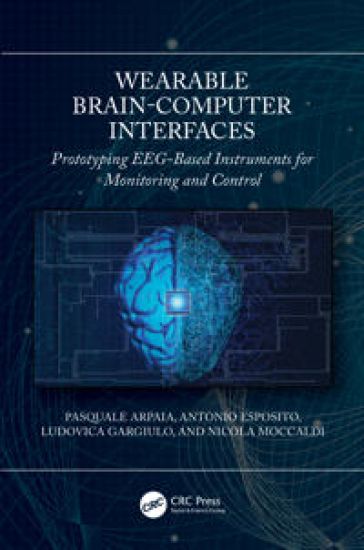
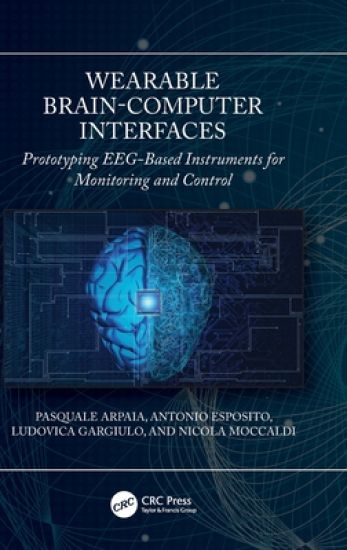
This book presents a complete overview of the main EEG-based Brain-Computer Interface (BCI) paradigms and the related practical solutions for their design, prototyping, and testing. Readers will explore active, reactive, and passive BCI paradigms, with an emphasis on the operation for developing solutions, addressing the need for customization.Readers will familiarize themselves with the main steps for the realization of low-cost wearable BCIs which include: identification of the most suitable neuro signals for a specific application; definition of the hardware, firmware, and software, with a focus on wearable, non-invasive, and low-cost solutions; development of algorithms for data processing and classification; and, lastly, experimental campaigns for the validation of the prototyped solutions. BCI systems based on electroencephalography (EEG) are investigated and a complete overview of all BCI paradigms is offered. The aim of this book is to drive the reader, from the beginning to the end, along a research-and-development process of a working BCI prototype.This book is a guide for designers, biomedical engineers, students, biotechnologists, and those in the biomedical instrumentation field that would like to conceive, design, prototype, and test an innovative low-cost wearable EEG-based BCI.
This book presents a complete overview of the main EEG-based Brain-Computer Interface (BCI) paradigms and the related practical solutions for their design, prototyping, and testing. Readers will explore active, reactive, and passive BCI paradigms, with an emphasis on the operation for developing solutions, addressing the need for customization.Readers will familiarize themselves with the main steps for the realization of low-cost wearable BCIs which include: identification of the most suitable neuro signals for a specific application; definition of the hardware, firmware, and software, with a focus on wearable, non-invasive, and low-cost solutions; development of algorithms for data processing and classification; and, lastly, experimental campaigns for the validation of the prototyped solutions. BCI systems based on electroencephalography (EEG) are investigated and a complete overview of all BCI paradigms is offered. The aim of this book is to drive the reader, from the beginning to the end, along a research-and-development process of a working BCI prototype.This book is a guide for designers, biomedical engineers, students, biotechnologists, and those in the biomedical instrumentation field that would like to conceive, design, prototype, and test an innovative low-cost wearable EEG-based BCI.
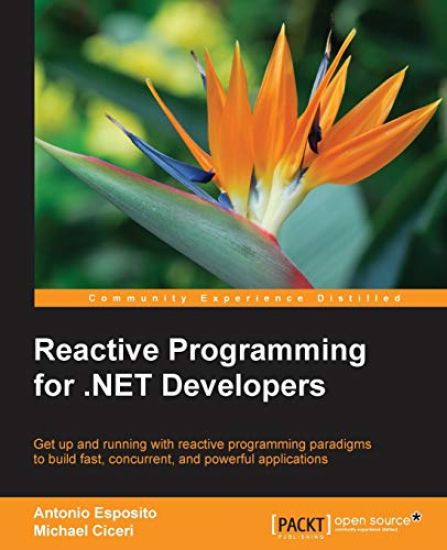
Get up and running with reactive programming paradigms to build fast, concurrent, and powerful applications About This Book • Get to grips with the core design principles of reactive programming • Learn about Reactive Extensions for .NET through real-world examples • Improve your problem-solving ability by applying functional programming Who This Book Is For If you are a .NET developer who wants to implement all the reactive programming paradigm techniques to create better and more efficient code, then this is the book for you. No prior knowledge of reactive programming is expected. What You Will Learn • Create, manipulate, and aggregate sequences in a functional-way • Query observable data streams using standard LINQ query operators • Program reactive observers and observable collections with C# • Write concurrent programs with ease, scheduling actions on various workers • Debug, analyze, and instrument Rx functions • Integrate Rx with CLR events and custom scheduling • Learn Functional Reactive Programming with F# In Detail Reactive programming is an innovative programming paradigm focused on time-based problem solving. It makes your programs better-performing, easier to scale, and more reliable. Want to create fast-running applications to handle complex logics and huge datasets for financial and big-data challenges? Then you have picked up the right book! Starting with the principles of reactive programming and unveiling the power of the pull-programming world, this book is your one-stop solution to get a deep practical understanding of reactive programming techniques. You will gradually learn all about reactive extensions, programming, testing, and debugging observable sequence, and integrating events from CLR data-at-rest or events. Finally, you will dive into advanced techniques such as manipulating time in data-flow, customizing operators and providers, and exploring functional reactive programming. By the end of the book, you'll know how to apply reactive programming to solve complex problems and build efficient programs with reactive user interfaces. Style and approach This is a concise reference manual for reactive programming with Rx for C# and F# using real-world, practical examples.
This book offers readers a quick, comprehensive and up-to-date overview of the most important methodologies, technologies, APIs and standards related to the portability and interoperability of cloud applications and services, illustrated by a number of use cases representing a variety of interoperability and portability scenarios.The lack of portability and interoperability between cloud platforms at different service levels is the main issue affecting cloud-based services today. The brokering, negotiation, management, monitoring and reconfiguration of cloud resources are challenging tasks for developers and users of cloud applications due to the different business models associated with resource consumption, and to the variety of services and features offered by different cloud providers.In chapter 1 the concepts of cloud portability and interoperability are introduced, together with the issues and limitations arising when such features are lacking or ignored. Subsequently, chapter 2 provides an overview of the state-of-the-art methodologies and technologies that are currently used or being explored to enable cloud portability and interoperability. Chapter 3 illustrates the main cross-platform cloud APIs and how they can solve interoperability and portability issues. In turn, chapter 4 presents a set of ready-to-use solutions which, either because of their broad-scale use in cloud computing scenarios or because they utilize established or emerging standards, play a fundamental part in providing interoperable and portable solutions. Lastly, chapter 5 presents an overview of emerging standards for cloud Interoperability and portability.Researchers and developers of cloud-based services will find here a brief survey of the relevant methodologies, APIs and standards, illustrated by case studies and complemented by an extensive reference list for more detailed descriptions of every topic covered.