

Kirjailija
Antonio Gulli
Kirjat ja teokset yhdessä paikassa: 20 kirjaa, julkaisuja vuosilta 2008-2026, suosituimpien joukossa AI Design. Vertaile teosten hintoja ja tarkista saatavuus suomalaisista kirjakaupoista.
Mukana myös kirjoitusasut: Antonio Gullì, Antonio Gullí
20 kirjaa
Kirjojen julkaisuhaarukka 2008-2026.
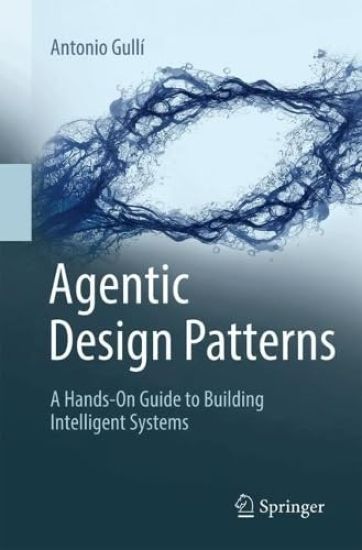
This book is a practical resource designed to help developers master the art of building sophisticated AI agents. As artificial intelligence evolves from simple reactive programs to autonomous entities capable of understanding context and making complex decisions, this book provides the essential Design Patterns and proven techniques needed to construct intelligent systems effectively. Each of the 21 Design Patterns represents a fundamental building block for creating agents that can perceive their environment, make informed decisions, and execute actions autonomously. Agentic Design Patterns: A Hands-On Guide to Building Intelligent Systems is structured as a comprehensive hands-on guide, with each chapter dedicated to a single agentic pattern. Within each chapter, you will find a detailed pattern overview, practical applications and use cases, one or more hands-on code example, and key takeaways for quick review. From foundational concepts such as Prompt Chaining and Tool Use to advanced topics like Multi-Agent Collaboration and Self-Correction, readers will gain practical knowledge they can immediately apply. While the chapters build on each other, you can also use the book as a handy reference, jumping to patterns that address your specific challenges. To provide a tangible "canvas" for the code examples, this guide utilizes three prominent agent development frameworks: LangChain and its extension LangGraph, which offer a flexible way to build complex operational sequences; Crew AI, which provides a structured framework for orchestrating multiple agents; and the Google Agent Developer Kit (Google ADK), which offers tools for building, evaluating, and deploying agents. By showcasing examples across these tools, you will gain a broad understanding of how these patterns can be applied in any technical environment. Building effective agentic systems requires more than just a powerful language model; it demands structure and design. Agentic patterns provide reusable, battle-tested solutions to common challenges, much like design patterns in software engineering. They offer a common language that makes an agent's logic clearer, more maintainable, and more robust. By the end of this journey, you will possess both the theoretical understanding and the practical skills to implement these 21 essential patterns, enabling you to build more intelligent, capable, and autonomous systems on your chosen development canvas.
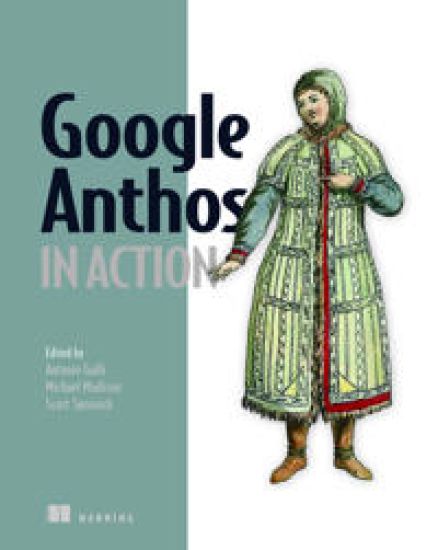
Learn Anthos directly from the Google development team! Anthos delivers a consistent management platform for deploying and operating Linux and Windows applications anywhere—multicloud, edge, on-prem, bare metal, or VMware. In Google Anthos in Action you will learn: How Anthos reduces your dependencies and stack-bloatRunning applications across multiple clouds and platformsHandling different workloads and dataAdding automation to speed up code deliveryModernizing infrastructure with microservices and Service MeshPolicy management for enterprisesSecurity and observability at scale In a cloud-centric world, all deployment is becoming hybrid deployment. Anthos is a modern, Kubernetes-based cloud platform that enables you to run your software in multicloud, hybrid, or on-premises deployments using the same operations tools and approach. With powerful automation features, it boosts your efficiency along the whole development lifecycle. Google Anthos in Action demystifies Anthos with practical examples of Anthos at work and invaluable insights from the Google team that built it. about the technology Anthos is built on a simple concept: write once, and run anywhere—whether that's on-prem, in any public cloud, on the edge, or all three. As the first truly multicloud platform from a major provider, Anthos was designed with the practical goals of balancing cost, efficiency, security, and performance. Anthos lets you simplify your stack, deliver software faster with cloud-native tooling, and automatically integrate high levels of security into your deployments. about the book Google Anthos in Action comes directly from the Anthos team at Google. This comprehensive book takes a true DevOps mindset, considering Google-tested patterns for how an application is designed, built, deployed, managed, monitored, and scaled. Developers will love how having a consistent platform across clouds brings a massive performance boost by standardizing the application across deployment targets, as well as how Anthos makes it easy to modernize legacy applications to cloud native infrastructure. Operations pros will appreciate how simple it is to integrate Anthos with CI/CD pipelines, automate security and policy management, and work with enterprise-level Kubernetes. Each concept is fully illustrated with exercises and hands-on examples, so you can see the power of Anthos in action. RETAIL SELLING POINTS • How Anthos reduces your dependencies and stack-bloat • Running applications across multiple clouds and platforms • Handling different workloads and data • Adding automation to speed up code delivery • Modernizing infrastructure with microservices and Service Mesh • Policy management for enterprises • Security and observability at scale AUDIENCE For software and cloud engineers with knowledge of Kubernetes.
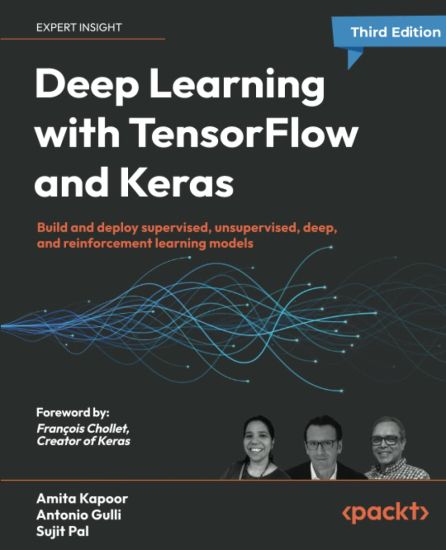
Deep Learning with TensorFlow and Keras
Amita Kapoor; Antonio Gulli; Sujit Pal; Francois Chollet
PACKT PUBLISHING LIMITED
2022
nidottu
Build cutting edge machine and deep learning systems for the lab, production, and mobile devices.Purchase of the print or Kindle book includes a free eBook in PDF format.Key FeaturesUnderstand the fundamentals of deep learning and machine learning through clear explanations and extensive code samplesImplement graph neural networks, transformers using Hugging Face and TensorFlow Hub, and joint and contrastive learningLearn cutting-edge machine and deep learning techniquesBook DescriptionDeep Learning with TensorFlow and Keras teaches you neural networks and deep learning techniques using TensorFlow (TF) and Keras. You'll learn how to write deep learning applications in the most powerful, popular, and scalable machine learning stack available.TensorFlow 2.x focuses on simplicity and ease of use, with updates like eager execution, intuitive higher-level APIs based on Keras, and flexible model building on any platform. This book uses the latest TF 2.0 features and libraries to present an overview of supervised and unsupervised machine learning models and provides a comprehensive analysis of deep learning and reinforcement learning models using practical examples for the cloud, mobile, and large production environments.This book also shows you how to create neural networks with TensorFlow, runs through popular algorithms (regression, convolutional neural networks (CNNs), transformers, generative adversarial networks (GANs), recurrent neural networks (RNNs), natural language processing (NLP), and graph neural networks (GNNs)), covers working example apps, and then dives into TF in production, TF mobile, and TensorFlow with AutoML.What you will learnLearn how to use the popular GNNs with TensorFlow to carry out graph mining tasksDiscover the world of transformers, from pretraining to fine-tuning to evaluating themApply self-supervised learning to natural language processing, computer vision, and audio signal processingCombine probabilistic and deep learning models using TensorFlow ProbabilityTrain your models on the cloud and put TF to work in real environmentsBuild machine learning and deep learning systems with TensorFlow 2.x and the Keras APIWho this book is forThis hands-on machine learning book is for Python developers and data scientists who want to build machine learning and deep learning systems with TensorFlow. This book gives you the theory and practice required to use Keras, TensorFlow, and AutoML to build machine learning systems.Some machine learning knowledge would be useful. We don't assume TF knowledge.
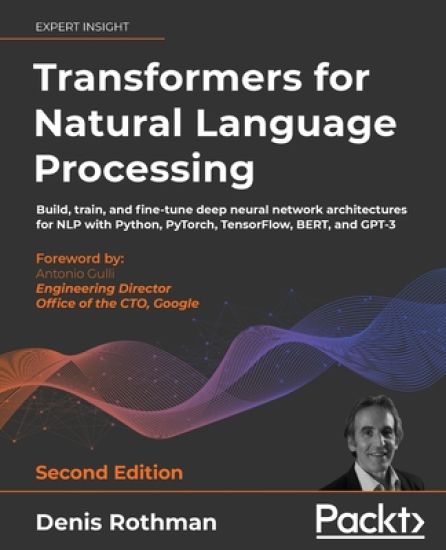
Transformers for Natural Language Processing
Denis Rothman; Antonio Gulli
PACKT PUBLISHING LIMITED
2022
nidottu
OpenAI's GPT-3, ChatGPT, GPT-4 and Hugging Face transformers for language tasks in one book. Get a taste of the future of transformers, including computer vision tasks and code writing and assistance.Purchase of the print or Kindle book includes a free eBook in PDF formatKey FeaturesImprove your productivity with OpenAI's ChatGPT and GPT-4 from prompt engineering to creating and analyzing machine learning modelsPretrain a BERT-based model from scratch using Hugging FaceFine-tune powerful transformer models, including OpenAI's GPT-3, to learn the logic of your dataBook DescriptionTransformers are...well...transforming the world of AI. There are many platforms and models out there, but which ones best suit your needs? Transformers for Natural Language Processing, 2nd Edition, guides you through the world of transformers, highlighting the strengths of different models and platforms, while teaching you the problem-solving skills you need to tackle model weaknesses. You'll use Hugging Face to pretrain a RoBERTa model from scratch, from building the dataset to defining the data collator to training the model. If you're looking to fine-tune a pretrained model, including GPT-3, then Transformers for Natural Language Processing, 2nd Edition, shows you how with step-by-step guides. The book investigates machine translations, speech-to-text, text-to-speech, question-answering, and many more NLP tasks. It provides techniques to solve hard language problems and may even help with fake news anxiety (read chapter 13 for more details). You'll see how cutting-edge platforms, such as OpenAI, have taken transformers beyond language into computer vision tasks and code creation using DALL-E 2, ChatGPT, and GPT-4. By the end of this book, you'll know how transformers work and how to implement them and resolve issues like an AI detective.What you will learnDiscover new techniques to investigate complex language problemsCompare and contrast the results of GPT-3 against T5, GPT-2, and BERT-based transformersCarry out sentiment analysis, text summarization, casual speech analysis, machine translations, and more using TensorFlow, PyTorch, and GPT-3Find out how ViT and CLIP label images (including blurry ones!) and create images from a sentence using DALL-ELearn the mechanics of advanced prompt engineering for ChatGPT and GPT-4Who this book is forIf you want to learn about and apply transformers to your natural language (and image) data, this book is for you.You'll need a good understanding of Python and deep learning and a basic understanding of NLP to benefit most from this book. Many platforms covered in this book provide interactive user interfaces, which allow readers with a general interest in NLP and AI to follow several chapters. And don't worry if you get stuck or have questions; this book gives you direct access to our AI/ML community to help guide you on your transformers journey!
Deep Learning with TensorFlow 2 and Keras
Antonio Gulli; Amita Kapoor; Sujit Pal
Packt Publishing Limited
2019
nidottu
Build machine and deep learning systems with the newly released TensorFlow 2 and Keras for the lab, production, and mobile devicesKey FeaturesIntroduces and then uses TensorFlow 2 and Keras right from the startTeaches key machine and deep learning techniquesUnderstand the fundamentals of deep learning and machine learning through clear explanations and extensive code samplesBook DescriptionDeep Learning with TensorFlow 2 and Keras, Second Edition teaches neural networks and deep learning techniques alongside TensorFlow (TF) and Keras. You’ll learn how to write deep learning applications in the most powerful, popular, and scalable machine learning stack available.TensorFlow is the machine learning library of choice for professional applications, while Keras offers a simple and powerful Python API for accessing TensorFlow. TensorFlow 2 provides full Keras integration, making advanced machine learning easier and more convenient than ever before.This book also introduces neural networks with TensorFlow, runs through the main applications (regression, ConvNets (CNNs), GANs, RNNs, NLP), covers two working example apps, and then dives into TF in production, TF mobile, and using TensorFlow with AutoML.What you will learnBuild machine learning and deep learning systems with TensorFlow 2 and the Keras APIUse Regression analysis, the most popular approach to machine learningUnderstand ConvNets (convolutional neural networks) and how they are essential for deep learning systems such as image classifiersUse GANs (generative adversarial networks) to create new data that fits with existing patternsDiscover RNNs (recurrent neural networks) that can process sequences of input intelligently, using one part of a sequence to correctly interpret anotherApply deep learning to natural human language and interpret natural language texts to produce an appropriate responseTrain your models on the cloud and put TF to work in real environmentsExplore how Google tools can automate simple ML workflows without the need for complex modelingWho this book is forThis book is for Python developers and data scientists who want to build machine learning and deep learning systems with TensorFlow. This book gives you the theory and practice required to use Keras, TensorFlow 2, and AutoML to build machine learning systems. Some knowledge of machine learning is expected.
TensorFlow 1.x Deep Learning Cookbook
Antonio Gulli; Amita Kapoor
Packt Publishing Limited
2017
nidottu
Take the next step in implementing various common and not-so-common neural networks with Tensorflow 1.x About This Book • Skill up and implement tricky neural networks using Google's TensorFlow 1.x • An easy-to-follow guide that lets you explore reinforcement learning, GANs, autoencoders, multilayer perceptrons and more. • Hands-on recipes to work with Tensorflow on desktop, mobile, and cloud environment Who This Book Is For This book is intended for data analysts, data scientists, machine learning practitioners and deep learning enthusiasts who want to perform deep learning tasks on a regular basis and are looking for a handy guide they can refer to. People who are slightly familiar with neural networks, and now want to gain expertise in working with different types of neural networks and datasets, will find this book quite useful. What You Will Learn • Install TensorFlow and use it for CPU and GPU operations • Implement DNNs and apply them to solve different AI-driven problems. • Leverage different data sets such as MNIST, CIFAR-10, and Youtube8m with TensorFlow and learn how to access and use them in your code. • Use TensorBoard to understand neural network architectures, optimize the learning process, and peek inside the neural network black box. • Use different regression techniques for prediction and classification problems • Build single and multilayer perceptrons in TensorFlow • Implement CNN and RNN in TensorFlow, and use it to solve real-world use cases. • Learn how restricted Boltzmann Machines can be used to recommend movies. • Understand the implementation of Autoencoders and deep belief networks, and use them for emotion detection. • Master the different reinforcement learning methods to implement game playing agents. • GANs and their implementation using TensorFlow. In Detail Deep neural networks (DNNs) have achieved a lot of success in the field of computer vision, speech recognition, and natural language processing. The entire world is filled with excitement about how deep networks are revolutionizing artificial intelligence. This exciting recipe-based guide will take you from the realm of DNN theory to implementing them practically to solve the real-life problems in artificial intelligence domain. In this book, you will learn how to efficiently use TensorFlow, Google's open source framework for deep learning. You will implement different deep learning networks such as Convolutional Neural Networks (CNNs), Recurrent Neural Networks (RNNs), Deep Q-learning Networks (DQNs), and Generative Adversarial Networks (GANs) with easy to follow independent recipes. You will learn how to make Keras as backend with TensorFlow. With a problem-solution approach, you will understand how to implement different deep neural architectures to carry out complex tasks at work. You will learn the performance of different DNNs on some popularly used data sets such as MNIST, CIFAR-10, Youtube8m, and more. You will not only learn about the different mobile and embedded platforms supported by TensorFlow but also how to set up cloud platforms for deep learning applications. Get a sneak peek of TPU architecture and how they will affect DNN future. By using crisp, no-nonsense recipes, you will become an expert in implementing deep learning techniques in growing real-world applications and research areas such as reinforcement learning, GANs, autoencoders and more. Style and approach This book consists of hands-on recipes where you'll deal with real-world problems. You'll execute a series of tasks as you walk through data mining challenges using TensorFlow 1.x. Your one-stop solution for common and not-so-common pain points, this is a book that you must have on the shelf.
Get to grips with the basics of Keras to implement fast and efficient deep-learning models About This Book • Implement various deep-learning algorithms in Keras and see how deep-learning can be used in games • See how various deep-learning models and practical use-cases can be implemented using Keras • A practical, hands-on guide with real-world examples to give you a strong foundation in Keras Who This Book Is For If you are a data scientist with experience in machine learning or an AI programmer with some exposure to neural networks, you will find this book a useful entry point to deep-learning with Keras. A knowledge of Python is required for this book. What You Will Learn • Optimize step-by-step functions on a large neural network using the Backpropagation Algorithm • Fine-tune a neural network to improve the quality of results • Use deep learning for image and audio processing • Use Recursive Neural Tensor Networks (RNTNs) to outperform standard word embedding in special cases • Identify problems for which Recurrent Neural Network (RNN) solutions are suitable • Explore the process required to implement Autoencoders • Evolve a deep neural network using reinforcement learning In Detail This book starts by introducing you to supervised learning algorithms such as simple linear regression, the classical multilayer perceptron and more sophisticated deep convolutional networks. You will also explore image processing with recognition of hand written digit images, classification of images into different categories, and advanced objects recognition with related image annotations. An example of identification of salient points for face detection is also provided. Next you will be introduced to Recurrent Networks, which are optimized for processing sequence data such as text, audio or time series. Following that, you will learn about unsupervised learning algorithms such as Autoencoders and the very popular Generative Adversarial Networks (GAN). You will also explore non-traditional uses of neural networks as Style Transfer. Finally, you will look at Reinforcement Learning and its application to AI game playing, another popular direction of research and application of neural networks. Style and approach This book is an easy-to-follow guide full of examples and real-world applications to help you gain an in-depth understanding of Keras. This book will showcase more than twenty working Deep Neural Networks coded in Python using Keras.

A collection of System Design Interview Questions
Antonio Gulli
Createspace Independent Publishing Platform
2016
nidottu
Special Edition Data Science Interview Questions Solved in Python and Spark: with Deep Learning and Reinforcement Learning bonus topics in Keras
Antonio Gulli
Createspace Independent Publishing Platform
2016
nidottu
Special Edition Programming Interview Questions Solved in C++: Tree, Graph, Bit, Dynamic Programming, and Design Patterns
Antonio Gulli
Createspace Independent Publishing Platform
2015
nidottu
A collection of Advanced Data Science and Machine Learning Interview Questions Solved in Python and Spark (II): Hands-on Big Data and Machine Learning
Antonio Gulli
Createspace Independent Publishing Platform
2015
nidottu

A collection of Data Science Interview Questions Solved in Python and Spark: Hands-on Big Data and Machine Learning
Antonio Gulli
Createspace Independent Publishing Platform
2015
nidottu
A collection of Tree Programming Interview Questions Solved in C++ (Volume 5)
Antonio Gulli
Createspace Independent Publishing Platform
2015
nidottu
A Collection of Graph Programming Interview Questions Solved in C++ (Volume 2)
Antonio Gulli
Createspace Independent Publishing Platform
2015
nidottu
A Collection of Design Pattern Interview Questions Solved in C++
Antonio Gulli
Createspace Independent Publishing Platform
2014
nidottu
A collection of Design Patterns implemented in C++
A Collection of Bit Programming Interview Questions solved in C++
Antonio Gulli
Createspace Independent Publishing Platform
2014
nidottu
A Collection of Dynamic Programming Interview Questions Solved in C++
Antonio Gulli
Createspace Independent Publishing Platform
2014
nidottu
This book presents a collection of Dynamic programming problems, their solution, and the C++ code related to them.

Revision with unchanged content. This book investigates several research problems which arise in modern Web Information Retrieval. First of all we consider the fact that there are many situations where a flat list of ten search results are not enough, and that the users might desire to have a larger number of results grouped on-the-fly in folders of similar topics. In this book, we describe Snaket, a hierarchical clustering meta-search engine which personalizes searches according to the clusters selected on-the-fly by users. Second, we consider those situations where users might desire to access fresh information such as news articles. We present a new ranking algorithm suitable for ranking those fresh type of information. Third, we will discuss numerical methodologies for accelerating the ranking methodologies used in Web Search. An important achievement for this book is that we show how to address the above predominant issues of Web Information Retrieval by using clustering and ranking methodologies. We demonstrate that both clustering and ranking have a mutual reinforcement property that has not yet been studied intensively.
Clustering and Ranking for Web Information Retrieval
Antonio Gullì
VDM Verlag Dr. Mueller E.K.
2008
pokkari