Kirjojen hintavertailu. Mukana 12 250 757 kirjaa ja 12 kauppaa.

Kirjailija

Antonio Machado

Kirjat ja teokset yhdessä paikassa: 31 kirjaa, julkaisuja vuosilta 1983-2026, suosituimpien joukossa Campos de Castilla. Vertaile teosten hintoja ja tarkista saatavuus suomalaisista kirjakaupoista.

Mukana myös kirjoitusasut: Antônio Machado

31 kirjaa

Kirjojen julkaisuhaarukka 1983-2026.

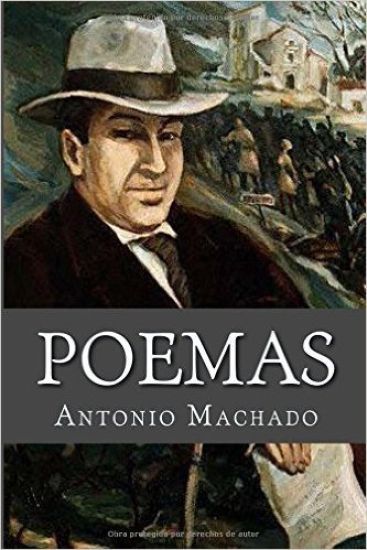
Poemas

Poemas

Antonio Machado

Createspace Independent Publishing Platform
2015
nidottu
Este poeta sevillano nacido en 1875 dej un gran legado dentro del Modernismo espa ol y form parte de la denominada Generaci n del 98, siendo elegido miembro de n mero de la Real Academia Espa ola. Algunos de sus libros publicados m s importantes fueron "Soledades", "Campos de Castilla" y "La Guerra".
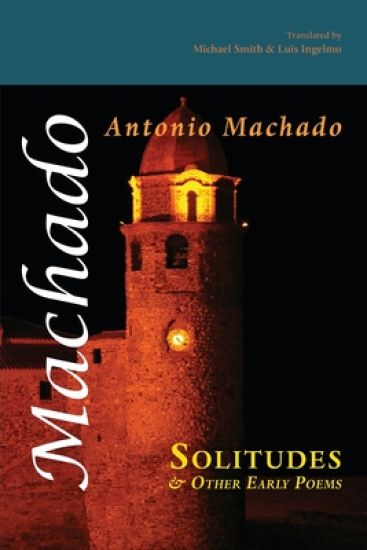
Solitudes and Other Early Poems

Solitudes and Other Early Poems

Antonio Machado

Shearsman Books
2015
nidottu
Antonio Machado is, without a doubt, the father of modern Spanish lyric poetry: a bridge that stretches between Becquer, Ruben Dario and the generation of Jimenez, Lorca, Alberti, Guillen, Cernuda, Aleixandre and Otero. An early visit to Paris and an engagement with Symbolism, and its Spanish equivalent, modernism, in the shape of Ruben Dario, was to determine his course as a poet. Machado, however, unlike many of the French symbolists and perhaps because he was Spanish, never turned his back on common reality. Rather, reality and natural images were sacred to him as mysterious cyphers, flickering shadows at the mouth of the Cave. He was a deeply humanitarian poet; he believed in human emotions and intuitions, and he was always opposed to the baroque in Spanish poetry because he saw it as cerebral or conceptual and therefore an inadequate means of receiving significances from the temporal flux in which human beings live. This edition is fully bilingual.
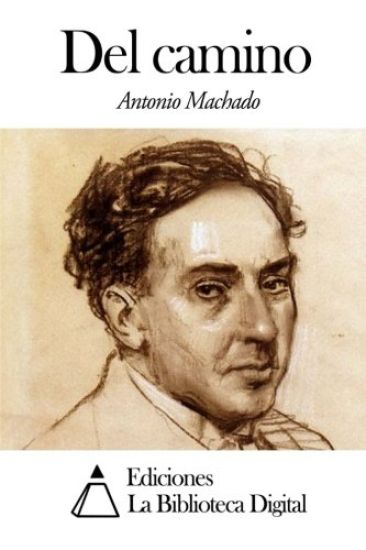
Del camino

Del camino

Antonio Machado

Createspace Independent Publishing Platform
2014
nidottu
"Del camino", de Antonio Machado. Antonio Machado fue un poeta espa ol, el m s joven representante de la Generaci n del 98 (1875-1939)
Border of a Dream

Border of a Dream

Antonio Machado

Copper Canyon Press
2003
pokkari
Antonio Machado (1875-1939) is Spain's master poet, the explorer of dream and landscape, and of consciousness below language. Widely regarded as the greatest twentieth century poet who wrote in Spanish, Machado--like his contemporary Rilke--is intensely introspective and meditative. In this collection, the unparalleled translator Willis Barnstone, returns to the poet with whom he first started his distinguished career, offering a new bilingual edition which provides a sweeping assessment of Machado's work. In addition, Border of a Dream includes a reminiscence by Nobel Laureate Juan Ram n Jim nez and a foreword by John Dos Passos.from Proverbs and SongsAbsolute faith. We neither are nor will be.Our whole life is borrowedWe brought nothing. With nothing we leave.*You say nothing is created?Don't worry. With clayof the earth make a cupso your brother can drink.Born near Seville, Spain, Antonio Machado turned to a career in writing and translating in order to help support his family after the death of his father in 1893. His growing reputation as a poet led to teaching posts in various cities in Spain and, eventually, he returned to finish his degree from the University of Madrid in 1918. He remained in Madrid after the outbreak of civil war, committed to the Republican cause, but the violence finally forced him to flee. He died an exile in France.Willis Barnstone is one of America's foremost translator-poets, bringing into English an extraordinary range of work, from Mao Tse-tung to the New Testament.
There is No Road

There is No Road

Antonio Machado

White Pine Press
2003
pokkari
"Traveler, there is no road; you make your path as you walk". While others suggest taking the road less travelled, Antonio Machado suggests that we each make our own road. In this series of brief poems Machado utilises traditional Spanish verse forms to create a wide ranging collection of reflections and philosophical insights in the form of aphorisms. Poems that have the immediacy of epigrams or Japanese haiku. Antonio Machado (1875-1939) is one of the greatest poets of 20th century Spain. He along with Juan Ramon Jimenez and Miguel de Unamuno formed the generation of 1898, which ushered in a new Spanish poetics.
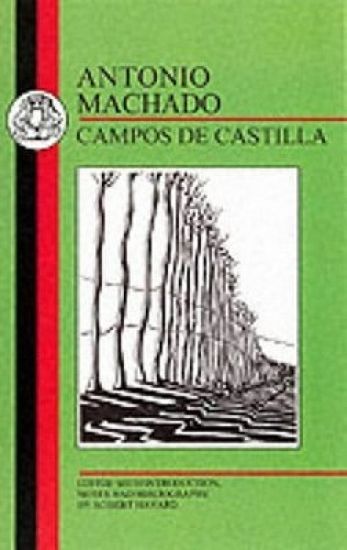
Campos de Castilla

Campos de Castilla

Antonio Machado

Bristol Classical Press
1998
pokkari
A thoroughly edited text of one of 20th-century Spain's most famous volumes of poetry. An introduction offers an in-depth commentary on Machado's themes, techniques and metaphysical manner. In addition to examining the various influences on his work - Krausism, Bergsonism and the '98 Generation's concern for "el problema de Espana" - the introduction looks at Machado's life, especially the years of composition, 1907-17, and it traces the critical phases in his poetic development: the discovery of the Castilian landscape in Soria, his growing political consciousness, his personal tragedy as a bereaved husband and his existential meditaions in Baeza. Annotations in the form of endnotes provide additional factual information and clarify points of difficulty in the text.
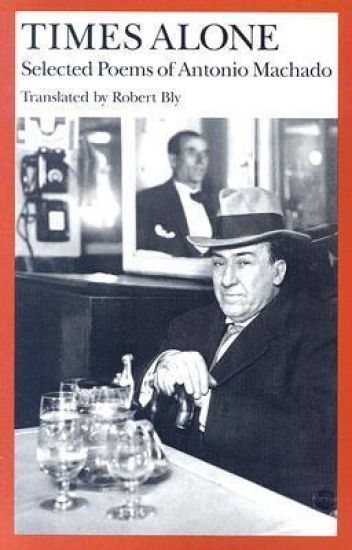
Times Alone

Times Alone

Antonio Machado

Wesleyan University Press
1983
nidottu
Antonio Machado, a school teacher and philosopher and one of Spain's foremost poets of the twentieth century, writes of the mountains, the skies, the farms and the sentiments of his homeland clearly and without narcissism: "Just as before, I'm interested/in water held in;/ but now water in the living/rock of my chest." "Machado has vowed not to soar too much; he wants to 'go down to the hells' or stick to the ordinary," Robert Bly writes in his introduction. He brings to the ordinary-to time, to landscape and stony earth, to bean fields and cities, to events and dreams-magical sound that conveys order, penetrating sight and attention. "The poems written while we are awake...are more original and more beautiful, and sometimes more wild than those made from dreams," Machado said. In the newspapers before and during the Spanish Civil War, he wrote of political and moral issues, and, in 1939, fled from Franco's army into the Pyrenees, dying in exile a month later. When in 1966 a bronze bust of Machado was to be unveiled in a town here he had taught school, thousands of people came in pilgrimage only to find the Civil Guard with clubs and submachine guns blocking their way. This selection of Machado's poetry, beautifully translated by Bly, begins with the Spanish master's first book, Times Alone, Passageways in the House, and Other Poems (1903), and follows his work to the poems published after his death: Poems from the Civil War (written during 1936-1939).