

Kirjailija
Antony Gormley
Kirjat ja teokset yhdessä paikassa: 14 kirjaa, julkaisuja vuosilta 2004-2026, suosituimpien joukossa Learning To Be. Vertaile teosten hintoja ja tarkista saatavuus suomalaisista kirjakaupoista.
14 kirjaa
Kirjojen julkaisuhaarukka 2004-2026.
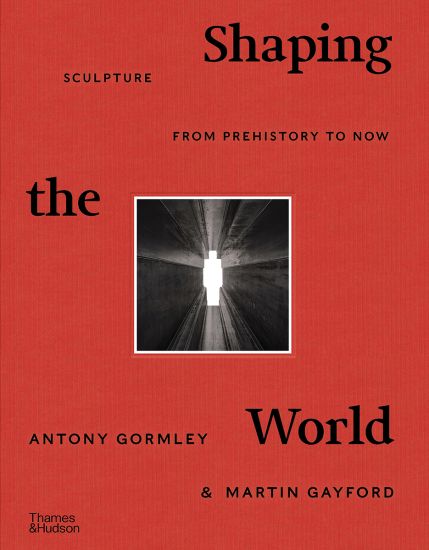
In this wide-ranging, thought-provoking and sometimes provocative new book, leading sculptor Antony Gormley, informed and energised by a lifetime of making, and art critic and historian Martin Gayford, explore sculpture as a transnational art form with its own compelling history. The authors’ lively conversations and explorations make unexpected connections across time and media. Sculpture has been practised by every culture throughout the world and stretches back into our distant past. The first surviving shaped stones may even predate the advent of language. Evidently, the desire to carve, mould, bend, chip away, weld, suspend, balance – to transform a vast array of materials and light into new shapes and forms – runs deep in our psyche and is a fundamental part of our human journey and need for expression. With more than 300 spectacular illustrations, Shaping the World juxtaposes a rich variety of works – from the famous Lowenmensch or Lion Man, c. 35,000 BCE to Michelangelo’s luminous Pietà in Rome, the Terracotta Warriors in China to Rodin’s The Kiss, Marcel Duchamp’s ready-mades, Olafur Eliasson’s extraordinary Weather Project and Kara Walker’s Fons Americanus, and Tomas Saraceno’s ongoing Aerocene project, as well as examples of Gormley’s own work. Antony Gormley and Martin Gayford take into account materials and techniques, and consider overarching themes such as light, mortality and our changing world. Above all, they discuss their view of sculpture as a form of physical thinking capable of altering the way people feel, and they invite us to look at sculpture we encounter – and more broadly the world around us – in a completely different way.
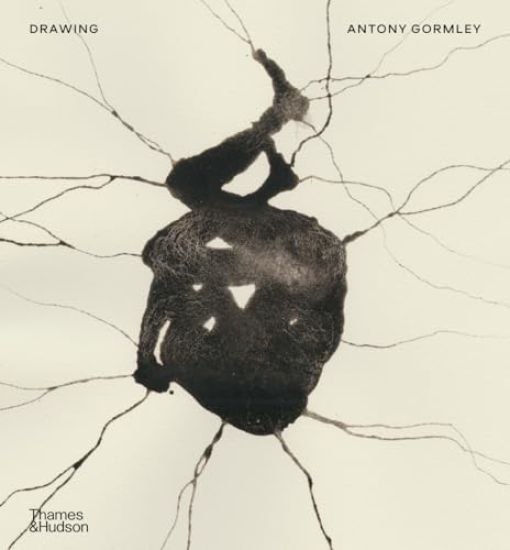
A comprehensive overview of Antony Gormley’s drawings from 1980 to the present, with insightful texts from the artist and major contributors. ‘What is drawing?’ the artist asks in the prologue to Drawing: Antony Gormley. ‘What does it mean to draw?’ This beautifully illustrated volume presents the first comprehensive overview of Antony Gormley’s drawings from 1980 to the present day, offering an intimate and enlightening window into the artist’s vision. Illustrating over 400 works, many of which have never been seen or published before, this major new publication traces Gormley’s exploration of drawing as a vital form of thought and feeling. The artist’s own reflections punctuate the book with deeply personal insights into his process, including ruminations on drawing’s possibilities – ‘the act of drawing is its own experimental field, a journey into the unarmed parts of our internal landscape’ – and meditations on ‘the intrinsic qualities of substances and liquids’, from charcoal, mushroom ink and blood to the earth beneath our feet. Accompanying Gormley’s writings are perceptive and occasionally moving texts by Jeanette Winterson, Margaret Iversen, Daisy Hildyard, W.J.T. Mitchell and Merlin Sheldrake. Each contributor offers a unique perspective on Gormley’s work and the wider meaning of drawing as an act of exploration and transformation. Drawing: Antony Gormley stands as both a personal and artistic journey. As Gormley himself reflects, ‘Drawings have immediacy. In a good session, drawing can be like going for a rugged, physical adventure on a blustery day with changing conditions of light and rain. A day passed without drawing is a day lost.’
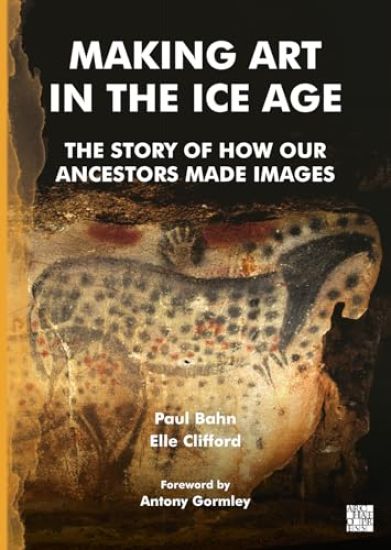
The extraordinary phenomenon of Ice Age art endured for over 30,000 years of our prehistory. This book will show you how the art was discovered, how it was made, how we know its age and if it’s genuine. But this art is much more than pictures and paint – it tells us more about our early ancestors than bones and tools ever will. Life during the Ice Age was a huge part of our human journey, and the people who lived then, by painting on cave walls and engraving their myths on animal bones, have reached out to us down the millennia with their stories and memories. It is unlikely we will ever know the meanings of the simple handprints or the animal silhouette paintings, or the ideas that were shared in great cave wall murals, but they are likely to be profound. And despite our inability to understand the messages, we can still marvel at the valuable gifts these Ice Age artists have bestowed on us.
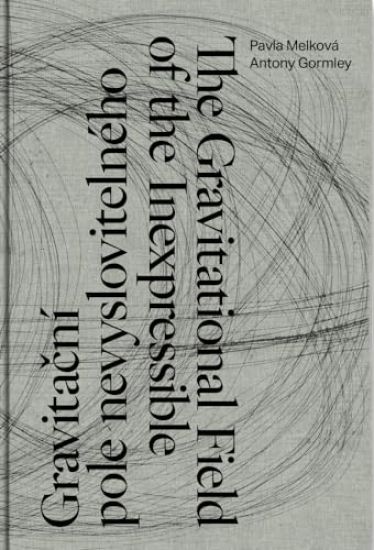
Antony Gormley, Pavla Melková the Gravitational Field of the Inexpressible
Antony Gormley
Kant
2024
sidottu
Gormley's drawings and Melkov 's poems intertwine and converse in this multilingual artistic dialogueThis volume, The Gravitational Field of the Inexpressible, is a dialogue between the drawings of British sculptor Antony Gormley (born 1950) and poems by Czech architect Pavla Melkov (born 1964). The lines of poetry and the lines of the drawings circle the same center until one common language emerges.

Antony Gormley's latest works: abstract aluminum sculptures reflecting on the human body This publication presents the latest works by British sculptor Antony Gormley (born 1950) at Galerie Thaddeus Ropac in 2020. Gormley's square aluminum tubing running the gallery's perimeter suggests the internal volumes of the human body.
Earth Body presents British artist Antony Gormley's (born 1950) recent anthropomorphic polyhedral sculptures. The catalog features full-spread installation views of the Salzburg exhibition, an essay and an artist interview, which draws connections to Gormley's celebrated early works such as The Angel of the North (1998).
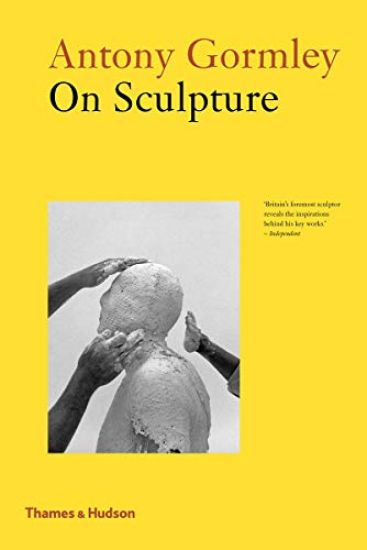

The Sculpture of Kenneth Armitage
James Scott; Antony Gormley
Lund Humphries Publishers Ltd
2016
sidottu
The Sculpture of Kenneth Armitage, which is being published to coincide with the artist's centenary in 2016, is the first book to feature a fully illustrated inventory of all of Armitage's known sculptures. It will be the only available illustrated reference book on the sculptural work of this important 20th-century artist. Through an inventory of 298 pieces and an accompanying narrative text, the book undertakes an examination of Armitage’s significant contribution to sculpture nationally and internationally during the second half of the 20th century, starting with the ‘geometry of fear’ exhibition at the 1952 Venice Biennale and Armitage’s solo contribution to the Biennale in 1958. It will be an essential reference resource for researchers, curators, dealers and collectors which will complement the complete sculpture catalogues already produced for Armitage’s sculptor contemporaries Lynn Chadwick, Elisabeth Frink, Robert Adams and Reg Butler, enhancing our understanding of post-war British sculpture.
Over a period of 100 days from July to October 2009, 2,400 people stood on the fourth plinth in Trafalgar Square for one hour. They were free to do as they chose during this period in the spotlight. Nobody could predict what would happen or the scale of the response. Many thousands applied for the 2,400 slots and candidates were selected randomly. Millions watched the events as they were all filmed and available online. Hundreds of thousands continued to turn to the website long after the project itself was finished. The event was a phenomenon, which we are grappling to understand. The entire enterprise was the conceived by Antony Gormley, and can be seen as a further example of the artist's ability to tap into the public consciousness. The book will contain studio portraits of all the 'plinthers' prior to their appearance. Photographs will be drawn from innumerable sources. The whole event has been remarkably photographed by Clare Richardson and the final edit will be drawn from a selection of 600 of her pictures of 'plinthers and public by day and night. Lee Hall will be writing a text about the importance of the square itself as a location. Essays will be included from Hans Ulrich Obrist, the art historian, as well as by both an anthropologist and a psychoanalyst. All the 'plinthers' were subject to extensive interviews set up by an oral history expert and their voices will contribute to the creation of a book that is more than a document. The aim is to capture the emotional intensity and the personally transformative effect that was created by one of the most extraordinary works of public art in our time.
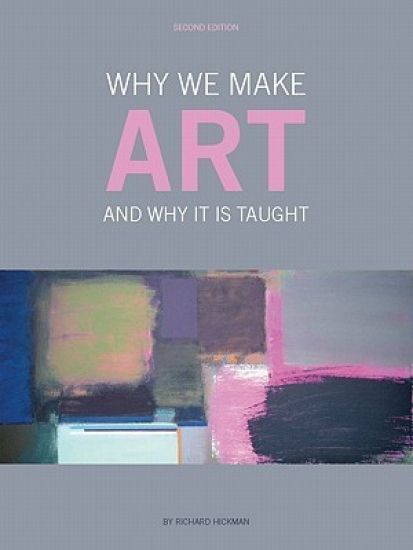
Governments around the world spend millions on art and cultural institutions, evidence of a basic human need for what the author refers to as 'creating aesthetic significance'. Yet what function or purpose does art satisfy in today’s society? In this thorough and accessible text, Richard Hickman rejects the current vogue for social and cultural accounts of the nature of art-making in favour of a largely psychological approach aimed at addressing contemporary developmental issues in art education. Bringing to bear current ideas about evolutionary psychology, this second edition will be an important resource for anyone interested in arts education.

Motorways, airports, tower blocks, power stations, windfarms; TV and the internet, easy travel and shrinking distances; business parks, starter homes and vast shopping and leisure complexes. All of these helped define the later 20th-century world and their material remains remind us of the major changes brought about through innovation and rapidly developing technology. Illustrated with striking aerial and ground photographs of some stunning and sometimes surprising 20th-century landscapes, Images of Change highlights for perhaps the first time the impact the developments of the last century have had on the landscape and gives us a new angle on the industrial, military, domestic and agricultural influences at work around us. By turns dramatic, beautiful, perhaps even shocking, the images and accompanying text will convince that the later 20th century should not be seen as an age that has devalued or destroyed what went before. Understanding how the 20th-century landscape is perceived and how it connects to the past is part of what this book is about – helping us to understand that change and creation is as important in the landscape as preservation. We recognise and celebrate the process of landscape change for earlier periods – the 20th century should be no different.

Making Space
Antony Gormley; Richard Jennett; Darian Leader; Andrew Renton; Adrian Searle
Hand Books
2004
sidottu