Kirjojen hintavertailu. Mukana 12 499 241 kirjaa ja 12 kauppaa.

Kirjailija

Anver M. Emon

Kirjat ja teokset yhdessä paikassa: 8 kirjaa, julkaisuja vuosilta 2010-2026, suosituimpien joukossa Jurisdictional Exceptionalisms. Vertaile teosten hintoja ja tarkista saatavuus suomalaisista kirjakaupoista.

8 kirjaa

Kirjojen julkaisuhaarukka 2010-2026.

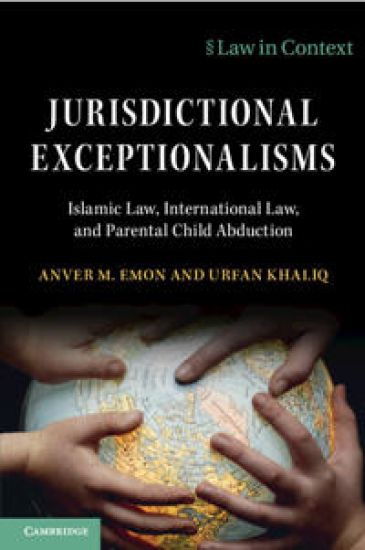
Jurisdictional Exceptionalisms

Jurisdictional Exceptionalisms

Anver M. Emon; Urfan Khaliq

Cambridge University Press
2026
pokkari
Jurisdictional Exceptionalisms examines the legal issues associated with a parent's forced removal of their children to reside in another country following relationship dissolution or divorce. Through an analysis of Public and Private International Laws, and Islamic law - historical and as implemented in contemporary Muslim Family Law States - the authors uncover distinct legal lexicons that centre children's interests in premodern Islamic legal doctrines, modern State practice, and multilateral conventions on children. While legal advocates and policy makers pursue global solutions to parental child abduction, this volume identifies fundamental obstacles, including the absence of shared understandings of jurisdiction. By examining the relevant law and practice, the study exposes the polarised politics embedded in the technical legal rules on jurisdiction. Presenting a new, innovative method in comparative legal history, the book examines the beliefs, values, histories, doctrines, institutions and practices of legal systems presumed to be in conflict with one another.
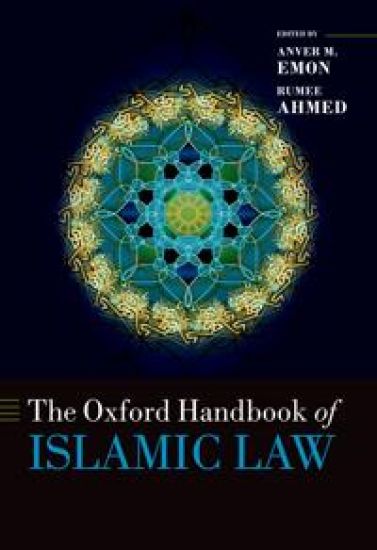
The Oxford Handbook of Islamic Law

The Oxford Handbook of Islamic Law

Anver M. Emon

Oxford University Press
2025
nidottu
This volume provides a comprehensive survey of the contemporary study of Islamic law and a critical analysis of its deficiencies. Written by outstanding senior and emerging scholars in their fields, it offers an innovative historiographical examination of the field of Islamic law and an ideal introduction to key personalities and concepts. While capturing the state of contemporary Islamic legal studies by chronicling how far the field has come, the Handbook also explains why certain debates recur and indicates fundamental gaps in our knowledge. Each chapter presents bold new avenues for research and will help readers appreciate the contested nature of key concepts and topics in Islamic law. This Handbook will be a major reference work for scholars and students of Islam and Islamic law for years to come.
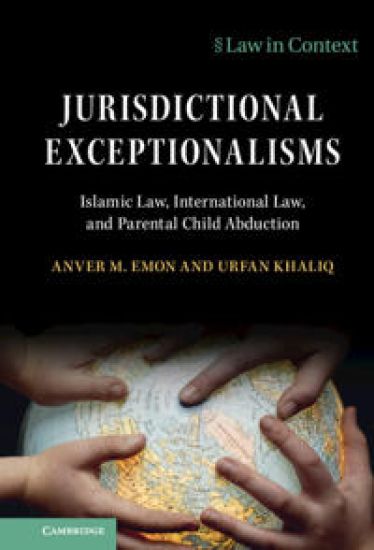
Jurisdictional Exceptionalisms

Jurisdictional Exceptionalisms

Anver M. Emon; Urfan Khaliq

Cambridge University Press
2021
sidottu
Jurisdictional Exceptionalisms examines the legal issues associated with a parent's forced removal of their children to reside in another country following relationship dissolution or divorce. Through an analysis of Public and Private International Laws, and Islamic law - historical and as implemented in contemporary Muslim Family Law States - the authors uncover distinct legal lexicons that centre children's interests in premodern Islamic legal doctrines, modern State practice, and multilateral conventions on children. While legal advocates and policy makers pursue global solutions to parental child abduction, this volume identifies fundamental obstacles, including the absence of shared understandings of jurisdiction. By examining the relevant law and practice, the study exposes the polarised politics embedded in the technical legal rules on jurisdiction. Presenting a new, innovative method in comparative legal history, the book examines the beliefs, values, histories, doctrines, institutions and practices of legal systems presumed to be in conflict with one another.
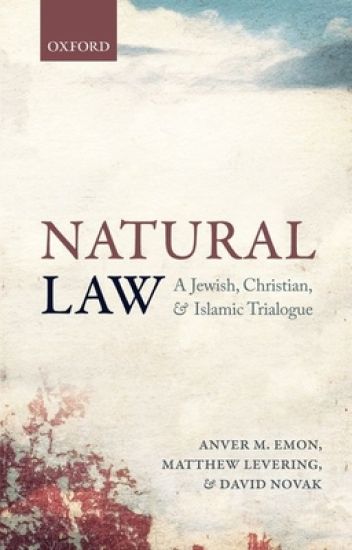
Natural Law

Natural Law

Anver M. Emon; Matthew Levering; David Novak

Oxford University Press
2015
nidottu
This book is an examination of natural law doctrine, rooted in the classical writings of our respective three traditions: Jewish, Christian, and Islamic. Each of the authors provides an extensive essay reflecting on natural law doctrine in his tradition. Each of the authors also provides a thoughtful response to the essays of the other two authors. Readers will gain a sense for how natural law (or cognate terms) resonated with classical thinkers such as Maimonides, Origen, Augustine, al-Ghazali and numerous others. Readers will also be instructed in how the authors think that these sources can be mined for constructive reflection on natural law today. A key theme in each essay is how the particularity of the respective religious tradition is squared with the evident universality of natural law claims. The authors also explore how natural law doctrine functions in particular traditions for reflection upon the religious other.
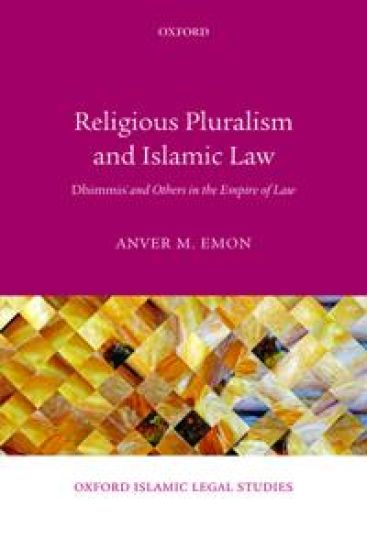
Religious Pluralism and Islamic Law

Religious Pluralism and Islamic Law

Anver M. Emon

Oxford University Press
2014
nidottu
The question of tolerance and Islam is not a new one. Polemicists are certain that Islam is not a tolerant religion. As evidence they point to the rules governing the treatment of non-Muslim permanent residents in Muslim lands, namely the dhimmi rules that are at the center of this study. These rules, when read in isolation, are certainly discriminatory in nature. They legitimate discriminatory treatment on grounds of what could be said to be religious faith and religious difference. The dhimmi rules are often invoked as proof-positive of the inherent intolerance of the Islamic faith (and thereby of any believing Muslim) toward the non-Muslim. This book addresses the problem of the concept of 'tolerance' for understanding the significance of the dhimmi rules that governed and regulated non-Muslim permanent residents in Islamic lands. In doing so, it suggests that the Islamic legal treatment of non-Muslims is symptomatic of the more general challenge of governing a diverse polity. Far from being constitutive of an Islamic ethos, the dhimmi rules raise important thematic questions about Rule of Law, governance, and how the pursuit of pluralism through the institutions of law and governance is a messy business. As argued throughout this book, an inescapable, and all-too-often painful, bottom line in the pursuit of pluralism is that it requires impositions and limitations on freedoms that are considered central and fundamental to an individual's well-being, but which must be limited for some people in some circumstances for reasons extending well beyond the claims of a given individual. A comparison to recent cases from the United States, United Kingdom, and the European Court of Human Rights reveals that however different and distant premodern Islamic and modern democratic societies may be in terms of time, space, and values, legal systems face similar challenges when governing a populace in which minority and majority groups diverge on the meaning and implication of values deemed fundamental to a particular polity.
Natural Law

Natural Law

Anver M. Emon; Matthew Levering; David Novak

Oxford University Press
2014
sidottu
This book is an examination of natural law doctrine, rooted in the classical writings of our respective three traditions: Jewish, Christian, and Islamic. Each of the authors provides an extensive essay reflecting on natural law doctrine in his tradition. Each of the authors also provides a thoughtful response to the essays of the other two authors. Readers will gain a sense for how natural law (or cognate terms) resonated with classical thinkers such as Maimonides, Origen, Augustine, al-Ghazali and numerous others. Readers will also be instructed in how the authors think that these sources can be mined for constructive reflection on natural law today. A key theme in each essay is how the particularity of the respective religious tradition is squared with the evident universality of natural law claims. The authors also explore how natural law doctrine functions in particular traditions for reflection upon the religious other.
Religious Pluralism and Islamic Law

Religious Pluralism and Islamic Law

Anver M. Emon

Oxford University Press
2012
sidottu
The question of tolerance and Islam is not a new one. Polemicists are certain that Islam is not a tolerant religion. As evidence they point to the rules governing the treatment of non-Muslim permanent residents in Muslim lands, namely the dhimmi rules that are at the center of this study. These rules, when read in isolation, are certainly discriminatory in nature. They legitimate discriminatory treatment on grounds of what could be said to be religious faith and religious difference. The dhimmi rules are often invoked as proof-positive of the inherent intolerance of the Islamic faith (and thereby of any believing Muslim) toward the non-Muslim. This book addresses the problem of the concept of 'tolerance' for understanding the significance of the dhimmi rules that governed and regulated non-Muslim permanent residents in Islamic lands. In doing so, it suggests that the Islamic legal treatment of non-Muslims is symptomatic of the more general challenge of governing a diverse polity. Far from being constitutive of an Islamic ethos, the dhimmi rules raise important thematic questions about Rule of Law, governance, and how the pursuit of pluralism through the institutions of law and governance is a messy business. As argued throughout this book, an inescapable, and all-too-often painful, bottom line in the pursuit of pluralism is that it requires impositions and limitations on freedoms that are considered central and fundamental to an individual's well-being, but which must be limited for some people in some circumstances for reasons extending well beyond the claims of a given individual. A comparison to recent cases from the United States, United Kingdom, and the European Court of Human Rights reveals that however different and distant premodern Islamic and modern democratic societies may be in terms of time, space, and values, legal systems face similar challenges when governing a populace in which minority and majority groups diverge on the meaning and implication of values deemed fundamental to a particular polity.
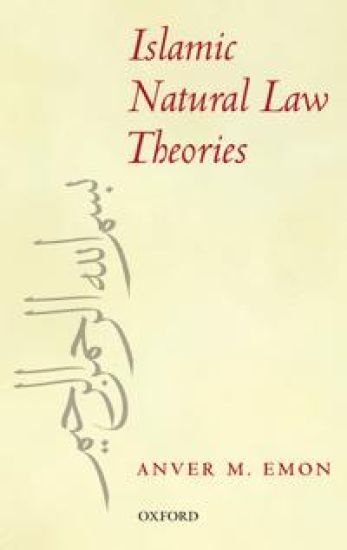
Islamic Natural Law Theories

Islamic Natural Law Theories

Anver M. Emon

Oxford University Press
2010
sidottu
This book offers the first sustained jurisprudential inquiry into Islamic natural law theory. It introduces readers to competing theories of Islamic natural law theory based on close readings of Islamic legal sources from as early as the 9th and 10th centuries CE. In popular debates about Islamic law, modern Muslims perpetuate an image of Islamic law as legislated by God, to whom the devout are bound to obey. Reason alone cannot obligate obedience; at most it can confirm or corroborate what is established by source texts endowed with divine authority. This book shows, however, that premodern Sunni Muslim jurists were not so resolute. Instead, they asked whether and how reason alone can be the basis for asserting the good and the bad, thereby justifying obligations and prohibitions under Shari'a. They theorized about the authority of reason amidst competing theologies of God. For premodern Sunni Muslim jurists, nature became the link between the divine will and human reason. Nature is the product of God's purposeful creation for the benefit of humanity. Since nature is created by God and thereby reflects His goodness, nature is fused with both fact and value. Consequently, as a divinely created good, nature can be investigated to reach both empirical and normative conclusions about the good and bad. They disagreed, however, whether nature's goodness is contingent upon a theology of God's justice or God's potentially contingent grace upon humanity, thus contributing to different theories of natural law. By recasting the Islamic legal tradition in terms of legal philosophy, the book sheds substantial light on an uncharted tradition of natural law theory and offers critical insights into contemporary global debates about Islamic law and reform.