Kirjojen hintavertailu. Mukana 12 272 335 kirjaa ja 12 kauppaa.

Kirjailija

Aparna Das

Kirjat ja teokset yhdessä paikassa: 4 kirjaa, julkaisuja vuosilta 2021-2025, suosituimpien joukossa Microwaves in Chemistry Applications. Vertaile teosten hintoja ja tarkista saatavuus suomalaisista kirjakaupoista.

4 kirjaa

Kirjojen julkaisuhaarukka 2021-2025.

Novel Photochemical Reactions in Organic and Medicinal Chemistry

Novel Photochemical Reactions in Organic and Medicinal Chemistry

Aparna Das; Bimal Krishna Banik

TAYLOR FRANCIS LTD
2025
sidottu
This book deals with chemical reactions which are triggered when light energy is absorbed by a substance’s molecules. It highlights the synthesis, molecular mechanism, chemical and biological properties of organic compounds and also focuses on recent advances in drug development related to cancer and other ailments. It will be helpful for the researcher during target identification, lead identification, and optimization during the drug development process as well as designing new molecules based on the data retrieved from the literature survey.
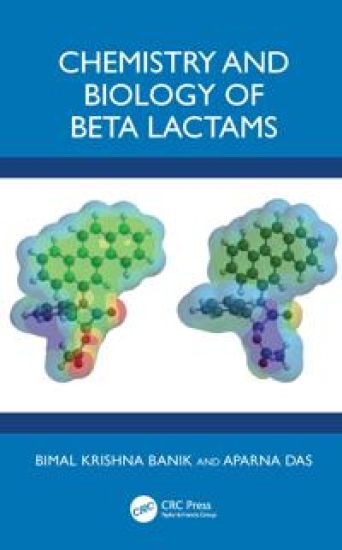
Chemistry and Biology of Beta-Lactams

Chemistry and Biology of Beta-Lactams

Bimal Krishna Banik; Aparna Das

TAYLOR FRANCIS LTD
2024
sidottu
Due to their medicinal activity and potential use as synthetic starting materials, studies on beta-lactams have increased significantly. This unique volume takes readers on a tour de force from the concept of antibiosis to the serendipity of antibiotics, evolution of beta-lactam development, and molecular biology of antibiotic resistance. These areas of research have culminated in a deeper understanding of microbiology, particularly in the area of bacterial cell wall synthesis and recycling. Considerable work has been performed by chemists and biologists to continue updating their findings about beta-lactam synthesis.Features:Stereoselective synthesis of monocyclic, bicyclic, and polycyclic beta-lactamsMicrowave, ultrasound, and solid support-mediated preparation of beta-lactamsDiverse medicinal activities including anticancer activities of beta-lactams and products obtained from themNanoparticles, artificial intelligence, and dipole moments in beta-lactam scienceSynthesis and mechanism of formation of polyaromatic beta-lactams
Natural Products as Anticancer Agents

Natural Products as Anticancer Agents

Bimal Krishna Banik; Aparna Das

Elsevier - Health Sciences Division
2023
nidottu
Natural Products as Anticancer Agents introduces the different types of natural products that have been used for cancer treatment. Divided into four parts, covering anticancer agents derived from terrestrial plants, anticancer agents derived from the marine environment, and anticancer agents derived from microorganisms, as well as evaluation of new anticancer agents, each part includes discussion of the properties, synthesis/extraction, storage, mechanism of action, and usage of the molecules. Discussion of the future prospects in anticancer natural products—including several new trends and an indication of where research in this area is likely to go in the future—is also included.
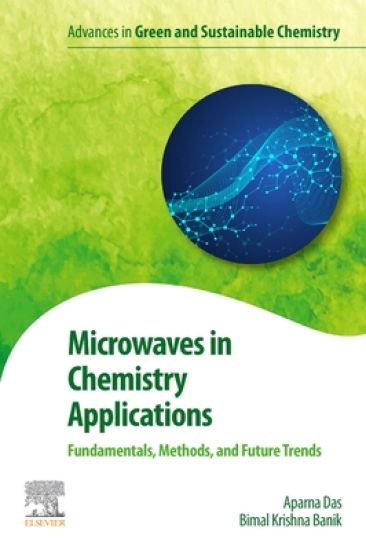
Microwaves in Chemistry Applications

Microwaves in Chemistry Applications

Aparna Das; Bimal Banik

Elsevier Science Publishing Co Inc
2021
nidottu
Microwaves in Chemistry Applications: Fundamentals, Methods and Future Trends offers a number of benefits over conventional heating technologies, including acceleration of reaction rates, milder reaction conditions, higher chemical yields, lower energy usage and different reaction selectivity, all of which can improve the sustainability of processes. The book provides valuable insights into the underlying chemistry at play in microwave-assisted processes, introducing fundamental concepts, discussing the modeling of reactions in such processes, and also highlighting a range of key methods and applications of microwaves in chemistry for improved sustainability. Beginning with an introduction to microwave chemistry, Part One discusses foundational principles, equipment and approaches for modeling reactions and assessing the outputs of those models. Methods in microwave chemistry are then the focus of Part Two, with microwave-assisted synthesis, catalysis, reduction and reactions all explored in detail. Part Three reflects on the practical usage of these methods to address specific issues, covering a number of interesting applications.