

Kirjailija
Archana Verma
Kirjat ja teokset yhdessä paikassa: 9 kirjaa, julkaisuja vuosilta 2007-2025, suosituimpien joukossa DATABASE MANAGEMENT SYSTEMS (Edition2nd). Vertaile teosten hintoja ja tarkista saatavuus suomalaisista kirjakaupoista.
9 kirjaa
Kirjojen julkaisuhaarukka 2007-2025.

Computer Networks is a core subject which explains how a computer connects with other computers. TCP/IP protocol suite is the basis on which computer connectivity can be achieved. The book Introduction to Computer networks 2nd edition has been written for MCA 2nd year students of Abdul Kalam Technical University. The book has been written according to the syllabus of the subject Computer Networks and concepts have been explained well through the help of examples and diagrams. The book contains Introduction to Computer Networks, its types and topologies, the Application Layer and its different protocols, the Transport Layer Protocols, flow control and congestion control, the Network Layer, IPv4 and IPv6 with addressing the Data Link Layer and its protocols, the Physical Layer. Also solved numerical problems are included at the end so that students can comprehend the concepts well. The book will be beneficial to students of other universities as well who are studying this subject. This book is the second edition of Introduction to Computer Networks book which has appended a broader range of topics to its first edition.
Associazione dei geni della lectina legante il mannosio con la mastite nelle bufale
Shahid Ahmad Shergojry; Archana Verma; Nazir Ahmad Mir
Edizioni Sapienza
2023
pokkari
La mastite la pi importante malattia delle ghiandole mammarie degli animali da latte e causa enormi perdite economiche agli imprenditori lattiero-caseari. Le attuali condizioni economiche richiedono che il singolo animale da latte non solo sia altamente produttivo ma anche redditizio. Pertanto, per soddisfare questa domanda sempre crescente, i ricercatori e gli allevatori di animali devono impegnarsi continuamente per trovare marcatori molecolari responsabili dei tratti di salute della mammella e sviluppare programmi di allevamento resistenti alle malattie in tempi rapidi. Pertanto, oggi, i ricercatori sono pi interessati a identificare i marcatori molecolari nei geni correlati all'immunit che forniranno una linea guida per la selezione precoce degli animali da latte per i programmi di allevamento di resistenza alla mastite. I geni della lectina che legano il mannosio svolgono un ruolo chiave nel sistema di difesa dell'ospite nei confronti della suscettibilit /resistenza a molte malattie infettive. I geni coinvolti nella risposta immunitaria nei mammiferi sono i geni delle lectine leganti il mannosio (MBL1 e MBL2). Sono un costituente importante della risposta immunitaria dell'organismo. Pertanto, sta diventando ampiamente accettato un approccio basato sul miglioramento della genetica dell'ospite in termini di resistenza alle malattie infettive attraverso l'allevamento selettivo di marcatori molecolari.

Associação dos genes da lectina de ligação à manose com a mastite em búfalas
Shahid Ahmad Shergojry; Archana Verma; Nazir Ahmad Mir
Edicoes Nosso Conhecimento
2023
pokkari
A mastite a doen a mais importante da gl ndula mam ria em animais leiteiros e causa enormes perdas econ micas aos empres rios leiteiros. As actuais condi es econ micas exigem que cada animal leiteiro individual seja n o s de grande produ o, mas tamb m rent vel. Assim, para satisfazer esta procura cada vez maior, os investigadores/criadores de animais t m de envidar esfor os cont nuos para encontrar marcadores moleculares respons veis pelas caracter sticas de sa de do bere e desenvolver programas de reprodu o resistentes a doen as de forma acelerada. Assim, hoje, os pesquisadores est o mais interessados em identificar os marcadores moleculares em genes relacionados imunidade que fornecer o uma diretriz para a sele o precoce de animais leiteiros para programas de reprodu o com resist ncia mastite. Os genes das lectinas de liga o manose desempenham um papel fundamental no sistema de defesa do hospedeiro relativamente susceptibilidade/resist ncia a muitas doen as infecciosas. Os genes envolvidos na resposta imune em mam feros s o os genes das lectinas de liga o manose (MBL1 e MBL2). Eles s o constituintes importantes do sistema de resposta imune de um organismo. Assim, uma abordagem baseada na melhoria da gen tica do hospedeiro na resist ncia a doen as infecciosas atrav s do melhoramento selectivo de marcadores moleculares est a tornar-se amplamente aceite.
Verbindung von Mannose-bindenden Lektin-Genen mit Mastitis bei Büffeln
Shahid Ahmad Shergojry; Archana Verma; Nazir Ahmad Mir
Verlag Unser Wissen
2023
pokkari
Mastitis ist die h ufigste Brustdr senerkrankung bei Milchvieh und verursacht enorme wirtschaftliche Verluste f r Milchunternehmer. Die gegenw rtigen wirtschaftlichen Bedingungen erfordern, dass das einzelne Milchvieh nicht nur einen hohen Ertrag erbringt, sondern auch profitabel ist. Um dieser st ndig steigenden Nachfrage gerecht zu werden, m ssen Tierforscher/Z chter kontinuierliche Anstrengungen unternehmen, um molekulare Marker zu finden, die f r Eutergesundheitsmerkmale verantwortlich sind, und schnell ein krankheitsresistentes Zuchtprogramm zu entwickeln. Daher sind Forscher heute mehr daran interessiert, die molekularen Marker in immunit tsbezogenen Genen zu identifizieren, die als Leitfaden f r die fr hzeitige Auswahl von Milchtieren f r Mastitis-Resistenz-Zuchtprogramme dienen. Mannose-bindende Lektin-Gene spielen eine Schl sselrolle im Abwehrsystem des Wirts hinsichtlich der Anf lligkeit/Resistenz gegen viele Infektionskrankheiten. Gene, die an der Immunantwort bei S ugetieren beteiligt sind, sind Mannose-bindende Lektin-Gene (MBL1 und MBL2). Sie sind ein wichtiger Bestandteil des Immunsystems eines Organismus. Daher findet ein Ansatz, der auf der Verbesserung der Wirtsgenetik hinsichtlich der Resistenz gegen Infektionskrankheiten durch molekularmarkerselektive Z chtung basiert, breite Akzeptanz.
A loner finds solace near a cremation ground. A professor of fiction concocts anecdotes in her classes. A prisoner falls in love with a woman whom he can only look at through a hole in a wall. A film director enters a time machine that is in beta version. A hunted man goes to a temple to seek peace and comes out with his shirt drenched in blood. A god-man gives audience from a mansion that changes locations. A mother rushing to reach her ailing son runs into Satan in a train coach... In these pages, you will find stories with a voice that is unique. These are stories imagined by present-day Hindi writers. Hindi and its dialects are understood by about half a billion people mainly in the north and central parts of India, but modern Hindi literature remains largely ignored in the rest of the world. In 2015, Cernunnos Books and Kathadesh magazine launched the first Hindi Tales of Mystery and Imagination contest. The winning stories were published in Hindi in Kathadesh. This collection brings these stories together for the first time in English. Cernunnos Books proudly presents the first fruit of a rare project that combines new writing and translation.

Analyzing the ways in which ideas of heroic discourse and the socio-religious and political needs of the period moulded iconography, this book explores the evolution of the iconography of the early mediaeval Hindu temples of the Indian peninsula, over the course of the sixth-twelfth centuries C.E. In order to study the socio-religious and political atmosphere in which the early mediaeval temple iconography grew and developed its specific forms, the author makes use of the inscriptions, archaeological and the literary materials ranging from the fourth centuries B.C.E. to the thirteenth century C.E., as these give an idea of the continuities and discontinuities in the ideas of heroic and political discourses which lie at the back of the visual art forms that they created. Of particular interest are the royal charters, issued in Sanskrit and Tamil, the religious narratives from the Sanskrit epics and the Puranas, iconographic canons that form a part of the religious texts known as the Agamas, written in Sanskrit, the court literature of the early mediaeval period and the early historical Sangam Tamil literature, apart from the archaeological material from the Indian peninsula. The author focuses particularly on exploring the ideas of power current in the society that created the narrative iconography of the period and the region studied.
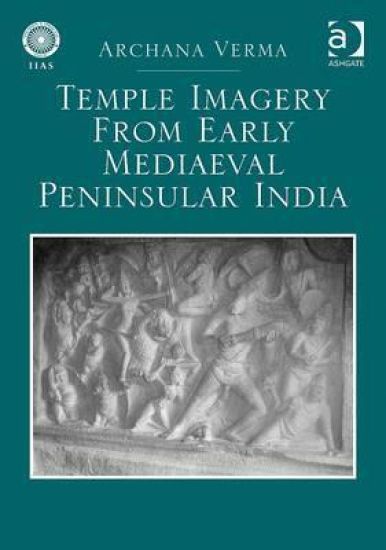
Temple Imagery from Early Mediaeval Peninsular India
Archana Verma
Ashgate Publishing Limited
2012
sidottu
Analyzing the ways in which ideas of heroic discourse and the socio-religious and political needs of the period moulded iconography, this book explores the evolution of the iconography of the early mediaeval Hindu temples of the Indian peninsula, over the course of the sixth-twelfth centuries C.E. In order to study the socio-religious and political atmosphere in which the early mediaeval temple iconography grew and developed its specific forms, the author makes use of the inscriptions, archaeological and the literary materials ranging from the fourth centuries B.C.E. to the thirteenth century C.E., as these give an idea of the continuities and discontinuities in the ideas of heroic and political discourses which lie at the back of the visual art forms that they created. Of particular interest are the royal charters, issued in Sanskrit and Tamil, the religious narratives from the Sanskrit epics and the Puranas, iconographic canons that form a part of the religious texts known as the Agamas, written in Sanskrit, the court literature of the early mediaeval period and the early historical Sangam Tamil literature, apart from the archaeological material from the Indian peninsula. The author focuses particularly on exploring the ideas of power current in the society that created the narrative iconography of the period and the region studied.

Cultural and Visual Flux at Early Historical Bagh in Central India
Archana Verma
BAR Publishing
2007
nidottu
A study of the region around the early historical Buddhist monastery in Bagh, in the state of Madhya Pradesh in central India; a special focus is given to the local cave art. The author argues that the visual art represents the religious assimilation by Buddhism, an approach caused by the process of transformation through three successive phases. The evolution of a Brahmanic class is also traced, together with the impact of Brahmanic ritual and class structures on the artwork of the monastery.