Kirjojen hintavertailu. Mukana 12 595 353 kirjaa ja 12 kauppaa.

Kirjailija

Ariel Salleh

Kirjat ja teokset yhdessä paikassa: 7 kirjaa, julkaisuja vuosilta 2017-2025, suosituimpien joukossa Ecofeminism as Politics. Vertaile teosten hintoja ja tarkista saatavuus suomalaisista kirjakaupoista.

7 kirjaa

Kirjojen julkaisuhaarukka 2017-2025.

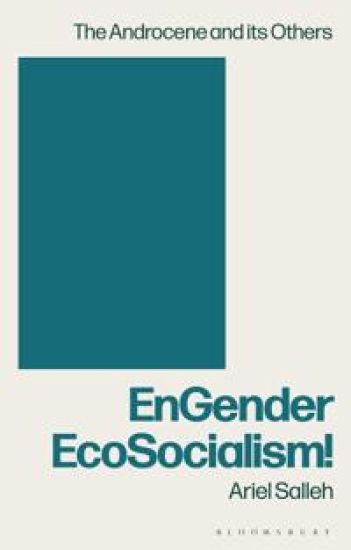
EnGender EcoSocialism!

EnGender EcoSocialism!

Ariel Salleh

BLOOMSBURY PUBLISHING PLC
2025
nidottu
This second volume in Ariel Salleh’s Androscene trilogy brings women’s labours in from the margins of ecosocialist thinking. With patriarchal capitalist coloniality the main driving force behind our planet’s degradation, recognising the racialized and gendered ‘meta-industrial labour class’ is a vital strategic priority if ecofeminist thinking is to offer a vision of a more sustainable future. If we focus on production purely in terms of growth, we miss what Salleh calls the ‘metabolic value’ of living processes and with it the opportunity for political ecology to encompass life in all of its dimensions – biological, libidinal, ego-driven, moral and political.Cutting across existing Marxist ideas, EnGender EcoSocialism! is an ecofeminist conceptualisation of women’s reproductive labour. The ecological challenges that face us demand that we break down the barriers between human and nature that have stood in our consciousness for millennia. This is a call to lay the ground for that breakthrough by healing the ‘libidinal rift’ caused when we ignore the value of unseen labour in our ecological processes. As it stands, this labour is captured by global capitalism and in turn subsidises it for free by regenerating its living resource base: the earth’s population. With this book, Salleh illustrates the limits of mending the damage caused by industry and urbanisation without further understanding the immense importance of a combined ecosocialist, ecofeminist approach.
EnGender EcoSocialism!

EnGender EcoSocialism!

Ariel Salleh

BLOOMSBURY PUBLISHING PLC
2025
sidottu
This second volume in Ariel Salleh’s The Androcene and its Others trilogy brings women’s labours in from the margins of ecosocialist thinking. With patriarchal capitalist coloniality the main driving force behind our planet’s degradation, recognising the racialized and gendered ‘meta-industrial labour class’ is a vital strategic priority if ecofeminist thinking is to offer a vision of a more sustainable future. If we focus on production purely in terms of growth, we miss what Salleh calls the ‘metabolic value’ of living processes and with it the opportunity for political ecology to encompass life in all of its dimensions – biological, libidinal, ego-driven, moral and political.Cutting across existing Marxist ideas, EnGender EcoSocialism! is an ecofeminist conceptualisation of women’s reproductive labour. The ecological challenges that face us demand that we break down the barriers between human and nature that have stood in our consciousness for millennia. This is a call to lay the ground for that breakthrough by healing the ‘libidinal rift’ caused when we ignore the value of unseen labour in our ecological processes. As it stands, this labour is captured by global capitalism and in turn subsidises it for free by regenerating its living resource base: the earth’s population. With this book, Salleh illustrates the limits of mending the damage caused by industry and urbanisation without further understanding the immense importance of a combined ecosocialist, ecofeminist approach.
DeColonize EcoModernism!

DeColonize EcoModernism!

Ariel Salleh

BLOOMSBURY PUBLISHING PLC
2025
sidottu
In the 21st century, the old colonial attitude of terra nullius, meaning a vacant place free for the taking, still lurks behind the global economic expropriation of peoples’ lands and bodies. Today, that theft is rationalised internationally by ecomodernist policy. This book engages with the patriarchal-colonial-capitalist mindset of the contemporary Androcene and its threats to Life-on-Earth, including global warming and nuclear risks, mining and the gene trade, the Fourth Industrial Revolution and digital coloniality.Ariel Salleh spells out the social and ecological contradictions set in motion by neocolonialism. Inspired by decolonial thinkers from Arturo Escobar to Tyson Yunkaporta, and critics of technology like Vandana Shiva and Shoshana Zuboff, she argues that dispossession of First Nation peoples’ livelihoods is not healed by consumerism in the name of ‘development’. Breaking with ecomodernist policy such as ‘the tech fix’ of mainstream environmentalists, Salleh contests the patriarchal-colonial-capitalist imperium and its advocacy of Green New Deals, Earth Governance, Sustainable Development Goals, and Smart Futures.Worldwide many decolonial activists see through the zero-sum imagination and its Earth Summits. Youth too, is defying the capitalist ruling class extinction trajectory, and some even challenge the fashionable post-human ideology circulating in high-tech quarters. Beyond ‘exchange value’, these Others of the Androcene are calling for self-governing bioregional futures, respectful of indigenous skills; they want local food sovereign economies, which meet people’s needs while protecting nature’s ‘metabolic value’.Tracing the biopolitical violence of digitalization and genetic engineering, this book follows two decades of creative defiance by global peoples’ movements against the contradictions of ecomodernist development and its ongoing imposition by nation states and international agencies.
DeColonize EcoModernism!

DeColonize EcoModernism!

Ariel Salleh

BLOOMSBURY PUBLISHING PLC
2025
nidottu
In the 21st century, the old colonial attitude of terra nullius, meaning a vacant place free for the taking, still lurks behind the global economic expropriation of peoples’ lands and bodies. Today, that theft is rationalised internationally by ecomodernist policy. This book engages with the patriarchal-colonial-capitalist mindset of the contemporary Androcene and its threats to Life-on-Earth, including global warming and nuclear risks, mining and the gene trade, the Fourth Industrial Revolution and digital coloniality.Ariel Salleh spells out the social and ecological contradictions set in motion by neocolonialism. Inspired by decolonial thinkers from Arturo Escobar to Tyson Yunkaporta, and critics of technology like Vandana Shiva and Shoshana Zuboff, she argues that dispossession of First Nation peoples’ livelihoods is not healed by consumerism in the name of ‘development’. Breaking with ecomodernist policy such as ‘the tech fix’ of mainstream environmentalists, Salleh contests the patriarchal-colonial-capitalist imperium and its advocacy of Green New Deals, Earth Governance, Sustainable Development Goals, and Smart Futures.Worldwide many decolonial activists see through the zero-sum imagination and its Earth Summits. Youth too, is defying the capitalist ruling class extinction trajectory, and some even challenge the fashionable post-human ideology circulating in high-tech quarters. Beyond ‘exchange value’, these Others of the Androcene are calling for self-governing bioregional futures, respectful of indigenous skills; they want local food sovereign economies, which meet people’s needs while protecting nature’s ‘metabolic value’.Spelling out the biopolitical violence of digitalization and genetic engineering, this book traces two decades of creative defiance by global peoples’ movements against the contradictions of ecomodernist development and its ongoing imposition by nation states and international agencies.
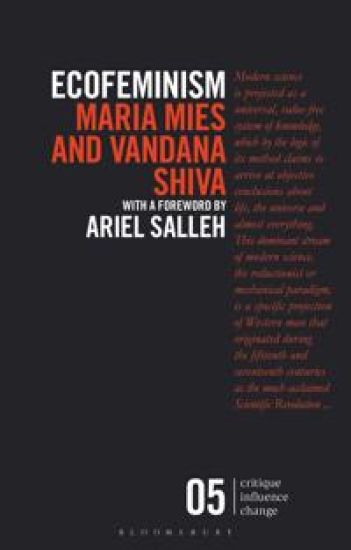
Ecofeminism

Ecofeminism

Vandana Shiva; Maria Mies; Ariel Salleh

BLOOMSBURY PUBLISHING PLC
2022
nidottu
In this groundbreaking work, two world-renowned scholars argue that ecological destruction and industrial catastrophes constitute a direct threat to everyday life, the maintenance of which has been made the particular responsibility of women. In both industrialized societies and the developing countries, the new wars the world is experiencing, violent ethnic chauvinisms and the malfunctioning of the economy also pose urgent questions for ecofeminists. Is there a relationship between patriarchal oppression and the destruction of nature in the name of profit and progress? How can women counter the violence inherent in these processes? Should they look to a link between the women's movement and other social movements?Maria Mies and Vandana Shiva offer a thought-provoking analysis of these and many other issues from a unique North-South perspective. They critique prevailing economic theories, conventional concepts of women's emancipation, the myth of 'catching up' development, the philosophical foundations of modern science and technology, and the omission of ethics when discussing so many questions, including advances in reproductive technology and biotechnology.In constructing their own ecofeminist epistemology and methodology, these two internationally respected feminist environmental activists look to the potential of movements advocating consumer liberation and subsistence production, sustainability and regeneration. They argue for an acceptance of limits and reciprocity and a rejection of exploitation, the endless commoditization of needs, and violence.
Pluriverse – A Post–Development Dictionary

Pluriverse – A Post–Development Dictionary

Ashish Kothari; Ariel Salleh; Arturo Escobar; Federico Demaria; Alberto Acosta

Tulika Book
2019
sidottu
Pluriverse: A Post-Development Dictionary contains over one hundred essays on transformative initiatives and alternatives to the currently dominant processes of globalized development, including its structural roots in modernity, capitalism, state domination, and masculinist values. It offers critical essays on mainstream solutions that ‘greenwash’ development and presents radically different worldviews and practices from around the world that point to an ecologically wise and socially just world.
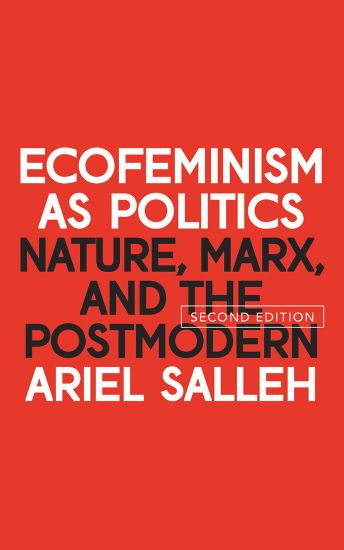
Ecofeminism as Politics

Ecofeminism as Politics

Ariel Salleh; Vandana Shiva; Professor John Clark

Zed Books Ltd
2017
nidottu
Ecofeminism as Politics is now a classic, being the first work to offer a joined-up framework for green, socialist, feminist and postcolonial thinking, showing how these have been held back by conceptual confusions over gender. Originally published in 1997, it argues that ecofeminism reaches beyond contemporary social movement ideologies and practices, by prefiguring a political synthesis of four-revolutions-in-one: ecology is feminism is socialism is postcolonial struggle. Ariel Salleh addresses discourses on class, science, the body, culture and nature, and her innovative reading of Marx converges the philosophy of internal relations with the organic materiality of everyday life.This new edition features forewords by Indian ecofeminist Vandana Shiva and US philosopher John Clark, a new introduction, and a recent conversation between Salleh and younger scholar activists.