Kirjojen hintavertailu. Mukana 12 595 353 kirjaa ja 12 kauppaa.

Kirjailija

Arif Dirlik

Kirjat ja teokset yhdessä paikassa: 23 kirjaa, julkaisuja vuosilta 1989-2022, suosituimpien joukossa Global Capitalism and the Future of Agrarian Society. Vertaile teosten hintoja ja tarkista saatavuus suomalaisista kirjakaupoista.

23 kirjaa

Kirjojen julkaisuhaarukka 1989-2022.

What Is In A Rim?

What Is In A Rim?

Arif Dirlik

TAYLOR FRANCIS LTD
2022
nidottu
In this volume, scholars question the current euphoria over the rapid growth of the Pacific rim - as an economic region and as a political ideal. They suggest that much of the discourse on the region is highly ideological, focusing on its potential for capitalist development while ignoring the limitations of such development, its human costs and consequences. This critique of the idea of a Pacific rim also seeks to redress the balance by focusing on the region in terms of human interactions.
What Is In A Rim?

What Is In A Rim?

Arif Dirlik

TAYLOR FRANCIS LTD
2021
sidottu
In this volume, scholars question the current euphoria over the rapid growth of the Pacific rim - as an economic region and as a political ideal. They suggest that much of the discourse on the region is highly ideological, focusing on its potential for capitalist development while ignoring the limitations of such development, its human costs and consequences. This critique of the idea of a Pacific rim also seeks to redress the balance by focusing on the region in terms of human interactions.
The Postcolonial Aura

The Postcolonial Aura

Arif Dirlik

Routledge
2019
sidottu
The essays in this volume range from questions of cultural self-representation in China to more general problems of reconceptualizing global relationships in response to contemporary changes. Although the new era of global capitalism calls for the remapping of global relations, such remapping must be informed both by a grasp of contemporary structu
Complicities – The People`s Republic of China in Global Capitalism
As the People's Republic of China has grown in economic power, so too have concerns about what its sustained growth and expanding global influence might mean for the established global order. Explorations of this changing dynamic in daily reporting as well as most recent scholarship ignore the part played by forces emanating from the global capitalist system in the PRC's failures as well as its successes. China scholar Arif Dirlik reflects in Complicities on a wide range of concerns, from the Tiananmen Square tragedy to the spread of Confucius Institutes across more than four hundred campuses worldwide, including nearly one hundred in the United States. Eschewing popular stereotypes and simple explanations, Dirlik's discussion stresses foreign complicity in encouraging the PRC's imperial ambitions and disdain for human rights. Eager for economic gain, the United States, Europe, and other Western countries have been complicit in supporting the PRC's authoritarian capitalism. Such support has been a key factor in nourishing the PRC's hegemonic aspirations. Infatuation with the PRC's incorporation in global capitalism has been important to Communist Party leaders' ability to suppress all memory and mention of Tiananmen, and their continuing abuse of human rights. More recently, the PRC's focus has migrated to "soft power" as a means of expanding global influence, with organizations like the Confucius Institutes exploiting foreign educational institutions to promote the political aims of the state.
Global Capitalism and the Future of Agrarian Society

Global Capitalism and the Future of Agrarian Society

Arif Dirlik; Alexander Woodside; Roxann Prazniak

Paradigm
2012
nidottu
This book offers historical and comparative analyses of changes in agrarian society forced by the globalization of capitalism, and the implications of these changes for human welfare globally. The book gives special attention to recent economic development and urbanization in the People s Republic of China which have had a major impact on contemporary transformations globally. Case studies from South and Southeast Asia, Africa and Latin America in turn place these transformations in a comparative global perspective. The contributors include distinguished scholars from the UN, PRC, India, Zimbabwe, and Latin America who are also active in policy issues."
Global Capitalism and the Future of Agrarian Society

Global Capitalism and the Future of Agrarian Society

Arif Dirlik; Alexander Woodside; Roxann Prazniak

Paradigm
2012
sidottu
This book offers historical and comparative analyses of changes in agrarian society forced by the globalization of capitalism, and the implications of these changes for human welfare globally. The book gives special attention to recent economic development and urbanisation in the People's Republic of China which have had a major impact on contemporary transformations globally. Case studies from South and Southeast Asia, Africa and Latin America in turn place these transformations in a comparative global perspective. The contributors include distinguished scholars from the UN, PRC, India, Zimbabwe, and Latin America who are also active in policy issues.
Culture and History in Postrevolutionary China

Culture and History in Postrevolutionary China

Arif Dirlik

The Chinese University Press
2012
sidottu
Offering critical perspectives on a number of ideological issues that have figured prominently in Chinese intellectual discourse since the beginning of the so-called reform and opening (gaige kaifang) in the late 1970s, these essays range widely in subject matter, from Marxist historiography to sociology and anthropology in China to guoxue/national studies. Together they are conceived as different windows into a basic problem: the deployment of culture and history in postrevolutionary Chinese thought. Dirlik touches on a number of themes, including the repudiation of the revolutionary past after 1978, which has led to a rise of cultural nationalism. He further places these developments within a global context, ultimately making a case methodologically for 'worlding' China: bringing China into the world, and the world into China.
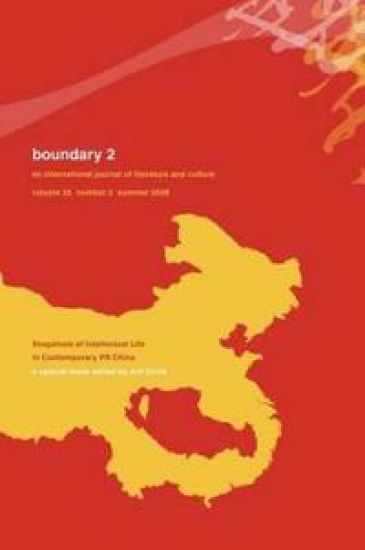
Snapshots of Intellectual Life in Contemporary PR China
“Snapshots of Intellectual Life in Contemporary PR China” discusses changes that have taken place in Chinese intellectual life over the past decade, the self-reflection that these changes have provoked among Chinese intellectuals, and the ways in which these changes have been received in the United States. Featuring essays by intellectuals from throughout Asia, this special issue of boundary 2 examines how China’s changing economy creates both new problems and new opportunities. These essays explore contemporary discussions concerning education and culture as China aspires to create innovative world-class universities and new national universities. Others discuss the question of “Chineseness” as an ideological operator within China, throughout the Chinese diaspora, and increasingly across the competitive globalized economy of culture and ideas.Contributors: Chris King Chi Chan, Chu Yiu-Wai, Alexander Day, Arif Dirlik, Han Shaogong, Pun Ngai, Fengzhen Wang, Wang Hui, Wang Shaoguang, Shaobo Xie, Yu Keping
Global Modernity

Global Modernity

Arif Dirlik

Paradigm
2007
nidottu
"A compelling essay on the contemporary human condition." William D. Coleman, Director of the Institute on Globalization and the Human Condition, McMaster University "An unusually perceptive and balanced appraisal of the globalization hype and its relation to the reality of global capitalism." Immanuel Wallerstein, Yale University In his provocative new book Arif Dirlik argues that the present represents not the beginning of globalization, but its end. We are instead in a new era in the unfolding of capitalism -- "global modernity". The fall of communism in the 1980s generated culturally informed counter-claims to modernity. Globalization has fragmented our understanding of what is "modern". Dirlik's "global modernity" is a concept that enables us to distinguish the present from its Eurocentric past, while recognizing the crucial importance of that past in shaping the present.
Pedagogies of the Global

Pedagogies of the Global

Arif Dirlik

Paradigm
2007
nidottu
The essays in this collection address questions raised by a modernity that has become global with the victory of capitalism over its competitors in the late twentieth century. Rather than erase difference by converting all to European-American norms of modernity, capitalist modernity as it has gone global has empowered societies once condemned to imprisonment in premodernity or tradition to make their own claims on modernity, on the basis of those very traditions, as filtered through experiences of colonialism, neocolonialism, or simple marginalization by the forces of globalization. Global modernity appears presently not as global homogeneity, but as a site of conflict between forces of homogenization and heterogenization within and between nations. Prominent in this context are conflicts over different ways of knowing and organizing the world. The essays here, dealing for the most part with education in the United States, engage in critiques of hegemonic ways of knowing and critically evaluate counterhegemonic voices for change that are heard from a broad spectrum of social, ethnic, and indigenous perspectives. Crucial to the essays' critique of hegemony in contemporary pedagogy is an effort shared by the contributors, distinguished scholars in their various fields, to overcome area and/or disciplinary boundaries and take the wholeness of everyday life as their point of departure.
Global Modernity

Global Modernity

Arif Dirlik

Paradigm
2006
sidottu
"A compelling essay on the contemporary human condition." William D. Coleman, Director of the Institute on Globalization and the Human Condition, McMaster University "An unusually perceptive and balanced appraisal of the globalization hype and its relation to the reality of global capitalism." Immanuel Wallerstein, Yale University In his provocative new book Arif Dirlik argues that the present represents not the beginning of globalization, but its end. We are instead in a new era in the unfolding of capitalism -- "global modernity". The fall of communism in the 1980s generated culturally informed counter-claims to modernity. Globalization has fragmented our understanding of what is "modern". Dirlik's "global modernity" is a concept that enables us to distinguish the present from its Eurocentric past, while recognizing the crucial importance of that past in shaping the present.
Pedagogies of the Global

Pedagogies of the Global

Arif Dirlik

Paradigm
2006
sidottu
The essays in this collection address questions raised by a modernity that has become global with the victory of capitalism over its competitors in the late twentieth century. Rather than erase difference by converting all to European-American norms of modernity, capitalist modernity as it has gone global has empowered societies once condemned to imprisonment in premodernity or tradition to make their own claims on modernity, on the basis of those very traditions, as filtered through experiences of colonialism, neocolonialism, or simple marginalization by the forces of globalization. Global modernity appears presently not as global homogeneity, but as a site of conflict between forces of homogenization and heterogenization within and between nations. Prominent in this context are conflicts over different ways of knowing and organizing the world. The essays here, dealing for the most part with education in the United States, engage in critiques of hegemonic ways of knowing and critically evaluate counterhegemonic voices for change that are heard from a broad spectrum of social, ethnic, and indigenous perspectives. Crucial to the essays' critique of hegemony in contemporary pedagogy is an effort shared by the contributors, distinguished scholars in their various fields, to overcome area and/or disciplinary boundaries and take the wholeness of everyday life as their point of departure.
Marxism in the Chinese Revolution

Marxism in the Chinese Revolution

Arif Dirlik

Rowman Littlefield Publishers
2005
sidottu
Representing a lifetime of research and writing by noted historian Arif Dirlik, the essays collected here explore developments in Chinese socialism and the issues that have occupied historians of the Chinese revolution for the past three decades. Dirlik engages Chinese socialism critically but with sympathy for the aspirations of revolutionaries who found the hope of social, political, and cultural liberation in Communist alternatives to capitalism and the intellectual inspiration to realize their hopes in Marxist theory. The book's historical approach to Marxist theory emphasizes its global relevance while avoiding dogmatic and Eurocentric limitations. These incisive essays range from the origins of socialism in the early twentieth century, through the victory of the Communists in mid-century, to the virtual abandonment by century's end of any pretense to a socialist revolutionary project by the leadership of the Chinese Communist Party. All that remains of the revolution in historical hindsight are memories of its failures and misdeeds, but Dirlik retains a critical perspective not just toward the past but also toward the ideological hegemonies of the present. Taken together, his writings reaffirm the centrality of the revolution to modern Chinese history. They also illuminate the fundamental importance of Marxism to grasping the flaws of capitalist modernity, despite the fact that in the end the socialist response was unable to transcend the social and ideological horizons of capitalism.
Chinese on the American Frontier

Chinese on the American Frontier

Arif Dirlik; Malcolm Yeung

Rowman Littlefield
2003
nidottu
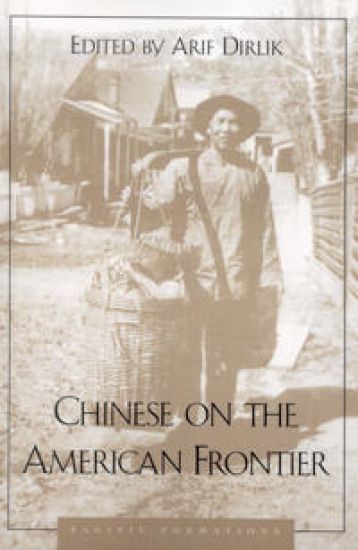
Chinese immigrants played a dynamic role in frontier America, yet scholars of Asian America have focused for the most part only on the Pacific Coast, especially California. This reader fills that gap by collecting memoirs, documents, and historical analyses from the other Western states—from the Cascades to the Great Plains—to provide a comprehensive overview of the Chinese in nineteenth-century America. Selecting among a wealth of primary and secondary material, Dirlik has chosen works that enlarge our understanding of the Chinese presence in the West and the development of Chinese cultural formations on the frontier. Providing insights not only into frontier society in the United States, but also into U.S.-Chinese relations of the time, this volume will be invaluable for all readers interested in China, Western history, and the history of Asian America.
Places and Politics in an Age of Globalization

Places and Politics in an Age of Globalization

Roxann Prazniak; Arif Dirlik

Rowman Littlefield Publishers
2001
nidottu
This ambitious work provides a unique statement on the question of place-based activism and its relationship to powerful forces of international capital. Arguing that specific places around the world are sites for the defense and enhancement of daily life in the context of rapidly expanding global technologies and investment options, the contributors reach for a vision of social development that supports sustainable, humane cultures. Bringing together the local and the global, this work provides the first sustained linkage of ethnic groups in diaspora to macrocosmic processes of world capital that inevitably reach down to mediate even the most local experiences. The essays, ranging in their discussion of place from Los Angeles and New York to New Zealand and Indonesia, offer both reasoned argument and authoritiative information on how local experience interacts with larger processes of global capital and the diasporic phenomenon. The book will be an invaluable resource and launching point for scholars and students in ethnic and identity studies and will interest all readers exploring the production of place and identification.
Postmodernity's Histories

Postmodernity's Histories

Arif Dirlik

Rowman Littlefield Publishers
2000
nidottu
Challenges to the conventional study of history have been raised by the recent paradigm of globalization and by new intellectual transformations linked to postmodernism and postcolonialism. In this book the noted historian Arif Dirlik argues for a new approach to the practice of historical research. Moving beyond mere critique, he synthesizes traditional historical methods with new approaches that emphasize historical memory, indigenous writing, place based history, and the dual processes of integration and fragmentation in a globalized world.
The Postcolonial Aura

The Postcolonial Aura

Arif Dirlik

Westview Press Inc
1998
pokkari
The essays in this volume range from questions of cultural self-representation in China to more general problems of reconceptualizing global relationships in response to contemporary changes. Although the new era of global capitalism calls for the remapping of global relations, such remapping must be informed both by a grasp of contemporary structures of economic, political, and cultural power and by memories of earlier radical visions of society. Without these two conditions, Arif Dirlik argues, the current preoccupation with Eurocentrism, ethnic diversity, and multiculturalism distract from issues of power that dominate global relations and that find expression in murderous ethnic conflicts.In lieu of multiculturalism, Dirlik offers multi-historicalism," which presupposes a historically grounded conception of cultural difference, seeks in different histories alternative visions of human society, and stresses divergent historical trajectories against a future colonized presently by an ideology of capital. Arguing that the operations of capital have brought the question of the local to the fore, he points to indigenism" as a source of paradigms of social relations and relationships to nature, to challenge the voracious developmentalism that undermines local welfare globally.
What Is in a Rim?

What Is in a Rim?

Arif Dirlik

Rowman Littlefield
1998
nidottu
This pathbreaking, multidisciplinary work challenges our unthinking acceptance of such terms as 'Asia Pacific' and 'Pacific Rim.' Clarifying the hidden power relationships and hegemonic struggles that are disguised by ideological constructions of the region, the contributors uncover fundamental contradictions_including the human costs and consequences_that underlie the much-celebrated economic boom. In evaluating the idea of 'Asia Pacific,' the book shifts our focus from abstract relationships between capital and commodities to the human interactions that have played a formative part in the region's constitution. The contributors agree that it is these interactions that constitute the region, rather than the physical boundaries of the Pacific. This revised and updated edition brings in additional essays focusing on conceptualizations of the Pacific, considers more fully interactions among countries, and strongly emphasizes peoples within the Pacific, who are routinely ignored in most discussions of the 'Rim.'
Anarchism in the Chinese Revolution

Anarchism in the Chinese Revolution

Arif Dirlik

University of California Press
1993
pokkari
Arif Dirlik's latest offering is a revisionist perspective on Chinese radicalism in the twentieth century. He argues that the history of anarchism is indispensable to understanding crucial themes in Chinese radicalism. And anarchism is particularly significant now as a source of democratic ideals within the history of the socialist movement in China. Dirlik draws on the most recent scholarship and on materials available only in the last decade to compile the first comprehensive history of his subject available in a Western language. He emphasizes the anarchist contribution to revolutionary discourse and elucidates this theme through detailed analysis of both anarchist polemics and social practice. The changing circumstances of the Chinese revolution provide the immediate context, but throughout his writing the author views Chinese anarchism in relation to anarchism worldwide.
Schools Into Fields and Factories

Schools Into Fields and Factories

Ming K. Chan; Arif Dirlik

Duke University Press
1991
sidottu
In this collaborative effort by two leading scholars of modern Chinese history, Ming K. Chan and Arif Dirlik investigate how the short-lived National Labor University in Shanghai was both a reflection of the revolutionary concerns of its time and a catalyst for future radical experiments in education. Under the slogan “Turn schools into fields and factories, fields and factories into schools,” the university attempted to bridge the gap between intellectual and manual labor that its founders saw as a central problem of capitalism, and which remains a persistent theme in Chinese revolutionary thinking.During its five years of existence, Labor University was the most impressive institutional embodiment in twentieth-century China of the labor-learning ideal, which was introduced by anarchists in the first decade of the century and came to be shared by a diverse group of revolutionaries in the 1920s. This detailed study places Labor University within the broad context of anarchist social ideals and educational experiments that inspired it directly, as well as comparable socialist experiments within labor education in Europe that Labor University’s founders used as models. The authors bring to bear the perspectives of institutional and intellectual history on their examination of the structure and operation of the University, presenting new material on its faculty, curriculum, physical plant, and history.