Kirjojen hintavertailu. Mukana 12 191 485 kirjaa ja 12 kauppaa.

Kirjailija

Arjun Dey

Kirjat ja teokset yhdessä paikassa: 5 kirjaa, julkaisuja vuosilta 2014-2018, suosituimpien joukossa Nanoindentation of Natural Materials. Vertaile teosten hintoja ja tarkista saatavuus suomalaisista kirjakaupoista.

5 kirjaa

Kirjojen julkaisuhaarukka 2014-2018.

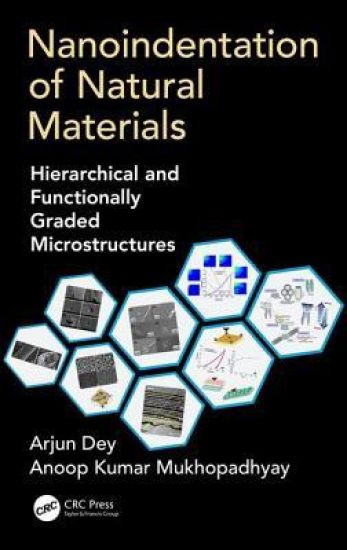
Nanoindentation of Natural Materials

Nanoindentation of Natural Materials

Arjun Dey; Anoop Kumar Mukhopadhyay

Productivity Press
2018
sidottu
Nanoindentation of Natural Materials: Hierarchical and Functionally Graded Microstructures provides a systematic introduction and review of state-of-the-art statistical hierarchical and functionally graded structures found in bone, teeth, hair, and scales, from a nanoindentation perspective, including detailed microstructure and composition.It covers the basics of hierarchical and functionally graded structures and nanoindentation techniques and detailed discussion with correlation micro/nano mechanical-structuresThe book includes practical issues backed with experimental data
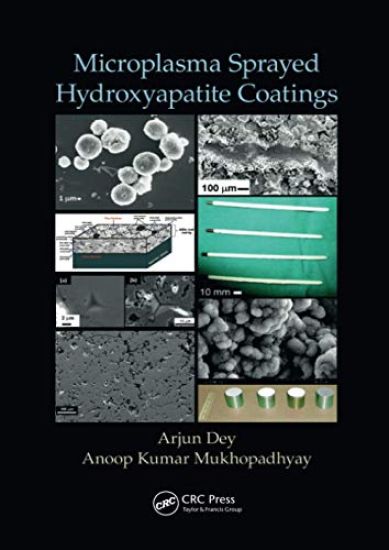
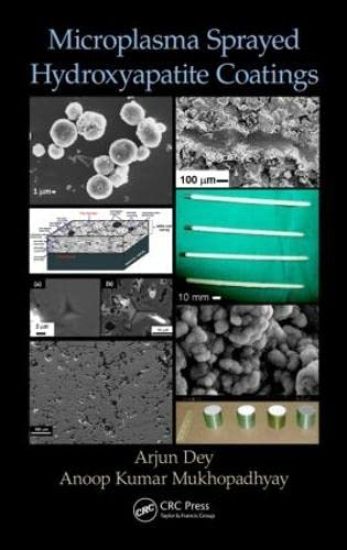
Microplasma Sprayed Hydroxyapatite Coatings

Microplasma Sprayed Hydroxyapatite Coatings

Arjun Dey; Anoop Kumar Mukhopadhyay

CRC Press
2017
nidottu
There has been enormous growth in the use of medical implants. However, in the case of hip replacement, loosening of metallic prosthesis fixed with polymethylmethylacrylate bone cement has resulted in painstaking revision surgery, which is a major problem for the patient, surgeon, and biomedical technology itself. In fact, global recognition of this problem led to the development of cementless fixation through the novel introduction of a bioactive hydroxyapatite (HAp) coating on biomedical-grade metallic implants. Since then, a wide variety of coating methods have evolved to make the HAp coatings on metallic implants more reliable.Microplasma Sprayed Hydroxyapatite Coatings discusses plasma spraying and other related HAp coating techniques, focusing on the pros and cons of macroplasma sprayed (MAPS)- and microplasma sprayed (MIPS)-HAp coatings. The book begins by explaining what a biomaterial really is, what the frequently used term biocompatibility stands for, and why it is so important for biomaterials to be biocompatible. It then:Examines the structural, chemical, macromechanical, micro/nanomechanical, and tribological properties and residual stress of HAp coatingsEvaluates the efficacies under simulated body fluid immersion for MAPS- and MIPS-HAp coatings developed on biomedical implant-grade SS316L substratesOffers a comprehensive survey of state-of-the-art in vivo studies of MIPS-HAp coatings, presenting the results of pioneering research related to bone defect fixationShedding light on the future scope and possibilities of MIPS-HAp coatings, Microplasma Sprayed Hydroxyapatite Coatings provides a valuable reference for students, researchers, and practitioners of biomedical engineering and materials science.
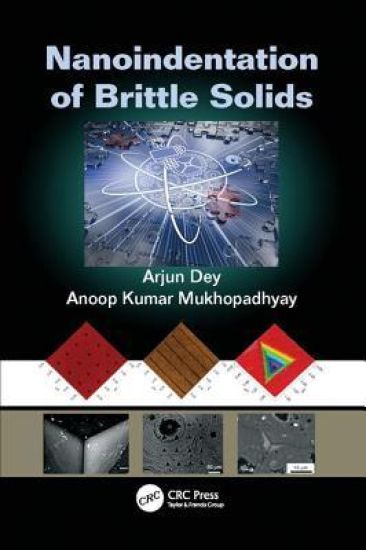
Nanoindentation of Brittle Solids

Nanoindentation of Brittle Solids

Arjun Dey; Anoop Kumar Mukhopadhyay

CRC Press
2017
nidottu
Understanding the Basics of Nanoindentation and Why It Is ImportantContact damage induced brittle fracture is a common problem in the field of brittle solids. In the case of both glass and ceramics—and as it relates to both natural and artificial bio-materials—it has triggered the need for improved fabrication technology and new product development in the industry. The Nanoindentation Technique Is Especially Dedicated to Brittle Materials Nanoindentation of Brittle Solids highlights the science and technology of nanoindentation related to brittle materials, and considers the applicability of the nanoindentation technique. This book provides a thorough understanding of basic contact induced deformation mechanisms, damage initiation, and growth mechanisms. Starting from the basics of contact mechanics and nanoindentation, it considers contact mechanics, addresses contact issues in brittle solids, and explores the concepts of hardness and elastic modulus of a material. It examines a variety of brittle solids and deciphers the physics of deformation and fracture at scale lengths compatible with the microstructural unit block.Discusses nanoindentation data analysis methods and various nanoindentation techniquesIncludes nanoindentation results from the authors’ recent research on natural biomaterials like tooth, bone, and fish scale materialsConsiders the nanoindentation response if contact is made too quickly in glassExplores energy issues related to the nanoindentation of glassDescribes the nanoindentation response of a coarse grain aluminaExamines nanoindentation on microplasma sprayed hydroxyapatite coatings Nanoindentation of Brittle Solids provides a brief history of indentation, and explores the science and technology of nanoindentation related to brittle materials. It also offers an in-depth discussion of indentation size effect; the evolution of shear induced deformation during indentation and scratches, and includes a collection of related research works.
Microplasma Sprayed Hydroxyapatite Coatings

Microplasma Sprayed Hydroxyapatite Coatings

Arjun Dey; Anoop Kumar Mukhopadhyay

Apple Academic Press Inc.
2015
sidottu
There has been enormous growth in the use of medical implants. However, in the case of hip replacement, loosening of metallic prosthesis fixed with polymethylmethylacrylate bone cement has resulted in painstaking revision surgery, which is a major problem for the patient, surgeon, and biomedical technology itself. In fact, global recognition of this problem led to the development of cementless fixation through the novel introduction of a bioactive hydroxyapatite (HAp) coating on biomedical-grade metallic implants. Since then, a wide variety of coating methods have evolved to make the HAp coatings on metallic implants more reliable.Microplasma Sprayed Hydroxyapatite Coatings discusses plasma spraying and other related HAp coating techniques, focusing on the pros and cons of macroplasma sprayed (MAPS)- and microplasma sprayed (MIPS)-HAp coatings. The book begins by explaining what a biomaterial really is, what the frequently used term biocompatibility stands for, and why it is so important for biomaterials to be biocompatible. It then:Examines the structural, chemical, macromechanical, micro/nanomechanical, and tribological properties and residual stress of HAp coatingsEvaluates the efficacies under simulated body fluid immersion for MAPS- and MIPS-HAp coatings developed on biomedical implant-grade SS316L substratesOffers a comprehensive survey of state-of-the-art in vivo studies of MIPS-HAp coatings, presenting the results of pioneering research related to bone defect fixationShedding light on the future scope and possibilities of MIPS-HAp coatings, Microplasma Sprayed Hydroxyapatite Coatings provides a valuable reference for students, researchers, and practitioners of biomedical engineering and materials science.
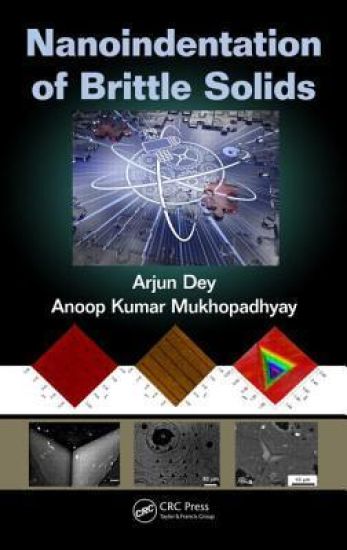
Nanoindentation of Brittle Solids

Nanoindentation of Brittle Solids

Arjun Dey; Anoop Kumar Mukhopadhyay

CRC Press Inc
2014
sidottu
Understanding the Basics of Nanoindentation and Why It Is ImportantContact damage induced brittle fracture is a common problem in the field of brittle solids. In the case of both glass and ceramics—and as it relates to both natural and artificial bio-materials—it has triggered the need for improved fabrication technology and new product development in the industry. The Nanoindentation Technique Is Especially Dedicated to Brittle Materials Nanoindentation of Brittle Solids highlights the science and technology of nanoindentation related to brittle materials, and considers the applicability of the nanoindentation technique. This book provides a thorough understanding of basic contact induced deformation mechanisms, damage initiation, and growth mechanisms. Starting from the basics of contact mechanics and nanoindentation, it considers contact mechanics, addresses contact issues in brittle solids, and explores the concepts of hardness and elastic modulus of a material. It examines a variety of brittle solids and deciphers the physics of deformation and fracture at scale lengths compatible with the microstructural unit block.Discusses nanoindentation data analysis methods and various nanoindentation techniquesIncludes nanoindentation results from the authors’ recent research on natural biomaterials like tooth, bone, and fish scale materialsConsiders the nanoindentation response if contact is made too quickly in glassExplores energy issues related to the nanoindentation of glassDescribes the nanoindentation response of a coarse grain aluminaExamines nanoindentation on microplasma sprayed hydroxyapatite coatings Nanoindentation of Brittle Solids provides a brief history of indentation, and explores the science and technology of nanoindentation related to brittle materials. It also offers an in-depth discussion of indentation size effect; the evolution of shear induced deformation during indentation and scratches, and includes a collection of related research works.