Kirjojen hintavertailu. Mukana 12 390 323 kirjaa ja 12 kauppaa.

Kirjailija

Arnar Árnason

Kirjat ja teokset yhdessä paikassa: 2 kirjaa, julkaisuja vuosilta 2009-2016, suosituimpien joukossa Comparing Rural Development. Vertaile teosten hintoja ja tarkista saatavuus suomalaisista kirjakaupoista.

2 kirjaa

Kirjojen julkaisuhaarukka 2009-2016.

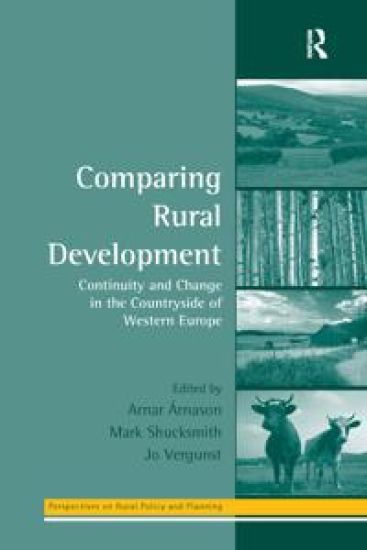
Comparing Rural Development

Comparing Rural Development

Arnar Árnason; Mark Shucksmith

Routledge
2016
nidottu
At a time when there is major reorientation of rural economies in Europe, and the emergence of new possibilities both for governance and for conflict, this book brings together a group of leading academics in the fields of geography, sociology and anthropology to examine how such changes are taking place in the west of Europe. It describes, analyses and theorises the role of networks and social capital in rural development in six countries: Finland, Ireland, Italy, Norway, Scotland and Sweden, and addresses the tension between studying 'local' rural development and the 'globalized' nature of modern economies and societies. An approach to networks and social capital is used as a way of drawing attention to the non-economic dimensions of rural development and society. The book stresses that the links between society and economics are of key importance.
Comparing Rural Development

Comparing Rural Development

Arnar Árnason; Mark Shucksmith

Ashgate Publishing Limited
2009
sidottu
At a time when there is major reorientation of rural economies in Europe, and the emergence of new possibilities both for governance and for conflict, this book brings together a group of leading academics in the fields of geography, sociology and anthropology to examine how such changes are taking place in the west of Europe. It describes, analyses and theorises the role of networks and social capital in rural development in six countries: Finland, Ireland, Italy, Norway, Scotland and Sweden, and addresses the tension between studying 'local' rural development and the 'globalized' nature of modern economies and societies. An approach to networks and social capital is used as a way of drawing attention to the non-economic dimensions of rural development and society. The book stresses that the links between society and economics are of key importance.