Kirjojen hintavertailu. Mukana 12 595 353 kirjaa ja 12 kauppaa.

Kirjailija

Arnauld Pierre

Kirjat ja teokset yhdessä paikassa: 3 kirjaa, julkaisuja vuosilta 2017-2023, suosituimpien joukossa Nicolas Schöffer. Vertaile teosten hintoja ja tarkista saatavuus suomalaisista kirjakaupoista.

3 kirjaa

Kirjojen julkaisuhaarukka 2017-2023.

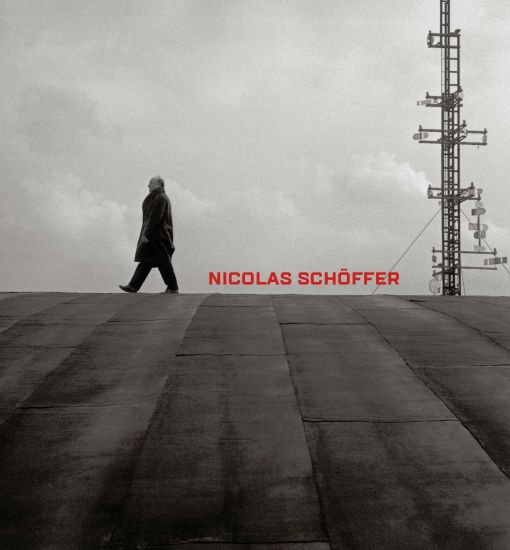
Nicolas Schöffer

Nicolas Schöffer

Arnauld Pierre; Sébastien Delot; Pauline Mari; Dominique Trudel

Yale University Press
2018
sidottu
Hungarian-born French artist Nicolas Schöffer (1912–1992), though relatively unknown today, was during his lifetime a significant presence in the art world. His 1956 piece CYSP 1 is considered the first cybernetic sculpture, making use of motors, microphones, and photo-electric cells to create a work based on feedback loops and responsiveness to its environment. For Schöffer, cybernetics enabled a crucial artistic exploration of the boundary between the living and the technological. This important reevaluation of Schöffer’s work features sculptures, paintings, and drawings, including unpublished pieces from the artist’s studio and archive, as well as documentation of his interdisciplinary and experimental collaborations with architects, musicians, choreographers, scientists, and industrialists. Particular attention is paid to the innovative work he created between 1945 and 1975, which takes on particular resonance in our current, digitally saturated world. Distributed for MercatorfondsExhibition Schedule:Lille Métropole Museum of Modern, Contemporary and Outsider Art (02/23/18–05/20/18)
Francis Picabia

Francis Picabia

Candace Clements; Arnauld Pierre; William A. Camfield

YALE UNIVERSITY PRESS
2023
sidottu
This publication is the fourth volume of an important catalogue raisonné of the work of Francis Picabia This publication, the fourth volume of an important catalogue raisonné of the work of Francis Picabia (1879–1953), includes paintings and selected drawings dating from 1940 into 1952. During the war years, while still residing in the south of France, Picabia was primarily occupied by figural subjects?—multi-figure allegories, female nudes, and glamorous female "portraits"?—painted in bold illusionistic relief. Notorious even in his lifetime, most of these works are now known to have adapted photographic illustrations in older "girly" magazines and other popular media. Upon his return to Paris in the post-war period, Picabia renewed his earlier interests in abstract and sometimes non-objective art, still often drawing upon published sources ranging from prehistoric art to Nietzsche, and pursued frequent exhibition of his distinctive, constantly mutating responses to critical currents of the day. These included a series of severely reductive, subtly effective "point" or dot paintings beginning in 1949—three years before ill-health effectively ended Picabia’s half-century of artistic provocation.Distributed for Mercatorfonds
Francis Picabia Catalogue Raisonné

Francis Picabia Catalogue Raisonné

William A. Camfield; Arnauld Pierre; Candace Clements; Beverley Calté; Aurélie Verdier; Pierre Calté

Yale University Press
2017
sidottu
The second of an important multi-volume catalogue project, this publication features work by Francis Picabia (1879-1953) that dates from 1915 into mid-1927. Beginning with Picabia’s elaboration of a personal machinist aesthetic, the book continues by looking at the artist’s central role in the formulation of the Paris Dada movement. That irreverent movement included Picabia’s increasingly provocative mechanomorphic compositions, complemented by his unorthodox writings and graphic designs as well as socially powerful performances. In the 1920s, Picabia turned to striking geometrical abstractions, subversive figurative art, and a collaboration in 1924 with the Swedish Ballet. The volume finishes with a look at Picabia’s creations of the mid-1920s, which included memorable collages and flamboyant figurative compositions known as the "monsters.” Distributed for Mercatorfonds