Kirjojen hintavertailu. Mukana 12 591 702 kirjaa ja 12 kauppaa.

Kirjailija

Arne Naess

Kirjat ja teokset yhdessä paikassa: 9 kirjaa, julkaisuja vuosilta 1990-2023, suosituimpien joukossa Elufilosoofia: mõtisklus tunnetest ja mõistusest. Vertaile teosten hintoja ja tarkista saatavuus suomalaisista kirjakaupoista.

9 kirjaa

Kirjojen julkaisuhaarukka 1990-2023.

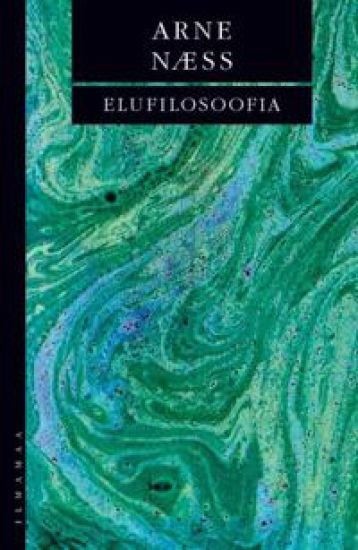
Elufilosoofia: mõtisklus tunnetest ja mõistusest
Arne Naess (1912-2009) sai filosoofiadoktori kraadi 1936. aastal pärast õpinguid Viinis ning oli 1939-1970 Oslo ülikooli filosoofiaprofessor. Samuti oli ta tuntud vägivallatuse eestkõnelejana, mägironijana, eelkõige norra-, aga ka ingliskeelsete õpikute ja filosoofiaraamatute autorina. Teose "Elufilosoofia" kaasautoriks on Per Ingvar Haukeland (sünd. 1966), kellega Naess on pidnud loenguid kodu- ja välismaal, põhiliselt süvaökoloogiast ja ökofilosoofiast, aga ka tunnete filosoofiast ja elufilosoofiast. Sõnum, et see Naessi enda meelest väike tunnetest ja mõistusest rääkiv raamat lugejatele korda läks, neile kasulikuks osutus, oli autori jaoks kõige väärtuslikum tunnustus, mida kirjanik võib tahta. Raamatu teljeks on "Eessõna" kirjutanud Toomas Trapido sõnul tunnete apoloogia ehk kaitsekõne tunnetele ja tundetarkusele ning isegi nende ülistamine, vähemalt oma õigele kohale seadmine Naessi vaates.
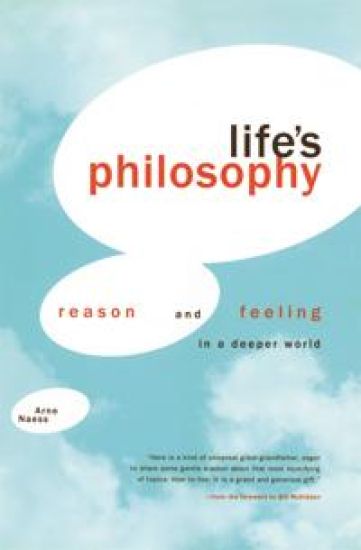
Life's Philosophy

Life's Philosophy

Arne Naess; Bill McKibben

University of Georgia Press
2018
sidottu
Now available in English for the first time, Norwegian philosopher Arne Naess's meditation on the art of living is an exhortation to preserve the environment and biodiversity. As Naess approaches his ninetieth year, he offers a bright and bold perspective on the power of feelings to move us away from ecological and cultural degradation toward sound, future-focused policy and action.Naess acknowledges the powerlessness of the intellect without the heart, and, like Thoreau before him, he rejects the Cartesian notion of mind-body separation. He advocates instead for the integration of reason and emotion—a combination Naess believes will inspire us to make changes for the better. Playful and serious, this is a guidebook for finding our way on a planet wrecked by the harmful effects of consumption, population growth, commodification, technology, and globalization. It is sure to mobilize today's philosophers, environmentalists, policy makers, and the general public into seeking—with whole hearts rather than with superficial motives—more effective and timelier solutions.Naess's style is reflective and anecdotal as he shares stories and details from his rich and long life. With characteristic goodwill, wit, and wisdom, he denounces our unsustainable actions while simultaneously demonstrating the unsurpassed wonder, beauty, and possibility our world offers, and ultimately shows us that there is always reason for hope, that everyone is a potential ally in our fight for the future.
Scepticism

Scepticism

Arne Naess

Routledge
2016
nidottu
Originally published in 1968. Scepticism is generally regarded as a position which, if correct, would be disastrous for our everyday and scientific beliefs. According to this view, a sceptical argument is one that leads to the intuitively false conclusion that we cannot know anything. But there is another, much neglected and more radical form of scepticism, Pyrrhonism, which neither denies nor accepts the possibility of knowledge and is to be regarded not as a philosophical position so much as the expression of a philosophical way of life. Professor Naess argues that, given a sympathetic interpretation, Sextus Empiricus’s outline of Pyrrhonian scepticism provides the essentials of a genuine and rational sceptical point of view. He begins with a brief account of Pyrrhonism, then goes on to argue for the psychological possibility of this kind of scepticism, defending it against common objections, and examining some of its implications. The last two chapters provide detailed support for the rationality of Pyrrhonism, drawing mainly on certain methodological distinctions in semantics which both justify the Pyrrhonist’s failure to make assertions and restrict the scope of recent epistemological arguments against scepticism in such a way as to modify severely the conclusions based on them.
Scepticism

Scepticism

Arne Naess

Routledge
2015
sidottu
Originally published in 1968. Scepticism is generally regarded as a position which, if correct, would be disastrous for our everyday and scientific beliefs. According to this view, a sceptical argument is one that leads to the intuitively false conclusion that we cannot know anything. But there is another, much neglected and more radical form of scepticism, Pyrrhonism, which neither denies nor accepts the possibility of knowledge and is to be regarded not as a philosophical position so much as the expression of a philosophical way of life. Professor Naess argues that, given a sympathetic interpretation, Sextus Empiricus’s outline of Pyrrhonian scepticism provides the essentials of a genuine and rational sceptical point of view. He begins with a brief account of Pyrrhonism, then goes on to argue for the psychological possibility of this kind of scepticism, defending it against common objections, and examining some of its implications. The last two chapters provide detailed support for the rationality of Pyrrhonism, drawing mainly on certain methodological distinctions in semantics which both justify the Pyrrhonist’s failure to make assertions and restrict the scope of recent epistemological arguments against scepticism in such a way as to modify severely the conclusions based on them.
The Ecology of Wisdom

The Ecology of Wisdom

Arne Naess

Counterpoint
2010
pokkari
Modern environmentalism owes a great debt to philosopher, professor, and writer Arne Naess, cofounder of the Deep Ecology movement. Here, editors Alan Drengson and Bill Devall provide a comprehensive yet accessible volume of Naess s most groundbreaking and seminal essays, which have remained influential among environmentalists to this day.Drawing from influences as diverse as Eastern religious practices, Gandhian nonviolent direct action, and Spinozan unity systems, Naess s writing calls for cooperative action to protect the earth on which we dwell, encouraging individuals and communities to develop their own distinctive ecosophies. These writings, full of Naess s characteristic enthusiasm, wit, and spiritual fascination with nature, provide a look into the remarkable philosophical underpinnings of his own social and ecological activism, as well as an inspiration for all those looking to follow in his footsteps. This is an essential anthology from one of modern environmentalism s most important and relevant voices."
Life's Philosophy

Life's Philosophy

Arne Naess; Bill McKibben

University of Georgia Press
2008
pokkari
Now available in English for the first time, Norwegian philosopher Arne Naess's meditation on the art of living is an exhortation to preserve the environment and biodiversity. As Naess approaches his ninetieth year, he offers a bright and bold perspective on the power of feelings to move us away from ecological and cultural degradation toward sound, future-focused policy and action.Naess acknowledges the powerlessness of the intellect without the heart, and, like Thoreau before him, he rejects the Cartesian notion of mind-body separation. He advocates instead for the integration of reason and emotion—a combination Naess believes will inspire us to make changes for the better. Playful and serious, this is a guidebook for finding our way on a planet wrecked by the harmful effects of consumption, population growth, commodification, technology, and globalization. It is sure to mobilize today's philosophers, environmentalists, policy makers, and the general public into seeking—with whole hearts rather than with superficial motives—more effective and timelier solutions.Naess's style is reflective and anecdotal as he shares stories and details from his rich and long life. With characteristic goodwill, wit, and wisdom, he denounces our unsustainable actions while simultaneously demonstrating the unsurpassed wonder, beauty, and possibility our world offers, and ultimately shows us that there is always reason for hope, that everyone is a potential ally in our fight for the future.
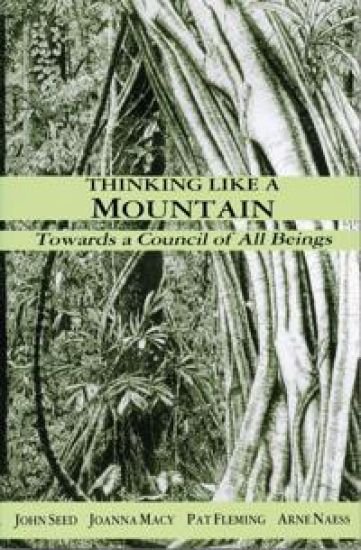
Thinking Like a Mountain

Thinking Like a Mountain

John Seed; Joanna Macy; Pat Fleming; Arne Naess

New Society Publishers
2007
pokkari
This book of readings, meditations, rituals and workshop notes prepared on three continents helps us remember that environmental defense is nothing less than "Self" defense. Including magnificent illustrations of Australia's rainforests, Thinking Like a Mountain provides a context for ritual identification with the natural environment, inviting us to begin a process of "community therapy" in defense of Mother Earth. It helps us experience our place in the web of life, rather than on the apex of some human-centred pyramid. An important deep ecology educational tool for activist, school and religious groups, Thinking Like a Mountain can also be used for personal reflection.Thinking Like a Mountain has been made available through New Catalyst Books. New Catalyst Books is an imprint of New Society Publishers, aimed at providing readers with access to a wider range of books dealing with sustainability issues by bringing books back into print that have enduring value in the field. For more information on New Catalyst Books click here.
The Selected Works of Arne Naess

The Selected Works of Arne Naess

Arne Naess

Springer-Verlag New York Inc.
2005
sidottu
Arne Naess is considered one of the most important philosophers of the twentieth century. He has been a tremendously prolific author, yet his works as a whole have remained largely unavailable – until now. Springer made available for the first time, a definitive 10-volume collection of Arne Naess’s life’s works: The Selected Works of Arne Naess. The Selected Works of Arne Naess (SWAN) presents a major overview of Arne Naess’s thinking and provides an extensive collection of this prolific philosopher’s principal writings. Some of Naess’s most important publications have never before been available in English. Many others are out of print. Often, his papers were published in obscure and inaccessible journals. And because Naess has been so prolific, many of his most important papers still remain unpublished. The publication of SWAN makes Naess’s work more fully accessible to scholars, students, and critics alike.
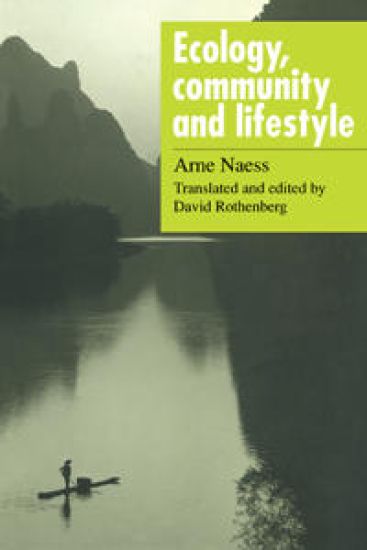
Ecology, Community and Lifestyle

Ecology, Community and Lifestyle

Arne Naess

Cambridge University Press
1990
pokkari
The basic thesis of the work is that environmental problems are only to be solved by people - people who will be required to make value judgements in conflicts that go beyond narrowly conceived human concerns. Thus people require not only an ethical system, but a way of conceiving the world and themselves such that the intrinsic value of life and nature is obvious, a system based on ‘deep ecological principles’. The book encourages readers to identify their own series of such parameters - their own ecosophies. Ecology, Comunity and Lifestyle will appeal to philosophers, specialists working on environmental issues, and the more general reader who is interested in learning some of the foundational ideas of the rapidly expanding field of environmental philosophy.