Kirjojen hintavertailu. Mukana 12 488 571 kirjaa ja 12 kauppaa.

Kirjailija

Arno Tausch

Kirjat ja teokset yhdessä paikassa: 31 kirjaa, julkaisuja vuosilta 1954-2025, suosituimpien joukossa Globalization, the Human Condition and Sustainable Development in the Twenty-first Century. Vertaile teosten hintoja ja tarkista saatavuus suomalaisista kirjakaupoista.

31 kirjaa

Kirjojen julkaisuhaarukka 1954-2025.

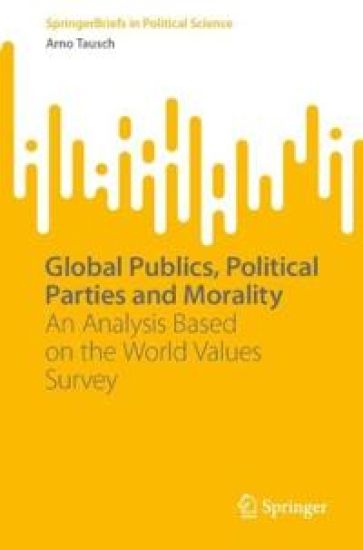
Global Publics, Political Parties and Morality

Global Publics, Political Parties and Morality

Arno Tausch

Springer International Publishing AG
2025
nidottu
This book provides a groundbreaking empirical study on the persistence of religious morality in an increasingly secular world. Analyzing data from the 2019–2022 World Values Survey and European Values Survey, it examines religious adherence and morality across 82 countries and over 400 political parties. Using advanced index methodologies, the study reveals where and how religious norms, particularly those rooted in the Ten Commandments, continue to shape social values and how this affects political party support. Essential for scholars, policymakers, and religious communities, this book challenges the notion that secularization is inevitable and explores the complex relationship between faith, politics, and global development.
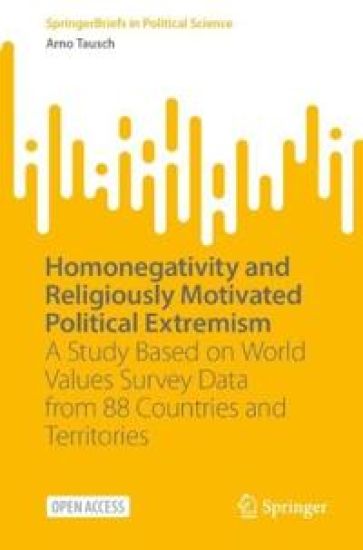
Homonegativity and Religiously Motivated Political Extremism

Homonegativity and Religiously Motivated Political Extremism

Arno Tausch

Springer International Publishing AG
2024
nidottu
This open access book describes the world’s increasingly multicultural societies face the problem that more and more diverse lifestyles (LGBTQIA+ communities) are not universally accepted, and that today, in addition to xenophobia, racism and anti-Semitism, there is substantial homonegativity. This book explores this issue, reviews the empirical literature on the subject and provides new empirically based evidence on a global and European scale. Based on an analysis of The World Values Survey using the statistical software SPSS, it provides a scientifically sound answer to the question of which social groups in Europe and around the globe are more homophobic and which are less, together with insights into the multivariate relationships between homonegativity and religiously motivated political extremism. The extensive and representative statistical samples allow cautious conclusions to be drawn for smaller religious groups in the European Union and other countries around the world.
Antisemitismus, Terrorismus und politischer Islam

Antisemitismus, Terrorismus und politischer Islam

Arno Tausch

Springer Fachmedien Wiesbaden
2024
nidottu
Angesichts der unfassbaren Pogrome, die die Terrororganisation Hamas, beginnend mit dem 7. Oktober 2023, in Israel verübte, und angesichts der Welle des globalen Antisemitismus und der antijüdischen Gewalt, die seither über die Welt hereingebrochen ist, ist eine empirisch orientierte Analyse von Antisemitismus, Terrorismus und politischem Islam von absoluter Wichtigkeit. Die Beiträge in diesem Buch versuchen, basierend auf Meinungsumfragen, einen aktuellen und empirisch abgesicherten Beitrag über das Verhältnis von Antisemitismus, Terrorismus und politischem Islam zu präsentieren, der dem internationalen Forschungsstand entspricht. Alles deutet darauf hin, dass der Antisemitismus der sogenannten "gemäßigten Islamisten" die Verbreitung der Ideologie des brutalen Terrorismus erst ermöglicht und sogar in Mode gebracht hat.
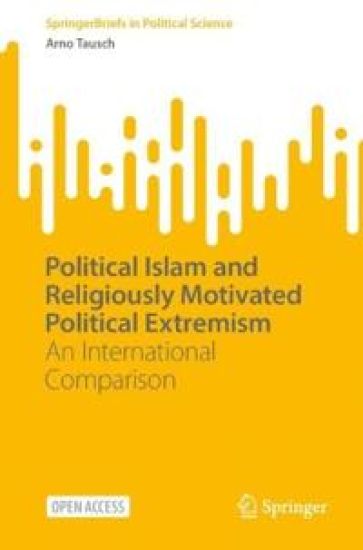
Political Islam and Religiously Motivated Political Extremism

Political Islam and Religiously Motivated Political Extremism

Arno Tausch

Springer International Publishing AG
2023
nidottu
This open access book presents an international comparison of religiously motivated extremism in the Arab world and around the globe. Based on data from the Arab Barometer and the World Values Survey, it applies advanced statistical techniques to analyze how religiously motivated political extremism affects political and social outcomes as well as political violence. The study clearly shows that identification with a political Islam that also influences elections, promotes religious and gender discrimination, and advocates an Islamist interpretation of Islam, are the main interrelated syndromes of political Islam that together explain more than 50% of the total variance of the 24 model variables used.“A carefully and methodically flawlessly researched work, which is highly recommended for all those who deal seriously with this topic. Professor Arno Tausch is clear-headed and possesses a remarkable ability to make the broad picture of Political Islam accessible.“Hon. Prof. Gunther Hauser, Head of the Department Strategy and Security Policy, National Defense Academy, Vienna, Austria“Methodological rigorous, scientifically sound, empirically rich and combining the best of qualitative and quantitative approaches, Prof Arno Tausch has produced a tour de force on Political Islam. This study reflects the best scholarship on the subject and will be of use to both policy makers and academics.”Prof Hussein Solomon, Academic Head of the Department of Political Studies and Governance, University of the Free State, South Africa
Globaler Katholizismus, Toleranz und die offene Gesellschaft

Globaler Katholizismus, Toleranz und die offene Gesellschaft

Arno Tausch; Stanislaw Obirek

Springer International Publishing AG
2022
nidottu
Dieses Buch bewertet systematisch die politischen und sozialen Werte der mehr als 1,3 Milliarden Katholiken auf der ganzen Welt, der bei weitem größten Konfession des westlichen Christentums. Auf der Grundlage einer umfassenden Analyse von Daten aus dem World Values Survey und anderen globalen Meinungsumfragen wirft das Buch ein neues Licht auf die Wertesysteme und Meinungen der Katholiken. Die Autoren heben zentrale Probleme und Herausforderungen hervor, mit denen die Kirche derzeit bei der Anpassung an die moderne Welt konfrontiert ist, einschließlich des katholischen Antisemitismus, der religiösen und sexuellen Toleranz und der Meinungen zur Demokratie, und bieten gleichzeitig eine anthropologische Reflexion darüber, wie gut sich die Kirche an die Anforderungen einer offenen Gesellschaft anpasst oder nicht.
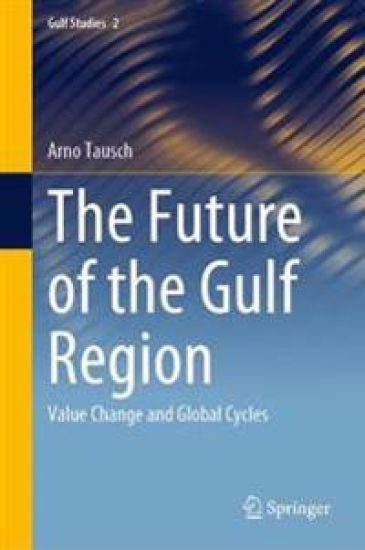
The Future of the Gulf Region

The Future of the Gulf Region

Arno Tausch

Springer Nature Switzerland AG
2022
nidottu
This book studies values and attitudes in the Gulf region. In light of global power shifts, the threatening collapse of internal security in the West, and uncertainty about the current leadership vacuum in world society, this book explores a future leading role of the Gulf countries in such institutions as the G-20 and the OECD. Based on rigorous analysis of macro-level data and opinion surveys with relevance for the Gulf region, it analyzes the global macro-factors shaping the Gulf's future at a time of the global COVID-19 crisis and depression and rising global tensions. Starting with an empirical time series analysis of the long cycles of global politics and economics, it highlights the implications for the Gulf region. Offering a multivariate analysis of civil society values in the Gulf, the author analyzes value changes and attitudes on antisemitism, political Islam, internal security, democracy, and other issues of Arab politics. The partially optimistic conclusions of the study testify to the underestimated and incipient maturity of the Gulf’s civil society and strongly suggest that the Gulf's future is rather with the free societies of the West and not with a Neo-Ottoman Empire in whatever form."Exceptional in scope and right up-to-the-minute in coverage"Brian M Pollins, Associate, Professor Emeritus, The Ohio State University."An outstanding and topical book by an astute scholar of the MENA region"Professor Hussein Solomon, Academic Head of Department, Political Studies and Governance, University of the Free State, South Africa."The most comprehensive and insightful study on the subject to date"Manfred B. Steger, Professor of Sociology, University of Hawai'i at Manoa and Global Professorial Fellow, Western Sydney University.
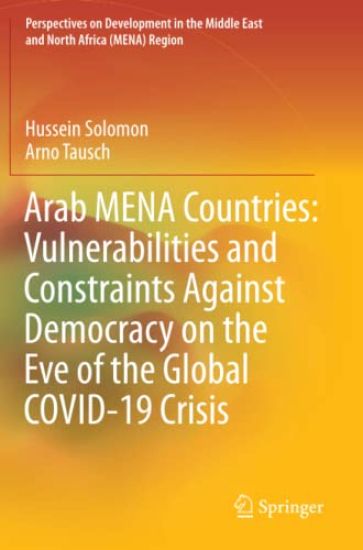
Arab MENA Countries: Vulnerabilities and Constraints Against Democracy on the Eve of the Global COVID-19 Crisis
This book offers readers critical insights into a region in crisis and explores different facets of the crisis from governance to gender to the politics of identity, the challenge of the environment and the enduring impact of demographic variables and technological change. Whilst exploring the nature of the crises, the book also explores how policy-makers have responded to these and what other alternatives there are in overcoming challenges posed. Whilst the focus is on the Middle East North Africa region as a whole, the authors are well aware of the unique characteristics of individual countries. Hence the book examines regional trends whilst also being conscious of the national specificities of each country. In combining the general with the particular, the book approaches its subject matter from both a quantitative and a qualitative perspective allowing one to understand regional trends and country specific peculiarities.
The Future of the Gulf Region

The Future of the Gulf Region

Arno Tausch

Springer Nature Switzerland AG
2021
sidottu
This book studies values and attitudes in the Gulf region. In light of global power shifts, the threatening collapse of internal security in the West, and uncertainty about the current leadership vacuum in world society, this book explores a future leading role of the Gulf countries in such institutions as the G-20 and the OECD. Based on rigorous analysis of macro-level data and opinion surveys with relevance for the Gulf region, it analyzes the global macro-factors shaping the Gulf's future at a time of the global COVID-19 crisis and depression and rising global tensions. Starting with an empirical time series analysis of the long cycles of global politics and economics, it highlights the implications for the Gulf region. Offering a multivariate analysis of civil society values in the Gulf, the author analyzes value changes and attitudes on antisemitism, political Islam, internal security, democracy, and other issues of Arab politics. The partially optimistic conclusions of the study testify to the underestimated and incipient maturity of the Gulf’s civil society and strongly suggest that the Gulf's future is rather with the free societies of the West and not with a Neo-Ottoman Empire in whatever form."Exceptional in scope and right up-to-the-minute in coverage"Brian M Pollins, Associate, Professor Emeritus, The Ohio State University."An outstanding and topical book by an astute scholar of the MENA region"Professor Hussein Solomon, Academic Head of Department, Political Studies and Governance, University of the Free State, South Africa."The most comprehensive and insightful study on the subject to date"Manfred B. Steger, Professor of Sociology, University of Hawai'i at Manoa and Global Professorial Fellow, Western Sydney University.
Smart Development

Smart Development

Arno Tausch

Nova Science Publishers Inc
2021
sidottu
In its much-debated Human Development Report 2020, the United Nations Human Development Program attempted to present indicators of development which are planetary pressures-adjusted. In the present book by Arno Tausch, the author presents further reflections in this important and evolving field, vital for any informed debate about the Paris Climate Accord. Tausch adjusts the development achievements and setbacks of the countries of the world by ecological footprint per capita. With the hitherto existing globalized political economy in ruins in the wake of the Covid-19 pandemic and the ensuing global economic depression, a new societal contract has to emerge which combines well-being with a minimum of energy inputs, thus reducing planetary pressures. Tausch attempts to answer vital questions, raised by the debates on the Paris climate accords, and the recent UNDP Human Development Index. Is a liberal economy, based on economic freedom, compatible with the attempt to "deliver" a maximum amount of democracy, economic growth, gender equality, human development, research and development, and social cohesion with a minimum of planetary pressure? Tausch looks at the cross-national drivers and bottlenecks of "smart development," using standard comparative cross-national data. The book shows that those attempting to reduce planetary pressure and to work towards fulfilling the Paris Climate Accords have to start thinking about such issues as gender justice, economic freedom, globalization, population density, and migration, if they really want to bring about development with a minimum of planetary pressure.
Islamism

Islamism

Arno Tausch

Nova Science Publishers Inc
2021
sidottu
This work is a collection of essays on Islamism and global opinion surveys, focusing on their implications for the future of Arab countries. Much of Western academia and the media still seem to be unable to come to terms with the real challenges posed by Islamism two decades after 9/11 and half a decade after the horrendous Paris 2015 terror attacks. What is at stake is the question of whether moderate Islamist political movements can and should be a partnered with the West. President Obama personally issued the Presidential Study Directive 11 (PSD-11) in 2010, ultimately concluding that the United States should shift from its longstanding policy of supporting "stability" in the Middle East and North Africa to a policy of backing moderate Islamic political movements. The present book squarely contradicts this perspective. Bassam Tibi maintains that only liberal Islam approves of democracy, while Islamism absolutely does not. The empirical basis of the book is based on estimates of the development of civil society in the Arab World by using comparative opinion survey data based on the evaluation of the World Values Survey and other global and regional surveys. Variables of trust, non-violence, gender justice and tolerance towards homosexuals indicate some of existing deficits in the development of civil societies in the region. Thus, Inglehart and Norris correctly foresaw that the real distinguishing parameter for Huntington's theory is not his opinion on democracy, but his societal opinion on gender issues. This perspective is followed up with an empirical analysis of the gender ideology of Islamism and its gender values, all based on World Values Survey data. Muslim feminism, which implies the rejection of Islamism and the veil, and the democracy movement in the Muslim world are closely interrelated. In a chapter on Islamism and anti-Semitism, the book identifies the extent of relationships between anti-Semitism, the current economic and social situation, religious data, and opinions on terrorism among the global Muslim society. Islamism is deeply connected to anti-Semitism. The book also explores which factors contribute to the approval of terroristic acts, measured by such variables as opinions on suicide bombing and the favorability of terrorist organizations such as Hamas and Hezbollah. The book shows how wrong it is to neglect the underlying ideological radicalism which characterizes the support of organizations such as the Muslim Brotherhood and its affiliates in the region. Along with most radicalized factions of Islamist terrorism, they share intense hatred of Jews and Free Masons and Western civilization. In a concluding chapter, the book analyzes globalization, the environment in the Arab World and the future "greening" of Arab politics.
Arab MENA Countries: Vulnerabilities and Constraints Against Democracy on the Eve of the Global COVID-19 Crisis
This book offers readers critical insights into a region in crisis and explores different facets of the crisis from governance to gender to the politics of identity, the challenge of the environment and the enduring impact of demographic variables and technological change. Whilst exploring the nature of the crises, the book also explores how policy-makers have responded to these and what other alternatives there are in overcoming challenges posed. Whilst the focus is on the Middle East North Africa region as a whole, the authors are well aware of the unique characteristics of individual countries. Hence the book examines regional trends whilst also being conscious of the national specificities of each country. In combining the general with the particular, the book approaches its subject matter from both a quantitative and a qualitative perspective allowing one to understand regional trends and country specific peculiarities.
Global Catholicism, Tolerance and the Open Society

Global Catholicism, Tolerance and the Open Society

Arno Tausch; Stanislaw Obirek

Springer Nature Switzerland AG
2020
nidottu
This book systematically assesses the political and social values of the more than 1.3 billion Catholics around the globe, by far the largest denomination of Western Christianity. Based on an extensive analysis of data from the World Values Survey and other global opinion surveys, the book sheds new light on the value systems and opinions of Roman Catholics. The authors highlight core problems and challenges the Church is currently facing in adapting to the modern world, including Catholic anti-Semitism, religious and sexual tolerance, and opinions towards democracy, while also offering an anthropological reflection on how well the Church is adapting or failing to adapt to the requirements of an open society.
Islamism, Crisis and Democratization

Islamism, Crisis and Democratization

Hussein Solomon; Arno Tausch

Springer Nature Switzerland AG
2020
nidottu
This book systematically assesses the value systems of active Muslims around the globe. Based on a multivariate analysis of recent World Values Survey data, it sheds new light on Muslim opinions and values in countries such as Indonesia, Iran, Tunisia, Egypt and Turkey. Due to a lack of democratic traditions, sluggish economic growth, escalating religiously motivated violence, and dissatisfaction with ruling elites in many Muslim countries, the authors identify a crisis and return to conservative values in the Muslim world, including anti-Semitism, religious and sexual intolerance, and views on democracy and secularism, business and economic matters. Based on these observations, they offer recommendations for policymakers and civil societies in Muslim countries on how to move towards tolerance, greater democratization and more rapid economic growth.
Global Catholicism, Tolerance and the Open Society

Global Catholicism, Tolerance and the Open Society

Arno Tausch; Stanislaw Obirek

Springer Nature Switzerland AG
2019
sidottu
This book systematically assesses the political and social values of the more than 1.3 billion Catholics around the globe, by far the largest denomination of Western Christianity. Based on an extensive analysis of data from the World Values Survey and other global opinion surveys, the book sheds new light on the value systems and opinions of Roman Catholics. The authors highlight core problems and challenges the Church is currently facing in adapting to the modern world, including Catholic anti-Semitism, religious and sexual tolerance, and opinions towards democracy, while also offering an anthropological reflection on how well the Church is adapting or failing to adapt to the requirements of an open society.
Islamism, Crisis and Democratization

Islamism, Crisis and Democratization

Hussein Solomon; Arno Tausch

Springer Nature Switzerland AG
2019
sidottu
This book systematically assesses the value systems of active Muslims around the globe. Based on a multivariate analysis of recent World Values Survey data, it sheds new light on Muslim opinions and values in countries such as Indonesia, Iran, Tunisia, Egypt and Turkey. Due to a lack of democratic traditions, sluggish economic growth, escalating religiously motivated violence, and dissatisfaction with ruling elites in many Muslim countries, the authors identify a crisis and return to conservative values in the Muslim world, including anti-Semitism, religious and sexual intolerance, and views on democracy and secularism, business and economic matters. Based on these observations, they offer recommendations for policymakers and civil societies in Muslim countries on how to move towards tolerance, greater democratization and more rapid economic growth.
Islamism, Arab Spring, and the Future of Democracy

Islamism, Arab Spring, and the Future of Democracy

Leonid Grinin; Andrey Korotayev; Arno Tausch

Springer Nature Switzerland AG
2019
nidottu
This book provides an in-depth analysis of public opinion patterns among Muslims, particularly in the Arab world. On the basis of data from the World Values Survey, the Arab Barometer Project and the Arab Opinion Index, it compares the dynamics of Muslim opinion structures with global publics and arrives at social scientific predictions of value changes in the region. Using country factor scores from a variety of surveys, it also develops composite indices of support for democracy and a liberal society on a global level and in the Muslim world, and analyzes a multivariate model of opinion structures in the Arab world, based on over 40 variables from 12 countries in the Arab League and covering 67% of the total population of the Arab countries. While being optimistic about the general, long-term trend towards democracy and the resilience of Arab and Muslim civil society to Islamism, the book also highlights anti-Semitic trends in the region and discusses them in the larger context of xenophobia in traditional societies. In light of the current global confrontation with radical Islamism, this book provides vital material for policy planners, academics and think tanks alike.
Islamism, Arab Spring, and the Future of Democracy

Islamism, Arab Spring, and the Future of Democracy

Leonid Grinin; Andrey Korotayev; Arno Tausch

Springer International Publishing AG
2018
sidottu
This book provides an in-depth analysis of public opinion patterns among Muslims, particularly in the Arab world. On the basis of data from the World Values Survey, the Arab Barometer Project and the Arab Opinion Index, it compares the dynamics of Muslim opinion structures with global publics and arrives at social scientific predictions of value changes in the region. Using country factor scores from a variety of surveys, it also develops composite indices of support for democracy and a liberal society on a global level and in the Muslim world, and analyzes a multivariate model of opinion structures in the Arab world, based on over 40 variables from 12 countries in the Arab League and covering 67% of the total population of the Arab countries. While being optimistic about the general, long-term trend towards democracy and the resilience of Arab and Muslim civil society to Islamism, the book also highlights anti-Semitic trends in the region and discusses them in the larger context of xenophobia in traditional societies. In light of the current global confrontation with radical Islamism, this book provides vital material for policy planners, academics and think tanks alike.
Economic Cycles, Crises, and the Global Periphery

Economic Cycles, Crises, and the Global Periphery

Leonid Grinin; Andrey Korotayev; Arno Tausch

Springer International Publishing AG
2018
nidottu
This thought-provoking monograph analyzes long- medium- and short-term global cycles of prosperity, recession, and depression, plotting them against centuries of important world events. Major research on economic and political cycles is integrated to clarify evolving relationships between the global center and its periphery as well as current worldwide economic upheavals and potential future developments. Central to this survey are successive waves of industrial and, later, technological and cybernetic progress, leading to the current era of globalization and the changes of the roles of both Western powers and former minors players, however that will lead to the formation of the world order without a hegemon. Additionally, the authors predict what they term the Great Convergence, the lessening of inequities between the global core and the rest of the world, including the wealth gap between First and Third World nations. Among the topics in this ambitious volume: · Why politics is often omitted from economic analysis.· Why economic cycles are crucial to understanding the modern geopolitical landscape. · How the aging of the developed world will affect world technological and economic future.· The evolving technological forecast for Global North and South. · Where the U.S. is likely to stand on the future world stage. Economic Cycles, Crises, and the Global Periphery will inspire discussion and debate among sociologists, global economists, demographers, global historians, and futurologists. This expert knowledge is necessary for further research, proactive response, and preparedness for a new age of sociopolitical change.
Economic Cycles, Crises, and the Global Periphery

Economic Cycles, Crises, and the Global Periphery

Leonid Grinin; Andrey Korotayev; Arno Tausch

Springer International Publishing AG
2016
sidottu
This thought-provoking monograph analyzes long- medium- and short-term global cycles of prosperity, recession, and depression, plotting them against centuries of important world events. Major research on economic and political cycles is integrated to clarify evolving relationships between the global center and its periphery as well as current worldwide economic upheavals and potential future developments. Central to this survey are successive waves of industrial and, later, technological and cybernetic progress, leading to the current era of globalization and the changes of the roles of both Western powers and former minors players, however that will lead to the formation of the world order without a hegemon. Additionally, the authors predict what they term the Great Convergence, the lessening of inequities between the global core and the rest of the world, including the wealth gap between First and Third World nations. Among the topics in this ambitious volume: · Why politics is often omitted from economic analysis.· Why economic cycles are crucial to understanding the modern geopolitical landscape. · How the aging of the developed world will affect world technological and economic future.· The evolving technological forecast for Global North and South. · Where the U.S. is likely to stand on the future world stage. Economic Cycles, Crises, and the Global Periphery will inspire discussion and debate among sociologists, global economists, demographers, global historians, and futurologists. This expert knowledge is necessary for further research, proactive response, and preparedness for a new age of sociopolitical change.