Kirjojen hintavertailu. Mukana 12 595 353 kirjaa ja 12 kauppaa.

Kirjailija

Arnold Arluke

Kirjat ja teokset yhdessä paikassa: 14 kirjaa, julkaisuja vuosilta 1987-2022, suosituimpien joukossa Just a Dog. Vertaile teosten hintoja ja tarkista saatavuus suomalaisista kirjakaupoista.

14 kirjaa

Kirjojen julkaisuhaarukka 1987-2022.

Regarding Animals

Regarding Animals

Arnold Arluke; Clinton Sanders; Leslie Irvine

TEMPLE UNIVERSITY PRESS,U.S.
2022
nidottu
Winner of the Charles Horton Cooley Award, Society for the Study of Symbolic Interaction, 1997The first edition of Regarding Animals provided insight into the history and practice of how human beings construct animals, and how we construct ourselves and others in relation to them. Considerable progress in how society regards animals has occurred since that time. However, shelters continue to euthanize companion animals, extinction rates climb, and wildlife “management” pits human interests against those of animals. This revised and updated edition of Regarding Animals includes four new chapters, examining how relationships with pets help homeless people to construct positive personal identities; how adolescents who engage in or witness animal abuse understand their acts; how veterinary technicians experience both satisfaction and contamination in their jobs; and how animals are represented in mass media-both traditional editorial media and social media platforms.The authors illustrate how modern society makes it possible for people to shower animals with affection and yet also to abuse or kill them. Although no culture or subculture provides solutions for resolving all moral contradictions, Regarding Animals illuminates how people find ways to live with inconsistent behavior.
Regarding Animals

Regarding Animals

Arnold Arluke; Clinton Sanders; Leslie Irvine

TEMPLE UNIVERSITY PRESS,U.S.
2022
sidottu
Winner of the Charles Horton Cooley Award, Society for the Study of Symbolic Interaction, 1997The first edition of Regarding Animals provided insight into the history and practice of how human beings construct animals, and how we construct ourselves and others in relation to them. Considerable progress in how society regards animals has occurred since that time. However, shelters continue to euthanize companion animals, extinction rates climb, and wildlife “management” pits human interests against those of animals. This revised and updated edition of Regarding Animals includes four new chapters, examining how relationships with pets help homeless people to construct positive personal identities; how adolescents who engage in or witness animal abuse understand their acts; how veterinary technicians experience both satisfaction and contamination in their jobs; and how animals are represented in mass media-both traditional editorial media and social media platforms.The authors illustrate how modern society makes it possible for people to shower animals with affection and yet also to abuse or kill them. Although no culture or subculture provides solutions for resolving all moral contradictions, Regarding Animals illuminates how people find ways to live with inconsistent behavior.
Underdogs

Underdogs

Arnold Arluke; Andrew Rowan

University of Georgia Press
2020
pokkari
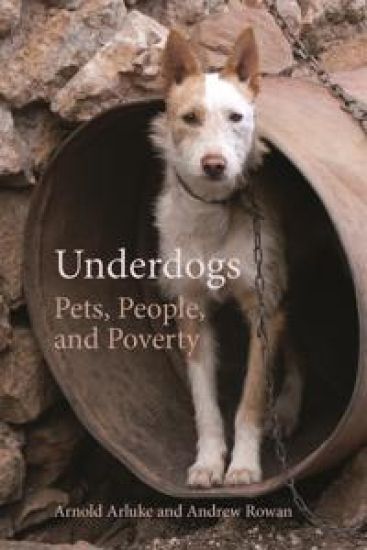
Underdogs looks into the rapidly growing initiative to provide veterinary care to underserved communities in North Carolina and Costa Rica and how those living in or near poverty respond to these forms of care. For many years, the primary focus of the humane community in the United States was to control animal overpopulation and alleviate the stray dog problem by euthanizing or sterilizing dogs and cats. These efforts succeeded by the turn of the century, and it appeared as though most pets were being sterilized and given at least basic veterinary care, including vaccinations and treatments for medical problems such as worms or mange. However, in recent years animal activists and veterinarians have acknowledged that these efforts only reached pet owners in advantaged communities, leaving over twenty million pets unsterilized, unvaccinated, and untreated in underserved communities. The problem of getting basic veterinary services to dogs and cats in low-income communities has suddenly become spotlighted as a major issue facing animal shelters, animal rescue groups, animal control departments, and veterinarians in the United States and abroad. In the past five to ten years, animal protection organizations have launched a new focus trying to deliver basic and even more advanced veterinary care to the many underserved pets in the Unites States. These efforts pose a challenge to these groups as does pet keeping to people living in poverty across most of the world who have pets or care for street dogs.
Underdogs

Underdogs

Arnold Arluke; Andrew Rowan

University of Georgia Press
2020
sidottu
Underdogs looks into the rapidly growing initiative to provide veterinary care to underserved communities in North Carolina and Costa Rica and how those living in or near poverty respond to these forms of care. For many years, the primary focus of the humane community in the United States was to control animal overpopulation and alleviate the stray dog problem by euthanizing or sterilizing dogs and cats. These efforts succeeded by the turn of the century, and it appeared as though most pets were being sterilized and given at least basic veterinary care, including vaccinations and treatments for medical problems such as worms or mange. However, in recent years animal activists and veterinarians have acknowledged that these efforts only reached pet owners in advantaged communities, leaving over twenty million pets unsterilized, unvaccinated, and untreated in underserved communities. The problem of getting basic veterinary services to dogs and cats in low-income communities has suddenly become spotlighted as a major issue facing animal shelters, animal rescue groups, animal control departments, and veterinarians in the United States and abroad. In the past five to ten years, animal protection organizations have launched a new focus trying to deliver basic and even more advanced veterinary care to the many underserved pets in the Unites States. These efforts pose a challenge to these groups as does pet keeping to people living in poverty across most of the world who have pets or care for street dogs.
The Photographed Cat

The Photographed Cat

Arnold Arluke; Lauren Rolfe

Syracuse University Press
2013
sidottu
With more than 130 illustrations, The Photographed Cat: Picturing Close Human-Feline Ties, 1900–1940 is both an archive and an analytical exploration of the close relationships between Americans and their cats during a period that is significant for photography and for modern understandings of animals as pets. This volume examines the cultural implications of feline companions while also celebrating the intimacy and joys of pets and family photographs. In seven thematic sections, Arluke and Rolfe engage with the collection of antique images as representations of real relationships and of ideal relationships, noting the cultural trends and tropes that occur throughout this increasingly popular practice. Whether as surrogate children, mascots, or companions to women, cats are part of modern American life and visual culture.Entertaining, smart, and filled with a collector’s trove of wonderful images, The Photographed Cat pays homage to the surprising range of relationships we have with cats and offers thoughtful consideration of the ways in which we represent them.
Beauty and the Beast

Beauty and the Beast

Arnold Arluke

Syracuse University Press
2010
sidottu
From fairy tales to photography, nowhere is the complexity of human-animal relationships more apparent than in the creative arts. Art illuminates the nature and significance of animals in modern, Western thought, capturing the complicated union that has long existed between the animal kingdom and us. In Beauty and the Beast, authors Arluke and Bogdan explore this relationship through the unique lens of photo postcards. This visual medium offers an enormous and relatively untapped archive to document their subject compellingly. The importance of photo postcards goes beyond their abundance. Recognized as the "people’s photography", photo postcards were typically taken by photographers who were part of the community they were photographing. Their intimacy with the people and places they captured resulted in a vernacular record of the life and times of the period unavailable in other kinds of photography. Arluke and Bogdan use these postcards to tell the story of human-animal relations in the United States from approximately 1905 to 1935. During these years, Americans experienced profound changes that altered their connection with animals and influenced perceptions and treatment of them today. Wide-ranging in scope, Beauty and the Beast looks at the variety of roles animals played in society, from pets and laborers to symbols and prey. The authors discuss the contradictions, dualisms, and paradoxes of our relationship to animals, illustrating how animals were distanced and embraced, commoditized and anthropomorphized. With over 350 illustrations, this book presents a vivid chronicle of the deep cultural ambivalence that characterized human-animal relations in the early twentieth century and that continues today.
Inside Animal Hoarding

Inside Animal Hoarding

Arnold Arluke; Celeste Killeen

Purdue University Press
2009
nidottu
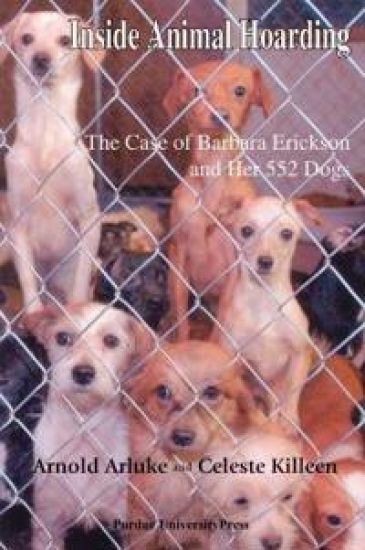
Inside Animal Hoarding: The Story of Barbara Erickson and Her 552 Dogs profiles one of the largest and most intriguing cases of animal hoarding in recent history. Celeste Killeen's investigation pries open the door to Barbara Erickson's hidden and closely guarded life, offering an in-depth view of animal hoarding. The chaos and torment discovered by local officials who'd responded to a ramshackle farmhouse in eastern Oregon was described as otherworldly, unbelievable. But, it was only the sad ending to a lifelong story of betrayal, abuse and abandonment. This in-depth look at how animal hoarding developed in one woman's life offers the rich detail and context so important in understanding how to recognize and respond to it and maybe even prevent it. Dr. Arnold Arluke's discussion follows the Erickson story with current research on animal hoarding and how it ties into the Erickson case. Drawing from his background in sociology and extensive study of the human/animal relationship, Arluke offers further insight about animal hoarders, how they see themselves, how society deals with them, and why people find them so perplexing. This integration of investigative journalism and scholarship offers a fresh approach with appeal to a broad audience of readers, those new to learning about the phenomenon and those with first-hand experience in the animal welfare field.
Brute Force

Brute Force

Arnold Arluke

Purdue University Press
2007
nidottu
Brute Force looks at people having the most contact with everyday animal abuse- humane law enforcement officers who are charged with enforcing anti-cruelty statutes. The author spent one year studying 30 animal cops and dispatchers in two large cities. They see themselves as a power for the helpless, a voice for the mute. On-the-job experience changes this view. Rather than fighting the good fight against egregious cases of cruelty, they are overwhelmed with complaints that are ambiguous and must be stretched to qualify as legally defined abuse or with complaints barking dogs or thin pets that are used in interpersonal disputes to get neighbors or spouses into trouble. Even more discouraging to officers are clear-cut and extreme cases of cruelty that do not lead to guilty verdicts or stiff penalties in court. Resulting cynicism is aggravated when rookies realize that they are seen as second-rate wannabe cops or closet animal extremists. With little legitimate authority to enforce the law, animal cops become humane educators who try to make people into responsible pet owners.
Just a Dog

Just a Dog

Arnold Arluke

Temple University Press,U.S.
2006
sidottu
Psychiatrists define cruelty to animals as a psychological problem or personality disorder. Legally, animal cruelty is described by a list of behaviors. In Just a Dog, Arnold Arluke argues that our current constructs of animal cruelty are decontextualized-imposed without regard to the experience of the groups committing the act. Yet those who engage in animal cruelty have their own understandings of their actions and of themselves as actors. In this fascinating book, Arluke probes those understandings and reveals the surprising complexities of our relationships with animals. Just a Dog draws from interviews with more than 250 people, including humane agents who enforce cruelty laws, college students who tell stories of childhood abuse of animals, hoarders who chronically neglect the welfare of many animals, shelter workers who cope with the ethics of euthanizing animals, and public relations experts who use incidents of animal cruelty for fundraising purposes. Through these case studies, Arluke shows how the meaning of \u0022cruelty\u0022 reflects and helps to create identities and ideologies.
Just a Dog

Just a Dog

Arnold Arluke

Temple University Press,U.S.
2006
pokkari
Psychiatrists define cruelty to animals as a psychological problem or personality disorder. Legally, animal cruelty is described by a list of behaviors. In Just a Dog, Arnold Arluke argues that our current constructs of animal cruelty are decontextualized-imposed without regard to the experience of the groups committing the act. Yet those who engage in animal cruelty have their own understandings of their actions and of themselves as actors. In this fascinating book, Arluke probes those understandings and reveals the surprising complexities of our relationships with animals. Just a Dog draws from interviews with more than 250 people, including humane agents who enforce cruelty laws, college students who tell stories of childhood abuse of animals, hoarders who chronically neglect the welfare of many animals, shelter workers who cope with the ethics of euthanizing animals, and public relations experts who use incidents of animal cruelty for fundraising purposes. Through these case studies, Arluke shows how the meaning of \u0022cruelty\u0022 reflects and helps to create identities and ideologies.
The Sacrifice

The Sacrifice

Arnold Arluke

Purdue University Press
2006
sidottu
The Sacrifice provides a uniquely detailed account of the sociological context of animal experimentation. The authors provide a rich analysis of complex and changing role of the laboratory animal in the political and scientific culture of the United States and the United Kingdom. By understanding the interplay of the groups, the authors view the experimental controversy as an ongoing and constantly recreated set of social processes, not just a problem of morality.
Regarding Animals

Regarding Animals

Arnold Arluke

Temple University Press,U.S.
1996
pokkari
What is it about Western society, ask the authors, that makes it possible for people to express great affection for animals as sentient creatures and simultaneously turn a blind eye to the most callous behavior toward them? Animals are sold as expensive commodities, used as food and clothing, killed as vermin, and hunted for sport. But they also are treated as members of the family, used as the cause celebre of social movements, and made the subject of art, film, and poetry. Such contradictions motivate these unique ethnographers to venture into social worlds most people know about only in passing, such as veterinary clinics where companion animals are cared for, animal shelters where dogs and cats are "mercifully" euthanized, and primate labs where monkeys are kept for animal experimentation. Arluke and Sanders are not distanced ethnographers. They worked in the clinics, shelters, and laboratories, cleaning cages, assisting in surgery, and participating in "sacrificing" animals for science or helping to provide them with an "easy death." In this book, the people who work with these animals and live through them talk to the authors about the strategies they adopt to cope with the stress of the job. This fascinating book combines sociological analysis with ethnographic description to give us insight into the history and practice of how we as human beings construct animals, and by extrapolation, how we construct ourselves and others in relation to them. Author note: Arnold Arluke is Professor of Sociology at Northeastern University and a Research Associate at the Center for Animals and Public Policy at Tufts School of Veterinary Medicine. He is an Associate Editor of Society and Animals and the author of The Making of Rehabilitation: A Political Economy of Medical Specialization with Glenn Gritzer and Gossip: The Inside Scoop with Jack Levin. Clinton R. Sanders, Professor of Sociology at the University of Connecticut, is the author of Customizing the Body: The Art and Culture of Tattooing (Temple) and the co-editor (with Jeff Ferrell) of Cultural Criminology.
The Making of Rehabilitation

The Making of Rehabilitation

Glenn Gritzer; Arnold Arluke

University of California Press
1989
pokkari
Focusing on the history of one medical field--rehabilitation medicine--this book provides the first systematic analysis of the underlying forces that shape medical specialization, challenging traditional explanations of occupational specialization.