Kirjailija
Arpad Szakolczai
Kirjat ja teokset yhdessä paikassa: 24 kirjaa, julkaisuja vuosilta 1998-2023, suosituimpien joukossa Novels and the Sociology of the Contemporary. Vertaile teosten hintoja ja tarkista saatavuus suomalaisista kirjakaupoista.
24 kirjaa
Kirjojen julkaisuhaarukka 1998-2023.
This book explores considerations of method in the field of political anthropology, contending that this constitutes a distinct approach within the broader area of the human, social and political sciences. Faithful to the basic guiding ideas of anthropology, it nonetheless challenges and rejects the pretended stance of scientific neutrality and advances a position that engages with the notion of participation, recognising its value and arguing that participation is essential to the development of a proper social and political understanding. An outline of what political anthropology can offer by way of methods, this invitation to consider the development of methodological ideas beyond the presumed ‘scientific’ and ‘universalistic’ approaches that dominate in the social sciences will appeal to scholars of anthropology, sociology and politics with interests in questions of method and methodology.
It is widely asserted that we are now living in a post-truth society. What that means, this book argues, is that the contemporary global world is thoroughly infested not only with trickster figures but an entire and operational trickster logic; or, that we now live in a Trickster Land – an argument advanced by the claim that in modernity liminality has become permanent; or that modern life is patently absurd.The first part of the book presents a series of ‘guides’ to this condition, in the form of key thinkers and writers who can help us understand and navigate our Trickster Land. Such guides include Hermann Broch, Lewis Hyde, Roberto Calasso, Michel Serres, Sándor Márai, Colin Thubron and Albert Camus. The second part goes on to discuss five main regions of Trickster Land: art, thought, the economy, politics and society. This last, central chapter of the book contrasts trickster logic with the basic, foundational logic of social life, presented as gift-giving by Marcel Mauss and as sociability by Georg Simmel, and which is expressed here, combining Heraclitus and Plato with the Gospel of John, by three basic terms of ancient Greek culture, as arkhé charis logos: meaningful social life originally and in its essence is animated by the power of kind benevolence. This volume will appeal to scholars of social theory, anthropology and sociology with interests in political thought and contemporary culture.
The Political Sociology and Anthropology of Evil: Tricksterology
Agnes Horvath; Arpad Szakolczai
Taylor Francis Ltd
2021
nidottu
This book offers a new approach to the problem of evil through an examination of the anthropological figure of the ‘trickster’. A lesser known and much more recent term than evil, the authors use the trickster to facilitate a greater understanding of the return of evil in the modern era. Instead of simply opposing ‘good’ and ‘evil’, the figure of the trickster is used to pursue the trajectories of similarities and quasi-similarities through imitation.After engaging with the trickster as presented in comparative anthropology and mythology, where it appears in tales and legends as a strange, erratic outsider, the authors seek to gain an inside perspective of trickster knowledge through an examination of mythology and the classical world, including both philosophers and poets. The book then goes on to trace the trickster through prehistory, using archaeological evidence to complement the diverse narratives. In this way, and by investigating the knowledge and customs surrounding evil, the authors use the figure of the trickster to provide an unprecedented diagnosis of the contemporary world, where external, mechanical rationality has become taken for granted and even considered as foundational in politics, economics, and technologised science. The authors advance the idea that the modern world, with its global free markets, mass mediatic democracy and technologised science, represents a universalisation of trickster logic. The Political Sociology and Anthropology of the Evil will be of interest to scholars working in the fields of social theory, political anthropology and political sociology, as well as those interested in the ways in which evil can infiltrate reality.
This book substantiates two claims. First, the modern world was not simply produced by "objective" factors, rooted in geographical discoveries and scientific inventions, to be traced to economic, technological or political factors, but is the outcome of social, cultural and spiritual processes. Among such factors, beyond the Protestant ethic (Max Weber), the rise of the absolutist state and its disciplinary network (Michel Foucault), or court society (Norbert Elias), a prime role is played by theatre. The modern reality is deeply theatricalized. Second, a special access for studying this theatricalized world is offered by novels. The best classical novels not simply can be interpreted as describing a world "like" the theatre, but they capture and present a world that has become thoroughly transformed into a global theatre. The theatre effectively transformed the world, and classical novels effectively analyze this "theatricalized" reality – much better than the main instruments supposedly destined to study reality, philosophy and sociology. Thus, instead of using the technique of sociology to analyze novels, the book will treat novels as a "royal road" to analyze a theatricalized reality, in order to find our way back to a genuine and meaningful life.
The Political Sociology and Anthropology of Evil: Tricksterology
Agnes Horvath; Arpad Szakolczai
Routledge
2019
sidottu
This book offers a new approach to the problem of evil through an examination of the anthropological figure of the ‘trickster’. A lesser known and much more recent term than evil, the authors use the trickster to facilitate a greater understanding of the return of evil in the modern era. Instead of simply opposing ‘good’ and ‘evil’, the figure of the trickster is used to pursue the trajectories of similarities and quasi-similarities through imitation.After engaging with the trickster as presented in comparative anthropology and mythology, where it appears in tales and legends as a strange, erratic outsider, the authors seek to gain an inside perspective of trickster knowledge through an examination of mythology and the classical world, including both philosophers and poets. The book then goes on to trace the trickster through prehistory, using archaeological evidence to complement the diverse narratives. In this way, and by investigating the knowledge and customs surrounding evil, the authors use the figure of the trickster to provide an unprecedented diagnosis of the contemporary world, where external, mechanical rationality has become taken for granted and even considered as foundational in politics, economics, and technologised science. The authors advance the idea that the modern world, with its global free markets, mass mediatic democracy and technologised science, represents a universalisation of trickster logic. The Political Sociology and Anthropology of the Evil will be of interest to scholars working in the fields of social theory, political anthropology and political sociology, as well as those interested in the ways in which evil can infiltrate reality.
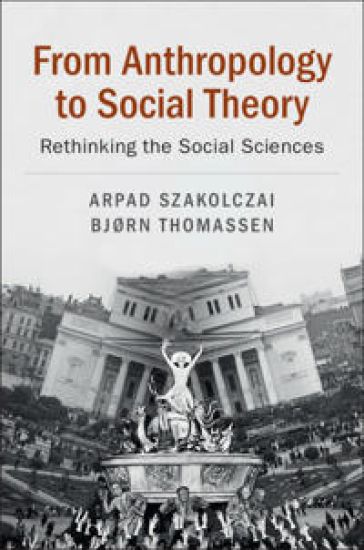
From Anthropology to Social Theory
Arpad Szakolczai; Bjørn Thomassen
Cambridge University Press
2019
sidottu
Presenting a ground-breaking revitalization of contemporary social theory, this book revisits the rise of the modern world to reopen the dialogue between anthropology and sociology. Using concepts developed by a series of 'maverick' anthropologists who were systematically marginalised as their ideas fell outside the standard academic canon, such as Arnold van Gennep, Marcel Mauss, Paul Radin, Lucien Lévy-Bruhl and Gregory Bateson, the authors argue that such concepts are necessary for understanding better the rise and dynamics of the modern world, including the development of the social sciences, in particular sociology and anthropology. Concepts discussed include liminality, imitation, schismogenesis and trickster, which provide an anthropological 'toolkit' for readers to develop innovative understandings of the underlying power mechanisms of globalized modernity. Aimed at graduate students and researchers, the book is clearly structured. Part I introduces the 'maverick' anthropologists, while Part II applies the maverick tool-kit to revisit the history of sociological thought and the question of modernity.
From Anthropology to Social Theory
Arpad Szakolczai; Bjørn Thomassen
Cambridge University Press
2019
pokkari
Presenting a ground-breaking revitalization of contemporary social theory, this book revisits the rise of the modern world to reopen the dialogue between anthropology and sociology. Using concepts developed by a series of 'maverick' anthropologists who were systematically marginalised as their ideas fell outside the standard academic canon, such as Arnold van Gennep, Marcel Mauss, Paul Radin, Lucien Lévy-Bruhl and Gregory Bateson, the authors argue that such concepts are necessary for understanding better the rise and dynamics of the modern world, including the development of the social sciences, in particular sociology and anthropology. Concepts discussed include liminality, imitation, schismogenesis and trickster, which provide an anthropological 'toolkit' for readers to develop innovative understandings of the underlying power mechanisms of globalized modernity. Aimed at graduate students and researchers, the book is clearly structured. Part I introduces the 'maverick' anthropologists, while Part II applies the maverick tool-kit to revisit the history of sociological thought and the question of modernity.
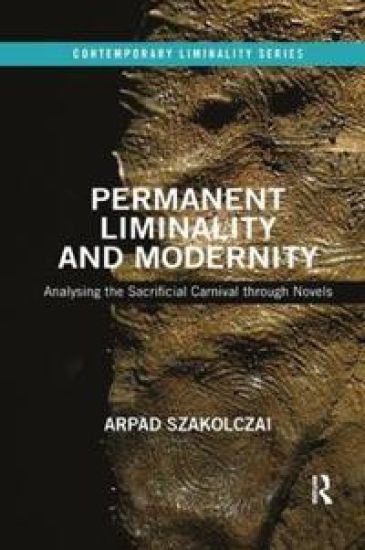
This book offers a comprehensive sociological study of the nature and dynamics of the modern world, through the use of a series of anthropological concepts, including the trickster, schismogenesis, imitation and liminality. Developing the view that with the theatre playing a central role, the modern world is conditioned as much by cultural processes as it is by economic, technological or scientific ones, the author contends the world is, to a considerable extent, theatrical - a phenomenon experienced as inauthenticity or a loss of direction and meaning. As such the novel is revealed as a means for studying our theatricalised reality, not simply because novels can be understood to be likening the world to theatre, but because they effectively capture and present the reality of a world that has been thoroughly ’theatricalised’ - and they do so more effectively than the main instruments usually employed to analyse reality: philosophy and sociology. With analyses of some of the most important novelists and novels of modern culture, including Rilke, Hofmannsthal, Kafka, Mann, Blixen, Broch and Bulgakov, and focusing on fin-de-siècle Vienna as a crucial ’threshold’ chronotope of modernity, Permanent Liminality and Modernity demonstrates that all seek to investigate and unmask the theatricalisation of modern life, with its progressive loss of meaning and our deteriorating capacity to distinguish between what is meaningful and what is artificial. Drawing on the work of Nietzsche, Bakhtin and Girard to examine the ways in which novels explore the reduction of human existence to a state of permanent liminality, in the form of a sacrificial carnival, this book will appeal to scholars of social, anthropological and literary theory.
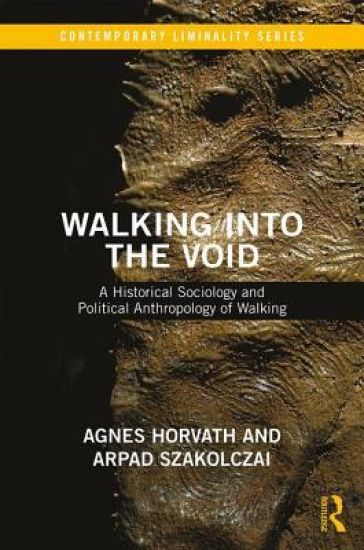
The book starts by discussing the significance of walking for the experience of being human, including a comparative study of the language and cultures of walking. It then reviews in detail, relying on archaeology, two turning points of human history: the emergence of cave art sanctuaries and a new cultural practice of long-distance ‘pilgrimages’, implying a descent into such caves, thus literally the ‘void’; and the abandonment of walking culture through settlement at the end of the Ice Age, around the time when the visiting of cave sanctuaries also stopped. The rise of philosophy and Christianity is then presented as two returns to walking. The book closes by looking at the ambivalent relationship of contemporary modernity to walking, where its radical abandonment is combined with attempts at returns.The book ventures an unprecedented genealogy of walking culture, bringing together archaeological studies distant in both time and place, and having a special focus on the significance of the rise of representative art for human history. Our genealogy helped to identify settlement not as the glorious origin of civilisation, but rather as a source of an extremely problematic development. The findings of the book should be relevant for social scientists, as well as those interested in walking and its cultural and civilisational significance, or in the direction and meaning of human history.
This book offers a comprehensive sociological study of the nature and dynamics of the modern world, through the use of a series of anthropological concepts, including the trickster, schismogenesis, imitation and liminality. Developing the view that with the theatre playing a central role, the modern world is conditioned as much by cultural processes as it is by economic, technological or scientific ones, the author contends the world is, to a considerable extent, theatrical - a phenomenon experienced as inauthenticity or a loss of direction and meaning. As such the novel is revealed as a means for studying our theatricalised reality, not simply because novels can be understood to be likening the world to theatre, but because they effectively capture and present the reality of a world that has been thoroughly ’theatricalised’ - and they do so more effectively than the main instruments usually employed to analyse reality: philosophy and sociology. With analyses of some of the most important novelists and novels of modern culture, including Rilke, Hofmannsthal, Kafka, Mann, Blixen, Broch and Bulgakov, and focusing on fin-de-siècle Vienna as a crucial ’threshold’ chronotope of modernity, Permanent Liminality and Modernity demonstrates that all seek to investigate and unmask the theatricalisation of modern life, with its progressive loss of meaning and our deteriorating capacity to distinguish between what is meaningful and what is artificial. Drawing on the work of Nietzsche, Bakhtin and Girard to examine the ways in which novels explore the reduction of human existence to a state of permanent liminality, in the form of a sacrificial carnival, this book will appeal to scholars of social, anthropological and literary theory.
This book substantiates two claims. First, the modern world was not simply produced by "objective" factors, rooted in geographical discoveries and scientific inventions, to be traced to economic, technological or political factors, but is the outcome of social, cultural and spiritual processes. Among such factors, beyond the Protestant ethic (Max Weber), the rise of the absolutist state and its disciplinary network (Michel Foucault), or court society (Norbert Elias), a prime role is played by theatre. The modern reality is deeply theatricalized. Second, a special access for studying this theatricalized world is offered by novels. The best classical novels not simply can be interpreted as describing a world "like" the theatre, but they capture and present a world that has become thoroughly transformed into a global theatre. The theatre effectively transformed the world, and classical novels effectively analyze this "theatricalized" reality – much better than the main instruments supposedly destined to study reality, philosophy and sociology. Thus, instead of using the technique of sociology to analyze novels, the book will treat novels as a "royal road" to analyze a theatricalized reality, in order to find our way back to a genuine and meaningful life.
The book aims at reframing the discussion on the "public sphere," usually understood as the place where the public opinion is formed, through rational discussion. The aim of this book is to give an account of this rationality, and its serious shortcomings, examining the role of the media and the confusing of public roles and personal identity. It focuses in particular on the role of the theatrical and comical in the historical development of the public sphere, and in this manner reformulating definitions of common sense, personal identity, and culture.
Max Weber and Michael Foucault are among the most controversial and fascinating thinkers of our century. This book is the first to jointly analyse them in detail, and to make effective links between their lives and work; it coincides with a substantial resurgence of interest in their writings. The author's exciting interpretative approach reveals a new dimension in reading the work of Foucault and Weber; it will be invaluable to students and those researching in sociology and philosophy.
The Genesis of Modernity reconstructs the ideas of three of the most important social and political theorists of the Twentieth Century, Max Weber, Michel Foucault and Eric Voegelin, on the distant roots and sources of modernity.Drawing upon the conceptual tools of social theory and political philosophy, complimented by approaches based in the fields of anthropology, comparative mythology and the history of ancient philosophy, this book will prove to be a timely and valuable contribution to this developing area, bringing together the ideas of a group of social and political theorists whose work so far has remained largely unconnected. This book will be essential reading for academics and advanced students concerned with social theory, political theory, sociology, history and philosophy.
The book aims at reframing the discussion on the "public sphere," usually understood as the place where the public opinion is formed, through rational discussion. The aim of this book is to give an account of this rationality, and its serious shortcomings, examining the role of the media and the confusing of public roles and personal identity. It focuses in particular on the role of the theatrical and comical in the historical development of the public sphere, and in this manner reformulating definitions of common sense, personal identity, and culture.
This book offers a sociological analysis of the Renaissance, focusing on the concept of grace, and the unity that exists between its various meanings: theological, anthropological (gift-giving, Mauss; and sociability, Simmel), and aesthetical (beauty and gracefulness).Since the seminal work of Max Weber rooted capitalism, and thus the modern world, in the Protestant ethic, interest in the Renaissance among social scientists has been minimal. However, this book argues that the heart of the European tradition lies in a series of renascences, going back to Minoan Crete and its rebirth in classical Greek civilisation, during an earlier global age.The Renaissance forged a novel unity between the Judaic-prophetic and Minoan-Athenian traditions, renewing grace in all its aspects and thus revitalising Europe. This attempt tragically failed and the modern world is the outcome of this explosion. All this has vital contemporary relevance, as the classical European tradition is still a unique source suggesting a way out of the spiralling logic of globalisation.
This book reconstructs and brings together the work of a number of social and political theorists in order to gain new insight on the emergence and character of modern Western society. It examines the intersection point of social theory and historical sociology in a new theoretical approach called "reflexive historical sociology". There is analysis of the works of Max Weber, Michel Foucault, Norbert Elias, Eric Voegelin and a number of others. The book is divided into three parts. Part 1 examines the works of Eric Voegelin, Norbert Elias, Lewis Mumford and Franz Borkenau. Part 2 is concerned with the major conceptual tools such as experience, liminality, process, symbolisation, figuration, order, dramatisation and reflexivity, and themes such as the history of forms of thought, subjectivity, knowledge and closed space and regulated time. Finally, the book examines the most important insights of the thinkers discussed, concerning the historical processes that led to modernity.