Kirjojen hintavertailu. Mukana 12 595 353 kirjaa ja 12 kauppaa.

Kirjailija

Artemis Cooper

Kirjat ja teokset yhdessä paikassa: 8 kirjaa, julkaisuja vuosilta 2004-2021, suosituimpien joukossa Patrick Leigh Fermor. Vertaile teosten hintoja ja tarkista saatavuus suomalaisista kirjakaupoista.

8 kirjaa

Kirjojen julkaisuhaarukka 2004-2021.

Paris efter befrielsen 1944-1949

Paris efter befrielsen 1944-1949

Antony Beevor; Artemis Cooper

Lindhardt og Ringhof
2021
nidottu
Da general Leclercs tropper ankom til Paris, blev de modtaget med overvældende begejstring af byens indbyggere. Den næste dag - den 26. august 1944 - dukkede halvdelen af hovedstadens befolkning op for at se general de Gaulles triumftog bevæge sig fra Triumfbuen til Notre Dame. Følelsen af frihed var intens, men der var også hævn i luften. Politisk lå byen i ruiner, det sorte marked tjente styrtende på den sultende befolkning, og mange opgør blev ordnet i fuld offentlighed.PARIS EFTER BEFRIELSEN 1944-1949 er en social, politisk og kulturel historie om en epoke ladet med kraftfulde og modstridende følelser og intellektuel forandring. En dramatisk politisk baggrund påvirker alle aspekter af livet i den franske hovedstad efter befrielsen - atmosfæren i gaderne, på cafeer, restauranter og natklubber, modehuse, saloner og malernes atelierer. Hemingway, Jean-Paul Sartre og Simone de Beauvoir, Camus, Picasso, Gertrude Stein og Samuel Beckett - sammen med de største politiske profiler som general de Gaulle og Maurice Thorez - er bare nogle af de figurer, som bringes til live i denne uovertrufne beretning om dramaet og omvæltningerne i Paris efter befrielsen i august 1944.?Omhyggeligt researchet og imponerende skrevet. For at forstå Frankrig i dag bør man læse denne bog om Frankrig i går.? Evening Standard
Elizabeth Jane Howard

Elizabeth Jane Howard

Artemis Cooper

John Murray Publishers Ltd
2017
pokkari
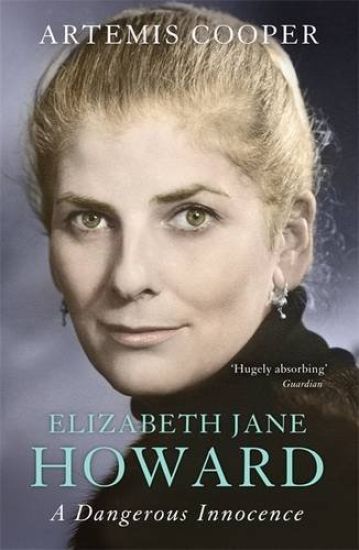
Elizabeth Jane Howard (1923-2014) wrote brilliant novels about what love can do to people, but in her own life the lasting relationship she sought so ardently always eluded her. She grew up yearning to be an actress; but when that ambition was thwarted by marriage and the war, she turned to fiction. Her first novel, The Beautiful Visit, won the John Llewellyn Rhys prize - she went on to write fourteen more, of which the best-loved were the five volumes of The Cazalet Chronicle. Following her divorce from her first husband, the celebrated naturalist Peter Scott, Jane embarked on a string of high-profile affairs with Cecil Day-Lewis, Arthur Koestler and Laurie Lee, which turned her into a literary femme fatale. Yet the image of a sophisticated woman hid a romantic innocence which clouded her emotional judgement. She was nearing the end of a disastrous second marriage when she met Kingsley Amis, and for a few years they were a brilliant and glamorous couple - until that marriage too disintegrated. She settled in Suffolk where she wrote and entertained friends, but her turbulent love life was not over yet. In her early seventies Jane fell for a conman. His unmasking was the final disillusion, and inspired one of her most powerful novels, Falling.Artemis Cooper interviewed Jane several times in Suffolk. She also talked extensively to her family, friends and contemporaries, and had access to all her papers. Her biography explores a woman trying to make sense of her life through her writing, as well as illuminating the literary world in which she lived.
Cairo in the War

Cairo in the War

Artemis Cooper

John Murray Publishers Ltd
2013
pokkari
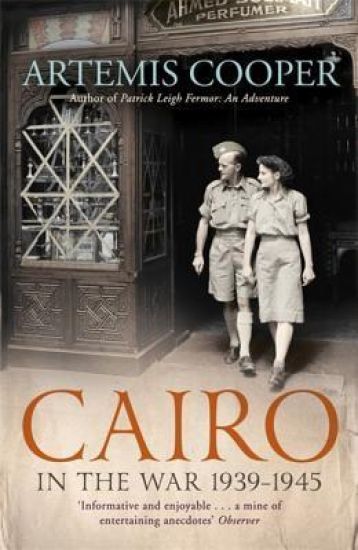
For troops in the desert, Cairo meant fleshpots or brass hats. For well-connected officers, it meant polo at the Gezira Club and drinks at Shepheard's. For the irregular warriors, Cairo was a city to throw legendary parties before the next mission behind enemy lines. For countless refugees, it was a stopping place in the long struggle home. The political scene was dominated by the British Ambassador Sir Miles Lampson. In February 1942 he surrounded the Abdin Palace with tanks and attempted to depose King Farouk. Five months later it looked as if the British would be thrown out of Egypt for good. Rommel's forces were only sixty miles from Alexandria - but the Germans were pushed back and Cairo life went on. Meanwhile, in the Egyptian Army, a handful of young officers were thinking dangerous thoughts.
Writing at the Kitchen Table

Writing at the Kitchen Table

Artemis Cooper

Faber Faber
2011
pokkari
Elizabeth David was born into a upper-class family and pursued a rebellious and bohemian life as a student of art and then an actress in Paris, before running off with a married man to Greece and then settling in Cairo, where she worked for the British government. After the Second World War, she returned to England, where she was shocked by poor food into writing first articles, then books on Meditteranean cooking. A Book of Mediterranean Food was published in 1950, inspiring a cookery revolution, bringing new flavours and ingredients to the drab, post-war British diet. Over the next few years, David was to become a major influence on British cooking, yet her classic cookery books show little of the colourful personality behind the public persona. Artermis Cooper, in this refreshing biography, reveals an adventurous and uncompromising personality - a woman with a passion for food, life and men. This is the whole story: of her strong friendships, her failed marriage, tempestuous affairs and the greatest love of her life, told with extensive refererence to David's private papers and letters.'In this wonderful and creative book, Cooper has brought David to life... she not only writes like an angel, but has done her research with great skill and obvious enjoyment.' Derek Cooper, Sunday Times'Engagingly well-written, thoroughly researched and documented. One of the delights of Artemis Cooper's book is that it makes you go back, time and again, to the source. And suddenly I will find that I have whiled away the afternoon re-reading, for the sheer pleasure of it, half of Spices or An Omlette and a Glass of Wine.' Frances Bissell, The Times'Fluent, engaging and astonishingly readable.' Clarissa Dickson Wright, Mail on Sunday'Artemis Cooper is skilled and wise enough to handle the contradictory sides of David's character without being either censorious or sensational.' Arabella Boxer, The Times Literary Supplement
Paris etter frigjøringen 1944-1949

Paris etter frigjøringen 1944-1949

Antony Beevor; Artemis Cooper

Cappelen Damm
2009
pokkari
De amerikanske troppene inntar metropolen Paris i august 1944, og blir møtt av sterke gledescener. Men feiringen har også en bakside, og i skyggene tar motstandsbevegelsen et oppgjør med kollaboratørene. I tiden som følger utvikler Paris seg til å bli et intellektuelt og kulturelt sentrum, mens forholdet til USA blir svært ambivalent.Vi møter kunstnere, politikere og diplomater i et fascinerende miljø der intriger og maktkamp følger i krigens kjølvann. Ernest Hemingway, Jean-Paul Sartre, Simone de Beauvoir, Pablo Picasso, Gertrude Stein og Samuel Beckett er bare noen av personene i denne medrivende skildringen fra en avgjørende periode i europeisk politikk og kulturhistorie.Antony Beevor og Artemis Cooper tegner et bilde av Paris i etterkrigstiden som er fargerikt, balansert og fullt av vittige observasjoner.
Paris After the Liberation

Paris After the Liberation

Artemis Cooper; Antony Beevor

Penguin Books Ltd
2007
pokkari
A remarkable historical account of the chaos and uncertainty that followed the liberation of Paris in August, 1944'A beautifully written book about a vast tapestry of military, political and social upheaval. Remarkably well-researched, wise, balanced, very funny at times' Dirk Bogarde______________ Post-liberation Paris: an epoch charged with political and conflicting emotions. Liberation was greeted with joy but marked by recriminations and the trauma of purges. The feverish intellectual arguments of the young took place amidst the mundane reality of hunger and fuel shortages. This is a thrilling, unsurpassed account of the drama and upheaval of one of history's most fascinating eras.______________'A dashing, multi-dimensional story. This book covers all aspects of life - diplomacy, strategy, rationing, politics and politicking (from Churchill, Pétain's and de Gaulle's point of view), the international theatricals and the tourist invasion, blitzkrieg and Ritzkrieg' Olivier Todd, Sunday Times'Absorbing . . . a rich, many-layered account, selecting from official documents, private archives, memoirs and histories with a wonderful lightness of touch, so that the most complex events become clear' Jenny Uglow, Independent on Sunday
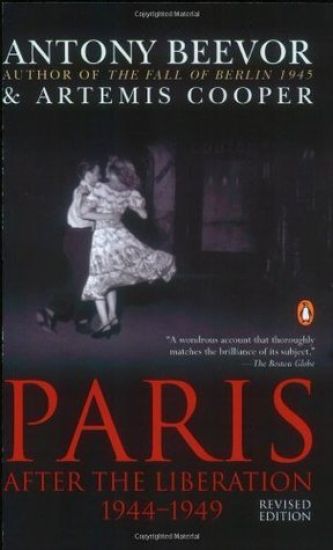
Paris: After the Liberation 1944-1949

Paris: After the Liberation 1944-1949

Antony Beevor; Artemis Cooper

PENGUIN BOOKS
2004
nidottu
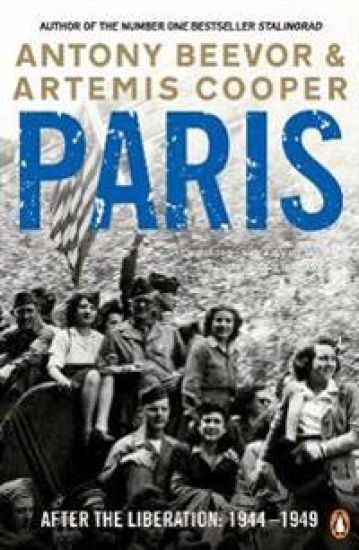
"A rich and intriguing story whcih the authors disentangle with great skill."--Sunday Telegraph From Antony Beevor, the internationally bestselling author of D-Day and The Battle of Arnhem In this brilliant synthesis of social, political, and cultural history, Antony Beevor and Artemis Cooper present a vivid and compelling portrayal of the City of Lights after its liberation. Paris became the diplomatic battleground in the opening stages of the Cold War. Against this volatile political backdrop, every aspect of life is portrayed: scores were settled in a rough and uneven justice, black marketers grew rich on the misery of the population, and a growing number of intellectual luminaries and artists including Hemingway, Beckett, Camus, Sartre, de Beauvoir, Cocteau, and Picassocontributed new ideas and a renewed vitality to this extraordinary moment in time.