Kirjojen hintavertailu. Mukana 12 595 353 kirjaa ja 12 kauppaa.

Kirjailija

Arthur Bradley

Kirjat ja teokset yhdessä paikassa: 19 kirjaa, julkaisuja vuosilta 1994-2024, suosituimpien joukossa Derrida's of Grammatology. Vertaile teosten hintoja ja tarkista saatavuus suomalaisista kirjakaupoista.

19 kirjaa

Kirjojen julkaisuhaarukka 1994-2024.

Staging Sovereignty

Staging Sovereignty

Arthur Bradley

Columbia University Press
2024
pokkari
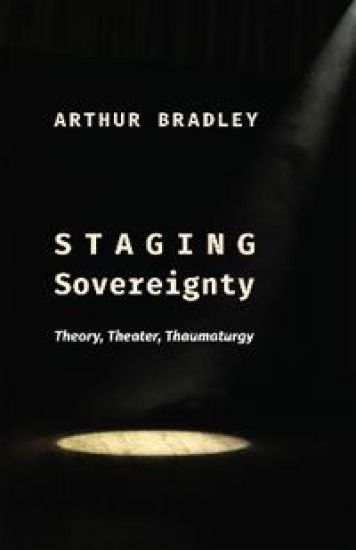
To become sovereign, one must be seen as sovereign. In other words, a sovereign must appear—philosophically, politically, and aesthetically—on the stage of power, both to themselves and to others, in order to assume authority. In this sense, sovereignty is a theatrical phenomenon from the very beginning.This book explores the relationship between theater and sovereignty in modern political theory, philosophy, and performance. Arthur Bradley considers the theatricality of power—its forms, dramas, and iconography—and examines sovereignty’s modes of appearance: thrones, insignia, regalia, ritual, ceremony, spectacle, marvels, fictions, and phantasmagoria. He weaves together political theory and literature, reading figures such as Plato, Aristotle, Montaigne, Leibniz, Kant, Hegel, Schmitt, Benjamin, Derrida, and Agamben alongside writers including Shakespeare, Cervantes, Schiller, Melville, Valéry, Kafka, Ionesco, and Genet. Formally inventive and deeply interdisciplinary, Staging Sovereignty offers a surprising and original narrative of political modernity from early modern political theology to the age of neoliberal capitalism.
Staging Sovereignty

Staging Sovereignty

Arthur Bradley

Columbia University Press
2024
sidottu
To become sovereign, one must be seen as sovereign. In other words, a sovereign must appear—philosophically, politically, and aesthetically—on the stage of power, both to themselves and to others, in order to assume authority. In this sense, sovereignty is a theatrical phenomenon from the very beginning.This book explores the relationship between theater and sovereignty in modern political theory, philosophy, and performance. Arthur Bradley considers the theatricality of power—its forms, dramas, and iconography—and examines sovereignty’s modes of appearance: thrones, insignia, regalia, ritual, ceremony, spectacle, marvels, fictions, and phantasmagoria. He weaves together political theory and literature, reading figures such as Plato, Aristotle, Montaigne, Leibniz, Kant, Hegel, Schmitt, Benjamin, Derrida, and Agamben alongside writers including Shakespeare, Cervantes, Schiller, Melville, Valéry, Kafka, Ionesco, and Genet. Formally inventive and deeply interdisciplinary, Staging Sovereignty offers a surprising and original narrative of political modernity from early modern political theology to the age of neoliberal capitalism.
Road Home

Road Home

Arthur Bradley

Independently Published
2020
pokkari
★★★ The Survivalist is "a cool cross between Justified and The Walking Dead." ★★★★★★ Check out Dr. Bradley's new apocalyptic western, "The Watchman." ★★★Following the tragic death of his deceitful lover, Mason hopes to return to the one place where a peaceful life might still be possible. Detouring to recover a hidden treasure of gold, he meets a beautiful widow in trouble. Together, they travel to her hometown of Clover, South Carolina, an idyllic community protected by a police chief and his faithful deputies. Caught in the middle of a plot driven by greed and lust, Mason soon discovers that carrying a king's ransom is not without its risks. Meanwhile, Issa and Mother must find their way out of the tunnels under Mount Weather. Pregnant and without supplies, Issa is forced to use her wits and trusty Merkel rifle to keep them alive. As they push deeper into the darkness, they uncover a horror that traces back to the earliest days of Mother's rule. They quickly realize that their only hope for escape is to trust one another, even if it means taking an unthinkable risk. With two nuclear warheads in their possession, Tanner and Samantha embark on their journey back to Mount Weather. Along the way, they encounter a bounty hunter in search of his next job. Agreeing to transport him to a place known only as "Sanctuary," they discover a community built around the unlikeliest of currencies. With evil threatening to tear them apart, they must once again stand together if they are to have any hope of returning home.
Unbearable Life

Unbearable Life

Arthur Bradley

Columbia University Press
2019
pokkari
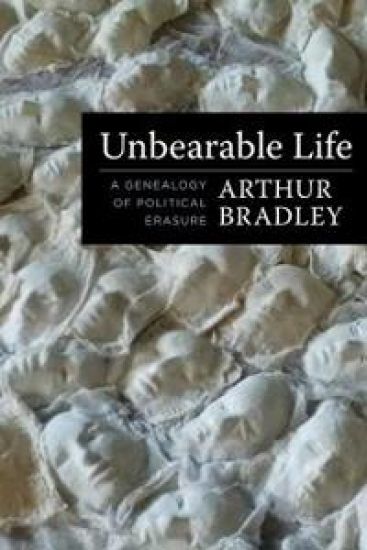
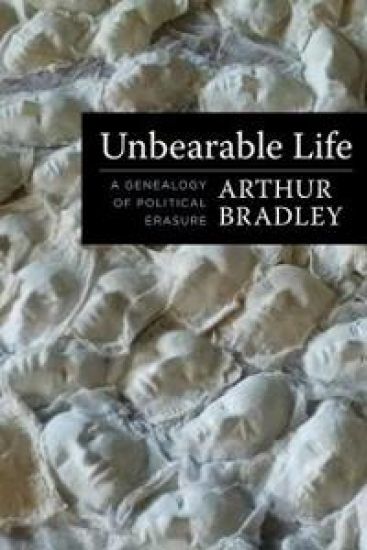
In ancient Rome, any citizen who had brought disgrace upon the state could be subject to a judgment believed to be worse than death: damnatio memoriae, condemnation of memory. The Senate would decree that every trace of the citizen’s existence be removed from the city as if they had never existed in the first place. Once reserved for individuals, damnatio memoriae in different forms now extends to social classes, racial and ethnic groups, and even entire peoples. In modern times, the condemned go by different names—“enemies of the people;” the “missing,” the “disappeared,” “ghost” detainees in “black sites”—but they are subject to the same fate of political erasure.Arthur Bradley explores the power to render life unlived from ancient Rome through the War on Terror. He argues that sovereignty is the power to decide what counts as being alive and what does not: to make life “unbearable,” unrecognized as having lived or died. In readings of Augustine, Shakespeare, Hobbes, Robespierre, Schmitt, and Benjamin, Bradley asks: What is the “life” of this unbearable life? How does it change and endure across sovereign time and space, from empires to republics, from kings to presidents? To what extent can it be resisted or lived otherwise? A profoundly interdisciplinary and ambitious work, Unbearable Life rethinks sovereignty, biopolitics, and political theology to find the radical potential of a life that neither lives or dies.
Unbearable Life

Unbearable Life

Arthur Bradley

Columbia University Press
2019
sidottu
In ancient Rome, any citizen who had brought disgrace upon the state could be subject to a judgment believed to be worse than death: damnatio memoriae, condemnation of memory. The Senate would decree that every trace of the citizen’s existence be removed from the city as if they had never existed in the first place. Once reserved for individuals, damnatio memoriae in different forms now extends to social classes, racial and ethnic groups, and even entire peoples. In modern times, the condemned go by different names—“enemies of the people;” the “missing,” the “disappeared,” “ghost” detainees in “black sites”—but they are subject to the same fate of political erasure.Arthur Bradley explores the power to render life unlived from ancient Rome through the War on Terror. He argues that sovereignty is the power to decide what counts as being alive and what does not: to make life “unbearable,” unrecognized as having lived or died. In readings of Augustine, Shakespeare, Hobbes, Robespierre, Schmitt, and Benjamin, Bradley asks: What is the “life” of this unbearable life? How does it change and endure across sovereign time and space, from empires to republics, from kings to presidents? To what extent can it be resisted or lived otherwise? A profoundly interdisciplinary and ambitious work, Unbearable Life rethinks sovereignty, biopolitics, and political theology to find the radical potential of a life that neither lives or dies.
Romantic Biography

Romantic Biography

Arthur Bradley

Routledge
2016
nidottu
Romantic biography lives. Despite the so-called 'death of the author', popular interest in the lives of the major Romantic writers has reached a new peak. Romantic Biography brings together Romantic biographers and critics to consider some of the key questions surrounding this publishing phenomenon. What precisely is Romantic biography? What is the relationship between it and Romantic writings more generally? And to what extent is Romantic biography itself the product of Romantic ideas about the self, time and creativity? Romantic Biography examines a range of canonical and non-canonical biographical subjects from a variety of practical and theoretical standpoints. Michael O'Neill opens the collection with an analysis of the relationship between Romantic biography and Romantic poetry. Jonathan Bate, Mark Storey and Kenneth R. Johnston reassess Clare, Southey and Wordsworth from their position as authors of recent/forthcoming biographies of the poets. Joe Bray and Alan Rawes explore the Romantic assumptions at work within contemporary biographies of Austen and Byron. Gerard Carruthers, Julian North, Jennifer Wallace and Arthur Bradley put biographies of Burns, Scott, Coleridge, Byron, Keats and Shelley into the context of contemporary historicist and theoretical ideas about national and gender identity, the body and difference. Ralph Pite brings the collection to a close with a further examination of the vexed question of Romantic biography's relation to Romanticism itself. Romantic Biography is a major new survey of Romantic life-writing and an important contribution to biographical studies more generally.
Negative Theology and Modern French Philosophy
This book provides a significant and insightful exploration of the so-called 'theological turn' in contemporary French thought. The philosopher Jacques Derrida speaks of a deeply ambiguous desire to 'save the name' of God in his work on negative theology, and this desire resonates in different ways in the work of his contemporaries. This turn to religion within the work of a group of thinkers who have been stereotypically identified as relativists or nihilists prompts a series of questions which form the background to this study.Negative Theology and Modern French Philosophy advance a reading of negative theology as an ancient name for something that is essential, not simply to modern French thought, but to all responsible thought and action whatsoever. It will be of essential interest to theologians and philosophers and will also interest those concerned with the work of Derrida and his contemporaries.
The New Atheist Novel

The New Atheist Novel

Arthur Bradley; Andrew Tate

Continuum International Publishing Group Ltd.
2010
nidottu
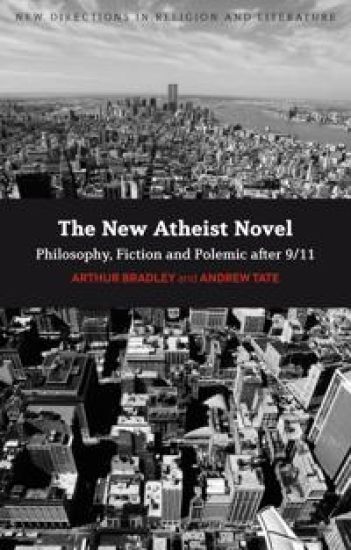
The New Atheist Novel is the first study of a major new genre of contemporary fiction. It examines how Richard Dawkins's so-called New Atheism' movement has caught the imagination of four eminent modern novelists: Ian McEwan, Martin Amis, Salman Rushdie and Philip Pullman. For McEwan and his contemporaries, the contemporary novel represents a new front in the ideological war against religion, religious fundamentalism and, after 9/11, religious terror: the novel apparently stands for everything freedom, individuality, rationality and even a secular experience of the transcendental that religion seeks to overthrow. In this book, Bradley and Tate offer a genealogy of the New Atheist Novel: where it comes from, what needs it serves and, most importantly, where it may go in the future. What is it? How does it dramatise the war between belief and non-belief? To what extent does it represent a genuine ideological alternative to the religious imaginary or does it merely repeat it in secularised form? This fascinating study offers an incisive critique of this contemporary testament of literary belief and unbelief.
The New Atheist Novel

The New Atheist Novel

Arthur Bradley; Andrew Tate

BLOOMSBURY PUBLISHING PLC
2010
sidottu
The New Atheist Novel is the first study of a major new genre of contemporary fiction. It examines how Richard Dawkins's so-called 'New Atheism' movement has caught the imagination of four eminent modern novelists: Ian McEwan, Martin Amis, Salman Rushdie and Philip Pullman. For McEwan and his contemporaries, the contemporary novel represents a new front in the ideological war against religion, religious fundamentalism and, after 9/11, religious terror: the novel apparently stands for everything freedom, individuality, rationality and even a secular experience of the transcendental that religion seeks to overthrow. In this book, Bradley and Tate offer a genealogy of the New Atheist Novel: where it comes from, what needs it serves and, most importantly, where it may go in the future. What is it? How does it dramatise the war between belief and non-belief? To what extent does it represent a genuine ideological alternative to the religious imaginary or does it merely repeat it in secularised form? This fascinating study offers an incisive critique of this contemporary testament of literary belief and unbelief.
Derrida's of Grammatology

Derrida's of Grammatology

Arthur Bradley

Indiana University Press
2008
pokkari
Jacques Derrida's Of Grammatology is essential reading for anyone interested in contemporary philosophy, literary theory, and intellectual history. Arthur Bradley's guide proves clear, careful, and sober commentary to explicate this pathbreaking work. Suitable for readers at all levels and in all disciplines, this guide is a welcome resource for understanding this key text.
Derrida's Of Grammatology

Derrida's Of Grammatology

Arthur Bradley

Edinburgh University Press
2008
sidottu
Everything you need to know about Derrida's Of Grammatology in one volume. Jacques Derrida was one of the most famous philosophers of the later twentieth century and Of Grammatology is his best known text. This book will provide the first commentary on Of Grammatology which can be read alongside of -- rather instead of -- the text itself, by students encountering Derrida for the first time.
Derrida's Of Grammatology

Derrida's Of Grammatology

Arthur Bradley

Edinburgh University Press
2008
nidottu
Everything you need to know about Derrida's Of Grammatology in one volume. Jacques Derrida was one of the most famous philosophers of the later twentieth century and Of Grammatology is his best known text. This book will provide the first commentary on Of Grammatology which can be read alongside of -- rather instead of -- the text itself, by students encountering Derrida for the first time.
Negative Theology and Modern French Philosophy
This book provides a significant and insightful exploration of the so-called 'theological turn' in contemporary French thought. The philosopher Jacques Derrida speaks of a deeply ambiguous desire to 'save the name' of God in his work on negative theology, and this desire resonates in different ways in the work of his contemporaries. This turn to religion within the work of a group of thinkers who have been stereotypically identified as relativists or nihilists prompts a series of questions which form the background to this study.Negative Theology and Modern French Philosophy advance a reading of negative theology as an ancient name for something that is essential, not simply to modern French thought, but to all responsible thought and action whatsoever. It will be of essential interest to theologians and philosophers and will also interest those concerned with the work of Derrida and his contemporaries.
Romantic Biography

Romantic Biography

Arthur Bradley

Ashgate Publishing Limited
2003
sidottu
Romantic biography lives. Despite the so-called 'death of the author', popular interest in the lives of the major Romantic writers has reached a new peak. Romantic Biography brings together Romantic biographers and critics to consider some of the key questions surrounding this publishing phenomenon. What precisely is Romantic biography? What is the relationship between it and Romantic writings more generally? And to what extent is Romantic biography itself the product of Romantic ideas about the self, time and creativity? Romantic Biography examines a range of canonical and non-canonical biographical subjects from a variety of practical and theoretical standpoints. Michael O'Neill opens the collection with an analysis of the relationship between Romantic biography and Romantic poetry. Jonathan Bate, Mark Storey and Kenneth R. Johnston reassess Clare, Southey and Wordsworth from their position as authors of recent/forthcoming biographies of the poets. Joe Bray and Alan Rawes explore the Romantic assumptions at work within contemporary biographies of Austen and Byron. Gerard Carruthers, Julian North, Jennifer Wallace and Arthur Bradley put biographies of Burns, Scott, Coleridge, Byron, Keats and Shelley into the context of contemporary historicist and theoretical ideas about national and gender identity, the body and difference. Ralph Pite brings the collection to a close with a further examination of the vexed question of Romantic biography's relation to Romanticism itself. Romantic Biography is a major new survey of Romantic life-writing and an important contribution to biographical studies more generally.
MEPC: Optometry: Examination Review

MEPC: Optometry: Examination Review

Linda Casser; Freddy Chang; Daniel Gertsman; Paul Pietsch; Arthur Bradley

Appleton Lange
1994
nidottu
This complete review is the perfect resource for optometry students preparing for national, state, or local examinations; optometrists seeking state licensure; and for busy practitioners seeking to keep abreast of changes in the field. The proliferation of new technologies, techniques, and knowledge in this field are thoroughly addressed to cover all contemporary optometry. Features of the Fourth Edition • 1,000 multiple-choice questions• Explanatory answers for each question significantly expanded• Completely reorganized and revised to reflect changes in the field and on the NBEO exam• Updated references in each chapter and supplemental reading information provided