
Kirjailija
Arthur Green
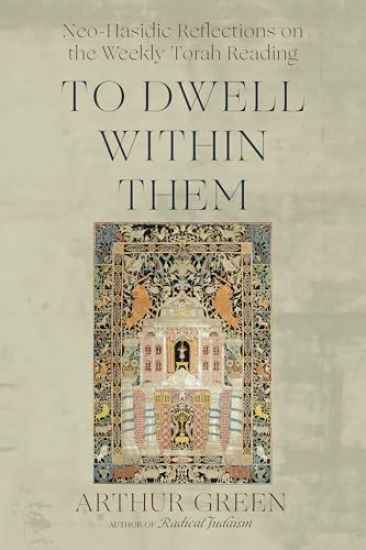
Kirjat ja teokset yhdessä paikassa: 33 kirjaa, julkaisuja vuosilta 1989-2026, suosituimpien joukossa To Dwell Within Them. Vertaile teosten hintoja ja tarkista saatavuus suomalaisista kirjakaupoista.
33 kirjaa
Kirjojen julkaisuhaarukka 1989-2026.

Can Judaism be saved from its most dangerous currents? That's the question Rabbi Arthur Green poses in this urgent exploration of the spiritual and ethical challenges facing Judaism today. Green examines the tension between universalist values and exclusivist tendencies across Jewish history, showing this tension's roots in through biblical, rabbinic, mystical, and Hasidic teachings. Green challenges us to confront the darker currents within Jewish history and thought while embracing the universal truths of freedom, equality, and human dignity that lie at the heart of the Torah. He envisions a Judaism that transcends narrow nationalism and exclusivity, offering a path of service to humanity and the world. Can Judaism Be Saved? invites readers to engage in a bold and necessary conversation about the future of Jewish identity, the role of Israel, and the moral responsibilities of the Jewish people.

Touching Infinity with your feet planted in ordinary reality; this is the goal of Jewish mysticism. In this transformational work, Matthew Ponak brings forward essential teachings from Kabbalah and places them side-by-side with profound inspirations from our era and the world's great wisdom traditions. In an age polarized between materialism and spiritual bypassing, Embodied Kabbalah offers a vision that is balanced, nuanced, and hopeful: never before translated texts with lucid commentaries shed light on obscure traditions of mystical enlightenment; fascinating descriptions of the paradoxical nature of reality are placed next to cautionary guidance against travelling too quickly on the road to expanded consciousness; spiritual practices for grappling with depression and sadness come in tandem with illuminated poetry of what our world could look like if we all strove to be truly loving. Using the stunning visual layouts of traditional Torah commentary, Ponak opens the gateway for Judaism to add its much needed voice to the universal quest for meaning, inner knowing, and rooted transcendence.
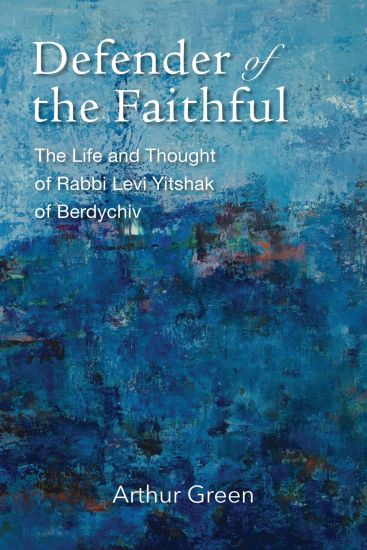
Defender of the Faithful – The Life and Thought of Rabbi Levi Yitshak of Berdychiv
Arthur Green
Brandeis University Press
2022
sidottu
The first scholarly biography of Levi Yitshak of Berdychiv in English in over thirty-five years. Defender of the Faithful explores the life and thought of Levi Yitshak of Berdychiv (1740–1809), one of the most fascinating and colorful Hasidic leaders of his time. This is an intellectual and religious biography, a reading of the development of his thought and career. Featuring examples of Levi Yitshak’s extraordinary texts alongside insightful analysis by scholar and theologian Arthur Green, Defender of the Faithful is a compelling study of both Levi Yitshak’s theology and broader philosophy.

National Jewish Book Award winner An internationally recognized scholar and theologian shares a Jewish mysticism for our times in this " humane, accessible " book (Publishers Weekly, Starred Review)“Green challenges traditional notions of God, Israel, and Torah, offering a radically new understanding and stimulating the reader to join him in a journey of discovery.”—Daniel Matt, Graduate Theological Union Judaism, one of the world’s great spiritual traditions, is not addressed to Jews alone. In this masterful book, winner of the 2020 National Jewish Book Award in the Contemporary Jewish Life and Practice category, Arthur Green calls out to seekers of all sorts, offering a universal response to the eternal human questions of who we are, why we exist, where we are going, and how to live. Drawing on over half a century as a Jewish seeker and teacher, he shows us a Judaism that cultivates the life of the spirit, that inspires an inward journey leading precisely toward self-transcendence, to an awareness of the universal Self in whose presence we exist. As a neo-hasidic seeker, he is both devotional and boldly questioning in his understanding of God and tradition. Engaging with the mystical sources, he translates the insights of the Hasidic masters into a new religious language accessible to all those eager to build an inner life and a human society that treasures the divine spark in each person and throughout Creation.
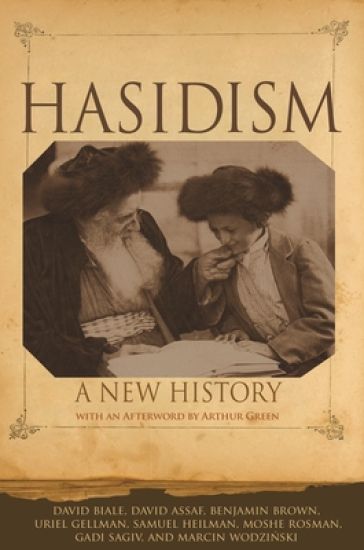
Hasidism
David Biale; David Assaf; Benjamin Brown; Uriel Gellman; Samuel Heilman; Moshe Rosman; Arthur Green; Gadi Sagiv; Marcin Wodzinski
Princeton University Press
2020
pokkari
A must-read book for understanding this vibrant and influential modern Jewish movementHasidism originated in southeastern Poland, in mystical circles centered on the figure of Israel Ba’al Shem Tov, but it was only after his death in 1760 that a movement began to spread. Today, Hasidism is witnessing a remarkable renaissance around the world. This book provides the first comprehensive history of the pietistic movement that shaped modern Judaism. Written by an international team of scholars, its unique blend of intellectual, religious, and social history demonstrates that, far from being a throwback to the Middle Ages, Hasidism is a product of modernity that forged its identity as a radical alternative to the secular world.
Hasidism
David Biale; David Assaf; Benjamin Brown; Uriel Gellman; Samuel Heilman; Moshe Rosman; Arthur Green; Gadi Sagiv; Marcin Wodzinski
PRINCETON UNIVERSITY PRESS
2017
sidottu
The first comprehensive history of the pietistic movement that shaped modern Judaism This is the first comprehensive history of the pietistic movement that shaped modern Judaism. The book's unique blend of intellectual, religious, and social history offers perspectives on the movement's leaders as well as its followers, and demonstrates that, far from being a throwback to the Middle Ages, Hasidism is a product of modernity that forged its identity as a radical alternative to the secular world. Hasidism originated in southeastern Poland, in mystical circles centered on the figure of Israel Baal Shem Tov, but it was only after his death in 1760 that a movement began to spread. Challenging the notion that Hasidism ceased to be a creative movement after the eighteenth century, this book argues that its first golden age was in the nineteenth century, when it conquered new territory, won a mass following, and became a mainstay of Jewish Orthodoxy. World War I, the Russian Revolution, and the Holocaust decimated eastern European Hasidism. But following World War II, the movement enjoyed a second golden age, growing exponentially. Today, it is witnessing a remarkable renaissance in Israel, the United States, and other countries around the world. Written by an international team of scholars, Hasidism is a must-read for anyone seeking to understand this vibrant and influential modern Jewish movement.

A Heart Afire
Zalman Schacter-Shalomi; Netanel Miles-Yepez; Arthur Green
Monkfish Book Publishing Company
2017
pokkari
This intimate guided tour of early Hasidism and Hasidic storytelling gives readers an opportunity to immerse themselves in the world of Hasidic wisdom. In A Heart Afire, the teachings and tales of old-world Hasidism are richly enhanced by the enlightening insights, interpretations, and personal reflections of Rabbi Zalman Schachter-Shaolmi, a modern-day Hasidic master and founder of the Jewish Renewal movement, and his disciple Netanel Miles-Yepez, a scholar of comparative religion. Together they add a deeply meaningful dimension to these stories and a facile bridge between old and new interpretations of them. A Heart Afire explores many of the lesser-known stories and teachings of the first three generations of Hasidism, especially those of the Ba'al Shem Tov, his heirs (male and female), and the students of his successor, the Maggid of Mezritch. Readers get a rare introduction to some of the more radical teachings of these popular Hasidic masters, and insights that connect them to the ecological, ecumenical, and feminist values of the modern world. Enlightening and spiritually uplifting, A Heart Afire reveals surprising relevancy today in cherished Hasidic wisdom and narrative of the past.
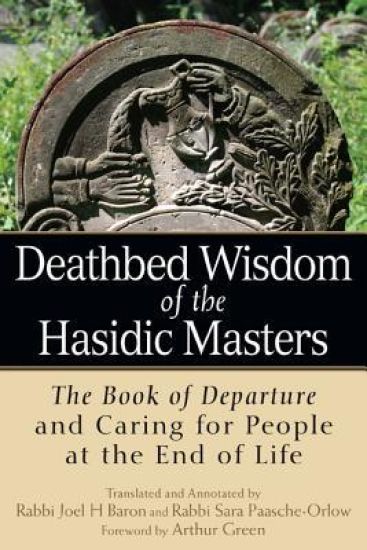
Death is a time of life that holds meaning for the dying, their family and friends, their community--and us."Most of Torah's teaching is about how to live. But there is a special section within its wisdom that also speaks to us about how to die. Since we are all mortals, our lives fashioned somehow around the awareness that death is inevitably to come, this is one of the important lessons.... There is something profound to be learned about the way of dying, and it is best learned from the wisdom and stories of those who have gone before us."--from the ForewordStudents of the Hasidic masters wrote down the stories of the last months, days, hours and moments of the lives of their rebbes. A compilation of their experiences, called The Book of Departure (Sefer haHistalkut), first published in Hebrew in 1930, brings together the rich end-of-life stories of forty-two holy men who died between 1760 and 1904, as well as their philosophical forebearer, Isaac Luria. Featuring new pastoral commentary in a unique facing-page format, this English presentation of heart-touching deathbed tales sheds light on Jewish traditions about death, the afterlife and how to care for people in their final days.
Death is a time of life that holds meaning for the dying, their family and friends, their community--and us."Most of Torah's teaching is about how to live. But there is a special section within its wisdom that also speaks to us about how to die. Since we are all mortals, our lives fashioned somehow around the awareness that death is inevitably to come, this is one of the important lessons.... There is something profound to be learned about the way of dying, and it is best learned from the wisdom and stories of those who have gone before us."--from the ForewordStudents of the Hasidic masters wrote down the stories of the last months, days, hours and moments of the lives of their rebbes. A compilation of their experiences, called The Book of Departure (Sefer haHistalkut), first published in Hebrew in 1930, brings together the rich end-of-life stories of forty-two holy men who died between 1760 and 1904, as well as their philosophical forebearer, Isaac Luria. Featuring new pastoral commentary in a unique facing-page format, this English presentation of heart-touching deathbed tales sheds light on Jewish traditions about death, the afterlife and how to care for people in their final days.
Keter is a close reading of fifty relatively brief Jewish texts, tracing the motif of divine coronation from Jewish esoteric writings of late antiquity to the Zohar, written in thirteenth-century Spain. In the course of this investigation Arthur Green draws a wide arc including Talmudic, Midrashic, liturgical, Merkavah, German Hasidic, and Kabbalistic works, showing through this single theme the spectrum of devotional, mystical, and magical views held by various circles of Jews over the course of a millennium or more. The first portion of the work deals with late antiquity, emphasizing the close relationship between texts of what is often depicted as "normative" Judaism and their mystical/magical analogues. The mythic imagination of ancient Judaism, he suggests, is shared across this spectrum. The latter portion of the work turns to the medieval Jews who inherited this ancient tradition and its evolution into Kabbalah, where keter plays a key role as the first of the ten divine emanations or sefirot. The nature of these sefirot as symbols and the emergence of a structured and hierarchical symbolism out of the mythic imagery of the past are key themes in these later chapters. As a whole, Keter takes the reader on an exciting tour of the interior landscapes of the Jewish imagination, offering some remarkable insights into the nature of mystical and symbolic thinking in the Jewish tradition. Originally published in 1997. The Princeton Legacy Library uses the latest print-on-demand technology to again make available previously out-of-print books from the distinguished backlist of Princeton University Press. These editions preserve the original texts of these important books while presenting them in durable paperback and hardcover editions. The goal of the Princeton Legacy Library is to vastly increase access to the rich scholarly heritage found in the thousands of books published by Princeton University Press since its founding in 1905.
What was piety like before the commandments were revealed? How did Abraham live in a way that fulfilled the ideals of piety without the Torah? This question, raised in the ancient Jewish theology of Philo and central to the struggle of Paul with his own Judaism and his emerging Christian faith, was raised once again by the Hasidic masters of Eastern Europe in the eighteenth century. In a series of powerful and spiritually searching sermons, the Hasidic masters reinterpret spiritually the ancient rabbis' insistence that the patriarchs lived within the Law. In centering their spiritualization of Judaism around the figure of Abraham, these latter-day Jewish thinkers express a position that stands midway between the claims of the Talmud and those of the Christian apostle. Arthur Green uses this Hasidic debate on the patriarchs and the commandments as a point of departure for a wide-ranging consideration of the relationship between piety and commandment in Hasidic Judaism. The result of this effort is a series of rather remarkable mystical defenses of the commandments and an original contribution of Hasidic thought to the ongoing history of Judaism.
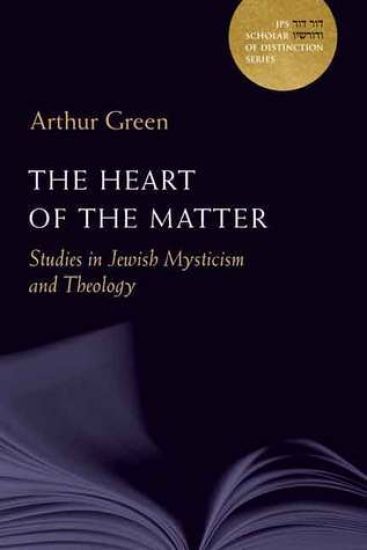
Judaism, like all the great religions, has a strand within it that sees inward devotion, the opening of the human heart to God's presence, to be the purpose of its entire edifice of praxis, liturgy, and way of life. This voice is not always easy to hear in a tradition where so much attention is devoted to the how rather than the why of religious living. The devotional claim, certainly a key part of Judaism's biblical heritage, has reasserted itself in the teachings of individual mystics and in the emergence of religious movements over the long course of Jewish history. This volume represents Arthur Green's own quest for such a Judaism—as a rabbi, as a scholar, and as a contemporary seeker. This collection of essays brings together Green's scholarly writings, centered on the history of early Hasidism, and his highly personal approach to a rebirth of Jewish spirituality in our own day. In choosing to present them in this way he asserts a claim that they are all of a piece. They represent one man's attempt to wade through history and text, language and symbol, and an array of voices both past and present while always focusing on the essential questions: "What does it mean to be a religious human being, and what does Judaism teach us about how to be one?" This, the author considers to be the heart of the matter.

A welcoming introduction to the most important ideas in Judaism. In an age of fluid identity, many people are honestly asking the question "Why be Jewish?" What in this religious and ethnic legacy is worth preserving? Does Judaism have something unique to offer a contemporary seeker free to choose a way of life and a system of values? Here is the answer of a leading spiritual teacher who has faced these questions in conversation with generations of students. With warmth, humor, personal and rabbinic stories and down-to-earth explanations, Arthur Green presents the ideas in Judaism that kept him loyal to the tradition passed on to him. The result is an enticing look into timeless Jewish wisdom that will encourage you to explore further and search out the riches of Judaism for yourself.

A welcoming introduction to the most important ideas in Judaism. In an age of fluid identity, many people are honestly asking the question ''Why be Jewish'' What in this religious and ethnic legacy is worth preserving? Does Judaism have something unique to offer a contemporary seeker free to choose a way of life and a system of values? Here is the answer of a leading spiritual teacher who has faced these questions in conversation with generations of students. With warmth, humor, personal and rabbinic stories and down - to - earth explanations, Arthur Green presents the ideas in Judaism that kept him loyal to the tradition passed on to him. The result is an enticing look into timeless Jewish wisdom that will encourage you to explore further and search out the riches of Judaism for yourself.
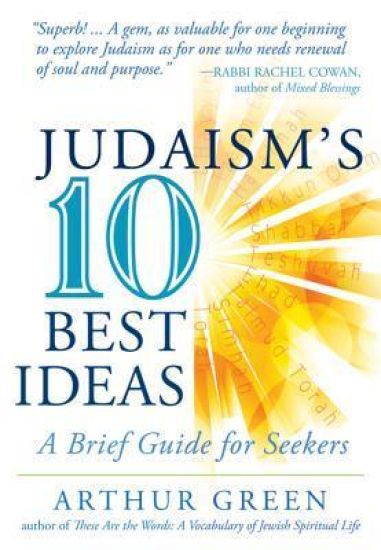
A welcoming introduction to the most important ideas in Judaism.In an age of fluid identity, many people are honestly asking the question "Why be Jewish?" What in this religious and ethnic legacy is worth preserving? Does Judaism have something unique to offer a contemporary seeker free to choose a way of life and a system of values?Here is the answer of a leading spiritual teacher who has faced these questions in conversation with generations of students. With warmth, humor, personal and rabbinic stories and down-to-earth explanations, Arthur Green presents the ideas in Judaism that kept him loyal to the tradition passed on to him. The result is an enticing look into timeless Jewish wisdom that will encourage you to explore further and search out the riches of Judaism for yourself.
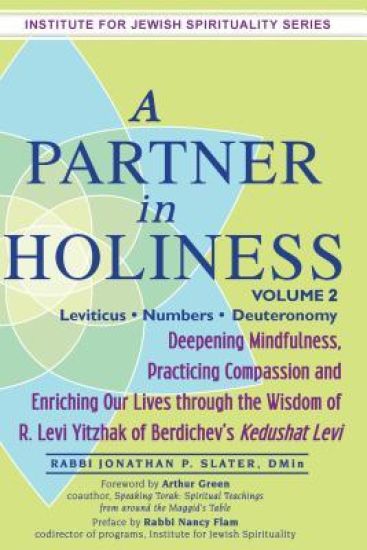
Find inspiration for a satisfying spiritual life of practice through the combination of contemporary mindfulness meditation and classical Hasidic spirituality."The lessons in Kedushat Levi were not originally intended as intellectual curiosities or as demonstrations of R. Levi Yitzhak's brilliance. They were meant to inspire religious passion and deeper spiritual practice. I believe that these teachings will come to life in us when we bring them into our lives in practice."--from the IntroductionThe soul yearns to feel connected to something greater and to know happiness despite personal suffering and seemingly endless need. Surprisingly, the perspectives of the late eighteenth- and nineteenth-century Hasidic spiritual teachers offer a radically different Jewish theology that speaks directly to today's spiritual seekers whose faith has been shattered by both modernity and the Holocaust. These masters taught of interdependence, interconnectedness, selflessness, service and joy, anticipating the insights of contemporary science and twenty-first-century spirituality.Bringing together the teachings of beloved Hasidic master Rabbi Levi Yitzhak of Berdichev (1740-1809) and the practice of mindfulness meditation, Rabbi Jonathan P. Slater reveals a new entrance into Jewish spiritual life. Covering the Five Books of Moses, these two volumes present accessible translations of selections from Kedushat Levi, R. Levi Yitzhak's Hasidic Torah commentary, which emphasizes our spiritual capacity to transform consciousness and so our life experience. The selections are paired with Rabbi Slater's commentaries to illuminate their message.
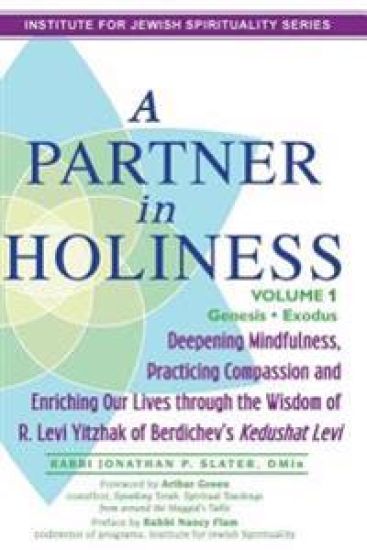
Partner in Holiness - Volume 1, Genesis & Exodus
Rabbi Jonathan P. Slater; Arthur Green
Jewish Lights Publishing
2014
sidottu
The soul yearns to feel connected to something greater and to know happiness despite personal suffering and seemingly endless need. Surprisingly, the teachings of nineteenth-century Hasidic spiritual teachers offer a radically different Jewish theology that speaks directly to contemporary spiritual seekers whose faith has been shattered by both modernity and the Holocaust. These masters taught of interdependence, interconnectedness, selflessness, service and joy, anticipating the insights of contemporary science and twenty-first-century spirituality.Mindfulness meditation, growing in popularity and influence throughout North America, directs practitioners to focus on their life experience in each moment. The spiritual practice offers the possibility of inner peace, fearlessness and expansive concern for the wellbeing of others.These volumes bring the two together, providing a practical mindfulness method for applying the spiritual teachings of the Hasidic masters to everyday spiritual life. Covering the Five Books of Moses, they present accessible translations (many previously unavailable in English) of selections from Kedushat Levi, the Hasidic Torah commentary of Rabbi Levi Yitzhak of Berdichev, one of the most beloved Hasidic leaders. His Torah commentary emphasizes our spiritual capacity to transform consciousness and so our life experience. The selections are paired with Rabbi Jonathan Slater's commentaries to help the reader understand their message and suggestions for practice, based in mindfulness, grounding them in a contemporary life.
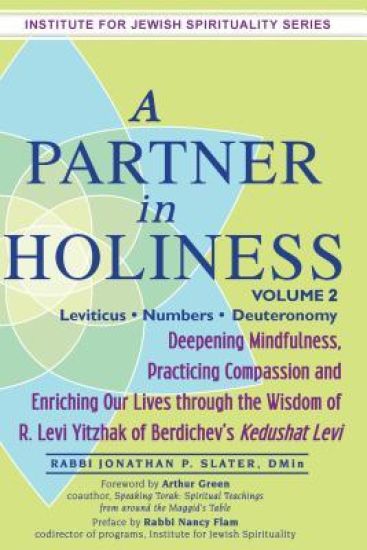
Find inspiration for a satisfying spiritual life of practice through the combination of contemporary mindfulness meditation and classical Hasidic spirituality."The lessons in Kedushat Levi were not originally intended as intellectual curiosities or as demonstrations of R. Levi Yitzhak's brilliance. They were meant to inspire religious passion and deeper spiritual practice. I believe that these teachings will come to life in us when we bring them into our lives in practice."--from the IntroductionThe soul yearns to feel connected to something greater and to know happiness despite personal suffering and seemingly endless need. Surprisingly, the perspectives of the late eighteenth- and nineteenth-century Hasidic spiritual teachers offer a radically different Jewish theology that speaks directly to today's spiritual seekers whose faith has been shattered by both modernity and the Holocaust. These masters taught of interdependence, interconnectedness, selflessness, service and joy, anticipating the insights of contemporary science and twenty-first-century spirituality.Bringing together the teachings of beloved Hasidic master Rabbi Levi Yitzhak of Berdichev (1740-1809) and the practice of mindfulness meditation, Rabbi Jonathan P. Slater reveals a new entrance into Jewish spiritual life. Covering the Five Books of Moses, these two volumes present accessible translations of selections from Kedushat Levi, R. Levi Yitzhak's Hasidic Torah commentary, which emphasizes our spiritual capacity to transform consciousness and so our life experience. The selections are paired with Rabbi Slater's commentaries to illuminate their message.
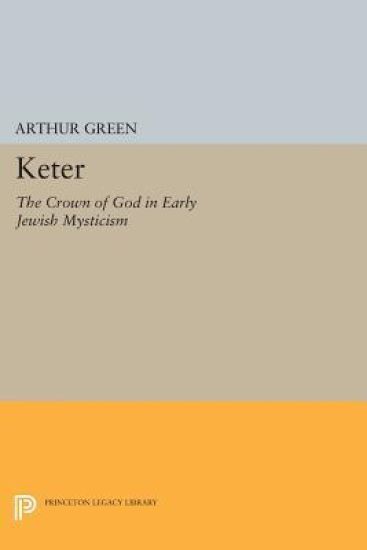
Keter is a close reading of fifty relatively brief Jewish texts, tracing the motif of divine coronation from Jewish esoteric writings of late antiquity to the Zohar, written in thirteenth-century Spain. In the course of this investigation Arthur Green draws a wide arc including Talmudic, Midrashic, liturgical, Merkavah, German Hasidic, and Kabbalistic works, showing through this single theme the spectrum of devotional, mystical, and magical views held by various circles of Jews over the course of a millennium or more. The first portion of the work deals with late antiquity, emphasizing the close relationship between texts of what is often depicted as "normative" Judaism and their mystical/magical analogues. The mythic imagination of ancient Judaism, he suggests, is shared across this spectrum. The latter portion of the work turns to the medieval Jews who inherited this ancient tradition and its evolution into Kabbalah, where keter plays a key role as the first of the ten divine emanations or sefirot. The nature of these sefirot as symbols and the emergence of a structured and hierarchical symbolism out of the mythic imagery of the past are key themes in these later chapters. As a whole, Keter takes the reader on an exciting tour of the interior landscapes of the Jewish imagination, offering some remarkable insights into the nature of mystical and symbolic thinking in the Jewish tradition. Originally published in 1997. The Princeton Legacy Library uses the latest print-on-demand technology to again make available previously out-of-print books from the distinguished backlist of Princeton University Press. These editions preserve the original texts of these important books while presenting them in durable paperback and hardcover editions. The goal of the Princeton Legacy Library is to vastly increase access to the rich scholarly heritage found in the thousands of books published by Princeton University Press since its founding in 1905.