Kirjojen hintavertailu. Mukana 12 390 323 kirjaa ja 12 kauppaa.

Kirjailija

Arthur M. Schlesinger

Kirjat ja teokset yhdessä paikassa: 16 kirjaa, julkaisuja vuosilta 1938-2020, suosituimpien joukossa A Thousand Days: John F. Kennedy in the White House. Vertaile teosten hintoja ja tarkista saatavuus suomalaisista kirjakaupoista.

Mukana myös kirjoitusasut: Arthur M Schlesinger

16 kirjaa

Kirjojen julkaisuhaarukka 1938-2020.

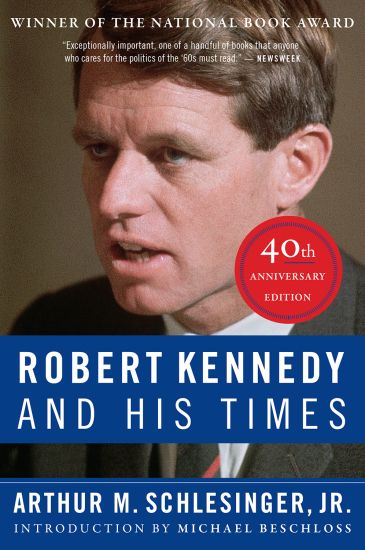
Robert Kennedy and His Times: 40th Anniversary Edition
"An absorbing and vividly written study of a gallant and tragic man."--Boston Globe Arthur M. Schlesinger, Jr., chronicles the short life of the Kennedy family's second presidential hopeful in "a story that leaves the reader aching for what cannot be recaptured" (Miami Herald). Schlesinger's account vividly recalls the forces that shaped Robert Kennedy, from his position as the third son of a powerful Irish Catholic political clan to his concern for issues of social justice in the turbulent 1960s. Robert Kennedy and His Times is "a picture of a deeply compassionate man hiding his vulnerability, drawn to the underdogs and the unfortunates in society by his life experiences and sufferings" (Los Angeles Times). This Fortieth Anniversary Edition contains not only Schlesinger's illuminating and inspiring portrait of Robert Kennedy, but a new introduction by Michael Beschloss, in which the acclaimed best-selling author and historian discusses the book's initial reception, Schlesinger's thoughts on it, and expounds on why Robert Kennedy is still such an important figure today. "An inspiring account of what it was like to be at Robert Kennedy's side and why he and many like him felt that vision and virtue walked with them."--Business Week
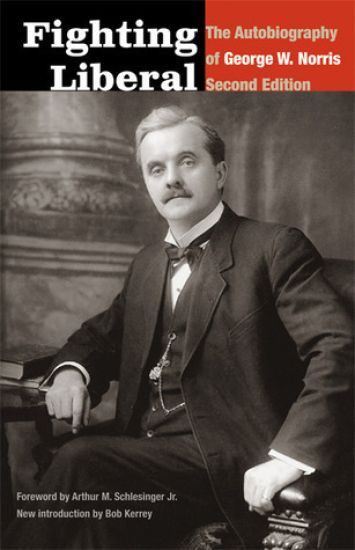
Fighting Liberal

Fighting Liberal

George W. Norris; Arthur M. Schlesinger

Bison Books
2009
pokkari
Though George Norris was born and grew up in Ohio, he headed west after earning his law degree and set up practice in Nebraska, eventually settling in McCook. Elected to the House of Representatives in 1902 and the Senate in 1912, Norris was a Republican for most of his life but headed a wing called the Progressives, who believed the government should be more responsive to the needs of ordinary citizens. Norris believed it his duty to vote according to conscience even if that sometimes conflicted with party affiliation or popular sentiment. Beyond personal integrity, Norris also left a considerable legacy of achievements: he promoted the nonpartisan one-house Unicameral in Nebraska, led the effort to create the Tennessee Valley Authority, and sponsored the Rural Electrification Act. Fighting Liberal is Norris's account of his amazing and admirable life from the early impoverished years that informed his populist philosophy to his career in government, where he made great contributions to the nation.
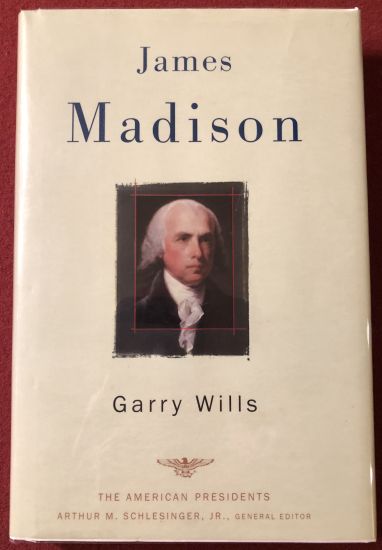
James Madison

James Madison

Garry Wills; Arthur M. Schlesinger

Henry Holt Company Inc
2003
sidottu
A bestselling historian examines the life of a Founding Father.Renowned historian and social commentator Garry Wills takes a fresh look at the life of James Madison, from his rise to prominence in the colonies through his role in the creation of the Articles of Confederation and the first Constitutional Congress. Madison oversaw the first foreign war under the constitution, and was forced to adjust some expectations he had formed while drafting that document. Not temperamentally suited to be a wartime President, Madison nonetheless confronted issues such as public morale, internal security, relations with Congress, and the independence of the military. Wills traces Madison's later life during which, like many recent Presidents, he enjoyed greater popularity than while in office. Garry Willis is a Pulitzer Prize-winning historian and cultural critic, and a professor of history at Northwestern University. A recipient of the National Book Award, his many books include Lincoln at Gettysburg, Reagon's America, Witches and Jesuits, and a Biography of Saint Augustine. He lives in Evanston, Illinois. Arthur M. Schlesinger, Jr., is arguably the preeminent political historian of our time. For more than half a century, he has been a cornerstone figure in the intellectual life of the nation and a fixture on the political scene. He served as a special assistant to John F. Kennedy; won two Pulitzer Prizes for The Age of Jackson (1946) and A Thousand Days (1966); and in 1998 received the National Humanities Medal. He published the first volume of his autobiography, A Life in the Twentieth Century, in 2000.
Kennedy or Nixon

Kennedy or Nixon

Arthur M Schlesinger

SIMON SCHUSTER
2017
pokkari
In an attempt to explore the facile and fashionable cliches of presidential campaigns, American historian Arthur Schlesinger, Jr. illuminates the differences between the campaigns of John F. Kennedy and Richard M. Nixon to evaluate what those differences predicted about the future of the nation. Pulitzer Prize-winning historian Arthur Schlesinger, Jr. examines the similarities and differences between the intense presidential campaigns of John F. Kennedy and Richard M. Nixon in 1960. With the introduction of television to air speeches and debates, the race between Kennedy and Nixon brought about a new style of campaign that truly had America questioning "What is the difference between your two parties?" Giving commentary on one of the most famous presidential races in American history, Schlesinger examines the candidates, their personalities, their policies, and their Parties in order to establish a considerable difference between JFK and Nixon, showing readers that those very differences would become vital to the safety and survival of the nation.
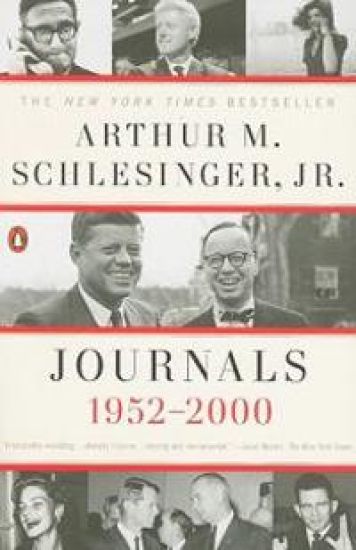
Journals: 1952-2000

Journals: 1952-2000

Arthur M. Schlesinger

PENGUIN BOOKS
2008
nidottu
From his entrance into Democratic leadership circles in the 1950s through his years in the Kennedy administration and up until his last days, Arthur Schlesinger, Jr., was always at the vital center of American politics. For more than half a century, the master historian recorded his experiences and opinions in journals that together form an intimate chronicle of life at the highest levels of American politics and culture in postwar America. This extraordinary volume contains his candid thoughts about the signal events of our time, from the Bay of Pigs to the devastating assassinations of the 1960s, from Vietnam to Watergate, and from the fall of the Soviet Union to Bush v. Gore. Filled with Schlesinger's trademark acerbic wit and tremendous insight, Journals is a fitting tribute to a most remarkable American life.
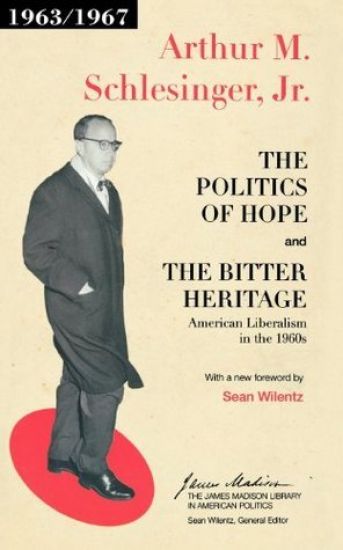
The Politics of Hope and The Bitter Heritage

The Politics of Hope and The Bitter Heritage

Arthur M. Schlesinger; Sean Wilentz

Princeton University Press
2007
pokkari
The Politics of Hope and The Bitter Heritage brings together two important books that bracket the tempestuous politics of 1960s America. In The Politics of Hope, which historian Arthur Schlesinger, Jr., published in 1963 while serving as a special assistant to President Kennedy, Schlesinger defines the liberalism that characterized the Kennedy administration and the optimistic early Sixties. In lively and incisive essays, most of them written between 1956 and 1960, on topics such as the basic differences underlying liberal and conservative politics, the writing of history, and the experience of Communist countries, Schlesinger emphasizes the liberal thinker's responsibility to abide by goals rather than dogma, to learn from history, and to look to the future. Four years later, following Kennedy's assassination and the escalation of America's involvement in Vietnam, Schlesinger's tone changes. In The Bitter Heritage, a brief but penetrating appraisal of the "war that nobody wanted," he recounts America's entry into Vietnam, the history of the war, and its policy implications. The Bitter Heritage concludes with an eloquent and sobering assessment of the war's threat to American democracy and a reflection on the lessons or legacies of the Vietman conflict. With a new foreword by Sean Wilentz, the James Madison Library edition of The Politics of Hope and The Bitter Heritage situates liberalism in the convulsive 1960s--and illuminates the challenges that still face liberalism today.
Roosevelt

Roosevelt

Roy Jenkins; Arthur M. Schlesinger

Pan Books
2005
pokkari
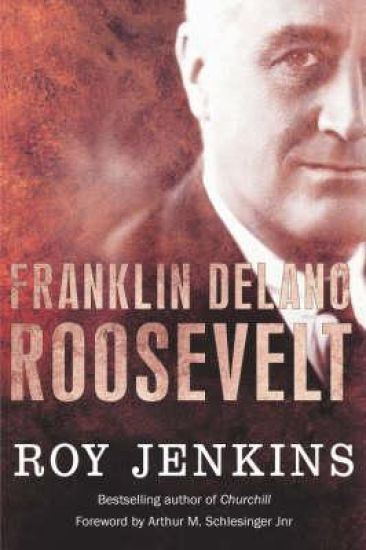
A protean figure and a man of massive achievement, Franklin Delano Roosevelt was the only man to be elected to the presidency more than twice. In a ranking of chief executives, no more than three of his predecessors could truly be placed in contention with his standing, and of his successors, there are so far none. In acute, stylish prose, Roy Jenkins tackles all of the nuances and intricacies of FDR's character. He was a skilled politician with astounding flexibility; he oversaw an incomparable mobilization of American industrial and military effort, all the while arousing great loyalty and dazzling those around him with his personal charm. Despite several setbacks and one apparent catastrophe, his life was buoyed by the influence of Eleanor, who was not only a wife but an adviser and one of the twentieth century's greatest political reformers. Nearly complete before Lord Jenkins's death in January 2003, this volume was finished by historian Richard Neustadt.
Imperial Presidency, The

Imperial Presidency, The

Arthur M. Schlesinger

Houghton Mifflin
2004
nidottu
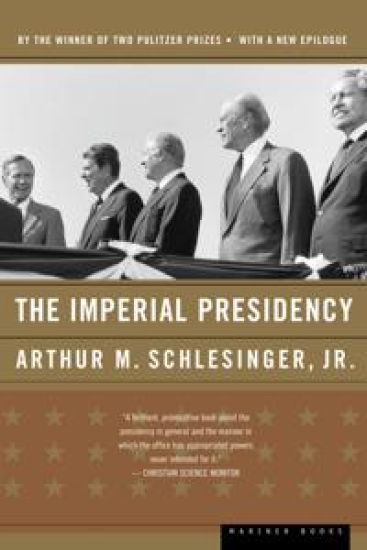
From two-time Pulitzer Prize–winning historian Arthur M. Schlesinger, Jr., comes one of the most important and influential investigations of the American presidency. The Imperial Presidency traces the growth of presidential power over two centuries, from George Washington to George W. Bush, examining how it has both served and harmed the Constitution and what Americans can do about it in years to come. The book that gave the phrase “imperial presidency” to the language, this is a work of “substantial scholarship written with lucidity, charm, and wit” (The New Yorker).
Politics of Upheaval

Politics of Upheaval

Arthur M. Schlesinger

Houghton Mifflin
2003
nidottu
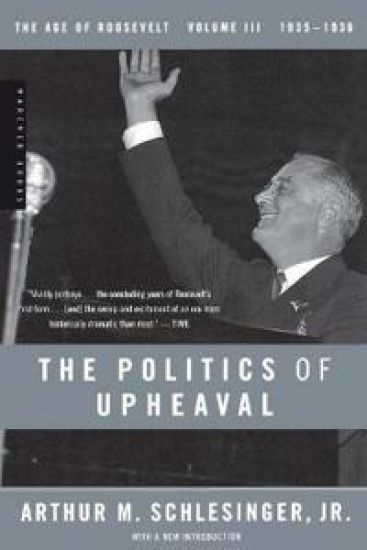
The Politics of Upheaval, 1935-1936, volume three of Pulitzer Prize-winning historian and biographer Arthur M.Schlesinger, Jr.'s Age of Roosevelt series, concentrates on the turbulent concluding years of Franklin D.Roosevelt's first term. A measure of economic recovery revived political conflict and emboldened FDR's critics to denounce 'that man in the White house.' To his left were demagogues - Huey Long, Father Coughlin, and Dr.Townsend. To his right were the champions of the old order - ex-president Herbert Hoover, the American Liberty League, and the august Supreme Court.For a time, the New Deal seemed to lose its momentum. But in 1935 FDR rallied and produced a legislative record even more impressive than the Hundred Days of 1933 - a set of statutes that transformed the social and economic landscape of American life.In 1936 FDR coasted to reelection on a landslide.Schlesinger has his usual touch with colorful personalities and draws a warmly sympathetic portrait of Alf M.Landon, the Republican candidate of 1936.
The Cycles of American History

The Cycles of American History

Arthur M. Schlesinger

Houghton Mifflin (Trade)
1999
nidottu
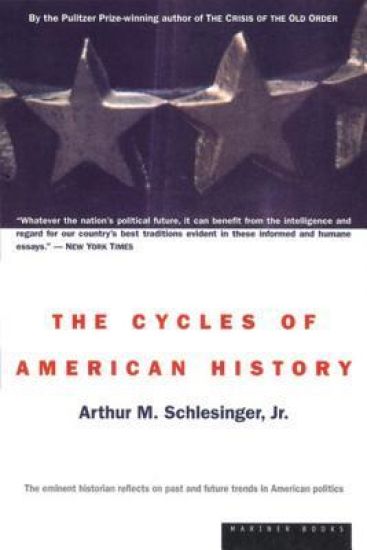
The eminent historian reflects on the "recurring struggle between pragmatism and idealism in the American soul" (Time). The Christian Science Monitor has hailed this book as "first-rate history mixed with a strong sense of public service . . .an excellent and provocative primer on the challenges surrounding the contemporary American political setting."
Nothing Stands Still

Nothing Stands Still

Arthur M Schlesinger

Harvard University Press
1969
sidottu
Arthur M. Schlesinger (1888-1965) was one of America's most distinguished and influential historians. The basis of his conception of history, as he put it in a note found among his papers, is that "nothing stands still," The moral he drew from this was the need for "a liberal, flexible attitude" on the part of both the historian and the citizen. This volume, with an introduction by Arthur M. Schlesinger, Jr., brings together eleven of Professor Schlesinger's essays not previously collected in book form. Written between 1929 and 1965, they fall into two sections--"The Scholar," which includes essays dealing with historical questions, and "The Citizen," which includes those dealing with public affairs. Illustrating the wide range of Professor Schlesinger's professional and humane interests, these essays set forth some of his views on the nature of the historical enterprise and record his own involvement in and hopes for American democracy.