Kirjojen hintavertailu. Mukana 12 290 824 kirjaa ja 12 kauppaa.
Kirjailija
Arthur Morrison
Kirjat ja teokset yhdessä paikassa: 162 kirjaa, julkaisuja vuosilta 2004-2025, suosituimpien joukossa Martin Hewitt, Investigator. Vertaile teosten hintoja ja tarkista saatavuus suomalaisista kirjakaupoista.
Tales of Mean Streets (Academy Victorian Classics)Paperback - August 30, 2005 by Arthur Morrison These stories are a brilliant evocatin of a narrow, close-knit community-that of the streets of London's East End in the 1890s. Having lived and worked there, he knew that his East Enders were not a race apart, but ordinary men and women, scraping by perhaps, but neither criminals nor paupers. He chronicled their adventures and misadventures, their wooings and their funerals, with sympathy, humor and a sense of both the tragedies and comedies to be found in the "mean streets, " from Lizerunt's disastrous marriage to Scuddy Lond's plausible but imperfect conversion and "Squire" Napper's quickly dispersed fortune We are delighted to publish this classic book as part of our extensive Classic Library collection. Many of the books in our collection have been out of print for decades, and therefore have not been accessible to the general public. The aim of our publishing program is to facilitate rapid access to this vast reservoir of literature, and our view is that this is a significant literary work, which deserves to be brought back into print after many decades. The contents of the vast majority of titles in the Classic Library have been scanned from the original works. To ensure a high quality product, each title has been meticulously hand curated by our staff. Our philosophy has been guided by a desire to provide the reader with a book that is as close as possible to ownership of the original work. We hope that you will enjoy this wonderful classic work, and that for you it becomes an enriching experience..
The Adventures of Martin Hewitt Arthur Morrison Arthur Morrison was a British writer best known for novels about London's East End, as well as detective fiction works that featured the character Martin Hewitt. We are delighted to publish this classic book as part of our extensive Classic Library collection. Many of the books in our collection have been out of print for decades, and therefore have not been accessible to the general public. The aim of our publishing program is to facilitate rapid access to this vast reservoir of literature, and our view is that this is a significant literary work, which deserves to be brought back into print after many decades. The contents of the vast majority of titles in the Classic Library have been scanned from the original works. To ensure a high quality product, each title has been meticulously hand curated by our staff. Our philosophy has been guided by a desire to provide the reader with a book that is as close as possible to ownership of the original work. We hope that you will enjoy this wonderful classic work, and that for you it becomes an enriching experience.
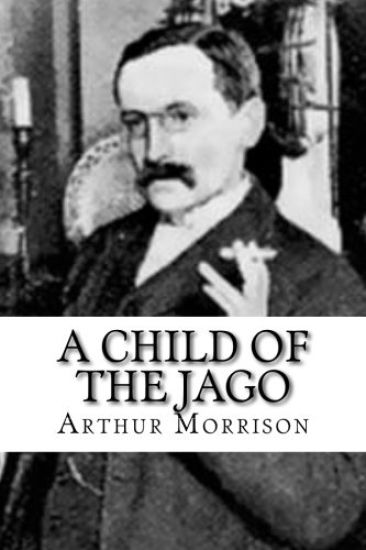
A Child of the Jago: Special Edition By Arthur Morrison The novel recounts the brief life of Dicky Perrott, a child growing up in the "Old Jago", a fictionalisation of the Old Nichol, a slum in the East End of London. We are delighted to publish this classic book as part of our extensive Classic Library collection. Many of the books in our collection have been out of print for decades, and therefore have not been accessible to the general public. The aim of our publishing program is to facilitate rapid access to this vast reservoir of literature, and our view is that this is a significant literary work, which deserves to be brought back into print after many decades. The contents of the vast majority of titles in the Classic Library have been scanned from the original works. To ensure a high quality product, each title has been meticulously hand curated by our staff. Our philosophy has been guided by a desire to provide the reader with a book that is as close as possible to ownership of the original work. We hope that you will enjoy this wonderful classic work, and that for you it becomes an enriching experience.
A tale of grinding poverty and struggle, A Child of the Jago follows Dicky Perrott - a boy who wishes to escape London's impoverished and corruption-riddled East End for a better life. First published at the end of the 19th century when industrialised London was in a state of dire impoverishment, the story is not a typical rags to riches tale - the Perrott family, and their friends and enemies, must struggle for their very survival in the harsh environment they live within. Tension and desperation amid the crime and roughness is constant in the overcrowded slums of the East End, with fortune hard to come by and danger ever present. The novel opens with a vivid and stark image of a hot midsummer's day - the residents of the Jago sleeping outside in the roads to avoid the heat and stench of their own homes. Illustrating the desperate situation, a robbery promptly occurs in which the victim is relieved of the very clothes on his back.
A tale of grinding poverty and struggle, A Child of the Jago follows Dicky Perrott - a boy who wishes to escape London's impoverished and corruption-riddled East End for a better life. First published at the end of the 19th century when industrialized London was in a state of dire impoverishment, the story is not a typical rags to riches tale - the Perrott family, and their friends and enemies, must struggle for their very survival in the harsh environment they live within. Tension and desperation amid the crime and roughness is constant in the overcrowded slums of the East End, with fortune hard to come by and danger ever present. The novel opens with a vivid and stark image of a hot midsummer's day - the residents of the Jago sleeping outside in the roads to avoid the heat and stench of their own homes. Illustrating the desperate situation, a robbery promptly occurs in which the victim is relieved of the very clothes on his back.
The novel opens after midnight on a hot summer night, when many of the residents of the Jago, likened to "great rats", prefer to sleep in the street to avoid the oppressive heat and stench of the closely packed houses. A man lured into a dwelling by a woman is brutally coshed, robbed and dragged unconscious into the street where others remove his boots. Dicky Perrott, 8 or 9 years old (the uncertainty is telling) makes his way home to the single room in which his family dwells, where he finds his mother, Hannah Perrott and flea-bitten baby sister, Looey, but only a crust of bread to eat. As dawn breaks his father, Josh Perrott, returns home with a club sticky with blood and hair, suggesting another robbery. Looking for cake and tea Dicky visits the East End Elevation Mission where well-intentioned middle-class 'missionaries' seek to educate and civilise. He dodges the young man on the door and takes the opportunity to steal a gold watch from a bishop. Returning home he proudly hands it to his father, who beats him for stealing but keeps the watch to sell for himself. Two families, the Ranns and the Learys, dominate the Jago, and one of their periodic violent confrontations breaks out. Sally Green, of the Leary clan, whose method of fighting is to hold down her opponent and chew viciously on the back of the neck, triumphs over the Rann's female champion, Nora Walsh, and proudly displays a bunch of her clotted hair as a trophy. Hannah Perrott, taking Looey out with her to buy food, is attacked by Sally Green and only rescued when Nora Walsh breaks a bottle and repeatedly stabs Sally in the face. Elsewhere there is a murder in the street when Fag Dawson is stabbed and the police descend in force on the Jago. Josh Perrott vows to fight Sally Green's brother, Billy Leary. Dicky encounters Aaron Weech, proprietor of a local coffee shop and a 'fence', a handler of stolen goods. Weech has heard about Dicky stealing the watch, and the punishment he received, and offers him coffee and cake. Weech suggests that in future Dicky should bring what he steals straight to him, and points out that Dicky is now in debt to him for the refreshments. Returning home, Dicky passes a clergyman, who, he imagines, has only ventured into the Jago because the police are present. Looey is ill but disregarded by her mother. Dicky sees that the door to the Roper family's room opposite is open, and ventures inside. He steals their clock, but as he descends the stairs he is confronted by the Roper's son, Bobby, and the two struggle before Dicky breaks free and takes the clock to Mr Weech. Other residents of the house also enter the Ropers' room and steal their belongings. The Ropers, already despised and resented due to their perceived relative gentility, return and are attacked by the Jagos, until they are saved by the intervention of the clergyman, Father Sturt, who cows the crowd and retrieves the stolen property.
I have already recorded many of the adventures of my friend Martin Hewitt, but among them there have been more of a certain few which were discovered to be related together in a very extraordinary manner; and it is to these that I am now at liberty to address myself. There may have been others-cases which gave no indication of their connection with these; some of them indeed I may have told without a suspicion of their connection with the Red Triangle; but the first in which that singular accompaniment became apparent was the matter of Samuel's diamonds. The case exhibited many interesting features, and I was very anxious to report it, with perhaps even less delay than I had thought judicious in other cases; but Hewitt restrained me. "No, Brett," he said, "there is more to come of this. This particular case is over, it is true, but there is much behind. I've an idea that I shall see that Red Triangle again. I may, or, of course, I may not; but there is deep work going on-very deep work, and whether we see more of it or not, I must keep prepared. I can't afford to throw a single card upon the table.
This novel, first published in 1896, is the story of Dick Perrot, born and bred in the Jago; but it is also a brilliant portrait of the community. The Jago is a London slum where crime and violence are the only way of life, and from which there is no escape for the inhabitants. Only the characters themselves are fictional: Morrison's descriptions of the fearful physical conditions are based directly on what he saw.
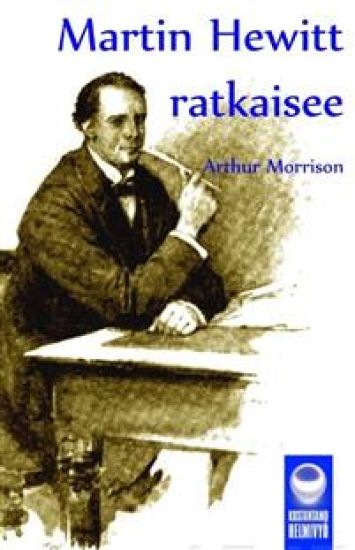
Kun Sherlock Holmes menehtyi Reichenbachin putouksilla vuonna 1894 maansuru oli suuri. Lukijat ja kustantajat kaipasivat salapoliisia takaisin. Strandin ratkaisu oli julkaista Arthur Morrisonin Holmes-klooni Martin Hewittin seikkailuja. Hewitt ehti käsitellä 25 tapausta ennen kuin 1903 paljastui, että Holmes oli lavastanut kuolemansa. Holmesin paluun myötä Hewitt siirtyi kirjallisuuden historiaan.Hewitt tuli tuoreeltaan tutuksi suomalaisillekin. Tähän teokseen on koottu seitsemän 1800- ja 1900-lukujen taitteessa suomalaisissa sanomalehdissä ilmestynyttä tarinaa. Teoksen on koonnut ja saatesanoilla varustanut Reijo Valta.
Arthur George Morrison (1 November 1863 - 4 December 1945) was an English writer and journalist known for his realistic novels and stories about working-class life in London's East End, and for his detective stories, featuring the detective Martin Hewitt. He also collected Japanese art and published several works on the subject. He left a large collection of paintings and other works of art to the British Museum after his death in 1945.Morrison's best known work of fiction is his novel A Child of the Jago (1896). Early life: Morrison was born in Poplar, in the East End of London, on 1 November 1863. His father George was an engine fitter at the London Docks. George died in 1871 of tuberculosis, leaving his wife Jane with three children including Arthur. Arthur spent his youth in the East End. In 1879 he began working as an office boy in the Architect's Department of the London School Board. He later remembered frequenting used bookstores in Whitechapel Road around this time. In 1880 Arthur's mother took over a shop in Grundy Street. Morrison published his first work, a humorous poem, in the magazine Cycling in 1880, and took up cycling and boxing. He continued to publish works in various cycling journals. Career: In 1885 Morrison published his first serious journalistic work in the newspaper The Globe. In 1886, after having worked his way up to the rank of a third-class clerk, he was appointed to a position at the People's Palace, in Mile End. In 1888 he was given reading privileges at the British Museum. In the same year he published a collection of thirteen sketches entitled Cockney Corner, describing life and conditions in several London districts including Soho, Whitechapel, and Bow Street. In 1889 he became an editor of the paper Palace Journal, reprinting some of his Cockney Corner sketches, and writing commentaries on books and other subjects including the life of London poor people. In 1890 he left this job and joined the editorial staff of The Globe and moved to lodgings in the Strand. In 1891 he published his first book The Shadows Around Us, a collection of supernatural stories. In October 1891 his short story A Street was published in Macmillan's Magazine. In 1892 he collaborated with illustrator J. A. Sheppard on a collection of animal sketches, one entitled My Neighbors' Dogs, for The Strand Magazine. Later that year he married Elizabeth Thatcher at Forest Gate. He befriended writer and editor William Ernest Henley around this time, publishing stories of working-class life in Henley's National Observer between 1892-94. His son Guy Morrison was born in 1893. In 1894 Morrison published his first detective story featuring the detective Martin Hewitt. In November he published his short story collection Tales of Mean Streets, dedicating the work to Henley. The collection was reviewed in 1896 in America by Jacob Riis. Morrison later said that the work was publicly banned. Reviewers of the collection objected to his story Lizerunt, causing Morrison to write a response in 1895. Later in 1894 he published Martin Hewitt, Investigator. In 1895 he was invited by writer and clergyman Reverend A. O. M. Jay to visit the Old Nichol Street Rookery. Morrison continued to develop his interest in Japanese art, which he had been introduced to by a friend in 1890. Morrison began writing his novel A Child of the Jago in early 1896. The novel was published in November by Henley. It described in graphic detail living conditions in the East End, including the permeation of violence into everyday life (it was a barely fictionalised account of life in the Old Nichol Street Rookery). ....
The novel opens after midnight on a hot summer night, when many of the residents of the Jago, likened to "great rats", prefer to sleep in the street to avoid the oppressive heat and stench of the closely packed houses. A man lured into a dwelling by a woman is brutally coshed, robbed and dragged unconscious into the street where others remove his boots. Dicky Perrott, 8 or 9 years old (the uncertainty is telling) makes his way home to the single room in which his family dwells, where he finds his mother, Hannah Perrott and flea-bitten baby sister, Looey, but only a crust of bread to eat. As dawn breaks his father, Josh Perrott, returns home with a club sticky with blood and hair, suggesting another robbery. Looking for cake and tea Dicky visits the East End Elevation Mission where well-intentioned middle-class 'missionaries' seek to educate and civilise. He dodges the young man on the door and takes the opportunity to steal a gold watch from a bishop. Returning home he proudly hands it to his father, who beats him for stealing but keeps the watch to sell for himself. Two families, the Ranns and the Learys, dominate the Jago, and one of their periodic violent confrontations breaks out. Sally Green, of the Leary clan, whose method of fighting is to hold down her opponent and chew viciously on the back of the neck, triumphs over the Rann's female champion, Nora Walsh, and proudly displays a bunch of her clotted hair as a trophy. Hannah Perrott, taking Looey out with her to buy food, is attacked by Sally Green and only rescued when Nora Walsh breaks a bottle and repeatedly stabs Sally in the face. Elsewhere there is a murder in the street when Fag Dawson is stabbed and the police descend in force on the Jago. Josh Perrott vows to fight Sally Green's brother, Billy Leary. Dicky encounters Aaron Weech, proprietor of a local coffee shop and a 'fence', a handler of stolen goods. Weech has heard about Dicky stealing the watch, and the punishment he received, and offers him coffee and cake. Weech suggests that in future Dicky should bring what he steals straight to him, and points out that Dicky is now in debt to him for the refreshments. Returning home, Dicky passes a clergyman, who, he imagines, has only ventured into the Jago because the police are present. Looey is ill but disregarded by her mother. Dicky sees that the door to the Roper family's room opposite is open, and ventures inside. He steals their clock, but as he descends the stairs he is confronted by the Roper's son, Bobby, and the two struggle before Dicky breaks free and takes the clock to Mr Weech. Other residents of the house also enter the Ropers' room and steal their belongings. The Ropers, already despised and resented due to their perceived relative gentility, return and are attacked by the Jagos, until they are saved by the intervention of the clergyman, Father Sturt, who cows the crowd and retrieves the stolen property. Dicky feels sorry for the Ropers and resolves to replace their clock with something. He steals a music box and is chased back to the Jago, narrowly avoiding capture. Father Sturt arranges for the Ropers to take up lodging in nearby Dove Lane and Dicky secretes the music box in the cart carrying away their belongings. Josh Perrott defeats Billy Leary in their fight, winning 5 in prize money and bets, and celebrates with Hannah in a pub. Looey dies whilst left behind in their room, and as Dicky sobs over his sister's corpse, Josh and Hannah return to the pub. Four years pass. Father Sturt plans to build a church on Jago Court. Although by now a hardened thief who has received a birching, Dicky occasionally attends school. He returns home one day to see the Ropers' clock on the family mantlepiece. Weech has given this to Josh in return for stolen tobacco. Another child has been born, and Looey is "forgotten"........
Short stories of the East End: at one time the slimy underbelly of London. The stories vary in style: from the gritty, no-holds-barred tale of Lizerunt, to the light humor of That Brute Simmons. "The greater number of these stories and studies were first printed in The National Observer; the introduction, in a slightly different form, in Macmillan's Magazine; "That Brute Simmons" and "A Conversion" have been published in The Pall Mall Budget; and "The Red Cow Group" is new."... Arthur George Morrison (1 November 1863 - 4 December 1945) was an English writer and journalist known for his realistic novels and stories about working-class life in London's East End, and for his detective stories, featuring the detective Martin Hewitt. He also collected Japanese art and published several works on the subject. He left a large collection of paintings and other works of art to the British Museum after his death in 1945.Morrison's best known work of fiction is his novel A Child of the Jago (1896). Early life: Morrison was born in Poplar, in the East End of London, on 1 November 1863. His father George was an engine fitter at the London Docks. George died in 1871 of tuberculosis, leaving his wife Jane with three children including Arthur. Arthur spent his youth in the East End. In 1879 he began working as an office boy in the Architect's Department of the London School Board. He later remembered frequenting used bookstores in Whitechapel Road around this time. In 1880 Arthur's mother took over a shop in Grundy Street. Morrison published his first work, a humorous poem, in the magazine Cycling in 1880, and took up cycling and boxing. He continued to publish works in various cycling journals. Career: In 1885 Morrison published his first serious journalistic work in the newspaper The Globe. In 1886, after having worked his way up to the rank of a third-class clerk, he was appointed to a position at the People's Palace, in Mile End. In 1888 he was given reading privileges at the British Museum. In the same year he published a collection of thirteen sketches entitled Cockney Corner, describing life and conditions in several London districts including Soho, Whitechapel, and Bow Street. In 1889 he became an editor of the paper Palace Journal, reprinting some of his Cockney Corner sketches, and writing commentaries on books and other subjects including the life of London poor people. In 1890 he left this job and joined the editorial staff of The Globe and moved to lodgings in the Strand. In 1891 he published his first book The Shadows Around Us, a collection of supernatural stories. In October 1891 his short story A Street was published in Macmillan's Magazine. In 1892 he collaborated with illustrator J. A. Sheppard on a collection of animal sketches, one entitled My Neighbors' Dogs, for The Strand Magazine. Later that year he married Elizabeth Thatcher at Forest Gate. He befriended writer and editor William Ernest Henley around this time, publishing stories of working-class life in Henley's National Observer between 1892-94. His son Guy Morrison was born in 1893. In 1894 Morrison published his first detective story featuring the detective Martin Hewitt. In November he published his short story collection Tales of Mean Streets, dedicating the work to Henley. The collection was reviewed in 1896 in America by Jacob Riis. Morrison later said that the work was publicly banned. Reviewers of the collection objected to his story Lizerunt, causing Morrison to write a response in 1895. Later in 1894 he published Martin Hewitt, Investigator. In 1895 he was invited by writer and clergyman Reverend A. O. M. Jay to visit the Old Nichol Street Rookery....
Arthur George Morrison (1 November 1863 - 4 December 1945) was an English writer and journalist known for his realistic novels and stories about working-class life in London's East End, and for his detective stories, featuring the detective Martin Hewitt. He also collected Japanese art and published several works on the subject. He left a large collection of paintings and other works of art to the British Museum after his death in 1945.Morrison's best known work of fiction is his novel A Child of the Jago (1896). Early life: Morrison was born in Poplar, in the East End of London, on 1 November 1863. His father George was an engine fitter at the London Docks. George died in 1871 of tuberculosis, leaving his wife Jane with three children including Arthur. Arthur spent his youth in the East End. In 1879 he began working as an office boy in the Architect's Department of the London School Board. He later remembered frequenting used bookstores in Whitechapel Road around this time. In 1880 Arthur's mother took over a shop in Grundy Street. Morrison published his first work, a humorous poem, in the magazine Cycling in 1880, and took up cycling and boxing. He continued to publish works in various cycling journals. Career: In 1885 Morrison published his first serious journalistic work in the newspaper The Globe. In 1886, after having worked his way up to the rank of a third-class clerk, he was appointed to a position at the People's Palace, in Mile End. In 1888 he was given reading privileges at the British Museum. In the same year he published a collection of thirteen sketches entitled Cockney Corner, describing life and conditions in several London districts including Soho, Whitechapel, and Bow Street. In 1889 he became an editor of the paper Palace Journal, reprinting some of his Cockney Corner sketches, and writing commentaries on books and other subjects including the life of London poor people. In 1890 he left this job and joined the editorial staff of The Globe and moved to lodgings in the Strand. In 1891 he published his first book The Shadows Around Us, a collection of supernatural stories. In October 1891 his short story A Street was published in Macmillan's Magazine. In 1892 he collaborated with illustrator J. A. Sheppard on a collection of animal sketches, one entitled My Neighbors' Dogs, for The Strand Magazine. Later that year he married Elizabeth Thatcher at Forest Gate. He befriended writer and editor William Ernest Henley around this time, publishing stories of working-class life in Henley's National Observer between 1892-94. His son Guy Morrison was born in 1893. In 1894 Morrison published his first detective story featuring the detective Martin Hewitt. In November he published his short story collection Tales of Mean Streets, dedicating the work to Henley. The collection was reviewed in 1896 in America by Jacob Riis. Morrison later said that the work was publicly banned. Reviewers of the collection objected to his story Lizerunt, causing Morrison to write a response in 1895. Later in 1894 he published Martin Hewitt, Investigator. In 1895 he was invited by writer and clergyman Reverend A. O. M. Jay to visit the Old Nichol Street Rookery. Morrison continued to develop his interest in Japanese art, which he had been introduced to by a friend in 1890. Morrison began writing his novel A Child of the Jago in early 1896. The novel was published in November by Henley. It described in graphic detail living conditions in the East End, including the permeation of violence into everyday life (it was a barely fictionalised account of life in the Old Nichol Street Rookery). Morrison also published The Adventures of Martin Hewitt in 1896. A second edition of A Child of the Jago came out in 1897. In 1897 Morrison published seven short stories detailing the exploits of Horace Dorrington.........
Arthur George Morrison (1 November 1863 - 4 December 1945) was an English writer and journalist known for his realistic novels and stories about working-class life in London's East End, and for his detective stories, featuring the detective Martin Hewitt. He also collected Japanese art and published several works on the subject. He left a large collection of paintings and other works of art to the British Museum after his death in 1945.Morrison's best known work of fiction is his novel A Child of the Jago (1896). Early life: Morrison was born in Poplar, in the East End of London, on 1 November 1863. His father George was an engine fitter at the London Docks. George died in 1871 of tuberculosis, leaving his wife Jane with three children including Arthur. Arthur spent his youth in the East End. In 1879 he began working as an office boy in the Architect's Department of the London School Board. He later remembered frequenting used bookstores in Whitechapel Road around this time. In 1880 Arthur's mother took over a shop in Grundy Street. Morrison published his first work, a humorous poem, in the magazine Cycling in 1880, and took up cycling and boxing. He continued to publish works in various cycling journals. Career: In 1885 Morrison published his first serious journalistic work in the newspaper The Globe. In 1886, after having worked his way up to the rank of a third-class clerk, he was appointed to a position at the People's Palace, in Mile End. In 1888 he was given reading privileges at the British Museum. In the same year he published a collection of thirteen sketches entitled Cockney Corner, describing life and conditions in several London districts including Soho, Whitechapel, and Bow Street. In 1889 he became an editor of the paper Palace Journal, reprinting some of his Cockney Corner sketches, and writing commentaries on books and other subjects including the life of London poor people. In 1890 he left this job and joined the editorial staff of The Globe and moved to lodgings in the Strand. In 1891 he published his first book The Shadows Around Us, a collection of supernatural stories. In October 1891 his short story A Street was published in Macmillan's Magazine. In 1892 he collaborated with illustrator J. A. Sheppard on a collection of animal sketches, one entitled My Neighbors' Dogs, for The Strand Magazine. Later that year he married Elizabeth Thatcher at Forest Gate. He befriended writer and editor William Ernest Henley around this time, publishing stories of working-class life in Henley's National Observer between 1892-94. His son Guy Morrison was born in 1893. In 1894 Morrison published his first detective story featuring the detective Martin Hewitt. In November he published his short story collection Tales of Mean Streets, dedicating the work to Henley. The collection was reviewed in 1896 in America by Jacob Riis. Morrison later said that the work was publicly banned. Reviewers of the collection objected to his story Lizerunt, causing Morrison to write a response in 1895. Later in 1894 he published Martin Hewitt, Investigator. In 1895 he was invited by writer and clergyman Reverend A. O. M. Jay to visit the Old Nichol Street Rookery. Morrison continued to develop his interest in Japanese art, which he had been introduced to by a friend in 1890. Morrison began writing his novel A Child of the Jago in early 1896. The novel was published in November by Henley. It described in graphic detail living conditions in the East End, including the permeation of violence into everyday life (it was a barely fictionalised account of life in the Old Nichol Street Rookery). Morrison also published The Adventures of Martin Hewitt in 1896. A second edition of A Child of the Jago came out in 1897..............
The Hole in the Wall by Arthur Morrison This is one of the most gripping adventure stories ever written. Stephen Kemp goes to live with his mysterious grandfather after his mother's death, and is gradually drawn into the seedy world which Captain Nat Kemp inhabits. Morrison brilliantly conveys the child's sharp observation of all that goes on around him, and builds up portrait of the London East End he himself may have known as a boy. We are delighted to publish this classic book as part of our extensive Classic Library collection. Many of the books in our collection have been out of print for decades, and therefore have not been accessible to the general public. The aim of our publishing program is to facilitate rapid access to this vast reservoir of literature, and our view is that this is a significant literary work, which deserves to be brought back into print after many decades. The contents of the vast majority of titles in the Classic Library have been scanned from the original works. To ensure a high quality product, each title has been meticulously hand curated by our staff. Our philosophy has been guided by a desire to provide the reader with a book that is as close as possible to ownership of the original work. We hope that you will enjoy this wonderful classic work, and that for you it becomes an enriching experience.
Arthur George Morrison (1 November 1863 - 4 December 1945) was an English writer and journalist known for his realistic novels and stories about working-class life in London's East End, and for his detective stories, featuring the detective Martin Hewitt. He also collected Japanese art and published several works on the subject. He left a large collection of paintings and other works of art to the British Museum after his death in 1945.Morrison's best known work of fiction is his novel A Child of the Jago (1896). Early life: Morrison was born in Poplar, in the East End of London, on 1 November 1863. His father George was an engine fitter at the London Docks. George died in 1871 of tuberculosis, leaving his wife Jane with three children including Arthur. Arthur spent his youth in the East End. In 1879 he began working as an office boy in the Architect's Department of the London School Board. He later remembered frequenting used bookstores in Whitechapel Road around this time. In 1880 Arthur's mother took over a shop in Grundy Street. Morrison published his first work, a humorous poem, in the magazine Cycling in 1880, and took up cycling and boxing. He continued to publish works in various cycling journals. Career: In 1885 Morrison published his first serious journalistic work in the newspaper The Globe. In 1886, after having worked his way up to the rank of a third-class clerk, he was appointed to a position at the People's Palace, in Mile End. In 1888 he was given reading privileges at the British Museum. In the same year he published a collection of thirteen sketches entitled Cockney Corner, describing life and conditions in several London districts including Soho, Whitechapel, and Bow Street. In 1889 he became an editor of the paper Palace Journal, reprinting some of his Cockney Corner sketches, and writing commentaries on books and other subjects including the life of London poor people. In 1890 he left this job and joined the editorial staff of The Globe and moved to lodgings in the Strand. In 1891 he published his first book The Shadows Around Us, a collection of supernatural stories. In October 1891 his short story A Street was published in Macmillan's Magazine. In 1892 he collaborated with illustrator J. A. Sheppard on a collection of animal sketches, one entitled My Neighbors' Dogs, for The Strand Magazine. Later that year he married Elizabeth Thatcher at Forest Gate. He befriended writer and editor William Ernest Henley around this time, publishing stories of working-class life in Henley's National Observer between 1892-94. His son Guy Morrison was born in 1893. In 1894 Morrison published his first detective story featuring the detective Martin Hewitt. In November he published his short story collection Tales of Mean Streets, dedicating the work to Henley. The collection was reviewed in 1896 in America by Jacob Riis. Morrison later said that the work was publicly banned. Reviewers of the collection objected to his story Lizerunt, causing Morrison to write a response in 1895. Later in 1894 he published Martin Hewitt, Investigator. In 1895 he was invited by writer and clergyman Reverend A. O. M. Jay to visit the Old Nichol Street Rookery. Morrison continued to develop his interest in Japanese art, which he had been introduced to by a friend in 1890. Morrison began writing his novel A Child of the Jago in early 1896. The novel was published in November by Henley. It described in graphic detail living conditions in the East End, including the permeation of violence into everyday life (it was a barely fictionalised account of life in the Old Nichol Street Rookery). Morrison also published The Adventures of Martin Hewitt in 1896. A second edition of A Child of the Jago came out in 1897............
This novel, first published in 1896, is the story of Dick Perrot, born and bred in the Jago; but it is also a brilliant portrait of the community. The Jago is a London slum where crime and violence are the only way of life, and from which there is no escape for the inhabitants. Only the characters themselves are fictional: Morrison's descriptions of the fearful physical conditions are based directly on what he saw. He conjures up an extraordinarily vivid picture of a world which, even as he wrote, was about to vanish in one of the first of the slum clearance schemes.
Martin Hewitt, Investigator is a book published by Arthur Morrison in 1894. It is a collection of 7 detective stories: The Lenton Croft Robberies, The Loss of Sammy Crockett, The Case of Mr. Foggatt, The Case of the Dixon Torpedo, The Quinton Jewel Affair, The Stanway Cameo Mystery & The Affair of the Tortoise. Though ostensibly Hewitt depends on logic to solve crimes, the stories mostly hinge on a clever gimmick. Sometimes all of the clues are provided for the reader to guess the solution, but for the most part one can only marvel at Hewitt's cleverness in figuring out bizarre solutions, and accept the solution he presents.