Kirjojen hintavertailu. Mukana 12 657 676 kirjaa ja 12 kauppaa.

Kirjailija

Arthur W. Blume

Kirjat ja teokset yhdessä paikassa: 7 kirjaa, julkaisuja vuosilta 2005-2026, suosituimpien joukossa Advancing Health Equity and Psychological Wellness in the Shadows of Colonialism. Vertaile teosten hintoja ja tarkista saatavuus suomalaisista kirjakaupoista.

7 kirjaa

Kirjojen julkaisuhaarukka 2005-2026.

Advancing Health Equity and Psychological Wellness in the Shadows of Colonialism
Examining the inequities that continue to impede health equity and those who champion it, this book advocates a new framework for global health and wellness based on Indigenous American psychology and culture. Throughout history, intergenerational detriments to health, including colonialism, environmental degradation, poverty, racism, unrestrained materialism, and violence, have impeded efforts to advance global health equity. The COVID-19 pandemic has only capitalized on these inequities and exposed considerable weaknesses in addressing collective, global health concerns. Using an Indigenous American framework, this book promotes a new understanding of how to reclaim and sustain health equity. An Indigenous paradigm views the natural world as inextricably connected and envisions a holistic model of health linked to egalitarian relationships with others and the environment. This book presents students and practitioners with a new method of addressing health equity—one which does not operate under the same cultural assumptions that created widespread inequities in the first place.

Colonialism and the COVID-19 Pandemic

Colonialism and the COVID-19 Pandemic

Arthur W. Blume

Springer Nature Switzerland AG
2023
nidottu
This book views responses to the Covid 19 virus through the lens of indigenous thinking which sheds light on some of the failures in dealing with the pandemic. Colonial societies maintain beliefs that hierarchies are part of the natural order, and that certain people are entitled to privileges that others are not. These hierarchies have contributed to racism as well as health, and wealth disparities that have increased vulnerabilities to the virus. Indigenous societies, on the other hand, view individuals as interdependent, and hold an optimistic view that this tragedy can yield important lessons for future improvement. This book examines the legacy of colonial societies in contributing to existing vulnerabilities, and incorporates an indigenous perspective in re-imagining the problem and its solutions.
Colonialism and the COVID-19 Pandemic

Colonialism and the COVID-19 Pandemic

Arthur W. Blume

Springer Nature Switzerland AG
2022
sidottu
This book views responses to the Covid 19 virus through the lens of indigenous thinking which sheds light on some of the failures in dealing with the pandemic. Colonial societies maintain beliefs that hierarchies are part of the natural order, and that certain people are entitled to privileges that others are not. These hierarchies have contributed to racism as well as health, and wealth disparities that have increased vulnerabilities to the virus. Indigenous societies, on the other hand, view individuals as interdependent, and hold an optimistic view that this tragedy can yield important lessons for future improvement. This book examines the legacy of colonial societies in contributing to existing vulnerabilities, and incorporates an indigenous perspective in re-imagining the problem and its solutions.
Indigenous Relapse Prevention

Indigenous Relapse Prevention

Arthur W. Blume; Monica Skewes; Scott Gardner

Cognella, Inc
2021
nidottu
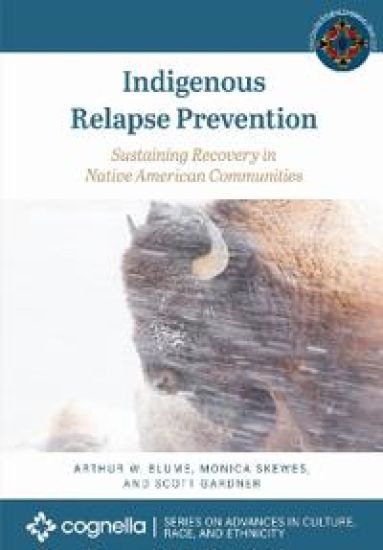
Indigenous Relapse Prevention: Sustaining Recovery in Native American Communities combines the resilient strengths of Indigenous cultural beliefs and practices with empirically supported methods to help readers better understand and address relapse processes.The text recognizes that mainstream relapse prevention programs must be adapted to better serve American Indian and Alaska Native clients. It leverages the Indigenist Relapse Prevention Model to offer a strengths-based, culturally grounded treatment model that assists individuals in overcoming threats to recovery. The model addresses Indigenous-specific issues related to substance use and recovery that are frequently not addressed in other programs, such as triggers related to racism, lateral violence, and intergenerational trauma. The program reflects an Indigenous worldview, emphasizes the role of spirituality in wellness, and is intended to restore balance and harmony in the lives of clients through an appreciation of the sacredness of Creation and self.Indigenous Relapse Prevention is part of the Cognella Series on Advances in Culture, Race, and Ethnicity. The series, co-sponsored by Division 45 of the American Psychological Association, addresses critical and emerging issues within culture, race, and ethnic studies, as well as specific topics among key ethnocultural groups.
Indigenous Relapse Prevention: Sustaining Recovery in Native American Communities

Indigenous Relapse Prevention: Sustaining Recovery in Native American Communities

Arthur W. Blume; Monica Skewes; Scott Gardner

Cognella Academic Publishing
2021
sidottu
Indigenous Relapse Prevention: Sustaining Recovery in Native American Communities combines the resilient strengths of Indigenous cultural beliefs and practices with empirically supported methods to help readers better understand and address relapse processes.The text recognizes that mainstream relapse prevention programs must be adapted to better serve American Indian and Alaska Native clients. It leverages the Indigenist Relapse Prevention Model to offer a strengths-based, culturally grounded treatment model that assists individuals in overcoming threats to recovery. The model addresses Indigenous-specific issues related to substance use and recovery that are frequently not addressed in other programs, such as triggers related to racism, lateral violence, and intergenerational trauma. The program reflects an Indigenous worldview, emphasizes the role of spirituality in wellness, and is intended to restore balance and harmony in the lives of clients through an appreciation of the sacredness of Creation and self.Indigenous Relapse Prevention is part of the Cognella Series on Advances in Culture, Race, and Ethnicity. The series, co-sponsored by Division 45 of the American Psychological Association, addresses critical and emerging issues within culture, race, and ethnic studies, as well as specific topics among key ethnocultural groups.
A New Psychology Based on Community, Equality, and Care of the Earth
Explains Native American psychology and how its unique perspectives on mind and behavior can bring a focus to better heal individual, social, and global disorders.Psychology is a relatively new discipline, with foundations formed narrowly and near-exclusively by white, European males. But in this increasingly diverse nation and world, those foundations filled with implicit bias are too narrow to best help our people and society, says author Arthur Blume, a fellow of the American Psychological Association. According to Blume, a narrowly based perspective prevents "out-of-the-box" thinking, research, and treatment that could well power greater healing and avoidance of disorders.In this text, Blume explains the Native American perspective on psychology, detailing why that needs to be incorporated as a new model for this field. A Native American psychologist, he contrasts the original culture of psychology's creators—as it includes individualism, autonomy, independence, and hierarchal relationships—with that of Native Americans in the context of communalism, interdependence, earth-centeredness, and egalitarianism. As Blume explains, psychological happiness is redefined by the reality of our interdependence rather than materialism and individualism, and how we do things becomes as important as what we accomplish.
Treating Drug Problems

Treating Drug Problems

Arthur W. Blume

John Wiley Sons Inc
2005
nidottu
Part of the new Treating Addictions series, Treating Drug Problems is full of practical information on assessing, diagnosing, and treating drug problems, and represents an invaluable tool for anyone who works with clients experiencing drug dependence or addiction. The popular series format includes assessment scales; tables, checklists, and diagrams; features such as "Dos and Don'ts" and "Important Things to Remember"; problem-solving scenarios; "Self-Improvement Techniques"; and suggested resources, including an annotated bibliography and lists of contacts such as self-help groups, residential and outpatient treatment programs, support groups, and websites.