Kirjojen hintavertailu. Mukana 12 390 323 kirjaa ja 12 kauppaa.

Kirjailija

Arturo De Hoyos

Kirjat ja teokset yhdessä paikassa: 13 kirjaa, julkaisuja vuosilta 2010-2025, suosituimpien joukossa Étienne Morin. Vertaile teosten hintoja ja tarkista saatavuus suomalaisista kirjakaupoista.

13 kirjaa

Kirjojen julkaisuhaarukka 2010-2025.

Étienne Morin

Étienne Morin

Josef Wäges; Arturo De Hoyos

Westphalia Press
2024
pokkari
tienne Morin: From the French Rite to the Scottish Rite presents a fresh perspective on the ancestor of the Ancient and Accepted Scottish Rite, the Order of the Sublime Princes of the Royal Secret from the perspective of the founder of the system himself. All extant Masonic records have been consulted and using this meta-data, a comprehensive reconstruction emerges, revealing that tienne Morin was a founding masonic figure in Saint Domingue and creator of his own high degree system, that operated for a time as a defacto Grand Lodge. Explore the symbolic rituals worked throughout the life of the colony and understand exactly how the most widespread symbolic masonic ritual, the Scottish Rite craft ritual was created and from what sources. Read the complete extant correspondance of Order of the Sublime Princes of the Royal Secret in Saint Domingue, published for the first time. Arturo de Hoyos, 33 , Grand Cross, KYCH, is Grand Archivist and Grand Historian of the Supreme Council, 33 , Southern Jurisdiction, Washington, DC, and a member of the executive staff at the House of the Temple. Josef W ges, 32 , is a Board Member of the Scottish Rite Research Society, and a Member of the Blue Friars (Masonic Authors)
El camino de la masonería

El camino de la masonería

Mark Stavish; Arturo de Hoyos; Lon Milo DuQuette

INNER TRADITIONS BEAR AND COMPANY
2025
pokkari
Guía práctica sobre los símbolos y rituales de la masonería como vía de desarrollo espiritual y personal • Recorre la historia y el significado de la masonería y sus símbolos • Ofrece reflexiones sobre distintos ámbitos de la experiencia masónica, basándose en doctrinas esotéricas y comparándolas con experiencias de la vida diaria • Aporta ejercicios y prácticas sencillas para ayudar a interiorizar y personalizar las enseñanzas presentadas, tales como el trabajo con sueños, la escritura de un diario, la meditación y la oración En esta guía práctica, Mark Stavish presenta las enseñanzas espirituales y los rituales de la masonería como un camino gradual de desarrollo espiritual y superación personal, tanto para hombres como para mujeres sin importar si son masones o no. Explora la historia y el significado de la masonería y sus símbolos –desde sus orígenes en el Templo de Salomón hasta los gremios artesanales medievales y del Renacimiento– y explica cómo la masonería promueve el crecimiento personal a través de la construcción simbólica de nuestro ser y de un templo interior de sabiduría, de la misma manera que los rituales masónicos simbolizan la construcción del templo de Salomón según las instrucciones arquitectónicas y místicas de Hiram. Basándose en doctrinas esotéricas como la Cábala, la alquimia, la geometría sagrada, la magia angelical de John Dee y los secretos de los constructores de catedrales góticas, cada capítulo aborda un área de la experiencia masónica, estableciendo un paralelismo con las experiencias que cada uno de nosotros encuentra en su propia vida. El autor proporciona prácticas sencillas para ayudar a interiorizar y personalizar las enseñanzas presentadas, entre las que se incluyen el trabajo con sueños, la escritura de un diario, la meditación, la oración y la comprensión de la arquitectura sagrada. El autor también examina la elaboración y el uso de las herramientas espirituales y simbólicas de la masonería, como el tablero de caballete o de trazado y la Cámara de Reflexión. Al proveer las herramientas para hacer de la Orden una experiencia iniciática de superación personal, el autor señala que la experiencia masónica es, en definitiva, la búsqueda humana de la autorrealización y la autoexpresión, así cada uno de nosotros podrá encontrar su lugar en el Templo de la Sabiduría.
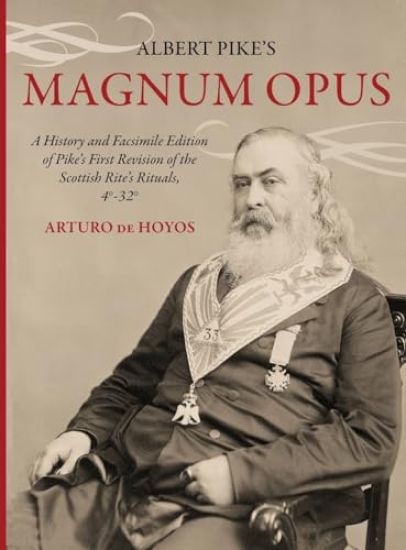
Albert Pike's Magnum Opus

Albert Pike's Magnum Opus

Arturo De Hoyos; Albert Pike

Westphalia Press
2025
sidottu
In 1855 the Scottish Rite's "Mother Supreme Council of the World" at Charleston, S.C., appointed a committee of five persons to review and standardize its initiation ceremonies and rituals. Only one person completed the task-46-year-old Albert Pike who would ultimately become the most influential Scottish Rite Mason in history. After two years he printed 100 copies of an untitled text which Albert G. Mackey called the Magnum Opus (great work). Although never officially adopted, Pike's revision was a monumental step forward, as it served as the basis for ritual revisions used worldwide. This valuable work allows us to trace the development of both Scottish Rite ritual and philosophy. The lectures which accompany the rituals were the foundation for his most famous work, Morals and Dogma. In his introduction de Hoyos, the Scottish Rite's "Grand Historian," provides an overview of the rituals used from the Scottish Rite's beginning in 1801 up to Pike's time.Arturo de Hoyos is Grand Archivist and Grand Historian of the Supreme Council, 33 , S.J., and an executive officer at the Scottish Rite's headquarters, the "House of the Temple," in Washington, D.C. The author, editor, and translator of more than 25 books and many articles, he's considered America's foremost scholar on the history, rituals, and symbolism of Scottish Rite Freemasonry, and most other Masonic orders, rites, and systems. He has travelled and lectured extensively on Freemasonry, and been featured on numerous television and radio programs, including NBC Dateline's "Secrets of the Lost Symbol," CNN's "The Situation Room," ABC Nightly News, Washington D.C.'s FOX 5 News, WAMU Radio's "Metro Connection," The History Channel, The Voice of America, and more.
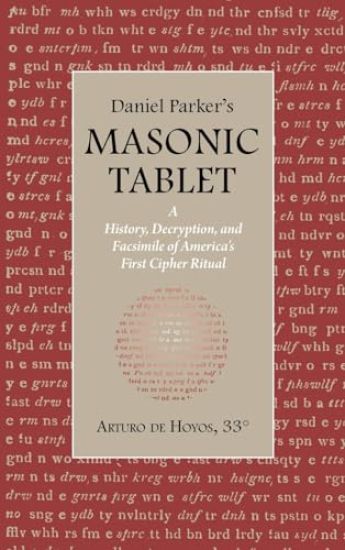
Daniel Parker's MASONIC TABLET

Daniel Parker's MASONIC TABLET

Arturo De Hoyos

Westphalia Press
2025
sidottu
Prior to the early nineteenth century American Masonic lodges didn't have standard forms of initiation rituals. Although they were generally similar, there were occasionally tremendous variations. This began to change with the publication of Thomas Smith Webb's Freemason's Monitor (1797), the first American Masonic guidebook. It offered standardized language to teach some of the fraternity's lessons. The secret initiation ceremonies, however, were taught "mouth to ear" by Webb (for a fee) to his student "lecturers," who in turn taught their own students (also for a fee). Webb's ritual was transcribed in private books, in a one-to-three lettered cipher code. In 1822 the Rev. Daniel Parker printed his own clever cipher ritual, which by-passed the need for private tutors, as a supplement to Webb's Masonic monitor. His Masonic Tablet offered the earliest full description of American Craft and York Rite rituals.The author's introduction gives a biography of Parker, and a history of his cipher. Also included are a complete facsimile of his work, and a full plaintext decryption of the earliest descriptions of the American versions of the degrees of Entered Apprentice, Fellow Craft, Master Mason, Past Master, Most Excellent Master and Royal Arch Mason. For comparative purposes, the appendices reproduce the original editions of William Morgan's Illustrations of Masonry by One of the Fraternity (1826), and A Revelation of Freemasonry (1827).
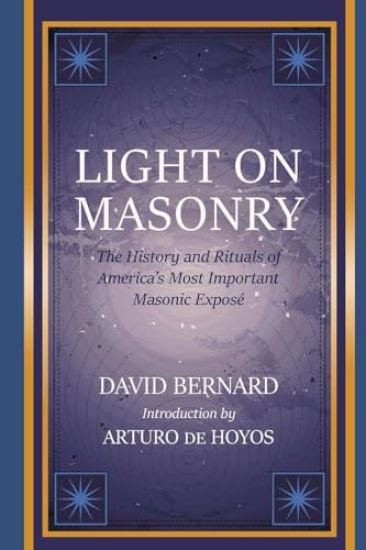
Light on Masonry

Light on Masonry

David Bernard; Arturo De Hoyos

Westphalia Press
2024
pokkari
The disappearance and presumed murder of William Morgan in 1826, by Masons, set off an intense anti-Masonic period which lasted until ca. 1842. The fraternity, which was once called the "handmaid of religion," was denounced as an institution of the devil. The Rev. David Bernard, one of the first to renounce his membership, prepared what was arguably the most important work of the period. Hailed as the "Bible of the anti-Masons," it offered the most complete exposure of American Masonic rituals ever published. Included were the secrets of the "Blue Lodge," York Rite (Royal Arch, etc.), the Scottish Rite (never before exposed), and much more, plus committee reports and testimony. In his 200-page introduction de Hoyos relied on the Scottish Rite's own archival correspondence to reveal a fascinating story of betrayal, showing how rituals were obtained for publication. He also supplemented the original work by providing the missing contemporary ritual texts, making this the most complete work on Masonic ritual of this important period in American and Masonic history.
The Path of Freemasonry

The Path of Freemasonry

Mark Stavish; Arturo de Hoyos; Lon Milo DuQuette

Inner Traditions Bear and Company
2021
pokkari
A practical guide to the symbols and rituals of Freemasonry as a path of spiritual development and self-realization• Shares the history and meaning of Freemasonry and its symbols • Offers thoughtful explorations of different areas of Masonic experience, drawing on esoteric doctrines and paralleling them with experiences found in daily life • Provides simple exercises and practices to help internalize and personalize the lessons presented, including dreamwork, journaling, meditation, and prayer In this practical guide, Mark Stavish details the spiritual lessons and rituals of Freemasonry as a step-by-step path of spiritual development and self-improvement for both Masons and non-Masons, men and women, alike. He explores the history and meaning of Freemasonry and its symbols--from its origins in the Temple of Solomon to the Medieval craft guilds to the Renaissance--and explains how the Craft promotes personal growth through the symbolic building of self and an inner Temple of Wisdom in much the same way that Masonry’s rituals symbolize the building of Solomon’s Temple in accordance with the mystical architectural instructions of Hiram. Drawing on esoteric doctrines, including the Qabala, alchemy, sacred geometry, John Dee’s angelic magic, and the secrets of the Gothic cathedral builders, each chapter addresses an area of the Masonic experience, paralleling them with experiences each of us finds in our own lives. The author provides simple practices to help internalize and personalize the lessons presented, including dreamwork, journaling, meditation, prayer, and understanding sacred architecture. The author also examines the crafting and use of the spiritual and symbolic tools of Freemasonry, such as the trestle or tracing board and the Chamber of Reflection. Providing the tools to make the Craft an initiatic experience of self-improvement, the author shows that, ultimately, the Masonic experience is the human quest for self-realization and self-expression, so that we each may find our place in the Temple of Wisdom.
North American Freemasonry

North American Freemasonry

Thomas W Jackson; Arturo De Hoyos

Plumbstone
2019
sidottu
This volume collects nearly one hundred speeches of Thomas W. Jackson, world-renowned Masonic leader. Jackson addresses all of the key issues facing North American Freemasonry today. Rooted in the Craft's traditional idealism, and grounded in a careful and pragmatic realism, Jackson's words are a powerful call to action. Featuring a foreword by Arturo de Hoyos.
American Freemasonry

American Freemasonry

Alain de Keghel; Arturo de Hoyos; Margaret C. Jacob

Inner Traditions Bear and Company
2017
sidottu
Freemasonry bears the imprint of the society in which it exists, and Freemasonry in North America is no exception. While keeping close ties to French lodges until 1913, American Freemasonry was also deeply influenced by the experiences of many early American political leaders, leading to distinctive differences from European lodges. The author investigates the racial split in American Freemasonry between black lodges and white and how, unlike French lodges, women are ineligible to become Masons in the U.S. He examines how American Freemasonry has remained deeply religious across the centuries and forbids discussion of religious or social issues in its lodges, unlike some branches of French Freemasonry, which removed belief in God as a prerequisite for membership in 1877 and whose lodges operate in some respects as philosophical debating societies. Revealing the factors that have resulted in shrinking Masonic enrollment in America, the author explores the revitalization work done by the Grand Lodge of California and sounds the call to make Freemasonry and its principles relevant to America once again.
Freemasonry's Royal Secret

Freemasonry's Royal Secret

Arturo De Hoyos

Westphalia Press
2014
pokkari
Many have heard of the Thirty-third Degree and the Scottish Rite, but lesser known is that it sprung from an equally important Masonic system. Created by the Frenchman Stephen Morin in the 1760s, the 25-degree system known as the "Order of the Royal Secret" used many of the most important Masonic degrees of the time. With its genesis in the French Caribbean, by 1764 these "high degrees" were established in New Orleans, and by 1767 they were brought to Albany, New York. Ultimately, its rituals were absorbed into the Scottish Rite at its creation in 1801. This original work, copied from a rare manuscript, provides the complete original system, from 4 Secret Master, to 25 Prince of the Royal Secret. Also included are the detached degrees of Select Master of 27 , Knight of the Royal Arch, and Grand Master Ecose, which appeared at the back of the original manuscript.
Is it True What They Say About Freemasonry?

Is it True What They Say About Freemasonry?

Arturo de Hoyos; S. Brent Morris

M. Evans Co Inc
2010
pokkari
For as long as there have been Freemasons, there has been a calculated effort to disparage and discredit them as well as their practices. But why does this incessant attack exist, and where does it originate from? In this insightful text, masons Arturo de Hoyos and S. Brent Morris explore the origins of the anti-Masonic mind-set and delve into the falsehoods on which critics have based these perennial sentiments. Confronting opponents one at a time, the authors methodically debunk the myths that have surrounded Freemasonry since its establishment, investigating the motives and misconceptions that drive these antagonists to spread deceit about Masonic traditions. With close readings and thorough research, they uncover a history of fallacies that have been handed down through the generations, and ultimately expose anti-Masonic prejudices that reach almost three hundred years into the past.