Kirjojen hintavertailu. Mukana 12 595 353 kirjaa ja 12 kauppaa.

Kirjailija

Arturo Escobar

Kirjat ja teokset yhdessä paikassa: 17 kirjaa, julkaisuja vuosilta 1992-2024, suosituimpien joukossa Territories of Difference. Vertaile teosten hintoja ja tarkista saatavuus suomalaisista kirjakaupoista.

17 kirjaa

Kirjojen julkaisuhaarukka 1992-2024.

Relationality

Relationality

Arturo Escobar; Michal Osterweil; Kriti Sharma

BLOOMSBURY PUBLISHING PLC
2024
nidottu
This important new book argues that at the root of the contemporary crisis of climate, energy, food, inequality, and meaning is a certain core presupposition that structures the ways in which we live, think, act and design: the assumption of dualism, or the fundamental separateness of things.The authors contend that the key to constructing livable worlds lies in the cultivation of ways of knowing and acting based on a profound awareness of the fundamental interdependence of everything that exists – what they refer to as relationality. This shift in paradigm is necessary for healing our bodies, ecosystems, cities, and the planet at large.The book follows two interwoven threads of argumentation: on the one hand, it explains and exemplifies the modes of operation and the dire consequences of non-relational living; on the other, it elucidates the nature of relationality and explores how it is embodied in transformative practices in multiple spheres of life.The authors provide an instructive account of the philosophical, scientific, social, and political sources of relational theory and action, with the aim of illuminating the transition from living within seemingly ineluctable ‘toxic loops’ of unrelational living (based on ontological dualism), to living within ‘relational weaves’ which we might co-create with multiple human and nonhuman others.

Relationality

Relationality

Arturo Escobar; Michal Osterweil; Kriti Sharma

BLOOMSBURY PUBLISHING PLC
2024
sidottu
This important new book argues that at the root of the contemporary crisis of climate, energy, food, inequality, and meaning is a certain core presupposition that structures the ways in which we live, think, act and design: the assumption of dualism, or the fundamental separateness of things.The authors contend that the key to constructing livable worlds lies in the cultivation of ways of knowing and acting based on a profound awareness of the fundamental interdependence of everything that exists – what they refer to as relationality. This shift in paradigm is necessary for healing our bodies, ecosystems, cities, and the planet at large.The book follows two interwoven threads of argumentation: on the one hand, it explains and exemplifies the modes of operation and the dire consequences of non-relational living; on the other, it elucidates the nature of relationality and explores how it is embodied in transformative practices in multiple spheres of life.The authors provide an instructive account of the philosophical, scientific, social, and political sources of relational theory and action, with the aim of illuminating the transition from living within seemingly ineluctable ‘toxic loops’ of unrelational living (based on ontological dualism), to living within ‘relational weaves’ which we might co-create with multiple human and nonhuman others.

Designs for the Pluriverse: Radical Interdependence, Autonomy, and the Making of Worlds
In Designs for the Pluriverse, Arturo Escobar presents a new vision of design theory and practice aimed at channeling design's world-making capacity toward ways of being and doing that are deeply attuned to justice and the Earth. Noting that most design - from consumer goods and digital technologies to built environments - currently serves capitalist ends, Escobar argues for the development of an "autonomous design" that eschews commercial and modernizing aims in favor of more collaborative and placed-based approaches. Such design attends to questions of environment, experience, and politics while focusing on the production of human experience based on the radical interdependence of all beings. Mapping autonomous design's principles to the history of decolonial efforts of indigenous and Afro-descended people in Latin America, Escobar shows how refiguring current design practices could lead to the creation of more just and sustainable social orders.
Designs and Anthropologies

Designs and Anthropologies

Arturo Escobar

University of New Mexico Press
2021
pokkari
The chapters in this captivating volume demonstrate the importance and power of design and the ubiquitous and forceful effects it has on human life within the study of anthropology. The scholars explore the interactions between anthropology and design through a cross-disciplinary approach, and while their approaches vary in how they specifically consider design, they are all centered around the design-and-anthropology relationship. The chapters look at anthropology for design, in which anthropological methods and concepts are mobilized in the design process; anthropology of design, in which design is positioned as an object of ethnographic inquiry and critique; and design for anthropology, in which anthropologists borrow concepts and practices from design to enhance traditional ethnographic forms. Collectively, the chapters argue that bringing design and anthropology together can transform both fields in more than one way and that to tease out the implications of using design to reimagine ethnography--and of using ethnography to reimagine design--we need to consider the historical specificity of their entanglements.
Pluriversal Politics

Pluriversal Politics

Arturo Escobar

Duke University Press
2020
pokkari
In Pluriversal Politics Arturo Escobar engages with the politics of the possible and how established notions of what is real and attainable preclude the emergence of radically alternative visions of the future. Reflecting on the experience, philosophy, and practice of indigenous and Afro-descendant activist-intellectuals and on current Latin American theoretical-political debates, Escobar chronicles the social movements mobilizing to defend their territories from large-scale extractive operations in the region. He shows how these movements engage in an ontological politics aimed at bringing about the pluriverse-a world consisting of many worlds, each with its own ontological and epistemic grounding. Such a politics, Escobar contends, is key to crafting myriad world-making stories telling of different possible futures that could bring about the profound social transformations that are needed to address planetary crises. Both a call to action and a theoretical provocation, Pluriversal Politics finds Escobar at his critically incisive best.
Pluriversal Politics

Pluriversal Politics

Arturo Escobar

Duke University Press
2020
sidottu
In Pluriversal Politics Arturo Escobar engages with the politics of the possible and how established notions of what is real and attainable preclude the emergence of radically alternative visions of the future. Reflecting on the experience, philosophy, and practice of indigenous and Afro-descendant activist-intellectuals and on current Latin American theoretical-political debates, Escobar chronicles the social movements mobilizing to defend their territories from large-scale extractive operations in the region. He shows how these movements engage in an ontological politics aimed at bringing about the pluriverse-a world consisting of many worlds, each with its own ontological and epistemic grounding. Such a politics, Escobar contends, is key to crafting myriad world-making stories telling of different possible futures that could bring about the profound social transformations that are needed to address planetary crises. Both a call to action and a theoretical provocation, Pluriversal Politics finds Escobar at his critically incisive best.
Pluriverse – A Post–Development Dictionary

Pluriverse – A Post–Development Dictionary

Ashish Kothari; Ariel Salleh; Arturo Escobar; Federico Demaria; Alberto Acosta

Tulika Book
2019
sidottu
Pluriverse: A Post-Development Dictionary contains over one hundred essays on transformative initiatives and alternatives to the currently dominant processes of globalized development, including its structural roots in modernity, capitalism, state domination, and masculinist values. It offers critical essays on mainstream solutions that ‘greenwash’ development and presents radically different worldviews and practices from around the world that point to an ecologically wise and socially just world.
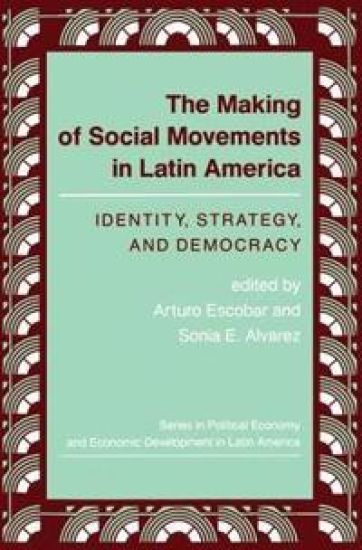
The Making Of Social Movements In Latin America

The Making Of Social Movements In Latin America

Arturo Escobar; Sonia E Alvarez

Routledge
2019
sidottu
During the last decade, Latin American social movements have brought about a profound transformation in the nature and practice of protest and collective action. This book surveys the full spectrum of movements in Latin America today-from peasant and squatter movements to women's and gay movements, as well as environmental and civic movements - exa
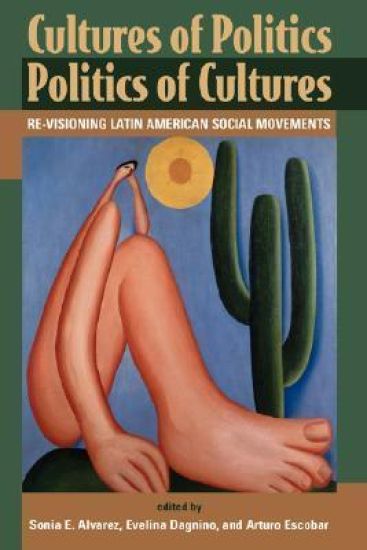
Cultures Of Politics/politics Of Cultures

Cultures Of Politics/politics Of Cultures

Sonia E Alvarez; Evelyn Dagnino; Arturo Escobar

Routledge
2019
sidottu
Investigating the complex interrelations between culture and politics in a wide range of social movements in Latin America, this book focuses on the cultural politics enacted by social movements as they struggle for new visions and practices of citizenship, democracy, social relations, and development. The volume explores the potential of these cul
Designs for the Pluriverse

Designs for the Pluriverse

Arturo Escobar

Duke University Press
2018
sidottu
In Designs for the Pluriverse Arturo Escobar presents a new vision of design theory and practice aimed at channeling design's world-making capacity toward ways of being and doing that are deeply attuned to justice and the Earth. Noting that most design-from consumer goods and digital technologies to built environments-currently serves capitalist ends, Escobar argues for the development of an “autonomous design” that eschews commercial and modernizing aims in favor of more collaborative and placed-based approaches. Such design attends to questions of environment, experience, and politics while focusing on the production of human experience based on the radical interdependence of all beings. Mapping autonomous design’s principles to the history of decolonial efforts of indigenous and Afro-descended people in Latin America, Escobar shows how refiguring current design practices could lead to the creation of more just and sustainable social orders.
Designs for the Pluriverse

Designs for the Pluriverse

Arturo Escobar

Duke University Press
2018
pokkari
In Designs for the Pluriverse Arturo Escobar presents a new vision of design theory and practice aimed at channeling design's world-making capacity toward ways of being and doing that are deeply attuned to justice and the Earth. Noting that most design-from consumer goods and digital technologies to built environments-currently serves capitalist ends, Escobar argues for the development of an “autonomous design” that eschews commercial and modernizing aims in favor of more collaborative and placed-based approaches. Such design attends to questions of environment, experience, and politics while focusing on the production of human experience based on the radical interdependence of all beings. Mapping autonomous design’s principles to the history of decolonial efforts of indigenous and Afro-descended people in Latin America, Escobar shows how refiguring current design practices could lead to the creation of more just and sustainable social orders.
Encountering Development

Encountering Development

Arturo Escobar

Princeton University Press
2011
pokkari
How did the industrialized nations of North America and Europe come to be seen as the appropriate models for post-World War II societies in Asia, Africa, and Latin America? How did the postwar discourse on development actually create the so-called Third World? And what will happen when development ideology collapses? To answer these questions, Arturo Escobar shows how development policies became mechanisms of control that were just as pervasive and effective as their colonial counterparts. The development apparatus generated categories powerful enough to shape the thinking even of its occasional critics while poverty and hunger became widespread. "Development" was not even partially "deconstructed" until the 1980s, when new tools for analyzing the representation of social reality were applied to specific "Third World" cases. Here Escobar deploys these new techniques in a provocative analysis of development discourse and practice in general, concluding with a discussion of alternative visions for a postdevelopment era. Escobar emphasizes the role of economists in development discourse--his case study of Colombia demonstrates that the economization of food resulted in ambitious plans, and more hunger. To depict the production of knowledge and power in other development fields, the author shows how peasants, women, and nature became objects of knowledge and targets of power under the "gaze of experts." In a substantial new introduction, Escobar reviews debates on globalization and postdevelopment since the book's original publication in 1995 and argues that the concept of postdevelopment needs to be redefined to meet today's significantly new conditions. He then calls for the development of a field of "pluriversal studies," which he illustrates with examples from recent Latin American movements.
Territories of Difference

Territories of Difference

Arturo Escobar

Duke University Press
2008
sidottu
In Territories of Difference, Arturo Escobar, author of the widely debated book Encountering Development, analyzes the politics of difference enacted by specific place-based ethnic and environmental movements in the context of neoliberal globalization. His analysis is based on his many years of engagement with a group of Afro-Colombian activists of Colombia’s Pacific rainforest region, the Proceso de Comunidades Negras (PCN). Escobar offers a detailed ethnographic account of PCN’s visions, strategies, and practices, and he chronicles and analyzes the movement’s struggles for autonomy, territory, justice, and cultural recognition. Yet he also does much more. Consistently emphasizing the value of local activist knowledge for both understanding and social action and drawing on multiple strands of critical scholarship, Escobar proposes new ways for scholars and activists to examine and apprehend the momentous, complex processes engulfing regions such as the Colombian Pacific today.Escobar illuminates many interrelated dynamics, including the Colombian government’s policies of development and pluralism that created conditions for the emergence of black and indigenous social movements and those movements’ efforts to steer the region in particular directions. He examines attempts by capitalists to appropriate the rainforest and extract resources, by developers to set the region on the path of modernist progress, and by biologists and others to defend this incredibly rich biodiversity “hot-spot” from the most predatory activities of capitalists and developers. He also looks at the attempts of academics, activists, and intellectuals to understand all of these complicated processes. Territories of Difference is Escobar’s effort to think with Afro-Colombian intellectual-activists who aim to move beyond the limits of Eurocentric paradigms as they confront the ravages of neoliberal globalization and seek to defend their place-based cultures and territories.
Territories of Difference

Territories of Difference

Arturo Escobar

Duke University Press
2008
pokkari
In Territories of Difference, Arturo Escobar, author of the widely debated book Encountering Development, analyzes the politics of difference enacted by specific place-based ethnic and environmental movements in the context of neoliberal globalization. His analysis is based on his many years of engagement with a group of Afro-Colombian activists of Colombia’s Pacific rainforest region, the Proceso de Comunidades Negras (PCN). Escobar offers a detailed ethnographic account of PCN’s visions, strategies, and practices, and he chronicles and analyzes the movement’s struggles for autonomy, territory, justice, and cultural recognition. Yet he also does much more. Consistently emphasizing the value of local activist knowledge for both understanding and social action and drawing on multiple strands of critical scholarship, Escobar proposes new ways for scholars and activists to examine and apprehend the momentous, complex processes engulfing regions such as the Colombian Pacific today.Escobar illuminates many interrelated dynamics, including the Colombian government’s policies of development and pluralism that created conditions for the emergence of black and indigenous social movements and those movements’ efforts to steer the region in particular directions. He examines attempts by capitalists to appropriate the rainforest and extract resources, by developers to set the region on the path of modernist progress, and by biologists and others to defend this incredibly rich biodiversity “hot-spot” from the most predatory activities of capitalists and developers. He also looks at the attempts of academics, activists, and intellectuals to understand all of these complicated processes. Territories of Difference is Escobar’s effort to think with Afro-Colombian intellectual-activists who aim to move beyond the limits of Eurocentric paradigms as they confront the ravages of neoliberal globalization and seek to defend their place-based cultures and territories.
Political Ecology Across Spaces, Scales, and Social Groups

Political Ecology Across Spaces, Scales, and Social Groups

Susan Paulson; Lisa L. Gezon; Arturo Escobar; Andrew Gardner; Mette Brodgen; James Greenberg; Hanne Svarstad; Michael Dove; Alf Hornborg; Charles Stevens; Josiah Heyman; Fiona Mackenzie; Anne Ferguson; William Derman

Rutgers University Press
2004
nidottu
Environmental issues have become increasingly prominent in local struggles, national debates, and international policies. In response, scholars are paying more attention to conventional politics and to more broadly defined relations of power and difference in the interactions between human groups and their biophysical environments. Such issues are at the heart of the relatively new interdisciplinary field of political ecology, forged at the intersection of political economy and cultural ecology.This volume provides a toolkit of vital concepts and a set of research models and analytic frameworks for researchers at all levels. The two opening chapters trace rich traditions of thought and practice that inform current approaches to political ecology. They point to the entangled relationship between humans, politics, economies, and environments at the dawn of the twenty-first century and address challenges that scholars face in navigating the blurring boundaries among relevant fields of enquiry. The twelve case studies that follow demonstrate ways that culture and politics serve to mediate human-environmental relationships in specific ecological and geographical contexts. Taken together, they describe uses of and conflicts over resources including land, water, soil, trees, biodiversity, money, knowledge, and information; they exemplify wide-ranging ecological settings including deserts, coasts, rainforests, high mountains, and modern cities; and they explore sites located around the world, from Canada to Tonga and cyberspace.
Cultures Of Politics/politics Of Cultures

Cultures Of Politics/politics Of Cultures

Sonia E Alvarez; Evelyn Dagnino; Arturo Escobar

Westview Press Inc
1998
nidottu
This book argues the relationship between culture and politics can be productively explored by delving into the nature of the cultural politics enacted by Latin American social movements and by examining the potential of this cultural politics for fostering social change.
The Making Of Social Movements In Latin America

The Making Of Social Movements In Latin America

Arturo Escobar; Sonia E Alvarez

Westview Press Inc
1992
nidottu
This book, paying attention to the axes of identity, strategy, and democracy, grew out of the authors' shared and growing interest in contemporary social movements and the vast theoretical literature on these movements produced during the 1980s, particularly in Latin America and Western Europe.