Kirjojen hintavertailu. Mukana 12 595 353 kirjaa ja 12 kauppaa.

Kirjailija

Arvind Sharma

Kirjat ja teokset yhdessä paikassa: 37 kirjaa, julkaisuja vuosilta 1990-2026, suosituimpien joukossa Success Mindsets. Vertaile teosten hintoja ja tarkista saatavuus suomalaisista kirjakaupoista.

37 kirjaa

Kirjojen julkaisuhaarukka 1990-2026.

Problematizing Religious Freedom

Problematizing Religious Freedom

Arvind Sharma

Springer
2011
sidottu
The concept of religious freedom is the favoured modern human rights concept, with which the modern world hopes to tackle the phenomenon of religious pluralism, as our modern existence in an electronically shrinking globe comes to be increasingly characterised by this phenomenon. To begin with, the concept of religious freedom, as embodied in Article 18 of the Universal Declaration of Human Rights, seems self-evident in nature. It is the claim of this book, however, that although emblematic on the one hand, the concept is also problematic on the other, and the implications of the concept of religious freedom are far from self-evident, despite the ready acceptance the term receives as embodying a worthwhile goal. This book therefore problematizes the concept along legal, constitutional, ethical and theological lines, and especially from the perspective of religious studies, so that religious freedom in the world could be enlarged in a way which promotes human flourishing.
One Religion Too Many

One Religion Too Many

Arvind Sharma

State University of New York Press
2011
pokkari
Enlightening encounters with the world's religions from a Hindu perspective.One Religion Too Many is a Hindu pilgrim's progress through the world's religious traditions. An eminent scholar of comparative religion, Arvind Sharma provides a first-hand account of how he came to be a party to the dialogue of religions-first with his own religion, then with the comparative study of religion, and finally with the religious universalism he has come to espouse because of this heritage. Starting with an account of the Hinduism of his family in Varanasi, India, Sharma then heads west, finding himself dumbfounded by the Christian Eucharist, wondering if there is a "Hinjew Connection," grappling with Zen in Massachusetts, and pressed into service to teach about Islam. Sharma writes with a light touch, but even when his encounters and perceptions are amusing, they are always insightful and thought-provoking. Western readers, in particular, will enjoy seeing their own traditions through the eyes of an Easterner who has come to know them well. Sharma's ultimate perspective on religious universalism is a welcoming vision for the globalizing world of the twenty-first century.
A Primal Perspective on the Philosophy of Religion
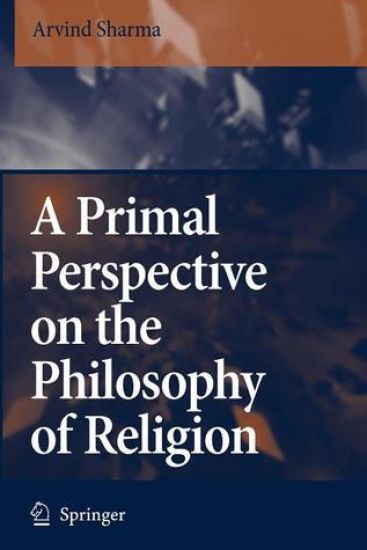
What am I trying to accomplish through the exercise which I have undertaken, namely, to examine the philosophy of religion in the light of primal religions? If to choose someone else’s expression to characterize one’s own intellectual endeavour is an indication of one’s own lack of imagination, then I must plead guilty to that charge; but not to that of lack of gratitude, for I have to thank Robin Horton for describing, better than I can, what I have attempted in the book. It is an exercise in what he calls “translational understanding. ” I quote him now: By ‘translational understanding’, I mean the kind of understanding of a particular thought-system that results from the successful translation of the language and conceptual system that embody it into terms of a language and conceptual system that currently enjoy ‘world’ status. In talking of translation, of course, I am not just talking of the provision of dictionary equivalents for individual words or sentences. I am talking about finding a ‘world-language’ equivalent for a whole realm of discourse, and of showing, in ‘world-language’ terms, what the point of that realm of discourse is in the life of the people who use it. Translation, in this broader sense, can be very arduous. There may be no realm of discourse in the ‘world’ language that exactly fits the bill. We may have to bend and refashion existing realms, and even redefine their guiding intentions.
The World's Religions

The World's Religions

Arvind Sharma

Augsburg Fortress
2010
pokkari
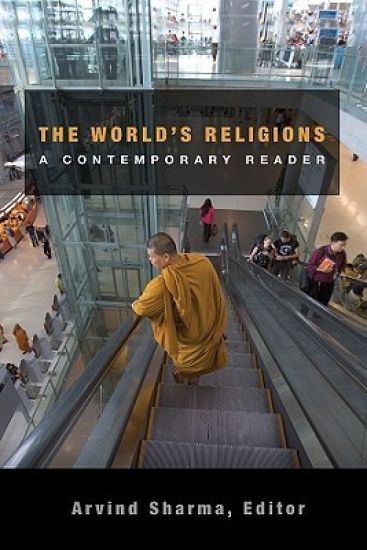
Watch Arvind Sharma discuss his new book, The World's ReligionsThis wide-ranging reader combines some of the best and most valuable contemporary perspectives from leading and significant writers, teachers, and thinkers who together address critical challenges and opportunities for the world's religions in a post 9/11 world. Edited by Arvind Sharma and organized by topic, the essays in this reader consider broad questions such as, What influence does religion have on contemporary life? Can religion destroy or preserve us? Could the world's religions join together as a force for good? The thematic arrangement of topics includes diverse religious perspectives on: pluralism, human rights, war, peace, globalization, science, spirituality and other topics. A special foreword by John Hick speaks to the value of this reader in broadening our needed understanding of religion.
Hindu Narratives on Human Rights

Hindu Narratives on Human Rights

Arvind Sharma

Praeger Publishers Inc
2009
sidottu
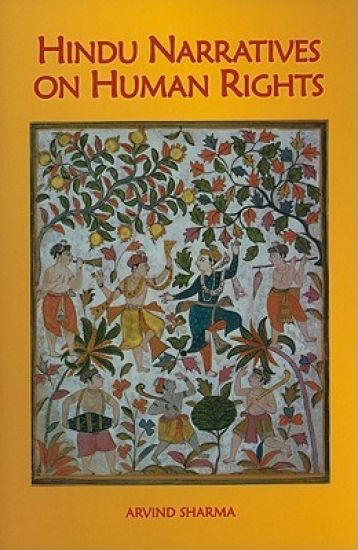
This pioneering work examines the existing understanding of Hinduism in relation to human rights discourse. Written by a leading Hindu scholar, Hindu Narratives on Human Rights is organized around specific rights, such as the right to own property, the rights of children, women's rights, and animal rights. Within these categories and in light of the questions they raise, the book provides a guided tour of Hindu narratives on ethics, ranging from the famous religious epics, the Mahabharata and the Ramayana, to various forms of secular literature drawn from almost a thousand years of Indic civilization. The realization that Hindu ethical discourse is narrative rather than propositional is a relatively recent one. Hence, the prevailing tendency in the West has been to overlook it in the context of the discussion of human rights. This book was written to correct that oversight. It shows that the presence of the universal in the particular in Hindu stories is a key to understanding Hindu thinking about human rights—and it indicates ways in which Hindu ethical discourse can interact creatively with modern human rights discourse.
Part of the Problem, Part of the Solution

Part of the Problem, Part of the Solution

Arvind Sharma

Praeger Publishers Inc
2008
sidottu
Part of the Problem, Part of the Solution unleashes religion's true potential to do good by bridging the modern divide between religion and an ever pervasive secular society, a notion often loathed by individuals on both sides of the religious aisle. As noted scholars such as Huston Smith, Karen Armstrong, Rosemary Radford Reuther, Harvey Cox, and Seyyed Hossein Nasr explain throughout the conversations related in this text, people of varied and conflicting faiths can come together to engage in civil, useful dialogue, and members of quite varied religious traditions can work together for the benefit of all humankind and can help defuse the world's current epidemic of violence. By showing how religion is an instrument in human affairs that can be tuned for both good and evil, this book lays the groundwork for an important cooperative effort to blossom. Furthermore, today's trend of associating all religion with suspicion has spiraled into a dangerous situation-that in discarding all religion because some of it causes harm, one risks throwing away the baby with the bathwater. Books such as When Religion Becomes Evil by Charles Kimball, The God Delusion by Richard Dawkins, The End of Faith by Sam Harris, Breaking the Spell: Religion as a Natural Phenomenon by Daniel Dennett, and God is Not Great: How Religion Poisons Everything by Christopher Hitchens have created quite a sensation, leaving the impression that religion, at its root, brings more heartache than handshakes. This development has dismayed many scholars, students, and practitioners of religion, of all faiths, who believe that only half the story-the negative half-is being told. Although demonstrating that certain religious beliefs have surely contributed to the violence that has occurred in this century, this book also explores how other religious teachings can help solve the epidemic of violence.
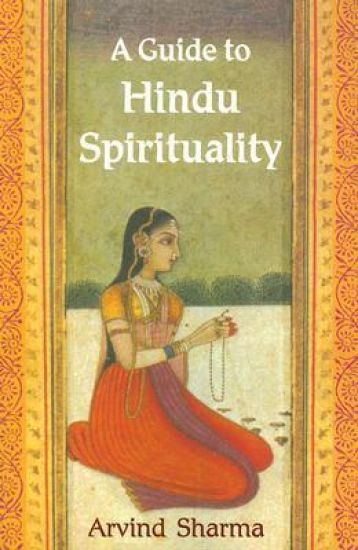
A Guide to Hindu Spirituality

A Guide to Hindu Spirituality

Arvind Sharma

World Wisdom Books
2006
nidottu
There is more to life than our ordinary experience of it and "A Guide to Hindu Spirituality" is intended to serve as a guide to help us explore that missing dimension. Spirituality is often viewed as something mysterious and Hindu spirituality even more so. But its central claim is really quite simple: that our normal life does not exhaust the experience of reality. The word spirituality is simply a signpost pointing to this unexplored religion. The various religions of the world provide their own roadmaps for exploring this region. "A Guide to Hindu Spirituality", by Arvind Sharma, presents one such roadmap based on a well-known philosophical system of the Hindu tradition.
A Primal Perspective on the Philosophy of Religion

A Primal Perspective on the Philosophy of Religion

Arvind Sharma

Springer-Verlag New York Inc.
2006
sidottu
What am I trying to accomplish through the exercise which I have undertaken, namely, to examine the philosophy of religion in the light of primal religions? If to choose someone else’s expression to characterize one’s own intellectual endeavour is an indication of one’s own lack of imagination, then I must plead guilty to that charge; but not to that of lack of gratitude, for I have to thank Robin Horton for describing, better than I can, what I have attempted in the book. It is an exercise in what he calls “translational understanding. ” I quote him now: By ‘translational understanding’, I mean the kind of understanding of a particular thought-system that results from the successful translation of the language and conceptual system that embody it into terms of a language and conceptual system that currently enjoy ‘world’ status. In talking of translation, of course, I am not just talking of the provision of dictionary equivalents for individual words or sentences. I am talking about finding a ‘world-language’ equivalent for a whole realm of discourse, and of showing, in ‘world-language’ terms, what the point of that realm of discourse is in the life of the people who use it. Translation, in this broader sense, can be very arduous. There may be no realm of discourse in the ‘world’ language that exactly fits the bill. We may have to bend and refashion existing realms, and even redefine their guiding intentions.
Sleep as a State of Consciousness in Advaita Vedanta

Sleep as a State of Consciousness in Advaita Vedanta

Arvind Sharma

State University of New York Press
2004
sidottu
Explores deep sleep (susupti), one of the three states of consciousness in Advaita Vedanta, and the major role it plays in this philosophy. Indian philosophy bases itself on three states of consciousness: waking, dreaming, and deep sleep. Deep sleep, or susupti, plays an important role in Advaita Vedanta, the major philosophical school that advocates a doctrine of pure consciousness. Explaining and savoring this paradox, this book shows how the concept of deep sleep can be used in Advaita Vedanta to reveal a philosophical insight, validate an argument, illustrate a moral, or adorn a tale. Arvind Sharma explores why sleep is a phenomenon that philosophers should be interested in and examines it in classical Hindu religious texts, including the Upanisads, and in foundational, early, and modern Advaita Vedanta.
To the Things Themselves

To the Things Themselves

Arvind Sharma; Jacques Waardenburg

De Gruyter
2001
sidottu
Sinceits founding by Jacques Waardenburg in 1971, Religion and Reason has been a leading forum for contributions on theories, theoretical issues and agendas related to the phenomenon and the study of religion. Topics include (among others) category formation, comparison, ethnophilosophy, hermeneutics, methodology, myth, phenomenology, philosophy of science, scientific atheism, structuralism, and theories of religion. From time to time the series publishes volumes that map the state of the art and the history of the discipline.
The Philosophy of Religion and Advaita Vedanta

The Philosophy of Religion and Advaita Vedanta

Arvind Sharma

Pennsylvania State University Press
1995
pokkari
Philosophy of religion, as we know it today, emerged in the West and has been shaped by Western philosophical and theological trends, while the philosophical tradition of India flowed along its own course until the late nineteenth century, when active, if tentative, contact was established between the West and the East. This book provides a definite focus to this interaction by investigating issues raised in Western philosophy of religion from the perspective of Advaita Vedanta, the influential school of Indian thought. In promoting the emergence of a cross-cultural philosophy of religion, Arvind Sharma focuses on John H. Hick and his well-known work The Philosophy of Religion as representative of modern Western philosophy of religion, and on Sankara, along with his modern successors such as M. Hiriyanna and S. Radhakrishnan, as representative of Advaita Vedanta.
God, Truth and Reality

God, Truth and Reality

Arvind Sharma

Palgrave Macmillan
1993
nidottu
All arts and sciences, in their own way, ultimately try to come to grips with reality. What sets philosophy, theology and religion apart is that they grapple with ultimate reality. Over the decades spanned by John Hick's life, in the course of this grappling (reminiscent of Jacob's nocturnal encounter with the angel) philosophy became analytic, theology dialogical and religion comparative along one line of development. In these essays, written in honour of Professor Hick, leading world scholars in these fields share their most recent insights. They are, so to speak, postcards from the cutting edge.
God, Truth and Reality

God, Truth and Reality

Arvind Sharma

Palgrave Macmillan
1992
sidottu
All arts and sciences, in their own way, ultimately try to come to grips with reality. What sets philosophy, theology and religion apart is that they grapple with ultimate reality. Over the decades spanned by John Hick's life, in the course of this grappling (reminiscent of Jacob's nocturnal encounter with the angel) philosophy became analytic, theology dialogical and religion comparative along one line of development. In these essays, written in honour of Professor Hick, leading world scholars in these fields share their most recent insights. They are, so to speak, postcards from the cutting edge.