Kirjojen hintavertailu. Mukana 12 595 353 kirjaa ja 12 kauppaa.

Kirjailija

Ashar Najmi

Kirjat ja teokset yhdessä paikassa: 69 kirjaa, julkaisuja vuosilta 2022-2024, suosituimpien joukossa Naya Hindustan Purana Musalman. Vertaile teosten hintoja ja tarkista saatavuus suomalaisista kirjakaupoista.

69 kirjaa

Kirjojen julkaisuhaarukka 2022-2024.

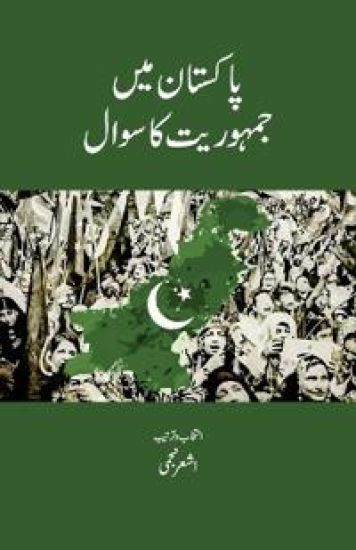
Pakistan Mein Jamhooriyat ka Sawaal
What are the factors that have contributed to the lack of democratic advancement in Pakistan? One possible explanation is straightforward: Pakistan has yet to develop a social structure conducive to democracy. However, the situation is further complicated by the fact that the aristocracy on occasion displays a nascent inclination towards a form of democracy, largely as a result of sustained pressure from the general public. In such circumstances, when dictatorship replaces the ostensible democracy and dismisses it, the people, intellectuals, and especially progressives maintain that the solution to the problems lies exclusively in democracy. Even if it is an ineffective and unsustainable system, it is preferable to dictatorship. It is therefore imperative that efforts be made to revive democracy. It is also necessary to consider why the democratic experiment fails repeatedly. It appears that whenever there is a demand for democracy, a fragile system emerges on the political landscape, presenting itself as a democratic entity for a brief period. However, a system that lacks historical legitimacy ultimately collapses, resulting in a recurrence of chaos. This phenomenon is evident in Pakistan, where the country continues to grapple with persistent challenges.
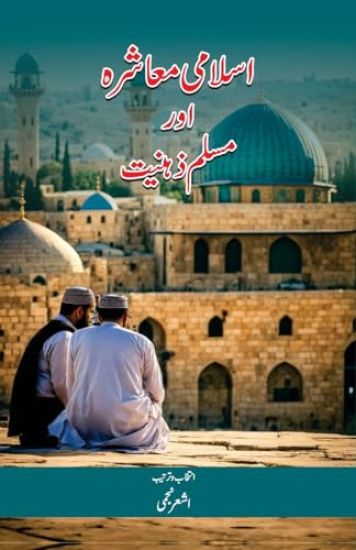
Isalmi Muashra Aur Muslim Zehniyat
It may be challenging to accept, but a comprehensive examination of Muslim society provides compelling evidence that we are on the verge of a "new religion" that has emerged with an old name and a radically different subject matter. It may be surprising to learn that, in the present era, Muslims have made sufficient intellectual progress to the extent that they are able to perceive the incongruity between the teachings of their faith and the realities of modern life. The development of reason has given rise to a new group of apologists among Muslims. This has not only led to a shift away from traditional Islamic studies such as biography, history, hadith, jurisprudence, and even logic, but has also prompted the adoption of a rational interpretation of the Quran. This approach aims to align Islamic beliefs with modern human sciences, ensuring their continued relevance in the modern era. This is why, in the present era, it is insufficient to be identified as a Muslim; many of us are reluctant to do so. Instead, we tend to self-identify as "Islamists," "liberal Muslims," "secular Muslims," and "free thinkers," which is indicative of our willingness to embrace a more nuanced and flexible understanding of our identity. In the present era, we find ourselves in a state of uncertainty, unable to determine our identity and direction. At times, we have rejected the hadiths, the historical record, the principles of jurisprudence, the traditional interpretations of the Quran, and even the dictionary translations of the divine word. We have embraced the tenets of the modern era, including democracy, secularism, patriotism, socialism, and communism, yet we remain uncertain and hesitant. Despite our efforts, we have been unable to effect changes in ourselves; instead, we have merely altered our religious affiliation. Over the course of centuries, significant efforts have been made to refine the historical and geographical aspects of national identity. In this process, the concept of geography has become increasingly fragmented. As history progresses from the distant past, it becomes increasingly fragmented.
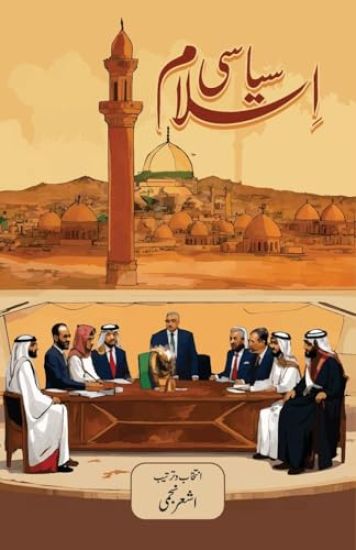
Siyasi Islam

Siyasi Islam

Ashar Najmi

UNKNOWN
2024
nidottu
The term "political Islam" has gained considerable currency in recent times. It is used to denote the manner in which religion is employed in the political sphere and the ramifications of such an employment. A review of historical evidence reveals that the nexus between religion and politics is not a novel phenomenon. In nearly every major civilization throughout history, rulers have employed religion for political purposes, utilizing it as a means of justifying their authority.In this regard, Muslim rulers also employed Islam for their political purposes. Scholars and jurists also occupied prominent roles within the state apparatus during periods of Muslim rule. Consequently, they endeavored to enhance the authority of the rulers and legitimized their decrees through religious justifications, thereby fostering compliance and allegiance among the populace. Historical evidence indicates that when a ruler required a fatwa pertaining to his personal or political affairs, the muftis and jurists promptly issued the desired fatwa and provided religious justification for the ruler's actions and orders. To illustrate, when Akbar desired to make more than four wives permissible from a religious standpoint, the Maliki judge ruled them lawful under Maliki jurisprudence and promptly resolved the issue. It is notable that following this fatwa, Akbar promptly dismissed the judge in order to prevent other princes from exploiting it and to preclude the establishment of a precedent allowing for more than four wives. A substantial number of such fatwas exist in historical records, in which the appropriation of power, the killing of rebels, the expenditure of royal funds from the treasury, and the initiation of warfare with both Muslim and non-Muslim entities have been deemed to be in accordance with religious teachings. In consequence, throughout history, those of a politically powerful disposition have made use of religion for their own interests and desires.
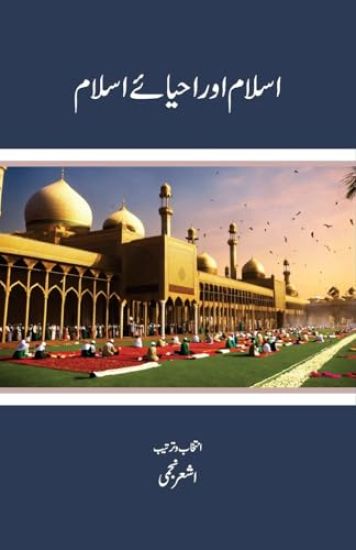
Islam Aur Ahya-e-Islam

Islam Aur Ahya-e-Islam

Ashar Najmi

UNKNOWN
2024
nidottu
In each successive era, there has been a tendency for individuals to revert to the tenets of their religious traditions and the original teachings of their faiths. For example, in India, Swami Dayanand Sarasvati advanced the slogan "Back to Vedas." In conclusion, the evolutionary history of religions demonstrates that in every religion, there have been instances of religious revival. These have manifested in various forms, including reformist, renewalist, and even militant efforts. These have been made either to create space for new changes within the respective religion or to reinvigorate old traditions, with the aim of providing a declining, outdated, and decrepit society with a new lease on life. Nevertheless, it is pertinent to inquire whether this aspiration has ever been actualized.With regard to the revival of Islam, the existing Urdu literature on the subject is largely narrative in style, written with a sense of devotion and dedication. However, the tone is defensive in response to critics and tends to be apologetic. To date, few have addressed this subject in a purely objective, analytical, and critical manner. Consequently, the style of some of the articles may appear unfamiliar to Urdu readers. However, all such writings are based on information and interpretation, sometimes embellished with allusions and sometimes with explicit references.
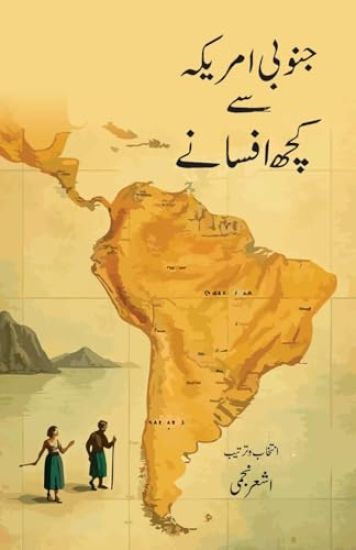
Janoobi America Se Kuchh Afsane
Southern United States literature consists of American literature written about the Southern United States or by writers from the region. This selection encompasses fiction (short stories) from a multitude of regions within Southern America including Columbia, Argentina. Peru, Brazil, Uruguay and Paraguay.
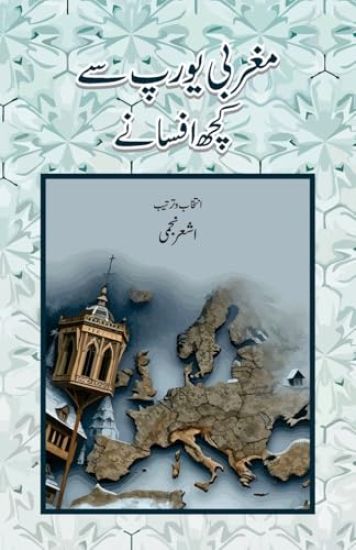
Maghrabi Europe Se Kuchh Afsane
Western literature, also known as European literature, The best of Western literature is considered to be the Western canon. The list of works in the Western canon varies according to the critic's opinions on Western culture and the relative importance of its defining characteristics.This selection encompasses fiction (short stories) from a multitude of regions within Western Europe, including France, Germany, Austria, Holland..
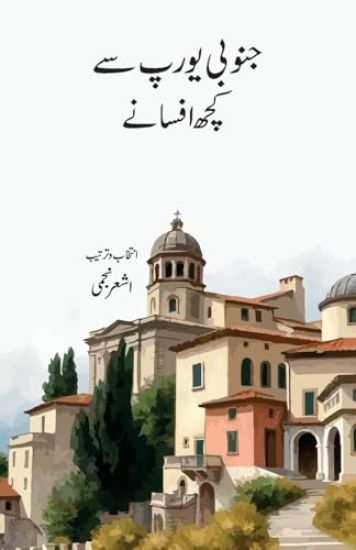
Janoobi Europe Se Kuchh Afsane
Southern Europe is the southern region of Europe. 1] It is also known as Mediterranean Europe. This selection encompasses fiction (short stories) from a multitude of regions within West Asia, including Greece, Croatia, Italy, Portugal, Albania, Spain, Estonia and Serbia.
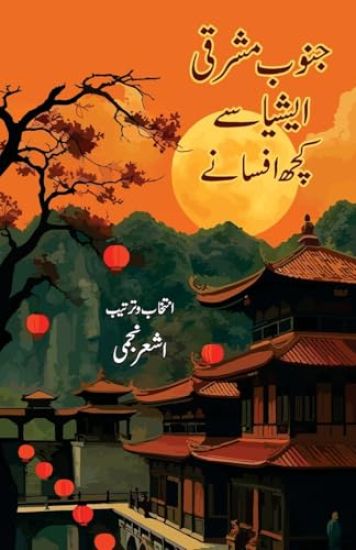
Janoob Mashriqi Asia Se Kuchh Afsane
From the point of view of its "classical" literatures, Southeast Asia can be divided into three major regions: (1) the Sanskrit region of Cambodia and Indonesia; (2) the region of Burma where Pali, a dialect related to Sanskrit, was used as a literary and religious language; and (3) the Chinese region of Vietnam.This selection includes fiction (short stories) from several regions in Southeast Asia, including Singapore, Indonesia, the Philippines, Taiwan, Burma, Malaysia, Vietnam, and Thailand.
Shumali Europe Se Kuchh Afsane
Northern European literature, also known as Scandinavian or Nordic literature, is written in the languages of the Nordic countries, which include: Denmark, Finland, Iceland, Norway, and Sweden.This selection encompasses fiction (short stories) from a multitude of regions within Northern Europe, including England, Ireland, Finland, Denmark, Norway, Sweden and Iceland..
Janoobi Asia Se Kuchh Afsane

Janoobi Asia Se Kuchh Afsane

Ashar Najmi

UNKNOWN
2024
nidottu
South Asia has many different languages that have been spoken due to its size and how long people have been inhabiting it. This has caused the region to be the most linguistically diverse region in the planet. South Asia has many significant authors that shaped the postcolonial period and response to the British establishment in the subcontinent. Modern South Asian literature has a deep focus on independence from Britain, mainly expressed in fiction, this literature commonly discusses the partition of India and how different South Asian nations, religions, and cultures interact with each other. Countries to which South Asian literature's writers are linked include India, Pakistan, Bangladesh, Sri Lanka, Afghanistan and Nepal.
Shumali America Se Kuchh Afsane
Northern America is the northernmost subregion of North America as well as the northernmost region in the Americas. The boundaries may be drawn significantly differently depending on the source of the definition. In one definition, it lies directly north of Middle America.This selection encompasses fiction (short stories) from a multitude of regions within West Asia, including Canada, Mexico, Cuba, Guatemala and Dominican Republic.
Maghrabi Asia Se Kuchh Afsane
Much as during the Persian Empire, political instability and changes in power led to a diverse and independent culture of writing. Continuity in all genres, writing systems, and languages remains the most important characteristic of Western Asian literature at least to the beginning of the Christian era.This selection encompasses fiction (short stories) from a multitude of regions within West Asia, including Iran, Turkey, Lebanon, Saudi Arabia, Syria, Georgia, Kuwait, Abu Dhabi, Israel, Palestine, Iraq, and others.
Kuchh Amriki Afsane

Kuchh Amriki Afsane

Ashar Najmi

UNKNOWN
2024
nidottu
American literature is literature written or produced in the United States and in the colonies that preceded it. The American literary tradition is part of the broader tradition of English-language literature but also includes literature produced in languages other than English.
Saqafati Muzahmat Aur Muashra
The literature that is currently emerging from around the globe is, in essence, a reflection of a left-of-center identity. The most prominent authors in the global literary landscape, whose works have achieved international renown in the English language, hail from the Third World. Moreover, there are individuals with left-wing affiliations. Similarly, the literary theory that has become the most discussed in the world, and which every English department is challenged to teach, is also a theory associated with the left.What is the curriculum in the United States and Canada? Notable figures in this field include Soviet semi-logists Valentin, Luk cs, Gramsci, Raymond Williams, and Terry Eagleton, as well as Benjamin. These individuals are either aligned with Marxism or draw inspiration from Marxist thought, as evidenced by the influence of Adorno and others.Consequently, the same American and French universities that have eliminated literary theory from literary criticism have instead embraced Marxism as their primary doctrine, derived from the left.Consequently, a substantial cohort of cultural intelligentsia is emerging. A global intellectual class has emerged that is primarily Marxist in orientation. It would be inaccurate to describe postmodernism as a complete right-wing phenomenon. In his writings, Foucault asserts that individuals are unaware of this perspective. I do not utilize quotation marks when referencing Marx.One might inquire as to the nature of the right wing of postmodernism. It would appear that this entity has risen in opposition to it. The cultural and literary hegemony is situated on the left and is globalized. Additionally, Edward Saeed is included in this category. Additionally, our books are widely read. Our corpus includes authors from a multitude of national backgrounds, including English, German, and Soviet. One noteworthy figure in Brazilian literary criticism is Roberto Schwarz..
Mazahmati Fiction

Mazahmati Fiction

Ashar Najmi

UNKNOWN
2024
nidottu
It is indubitable that literature encompasses a certain degree of deviation. The use of literary language represents a manifestation of this deviation. The language employed in literature is distinct from that utilized in other scientific disciplines, as well as from everyday language. The creative use of language elements that are embedded within its structure is a defining feature of literary language. In addition, the act of expression printing is worthy of note. It can be surmised that literature, like language, is resistant to change. This implies that every writer, by virtue of being a writer, has a certain degree of resistance. The world he creates through his deviation from it is not without consequence. The concept of "literary language," particularly as a means of articulating the tenets of literary tradition, is similarly imbued with a certain degree of prestige. A writer expresses a particular perspective by selecting a specific element of literary language. In other words, he asserts that he will accept a specific paraphrase that is already established within the tradition, adhere to a particular literary canon, or even dare to invent an entirely new paraphrase. He will either align with some aspect of the tradition itself or become an imitator. The act of adaptation serves to reinforce the tradition, demonstrating its continued relevance and validity even in the face of changing times. Conversely, an unconventional style creates a dissonance within the tradition, reflecting a concern and anxiety about the past and tradition. Even when it is entirely fantastical in nature, it nevertheless retains some degree of connection to the real world. The decision to employ fantasy as a literary device represents a critique of realism as an inadequate mode of representing the world. The position of literature with regard to linguistic, stylistic, or other aspects can be characterized as either one of adaptation, resistance, or as belonging to a grey area beyond these two positions. Furthermore, it can be a means of remaining in the world and observing it. This stance is situated within the same socio-political context, where there is a persistent pursuit of establishing and consolidating political power and authority. In light of these considerations, we propose that this literature may be designated as a form of resistance, which interrogates the various power structures, symbols, phenomena, and strategies that shape our reality. It challenges these structures, rejects them, and illuminates the shadows cast by them, from which the light of truth emerges.
Adbi Mazahmat Ka Naya Pesh Lafz
It is a common assumption that the act of writing itself constitutes a form of resistance. If this proposition is accepted as accurate, it follows that the history of literature is, in fact, the history of resistance. Regardless of the era in which they write or their affiliation with a particular movement, writers have consistently employed their craft to challenge the structures of power, oppression, and exploitation. However, if we consider the history of literature, we may find evidence to support this opinion, or even that resistance is an essential principle inherent in the process of writing itself. Both categories of writers are evident in the historical record. To illustrate, during the twentieth century, fascism was regarded as the most significant threat to both civilization and humanity. Ether Uppond was an outspoken supporter of Mussolini. Additionally, T. S. Eliot was accused of supporting fascism. In addition, WB Yeats was known to have supported the fascist organization, the Irish Blue Shirts. Heidegger was an outspoken proponent of Hitler and his ideology, openly espousing his support through his writings and professional activities. Austrian Nobel laureate Peter Handke has been the subject of criticism for expressing support for the actions of the Serbian president, which have been deemed brutal. George Orwell, in contrast, produced fiction and other writings that were critical of totalitarianism. Camus demonstrated a consistent resistance to all forms of aggression throughout the Second World War. Bertrand Russell was instrumental in the formation of the Writers' Tribunal, which was established to oppose the American invasion of Vietnam. Sartre was an outspoken opponent of the French government's actions during the Algerian War. Moreover, he declined all incentives, including the Nobel Prize, extended to writers. Such writers have been present throughout our own history. In the War of Independence of 1857, Imam Bakhsh Sahbai perished on one side, while Fazal Haq Khairabadi was sentenced to be exiled to the desolate region of Black Water, where he was subsequently executed. Conversely, writers such as Ghalib and Sir Syed endorsed the British colonial presence. The role of writers in Pakistan can be elucidated by examining the Rawalpindi Conspiracy Case and the Writers Guild. While the Rawalpindi Conspiracy case was not devoid of military exploitative intentions, it marked the beginning of efforts to suppress the independent thought of writers (especially progressives) by state power. This was exemplified by the military dictator Ayub's Ema۔