Kirjojen hintavertailu. Mukana 12 152 606 kirjaa ja 12 kauppaa.

Kirjailija

Ashley H Robins

Kirjat ja teokset yhdessä paikassa: 4 kirjaa, julkaisuja vuosilta 1991-2012, suosituimpien joukossa Oscar Wilde -- The Great Drama of His Life. Vertaile teosten hintoja ja tarkista saatavuus suomalaisista kirjakaupoista.

Mukana myös kirjoitusasut: Ashley H. Robins

4 kirjaa

Kirjojen julkaisuhaarukka 1991-2012.

Oscar Wilde -- The Great Drama of His Life

Oscar Wilde -- The Great Drama of His Life

Ashley H Robins

Sussex Academic Press
2012
nidottu
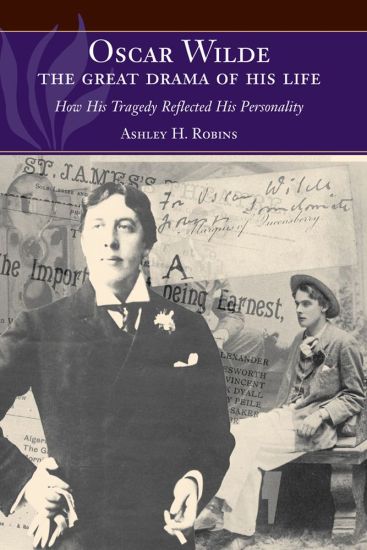
In the 1890s Oscar Wilde enjoyed one of the most high-profile reputations in Britain; yet, virtually overnight, he was plunged into disgrace and ruin. What were the reasons for this extraordinary reversal of fortune? Ashley Robins explores Wilde's motivation in prosecuting the Marquess of Queensberry, and elaborates on the precarious legal situation that effectively quashed any prospect of a withdrawal from the lawsuit without dire consequences. He examines the medical and psychiatric aspects of Wilde's two-year imprisonment and reveals -- for the first time and based on the original Home Office records -- the machinations among prison officials and doctors to cover up Wilde's state of health. Wilde's medical history is presented with an expert evaluation of his terminal illness, including a resolution of the syphilis controversy. Robins details Wilde's tangled matrimonial affairs during his imprisonment and goes on to disclose the manoeuvres adopted by friends to secure his early release, citing hitherto unpublished letters to show that bribery of prison personnel was seriously contemplated. The issue of homosexuality is discussed not only in relation to Oscar Wilde but from the broader historical, legal and biological perspective. The author portrays Wilde's character and behaviour through the images he projected onto society, by the strong but mixed public reaction to him, and by the quality of his interpersonal relationships with his wife, family and close friends. Finally, Wilde's personality is assessed using internationally accepted diagnostic criteria; and, in an unusual and innovative experiment, a group of Wildean scholars completed a psychological questionnaire as if they were doing so for Oscar Wilde himself. Drawing on these findings and on his own extensive psychiatric experience, Ashley Robins concludes that Wilde had a disorder of personality that culminated in the final and tragic phase of his life.
Oscar Wilde -- The Great Drama of His Life

Oscar Wilde -- The Great Drama of His Life

Ashley H Robins

Sussex Academic Press
2010
sidottu
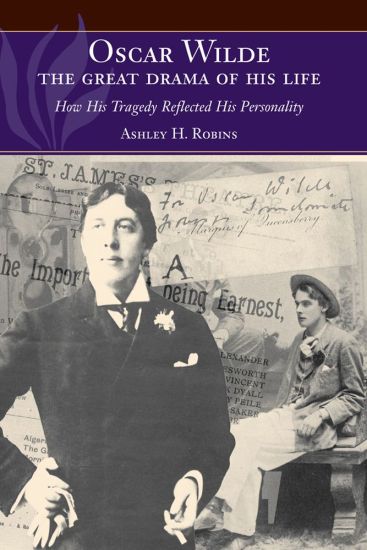
In the 1890s Oscar Wilde enjoyed one of the most high-profile reputations in Britain; yet, virtually overnight, he was plunged into disgrace and ruin. What were the reasons for this extraordinary reversal of fortune? Ashley Robins explores Wilde's motivation in prosecuting the Marquess of Queensberry, and elaborates on the precarious legal situation that effectively quashed any prospect of a withdrawal from the lawsuit without dire consequences. He examines the medical and psychiatric aspects of Wilde's two-year imprisonment and reveals -- for the first time and based on the original Home Office records -- the machinations among prison officials and doctors to cover up Wilde's state of health. Wilde's medical history is presented with an expert evaluation of his terminal illness, including a resolution of the syphilis controversy. Robins details Wilde's tangled matrimonial affairs during his imprisonment and goes on to disclose the manoeuvres adopted by friends to secure his early release, citing hitherto unpublished letters to show that bribery of prison personnel was seriously contemplated. The issue of homosexuality is discussed not only in relation to Oscar Wilde but from the broader historical, legal and biological perspective. The author portrays Wilde's character and behaviour through the images he projected onto society, by the strong but mixed public reaction to him, and by the quality of his interpersonal relationships with his wife, family and close friends. Finally, Wilde's personality is assessed using internationally accepted diagnostic criteria; and, in an unusual and innovative experiment, a group of Wildean scholars completed a psychological questionnaire as if they were doing so for Oscar Wilde himself. Drawing on these findings and on his own extensive psychiatric experience, Ashley Robins concludes that Wilde had a disorder of personality that culminated in the final and tragic phase of his life.

Biological Perspectives on Human Pigmentation

Biological Perspectives on Human Pigmentation

Ashley H. Robins

Cambridge University Press
2005
pokkari
Skin colour is perhaps the most decisive and abused physical characteristic of humankind. This book presents a multidisciplinary overview of how and why human populations vary so markedly in their skin colour. The biological aspects of the pigment cell and its production of melanin are reviewed. The functions of melanin in the skin, brain, eye and ear are considered, and the common clinical abnormalities of pigmentation, such as albinism, are described and illustrated. Detailed reflectance data from worldwide surveys of skin colour are also presented. The historical and contemporary background of the phenomenon is explored in relation to the so-called 'colour problem' in society. Finally, the possible evolutionary forces which shape human pigmentation are assessed. This fascinating account will be of interest to graduate students and researchers of biological anthropology, anatomy, physiology and dermatology, as well as medical practitioners.
Biological Perspectives on Human Pigmentation

Biological Perspectives on Human Pigmentation

Ashley H. Robins

Cambridge University Press
1991
sidottu
Skin colour is perhaps the most decisive and abused physical characteristic of humankind. This book presents a multidisciplinary overview of how and why human populations vary so markedly in their skin colour. The biological aspects of the pigment cell and its production of melanin are reviewed. The functions of melanin in the skin, brain, eye and ear are considered, and the common clinical abnormalities of pigmentation, such as albinism, are described and illustrated. Detailed reflectance data from worldwide surveys of skin colour are also presented. The historical and contemporary background of the phenomenon is explored in relation to the so-called ‘colour problem’ in society. Finally, the possible evolutionary forces which shape human pigmentation are assessed. This fascinating account will be of interest to graduate students and researchers of biological anthropology, anatomy, physiology and dermatology, as well as medical practitioners.