Kirjojen hintavertailu. Mukana 12 595 353 kirjaa ja 12 kauppaa.
Kirjailija
Ashutosh Kumar Singh
Kirjat ja teokset yhdessä paikassa: 8 kirjaa, julkaisuja vuosilta 2011-2025, suosituimpien joukossa Well-known Trademark. Vertaile teosten hintoja ja tarkista saatavuus suomalaisista kirjakaupoista.
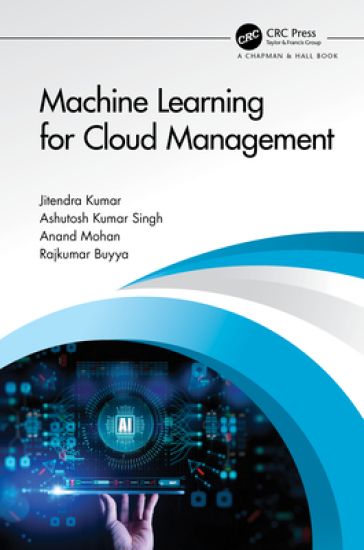
This book addresses fundamental concepts and practical implementations in cloud computing environments, focusing on load balancing and resource management. As cloud computing's popularity grows, expertise in infrastructure management is crucial for delivering flawless subscription-based services and hosted data solutions. The book presents novel models for cloud resource management to improve operational efficiency through better virtual machine (VM) placements. Beginning with task scheduling and resource allocation basics, the book progresses to resource management concepts. It introduces innovative models for dynamic resource allocation, heuristic approaches for optimal host selection, secure resource management frameworks, multi-objective VM allocation schemes, and data security models. A significant contribution is an effective model integrating load balancing, resource management, Quality of Service (QoS), security, and cloud performance for Infrastructure as a Service (IaaS). The book offers innovative methodologies for dynamic resource allocation and service administration in cloud datacenters. It presents traffic management techniques to reduce energy consumption, improve resource utilization, and enhance security through optimized VM placement, with experimental validation. These models improve response time, throughput, resource utilization, energy consumption, and failure node management. Security is addressed through secure VM placement strategies, making it harder for attackers to achieve co-tenancy. A multi-objective approach for secure load balancing optimizes multiple conflicting objectives simultaneously. The book includes cyber-threat countermeasures and provides recommendations for organizations and users. Suitable for senior undergraduate and graduate courses in cloud computing, resource allocation, security, and energy consumption methods, the book includes examples and tutorials using Cloudsim tools for beginners. This helps them understand virtual infrastructure and service design. The methodologies benefit both cloud service providers and customers, offering cost-effective solutions for revenue maximization. The comprehensive approach makes the book valuable for academic study and practical application in cloud computing environments.
Cloud computing offers subscription-based on-demand services, and it has emerged as the backbone of the computing industry. It has enabled us to share resources among multiple users through virtualization, which creates a virtual instance of a computer system running in an abstracted hardware layer. Unlike early distributed computing models, it offers virtually limitless computing resources through its large scale cloud data centers. It has gained wide popularity over the past few years, with an ever-increasing infrastructure, a number of users, and the amount of hosted data. The large and complex workloads hosted on these data centers introduce many challenges, including resource utilization, power consumption, scalability, and operational cost. Therefore, an effective resource management scheme is essential to achieve operational efficiency with improved elasticity. Machine learning enabled solutions are the best fit to address these issues as they can analyze and learn from the data. Moreover, it brings automation to the solutions, which is an essential factor in dealing with large distributed systems in the cloud paradigm.Machine Learning for Cloud Management explores cloud resource management through predictive modelling and virtual machine placement. The predictive approaches are developed using regression-based time series analysis and neural network models. The neural network-based models are primarily trained using evolutionary algorithms, and efficient virtual machine placement schemes are developed using multi-objective genetic algorithms.Key Features:The first book to set out a range of machine learning methods for efficient resource management in a large distributed network of clouds.Predictive analytics is an integral part of efficient cloud resource management, and this book gives a future research direction to researchers in this domain.It is written by leading international researchers.The book is ideal for researchers who are working in the domain of cloud computing.
This book covers several futuristic computing technologies like quantum computing, quantum-dot cellular automata, DNA computing, and optical computing. In turn, it explains them using examples and tutorials on a CAD tool that can help beginners get a head start in QCA layout design. It discusses research on the design of circuits in quantum-dot cellular automata (QCA) with the objectives of obtaining low-complexity, robust designs for various arithmetic operations. The book also investigates the systematic reduction of majority logic in the realization of multi-bit adders, dividers, ALUs, and memory.