

Kirjailija
Astra Taylor
Kirjat ja teokset yhdessä paikassa: 15 kirjaa, julkaisuja vuosilta 2015-2026, suosituimpien joukossa End Times Fascism. Vertaile teosten hintoja ja tarkista saatavuus suomalaisista kirjakaupoista.
15 kirjaa
Kirjojen julkaisuhaarukka 2015-2026.
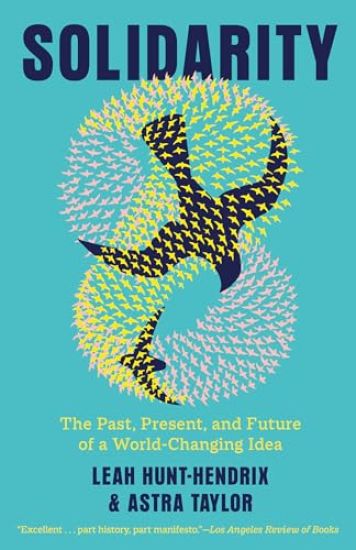
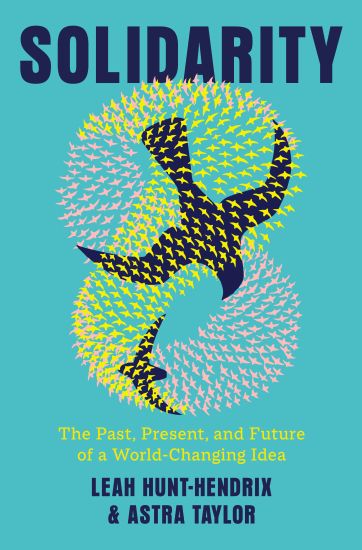
A MOST ANTICIPATED BOOK - From renowned organizers and activists Leah Hunt-Hendrix and Astra Taylor, comes the first in-depth examination of Solidarity--not just as a rallying cry, but as potent political movement with potential to effect lasting change. "A window into what is possible when we reject the politics of division, trade individualism for interconnectedness and prioritize coming together for the greater good."--Heather McGhee, author of The Sum of Us: What Racism Costs Everyone Solidarity is often invoked, but it is rarely analyzed and poorly understood. Here, two leading activists and thinkers survey the past, present, and future of the concept across borders of nation, identity, and class to ask: how can we build solidarity in an era of staggering inequality, polarization, violence, and ecological catastrophe? Offering a lively and lucid history of the idea--from Ancient Rome through the first European and American socialists and labor organizers, to twenty-first century social movements like Occupy Wall Street and Black Lives Matter--Hunt-Hendrix and Taylor trace the philosophical debates and political struggles that have shaped the modern world. Looking forward, they argue that a clear understanding of how solidarity is built and sustained, and an awareness of how it has been suppressed, is essential to warding off the many crises of our present: right-wing backlash, irreversible climate damage, widespread alienation, loneliness, and despair. Hunt-Hendrix and Taylor insist that solidarity is both a principle and a practice, one that must be cultivated and institutionalized, so that care for the common good becomes the central aim of politics and social life.
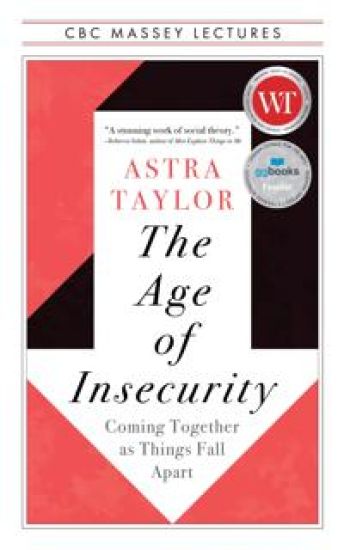
Finalist, 2024 Governor General's Literary Award for Nonfiction Finalist, 2024 Writers' Trust Shaughnessy Cohen Prize for Political Writing These days, everyone feels insecure. We are financially stressed and emotionally overwhelmed. The status quo isn’t working for anyone, even those who appear to have it all. What is going on? In this urgent cultural diagnosis, author and activist Astra Taylor exposes how seemingly disparate crises—rising inequality and declining mental health, the ecological emergency, and the threat of authoritarianism—originate from a social order built on insecurity. From home ownership and education to the wellness industry and policing, many of the institutions and systems that promise to make us more secure actually undermine us. Mixing social critique, memoir, history, political analysis, and philosophy, this genre-bending book rethinks both insecurity and security from the ground up. By facing our existential insecurity and embracing our vulnerability, Taylor argues, we can begin to develop more caring, inclusive, and sustainable forms of security to help us better weather the challenges ahead. The Age of Insecurity will transform how you understand yourself and society—while illuminating a path toward meaningful change.

Solidarity: The Past, Present, and Future of a World-Changing Idea
Leah Hunt-Hendrix; Astra Taylor
VERSO
2023
sidottu
An incisive treatise on solidarity, the centuries-old idea that bridges care for the individual with care for the collective -- and why we can't survive without it. Solidarity is often invoked, but it is rarely analyzed and poorly understood. Here, two leading activists and thinkers survey the past, present, and future of the concept across borders of nation, identity, and class to ask: how can we build solidarity in an era of staggering inequality, polarization, violence, and ecological catastrophe? Offering a lively and lucid history of the idea -- from Ancient Rome through the first European and American socialists and labor organizers, to twenty-first century social movements like Occupy Wall Street and Black Lives Matter -- Hunt-Hendrix and Taylor trace the philosophical debates and political struggles that have shaped the modern world. Looking forward, they argue that a clear understanding of how solidarity is built and sustained, and an awareness of how it has been suppressed, is essential to warding off the many crises of our present: right-wing backlash, irreversible climate damage, and widespread alienation, loneliness, and despair. Hunt-Hendrix and Taylor insist that solidarity is both a principle and a practice, one that must be cultivated and institutionalized, so that care for the common good becomes the central aim of politics and social life.

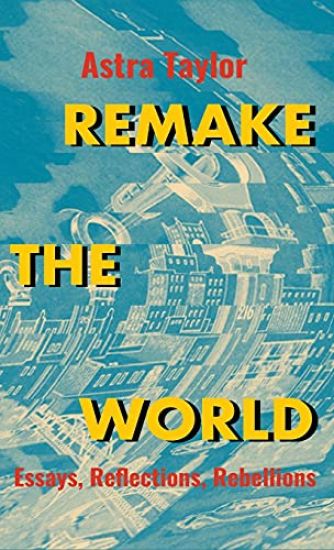
Over the last decade, author and activist Astra Taylor has helped shift the national conversation on topics including technology, inequality, indebtedness, and democracy. The essays collected here reveal the range and depth of her thinking, with Taylor tackling the rising popularity of socialism, the problem of automation, the politics of listening, the possibility of rights for the natural and non-human world, the future of the university, the temporal challenge of climate catastrophe, and more. Addressing some of the most pressing social problems of our day, Taylor invites us to imagine how things could be different while never losing sight of the strategic question of how change actually happens. Curious and searching, these historically informed and hopeful essays are as engaging as they are challenging and as urgent as they are timeless. Taylor 's unique philosophical style has a political edge that speaks directly to the growing conviction that a radical transformation of our economy and society is required.
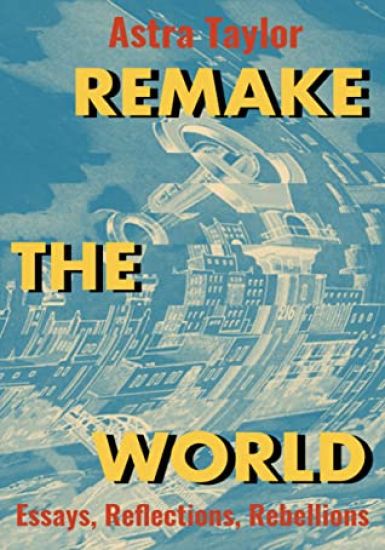
Over the last decade, author and activist Astra Taylor has helped shift the national conversation on topics including technology, inequality, indebtedness, and democracy. The essays collected here reveal the range and depth of her thinking, with Taylor tackling the rising popularity of socialism, the problem of automation, the politics of listening, the possibility of rights for the natural and non-human world, the future of the university, the temporal challenge of climate catastrophe, and more. Addressing some of the most pressing social problems of our day, Taylor invites us to imagine how things could be different while never losing sight of the strategic question of how change actually happens. Curious and searching, these historically informed and hopeful essays are as engaging as they are challenging and as urgent as they are timeless. Taylor 's unique philosophical style has a political edge that speaks directly to the growing conviction that a radical transformation of our economy and society is required.
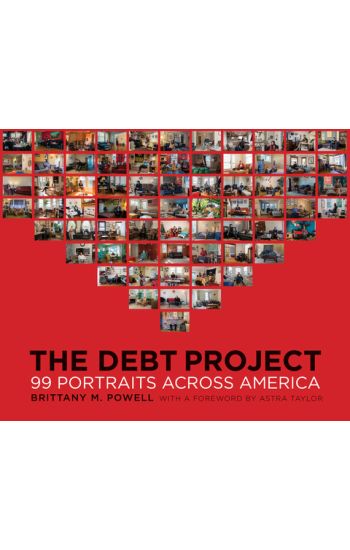
FEATURED IN THE NEW YORKER: The Faces of Americans Living in DebtFinalist for the Dorothea Lange/Paul Taylor Prize in Documentary.Featured on Politico, in the Washington Post, the Daily Mail, and the Huffington Post, USA Today, Business Insider, Refinery29, and Fast Company.Based on the popular online photo series and now published in print for the first time, The Debt Project collects 99 portraits of debt across the United States, featuring people of all different backgrounds and stories, to recontextualize an often stigmatized experience.In 2013, Brittany Powell made the difficult decision to file for bankruptcy for her photography business. In the years following the 2008 economic collapse, she found herself in a significant amount of debt, a position many Americans across the country still share, a common yet isolating and private experience often steeped in shame.Her personal experience, bolstered by the We Are the 99% slogan that came out of the Occupy movement, brought her to start The Debt Project, an exploration of the role debt and finance plays in our personal identity and social structure. This book presents an intimate look into 99 different lives: each shares an arrestingly honest portrait in the person’s home, surrounded by all their belongings, accompanied by a handwritten note of the amount of debt that person is in and the story behind the numbers.The Debt Project, with a foreword by writer and filmmaker Astra Taylor plus resources at the back of the book to support people in debt, examines the social and personal hold financial debt has on us and invites others into a private world, while at the same empowering people to share their stories and overcome the shame they may feel.

Debtors have been mocked, scolded and lied to for decades. We have been told that it is perfectly normal to go into debt to get medical care, to go to school, or even to pay for our own incarceration. We 've been told there is no way to change an economy that pushes the majority of people into debt while a small minority hoard wealth and power. The coronavirus pandemic has revealed that mass indebtedness and extreme inequality are a political choice. In the early days of the crisis, elected officials drew up plans to spend trillions of dollars. The only question was: where would the money go and who would benefit from the bailout?The truth is that there has never been a lack of money for things like housing, education and health care. Millions of people never needed to be forced into debt for those things in the first place.Armed with this knowledge, a militant debtors movement has the potential to rewrite the contract and assure that no one has to mortgage their future to survive. Debtors of the World Must Unite. As isolated individuals, debtors have little influence. But as a bloc, we can leverage our debts and devise new tactics to challenge the corporate creditor class and help win reparative, universal public goods. Individually, our debts overwhelm us. But together, our debts can make us powerful.

Debtors have been mocked, scolded and lied to for decades. We have been told that it is perfectly normal to go into debt to get medical care, to go to school, or even to pay for our own incarceration. We’ve been told there is no way to change an economy that pushes the majority of people into debt while a small minority hoard wealth and power. The coronavirus pandemic has revealed that mass indebtedness and extreme inequality are a political choice. In the early days of the crisis, elected officials drew up plans to spend trillions of dollars. The only question was: where would the money go and who would benefit from the bailout? The truth is that there has never been a lack of money for things like housing, education and health care. Millions of people never needed to be forced into debt for those things in the first place. Armed with this knowledge, a militant debtors movement has the potential to rewrite the contract and assure that no one has to mortgage their future to survive. Debtors of the World Must Unite. As isolated individuals, debtors have little influence. But as a bloc, we can leverage our debts and devise new tactics to challenge the corporate creditor class and help win reparative, universal public goods. Individually, our debts overwhelm us. But together, our debts can make us powerful.

Democracy May Not Exist, But We'll Miss It When It's Gone
Astra Taylor
Metropolitan Books
2020
nidottu
What is democracy really? What do we mean when we use the term? And can it ever truly exist? Astra Taylor, hailed as a "New Civil Rights Leader" (LA Times), provides surprising answers. There is no shortage of democracy, at least in name, and yet it is in crisis everywhere we look. From a cabal of thieving plutocrats in the White House to campaign finance and gerrymandering, it is clear that democracy--specifically the principle of government by and for the people--is not living up to its promise. In Democracy Might Not Exist, but We'll Miss It When It's Gone, Astra Taylor shows that real democracy--fully inclusive and completely egalitarian--has in fact never existed. In a tone that is both philosophical and anecdotal, weaving together history, theory, the stories of individuals, and interviews with such leading thinkers as Cornel West, Danielle Allen, and Slavoj Zizek, Taylor invites us to reexamine the term. Is democracy a means or an end, a process or a set of desired outcomes? What if those outcomes, whatever they may be--peace, prosperity, equality, liberty, an engaged citizenry--can be achieved by non-democratic means? Or if an election leads to a terrible outcome? If democracy means rule by the people, what does it mean to rule and who counts as the people? The inherent paradoxes are unnamed and unrecognized. By teasing them, Democracy Might Not Exist, but We'll Miss It When It's Gone offers a better understanding of what is possible, what we want, and why democracy is so hard to realize.

The Right to Have Rights
Stephanie Degooyer; Samuel Moyn; Alastair Hunt; Astra Taylor
Verso Books
2020
nidottu
Sixty years ago, the political theorist Hannah Arendt, an exiled Jew deprived of her German citizenship, observed that before people can enjoy any of the "inalienable" Rights of Man-before there can be any specific rights to education, work, voting, and so on-there must first be such a thing as "the right to have rights". The concept received little attention at the time, but in our age of mass deportations, Muslim bans, refugee crises, and extra-state war, the phrase has become the centre of a crucial and lively debate. Here five leading thinkers from varied disciplines-including history, law, politics, and literary studies-discuss the critical basis of rights and the meaning of radical democratic politics today.
Democracy is in crisis. In every major company it has been stole by elites or in the hands of strong men. In democracy's name we see a raft of policies that spread inequality and xenophobia worldwide. It is clear that democracy - the principle of government by and for the people - is not living up to its promise.In fact, real democracy- inclusive and egalitarian - has in fact never existed. In this urgent and engaging book, Astra Taylor invites us to re-examine the term. Is democracy a means or an end? A process or a set of desired outcomes? What if the those outcomes, whatever they may be - peace, prosperity, equality, liberty, an engaged citizenry - can be achieved by non-democratic means? Or if an election leads to a terrible outcome? If democracy means rule by the people, what does it mean to rule and who counts as the people? The inherent paradoxes are too often unnamed and unrecognized. But to ignore them is no longer possible. Democracy May Not Exist, but We'll Miss It When It's Gone offers a better understanding of what is possible, what we want, and why democracy is so hard to realize.
The People's Platform: Taking Back Power and Culture in the Digital Age
Astra Taylor
Picador USA
2015
nidottu
"Taylor is the Marshall McLuhan or the Neil Postman of our new digital economy, the lonely voice raising urgent questions we need to answer together . . . If The People's Platform doesn't spark the conversation about the kind of democracy and culture we deserve, then we'll deserve the one we get."--NY1 News' The Book Reader The Internet has been hailed as an unprecedented democratizing force, a place where all can participate equally. But how true is this claim? In a seminal dismantling of techno-utopian visions, The People's Platform argues that the Internet in fact amplifies real-world inequities at least as much as it ameliorates them. Online, just as off-line, attention and influence largely accrue to those who already have plenty of both. A handful of giant companies remain the gatekeepers, while the worst habits of the old media model--the pressure to seek easy celebrity, to be quick and sensational above all--have proliferated in the ad-driven system. We can do better, Astra Taylor insists. The online world does offer a unique opportunity, but a democratic culture that supports work of lasting value will not spring up from technology alone. If we want the Internet to truly be a people's platform, we will have to make it so.