Kirjojen hintavertailu. Mukana 12 595 353 kirjaa ja 12 kauppaa.

Kirjailija

Atalia Omer

Kirjat ja teokset yhdessä paikassa: 8 kirjaa, julkaisuja vuosilta 2013-2023, suosituimpien joukossa Religious Nationalism. Vertaile teosten hintoja ja tarkista saatavuus suomalaisista kirjakaupoista.

8 kirjaa

Kirjojen julkaisuhaarukka 2013-2023.

Decolonizing Religion and Peacebuilding

Decolonizing Religion and Peacebuilding

Atalia Omer

OXFORD UNIVERSITY PRESS INC
2023
sidottu
An investigation of what consolidating religion as a technology of peacebuilding and development does to people's accounts of their religious and cultural traditions and why interreligious peacebuilding entrenches colonial legacies in the present. Throughout the global south, local and international organizations are frequent participants in peacebuilding projects that focus on interreligious dialogue. Yet as Atalia Omer argues in Decolonizing Religion and Peacebuilding, the effects of their efforts are often perverse, reinforcing neocolonial practices and disempowering local religious actors. Based on empirical research of inter and intra-religious peacebuilding practices in Kenya and the Philippines, Omer identifies two paradoxical findings: first, religious peacebuilding practices are both empowering and depoliticizing and, second, more doing of religion does not necessarily denote deeper or more critical religious literacy. Further, she shows that these religious actors generate decolonial openings regardless of how closed or open their religious communities are. Hence, religion's occasional usefulness in peacebuilding does not necessarily mean justice-oriented outcomes. The book not only uses decolonial and intersectional prisms to expose the entrenched and ongoing colonial dynamics operative in religion and the practices of peacebuilding and development in the global South, but it also speaks to decolonial theory through stories of transformation and survival.

Decolonizing Religion and Peacebuilding

Decolonizing Religion and Peacebuilding

Atalia Omer

OXFORD UNIVERSITY PRESS INC
2023
nidottu
An investigation of what consolidating religion as a technology of peacebuilding and development does to people's accounts of their religious and cultural traditions and why interreligious peacebuilding entrenches colonial legacies in the present. Throughout the global south, local and international organizations are frequent participants in peacebuilding projects that focus on interreligious dialogue. Yet as Atalia Omer argues in Decolonizing Religion and Peacebuilding, the effects of their efforts are often perverse, reinforcing neocolonial practices and disempowering local religious actors. Based on empirical research of inter and intra-religious peacebuilding practices in Kenya and the Philippines, Omer identifies two paradoxical findings: first, religious peacebuilding practices are both empowering and depoliticizing and, second, more doing of religion does not necessarily denote deeper or more critical religious literacy. Further, she shows that these religious actors generate decolonial openings regardless of how closed or open their religious communities are. Hence, religion's occasional usefulness in peacebuilding does not necessarily mean justice-oriented outcomes. The book not only uses decolonial and intersectional prisms to expose the entrenched and ongoing colonial dynamics operative in religion and the practices of peacebuilding and development in the global South, but it also speaks to decolonial theory through stories of transformation and survival.
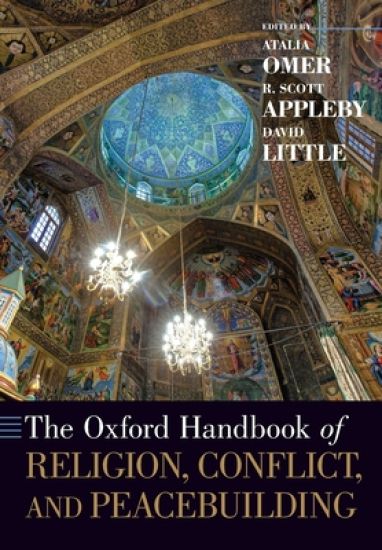
The Oxford Handbook of Religion, Conflict, and Peacebuilding

The Oxford Handbook of Religion, Conflict, and Peacebuilding

R. Scott Appleby; David Little; Atalia Omer

Oxford University Press Inc
2019
nidottu
Featuring numerous case studies from various contexts and traditions, The Oxford Handbook of Religion, Conflict, and Peacebuilding brings together a diverse array of scholars to grapple with the tension between theory and practice, cultural theory, and the legacy of the liberal peace paradigm. This innovative Handbook offers provocative, elastic, and context-specific insights for strategic peacebuilding processes.
Days of Awe

Days of Awe

Atalia Omer

University of Chicago Press
2019
nidottu
For many Jewish people in the mid-twentieth century, Zionism was an unquestionable tenet of what it meant to be Jewish. Seventy years later, a growing number of American Jews are instead expressing solidarity with Palestinians, questioning old allegiances to Israel. How did that transformation come about? What does it mean for the future of Judaism? In Days of Awe, Atalia Omer examines this shift through interviews with a new generation of Jewish activists, rigorous data analysis, and fieldwork within a progressive synagogue community. She highlights people politically inspired by social justice campaigns including the Black Lives Matter movement and protests against anti-immigration policies. These activists, she shows, discover that their ethical outrage at US policies extends to Israel’s treatment of Palestinians. For these American Jews, the Jewish history of dispossession and diaspora compels a search for solidarity with liberation movements. This shift produces innovations within Jewish tradition, including multi-racial and intersectional conceptions of Jewishness and movements to reclaim prophetic Judaism. Charting the rise of such religious innovation, Omer points toward the possible futures of post-Zionist Judaism.
The Oxford Handbook of Religion, Conflict, and Peacebuilding

The Oxford Handbook of Religion, Conflict, and Peacebuilding

R. Scott Appleby; David Little; Atalia Omer

Oxford University Press Inc
2015
sidottu
The book provides a comprehensive and interdisciplinary account of the scholarship on religion, conflict, and peacebuilding. Extending the scope of inquiry beyond previous parameters, the volume engages deeply with the legacies of colonialism, missionary activism, secularism, orientalism, and liberalism as they relate to the discussion of religion, violence, and nonviolent transformation and resistance. Featuring diverse case studies from various contexts and traditions, the volume is organized thematically into five different parts. It begins with an up-to-date mapping of scholarship on religion and violence, and religion and peace. The second part explores the challenges related to developing secularist theories on peace and nationalism. In addition, this section broadens the discussion of violence to include an analysis of cultural and structural forms, thereby expanding the scope of potential scholarship pertinent to the analysis of religion. The third part engages with the controversies within religion and development, religious-violent and nonviolent-militancy, religion and the legitimate use of force, the protection of the freedom of religion as a keystone of peacebuilding, and theories about gender and peacebuilding. The fourth part highlights peacebuilding in practice by focusing on constructive resources within various traditions, the transformative role of rituals, spiritual practices involved in the formation of peace-builders in contexts of acute violence, youth and interfaith activism in American university campuses, religion and solidarity activism, scriptural reasoning as a peacebuilding practice, and an extended reflection on the history and legacy of missionary peacebuilding. The conclusion looks to the future of peacebuilding scholarship and the possibilities for new growth and progress. Bringing together a diverse array of scholars, this innovative Handbook grapples with the tension between theory and practice, cultural theory, and the legacy of the liberal peace paradigm, offering provocative, elastic, and context-specific insights for strategic peacebuilding processes.
When Peace Is Not Enough

When Peace Is Not Enough

Atalia Omer

University of Chicago Press
2013
nidottu
The state of Israel is often spoken of as a haven for the Jewish people, a place rooted in the story of a nation dispersed, wandering the earth in search of its homeland. Born in adversity but purportedly nurtured by liberal ideals, Israel has never known peace, experiencing instead a state of constant war that has divided its population along the stark and seemingly unbreachable lines of dissent around the relationship between unrestricted citizenship and Jewish identity. By focusing on the perceptions and histories of Israel's most marginalized stakeholders - Palestinian Israelis; Arab Jews, and non-Israeli Jews - Atalia Omer cuts to the heart of the Israeli-Arab conflict, demonstrating how these voices provide urgently needed resources for conflict analysis and peace building. Navigating a complex set of arguments about ethnicity, boundaries, and peace and offering a different approach to the renegotiation and reimagination of national identity and citizenship, Omer pushes the conversation beyond the bounds of the single narrative and toward a new and dynamic concept of justice - one that offers the prospect of building a lasting peace.
When Peace Is Not Enough

When Peace Is Not Enough

Atalia Omer

University of Chicago Press
2013
sidottu
The state of Israel is often spoken of as a haven for the Jewish people, a place rooted in the story of a nation dispersed, wandering the earth in search of its homeland. Born in adversity but purportedly nurtured by liberal ideals, Israel has never known peace, experiencing instead a state of constant war that has divided its population along the stark and seemingly unbreachable lines of dissent around the relationship between unrestricted citizenship and Jewish identity. By focusing on the perceptions and histories of Israel's most marginalized stakeholders - Palestinian Israelis, Arab Jews, and non-Israeli Jews - Atalia Omer cuts to the heart of the Israeli-Arab conflict, demonstrating how these voices provide urgently needed resources for conflict analysis and peace building. Navigating a complex set of arguments about ethnicity, boundaries, and peace and offering a different approach to the renegotiation and reimagination of national identity and citizenship, Omer pushes the conversation beyond the bounds of the single narrative and toward a new and dynamic concept of justice - one that offers the prospect of building a lasting peace.
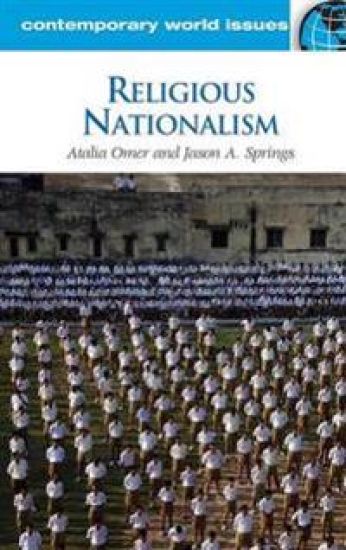
Religious Nationalism

Religious Nationalism

Atalia Omer; Jason A. Springs

ABC-CLIO
2013
sidottu
This book tackles the assumptions behind common understandings of religious nationalism, exploring the complex connections between religion, nationalism, conflict, and conflict transformation.Religious Nationalism: A Reference Handbook challenges dominant scholarly works on religious nationalism by identifying the preconceptions that skew analysis of the phenomenon dubbed "religious nationalism." The book utilizes a multidisciplinary approach that draws insight from theories of nationalism, religious studies, peace research, and political theory, and reframes the questions of religious nationalism within the perspectives of secularism, modernity, and Orientalism. In doing so, the author enables readers to uncover their own presumptions regarding the role of religion in public life.Unlike other works on this subject, the work outlines connections between the analysis of the role of religion in conflict to thoughts regarding how religion may relate to processes of peacebuilding and conflict transformation, and further connects the discussion of religious nationalism to broader conversations on the so-called resurgence of religion. The book will serve advanced high school and college students studying religion, international relations, and related subjects while also appealing to a wide audience of readers with an interest in questions of religion and politics.