Kirjojen hintavertailu. Mukana 12 152 606 kirjaa ja 12 kauppaa.
Kirjailija
Athol Fugard
Kirjat ja teokset yhdessä paikassa: 24 kirjaa, julkaisuja vuosilta 1993-2023, suosituimpien joukossa Athol Fugard Plays 1. Vertaile teosten hintoja ja tarkista saatavuus suomalaisista kirjakaupoista.
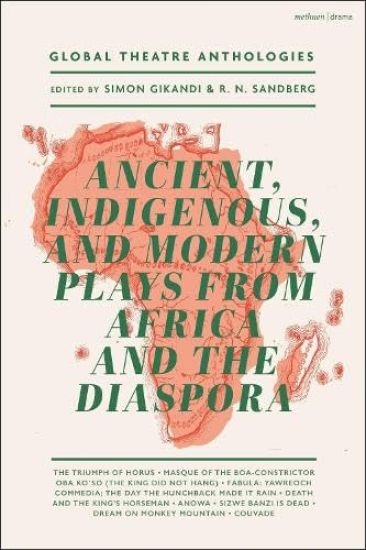
The power of theatrical performance is universal, but the style and concerns of theatre are specific to individual cultures. This volume in the Global Theatre Perspectives series presents a reconstructed ancient performance text, four one-act indigenous African plays and five modern dramas from various regions of Africa and the Caribbean Diaspora. Because these plays span centuries and are the work of artists from diverse cultures, readers can see elements that occur across time and space. Physicalized ritual, direct interaction with spectators, improvisation, music, drumming, and metaphorical animal characters help create the theatrical forms in multiple plays. Recurring themes include the establishment or challenging of political authority, the oppression or corruption of government, societal expectations based on gender, the complex and transformational nature of identity, and the power of dreams. Though each play is its own unique entity, reading them together allows readers to explore what theatrical elements and cultural concerns are perhaps essentially African. The Caribbean plays add further perspective to the questions of what values, theatrical and societal, are part of African drama, how these have influenced the Caribbean aesthetic, and what the relationships are between the old and new world. Among the creators of the pieces are two Nobel Laureates, those who have been exiled or jailed for the political nature of their work, and the author of his country’s first constitution. The volume can serve as the primary text for an intensive semester-long investigation of African drama and culture. But it is also possible to use this volume along with others in the series as texts for a single course on drama from around the world. The global perspectives approach, letting works from ancient, indigenous, and modern times resonate with each other, encourages thinking across boundaries and connective human understanding.
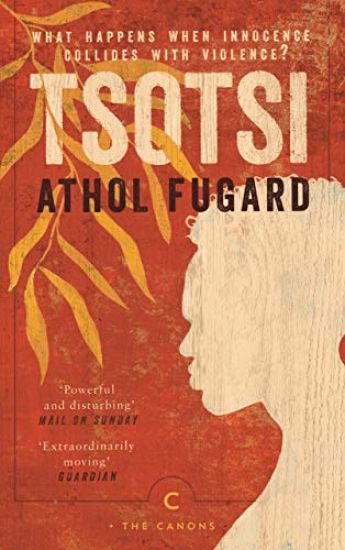
Tsotsi is an angry young gang leader in the South African township of Sophiatown. A man without a past, he exists only to kill and steal. But when he captures a woman one night in a moonlit grove of bluegum trees, she shoves a shoebox into his arms: the box contains a baby and his life is inexorably changed. He begins to remember his childhood and rediscover the self he left behind.Tsotsi's raw power and rare humanity show how decency and compassion can survive against the odds.
Set in 1963 in a white district of Port Elizabeth South Africa this important play gives a compelling portrait of a society caught in the grip of a police state and the effect it has on individuals. A liberal Afrikaner who is actively involved in anti-apartheid activity and his wife who is recovering from a nervous breakdown brought about by a police raid on their home are waiting for dinner guests a Black family. They never arrive but the head of the family does. He has just been released from prison and plans to flee South Africa after first confronting the Afrikaner with the charge that he has betrayed him.
Two Black scavengers emerge from the underbrush loaded with their total possessions: the makings of a shack and a battery of pots and pans, but nothing to cook in them.
Aging farm laborer Nukain has spent his life transforming the rocks at Revolver Creek into a vibrant garden of painted flowers. Now, the final unpainted rock, as well as his young companion Bokkie, has forced Nukain to confront his legacy as a painter, a person and a black man in 1980s South Africa. When the landowner's wife arrives with demands about the painting, the profound rifts of a country hurtling toward the end of apartheid are laid bare.
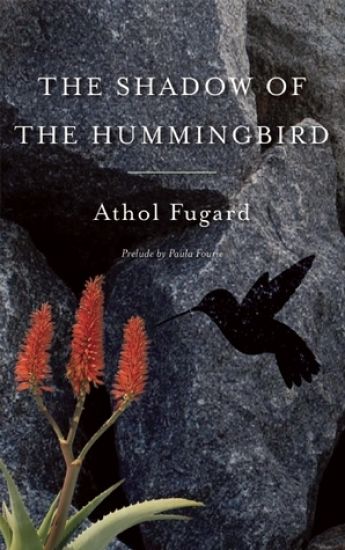
"The greatest active playwright in the English-speaking world."--"Time""If there is a more urgent and indispensable playwright in world theater than South Africa's Athol Fugard, I don't know who it could be."--"Newsweek""Athol Fugard can say more with a single line than most playwrights convey in an entire script."--"Variety"Legendary theatre artist Athol Fugard returns to the stage for the first time in fifteen years in this, his latest work. "The Shadow of the Hummingbird" tells the story of an ailing man in his eighties and the afternoon spent with his ten year-old grandson. In a charming meditation on the beauty and transience of the world around us, Fugard continues to mine the depths of the human spirit with profound empathy and heart. The text of the play includes an introductory Prelude by Paula Fourie with extracts from Fugard's unpublished notebooks.Athol Fugard has been working in the theater as a playwright, director, and actor for more than fifty years. In 2011, he received a Special Tony Award for Lifetime Achievement in the Theatre, and he was the inaugural Humanitas Visiting Professor of Drama at Oxford University. His plays include "Blood Knot," "Boesman and Lena," "Statements After an Arrest Under the Immorality Act," "Sizwe Banzi Is Dead," "'Master Harold' . . . and the Boys," "The Road to Mecca," "My Children My Africa " and "The Blue Iris."
For me The Train Driver] is the biggest of them all. Everything I have written before has been a journey to this.--Athol FugardA dramatic, moving theater experience written for South Africa. . . . It will save us from hopelessness. See it.--Sunday IndependentThe Train Driver is classic Athol Fugard, and one of his most important plays. The playwright, known throughout the world as a chronicler of his native South Africa's apartheid past, directed its premiere at the newly opened Fugard Theater in one of Cape Town's most politically contentious areas. This seminal work was inspired by the true story of a mother who, with her three children, committed suicide on the train tracks in Cape Town. The two-person drama unfolds between the train's engineer and the grave digger who buries the ones without names. This edition also includes Coming Home, Fugard's first work addressing AIDS in South Africa, and Have You Seen Us? his first play set in America, about a South African transplanted to San Diego, where the playwright currently resides.Athol Fugard's works includes Blood Knot, Master Harold. . .and the Boys, Boesman and Lena, Sizwe Banzi is Dead and My Children My Africa He has been widely produced in South Africa, London, on Broadway, and across the United States.
Roelf, a train driver, has spent weeks searching for the identities of a mother and child he unintentionally killed with his train. After a fruitless journey through shanty towns, he encounters an old gravedigger named Simon who helps the desperate man unburden his conscience. Based on a true story, The Train Driver is a soulful exploration of guilt, suffering, and the powerful bonds that grow between strangers.
Genre: Drama Characters: 2 males, 1 female Scenery: Bare Stage On board the SS Graigaur a young sailor begins to pen his first novel. Assisted by his muse, a portrait of his mother comes to life, and supported by his friend, an illiterate ship's mechanic, he struggles to balance romance and reality. This most personal of Athol Fugard's works is strictly autobiographical; at twenty he abandoned his university education, hitch hiked up Africa and ended up on a tramp steamer in Port Sudan. This play refl ects his attempts to come to terms with the conflicting emotions evoked by memories of his courageous mother and flawed father. "Charming... Admire The Captain's Tiger and the lovely way in which it is told." - The New York Daily News
Full Length, Drama Characters: 2 male, 1 female Unit set. The great South African playwright confronts the tragedy of apartheid in his native land in this compelling tale about the efforts of a humble and humane black teacher in a segregated township to persuade just one young person that education, not violence, is the answer to South Africa's problems. "A document of towering stature." Philadelphia Inquirer "The drama vacillates superbly between politica
In December 2000, Pumla Lolwana pulled her three children close to her body and stepped in front of a train on the railway tracks between Philippi and Nyanga on the Cape Flats, South Africa.This true story compelled Athol Fugard to write this play; a beautiful and haunting drama of redemptive power. The Train Driver received its UK premiere at Hampstead Theatre, London, in November 2010.'Brave, confrontational and tender . . . Essential theatre viewing.' Sunday Times, South Africa
Drama / 3m (1 white, 2 black) / Int.The role that won Zakes Mokae a Tony Award brought Danny Glover back to the New York stage for the Roundabout Theatre's revival of this searing coming of age story, considered by many to be Fugard's masterpiece. A white teen who has grown up in the affectionate company of the two black waiters who work in his mother's tea room in Port Elizabeth learns that his viciously racist alcoholic father is on his way home from the hospital. An ensuing rage unwitting
A compelling drama of South African apartheid and a universal coming-of-age story, from "the greatest active playwright in the English-speaking world" (Time). Originally produced in 1982, "Master Harold and the Boys" is now an acknowledged classic of the stage, whose themes of injustice, racism, friendship, and reconciliation traverse borders and time.
In the Johannesburg township of Soweto, a young, black gangster in South Africa, who leads a group of violent criminals, slowly discovers the meaning of compassion, dignity, and his own humanity. Reprint. A South African film, releasing February 2006 by Miramax) (General Fiction)
The four plays in this volume focus on the people and the place Fugard knows most intimately - Port Elizabeth, South Africa. Each explores a tense family situation or relationship against the background of wider suffering and tensions, engaging our sympathies for South Africans of all races.
The Captain's Tiger provides a glimpse of an author's beginnings, that rare chance to witness the embryonic start of a great man's life with all the shadows and light so much part of the writer's landscape. Fugard catches us unawares in a story that is not all that it seems-just like life. --Pretoria News In The Captain's Tiger, Athol Fugard sets out as a young seafarer and writer to begin The Great Novel--the exciting tales of his mother, a young Afrikaner, and her escape from small-town life. But what he discovers on his travels is that the secret to great writing comes from the desperate need to tell the truth, and in turn he finds his voice as an author. Subtitled a "Memoir for the Stage," the play is told both from the point of view of the twenty-year-old author who was the captain's tiger--a glorified personal servant to the ship's captain--and the author as his current-day self. This is a fascinating voyage, a writer's pilgrimage, a whole painful process we are privy to. We witness his coming of age through author monologues, recreations of onboard conversations, letters written to his mother, imagined discourse, and dreams. Fugard has created a personal dramatic structure moving from present to past, from reality to reverie. One of the author's most imaginative works, Fugard has created a world with imagery that is visual, visceral and poetic.
This collection of Athol Fugard's plays confirms his reputation as 'South Africa's most accomplished playwright' (The Times). The collection includes the plays The Road to Mecca, A Place with the Pigs, My Children! My Africa!, Playland and Valley Song, and is introduced by the author.
My Life is based on the diaries of five South African girls who were growing into womanhood in 1994. The perspective of each young woman on her country and her people is conveyed with a mixture of naivety, exuberance, warmth and humour. A small Karoo town provides the setting for Valley Song, which explores the theme of youth in search of itself, and provides a lyrical metaphor for the new South Africa in which it was set, and has been termed one of Fugard's most endearing plays.